Region:Middle East
Author(s):Dev
Product Code:KRAD7625
Pages:84
Published On:December 2025
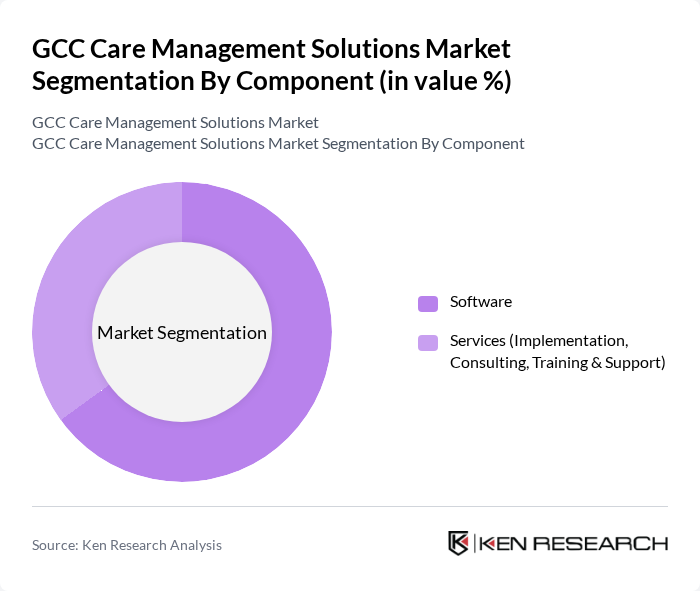
By Component:The components of care management solutions are primarily divided into software and services. The software segment includes various applications designed to facilitate care management, while the services segment encompasses implementation, consulting, training, and support services. The software segment is currently leading the market due to the increasing adoption of digital health solutions and the need for efficient data management systems.
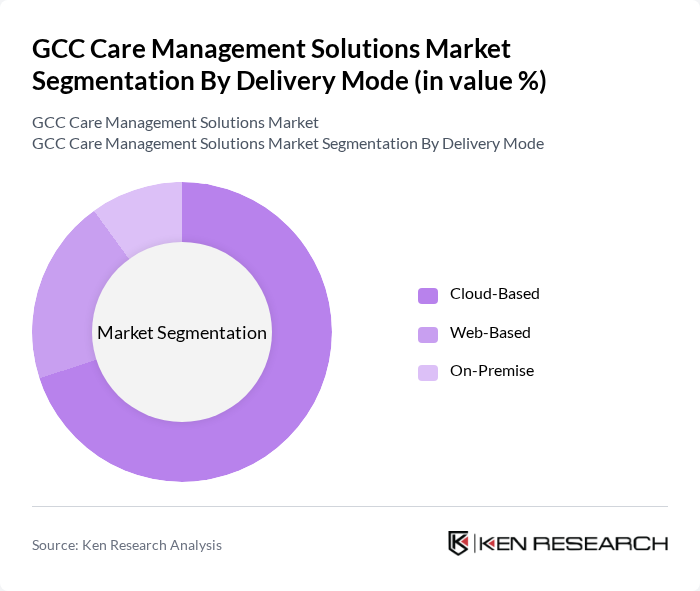
By Delivery Mode:The delivery modes for care management solutions include cloud-based, web-based, and on-premise solutions. The cloud-based segment is gaining traction due to its scalability, cost-effectiveness, ease of access, seamless data sharing, and improved interoperability. Organizations are increasingly opting for cloud-based solutions to enhance collaboration and streamline operations, making it the dominant delivery mode in the market.
The GCC Care Management Solutions Market is characterized by a dynamic mix of regional and international players. Leading participants such as Oracle Health (formerly Cerner) – GCC, InterSystems Corporation – Middle East & GCC, DXC Technology – Healthcare & Life Sciences, Middle East, Cognizant (TriZetto & care management platforms) – GCC, Philips Healthcare – Population Health & Care Management, Middle East, Medtronic Care Management Services – Remote & Chronic Care, IBM Watson Health (Merative) – Population Health & Analytics, Epic Systems Corporation – Population Health & Care Management, Salesforce Health Cloud – Care Management in GCC, HealthInsights (SEHA / PureHealth Group) – UAE, Lean Business Services – Saudi Arabia (MOH Digital & Care Platforms), Cerner?Saudi Business Machines (SBM) / Local JV & Partners, Tamer Healthcare IT (Saudi Arabia) – Digital Health & Care Coordination, Orion Health – Population Health Management, Middle East, Vezeeta – Digital Health Platform with Care Coordination Services contribute to innovation, geographic expansion, and service delivery in this space.
The future of the GCC care management solutions market appears promising, driven by ongoing technological advancements and a shift towards value-based care. As healthcare providers increasingly focus on improving patient outcomes and reducing costs, the integration of AI and machine learning into care management systems is expected to enhance efficiency. Additionally, the expansion of telehealth services will likely facilitate greater access to care, particularly in remote areas, further propelling market growth in the coming years.
| Segment | Sub-Segments |
|---|---|
| By Component | Software Services (Implementation, Consulting, Training & Support) |
| By Delivery Mode | Cloud-Based Web-Based On-Premise |
| By Application | Chronic Care Management (e.g., diabetes, CVD, COPD) Disease & Case Management Utilization Management Population Health Management & Risk Stratification |
| By End-User | Healthcare Providers (Hospitals, Clinics, Specialist Centers) Healthcare Payers (Public & Private Insurers) Government & Public Health Agencies Others (TPAs, Employer Groups) |
| By Deployment Environment | Single-Facility Deployments Multi-Facility / Health System Deployments Cross?Network / Regional Platforms |
| By Country within GCC | Saudi Arabia United Arab Emirates Qatar Kuwait Oman Bahrain |
| Scope Item/Segment | Sample Size | Target Respondent Profiles |
|---|---|---|
| Hospital Care Management Solutions | 140 | Healthcare Administrators, IT Managers |
| Telehealth Service Providers | 100 | Telehealth Coordinators, Clinical Directors |
| Chronic Disease Management Programs | 80 | Program Managers, Healthcare Consultants |
| Patient Engagement Technologies | 70 | Product Managers, User Experience Designers |
| Healthcare Policy Makers | 60 | Government Officials, Health Policy Analysts |
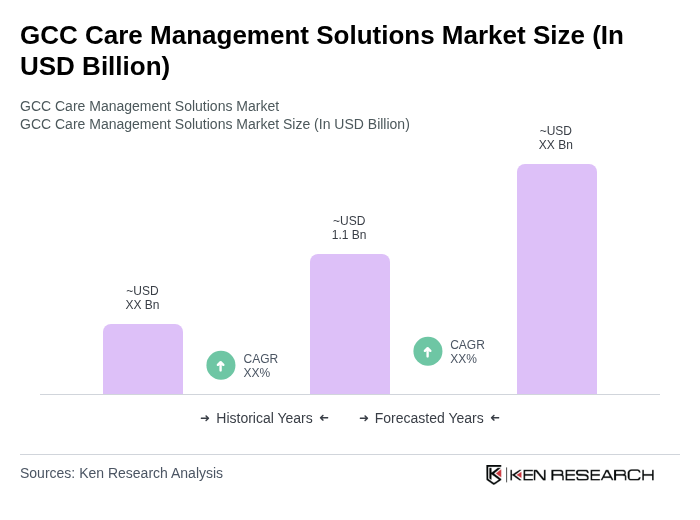
The GCC Care Management Solutions Market is valued at approximately USD 1.1 billion, driven by the increasing prevalence of chronic diseases and the demand for efficient healthcare delivery systems, along with government initiatives to enhance healthcare infrastructure.

What makes us stand out is that our consultants follow Robust, Refine and Result (RRR) methodology. Robust for clear definitions, approaches and sanity checking, Refine for differentiating respondents' facts and opinions, and Result for presenting data with story.

We have set a benchmark in the industry by offering our clients with syndicated and customized market research reports featuring coverage of entire market as well as meticulous research and analyst insights.

While we don't replace traditional research, we flip the method upside down. Our dual approach of Top Bottom & Bottom Top ensures quality deliverable by not just verifying company fundamentals but also looking at the sector and macroeconomic factors.

With one step in the future, our research team constantly tries to show you the bigger picture. We help with some of the tough questions you may encounter along the way: How is the industry positioned? Best marketing channel? KPI's of competitors? By aligning every element, we help maximize success.

Our report gives you instant access to the answers and sources that other companies might choose to hide. We elaborate each steps of research methodology we have used and showcase you the sample size to earn your trust.

If you need any support, we are here! We pride ourselves on universe strength, data quality, and quick, friendly, and professional service.













