Region:Middle East
Author(s):Rebecca
Product Code:KRAC2299
Pages:82
Published On:January 2026
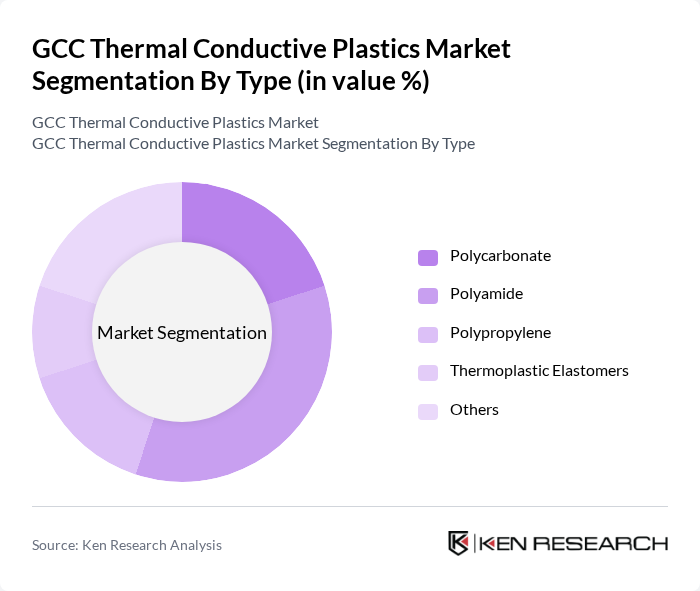
By Type:The market is segmented into various types of thermal conductive plastics, including Polycarbonate, Polyamide, Polypropylene, Thermoplastic Elastomers, and Others. Among these, Polyamide is currently the leading subsegment due to its excellent thermal conductivity and mechanical properties, making it suitable for high-performance applications in electronics and automotive sectors. The increasing adoption of lightweight materials in these industries is driving the demand for Polyamide, which is favored for its durability and efficiency.
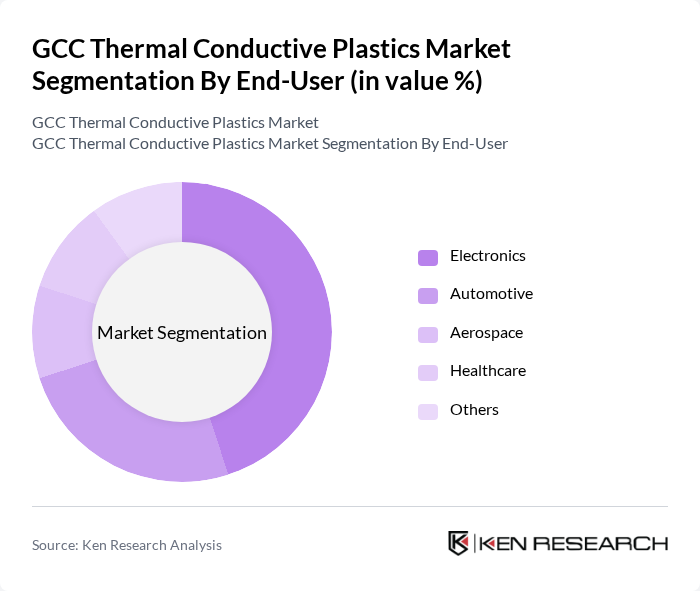
By End-User:The end-user segmentation includes Electronics, Automotive, Aerospace, Healthcare, and Others. The Electronics sector is the dominant segment, driven by the increasing demand for thermal management solutions in consumer electronics and industrial applications. The rapid growth of the electronics industry in the GCC region, coupled with the need for efficient heat dissipation in devices, is propelling the demand for thermal conductive plastics in this sector.
The GCC Thermal Conductive Plastics Market is characterized by a dynamic mix of regional and international players. Leading participants such as BASF SE, DuPont de Nemours, Inc., Celanese Corporation, RTP Company, SABIC, Mitsubishi Engineering-Plastics Corporation, Covestro AG, LG Chem Ltd., Solvay S.A., Ensinger GmbH, PolyOne Corporation, Toray Industries, Inc., Huntsman Corporation, Eastman Chemical Company, 3M Company contribute to innovation, geographic expansion, and service delivery in this space.
The future of the GCC thermal conductive plastics market appears promising, driven by increasing investments in research and development and a growing emphasis on sustainability. As industries seek to enhance energy efficiency and reduce environmental impact, the demand for innovative thermal conductive materials is expected to rise. Furthermore, the integration of smart technologies in manufacturing processes will likely lead to more customized solutions, catering to specific industry needs and enhancing overall market growth.
| Segment | Sub-Segments |
|---|---|
| By Type | Polycarbonate Polyamide Polypropylene Thermoplastic Elastomers Others |
| By End-User | Electronics Automotive Aerospace Healthcare Others |
| By Application | Heat Sinks Thermal Interface Materials Insulation Components Others |
| By Formulation | Filled Compounds Unfilled Compounds Blends Others |
| By Distribution Channel | Direct Sales Distributors Online Sales Others |
| By Geography | Saudi Arabia UAE Qatar Kuwait Others |
| By Customer Type | OEMs Aftermarket Others |
| Scope Item/Segment | Sample Size | Target Respondent Profiles |
|---|---|---|
| Electronics Industry Applications | 100 | Product Development Engineers, R&D Managers |
| Automotive Sector Utilization | 80 | Procurement Managers, Design Engineers |
| Construction Material Usage | 70 | Project Managers, Material Engineers |
| Consumer Electronics Market | 90 | Supply Chain Managers, Quality Assurance Specialists |
| Industrial Applications | 60 | Operations Managers, Technical Sales Representatives |
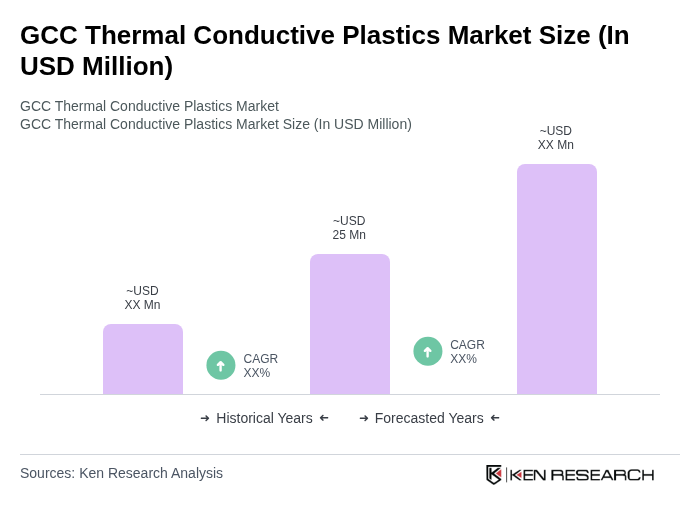
The GCC Thermal Conductive Plastics Market is valued at approximately USD 20 million, driven by the increasing demand for lightweight and high-performance materials in industries such as electronics and automotive, particularly for efficient thermal management solutions.

What makes us stand out is that our consultants follow Robust, Refine and Result (RRR) methodology. Robust for clear definitions, approaches and sanity checking, Refine for differentiating respondents' facts and opinions, and Result for presenting data with story.

We have set a benchmark in the industry by offering our clients with syndicated and customized market research reports featuring coverage of entire market as well as meticulous research and analyst insights.

While we don't replace traditional research, we flip the method upside down. Our dual approach of Top Bottom & Bottom Top ensures quality deliverable by not just verifying company fundamentals but also looking at the sector and macroeconomic factors.

With one step in the future, our research team constantly tries to show you the bigger picture. We help with some of the tough questions you may encounter along the way: How is the industry positioned? Best marketing channel? KPI's of competitors? By aligning every element, we help maximize success.

Our report gives you instant access to the answers and sources that other companies might choose to hide. We elaborate each steps of research methodology we have used and showcase you the sample size to earn your trust.

If you need any support, we are here! We pride ourselves on universe strength, data quality, and quick, friendly, and professional service.













