About the Report
Base Year 2024Listen to the audio summary
Global Orthodontic Equipment Market Overview
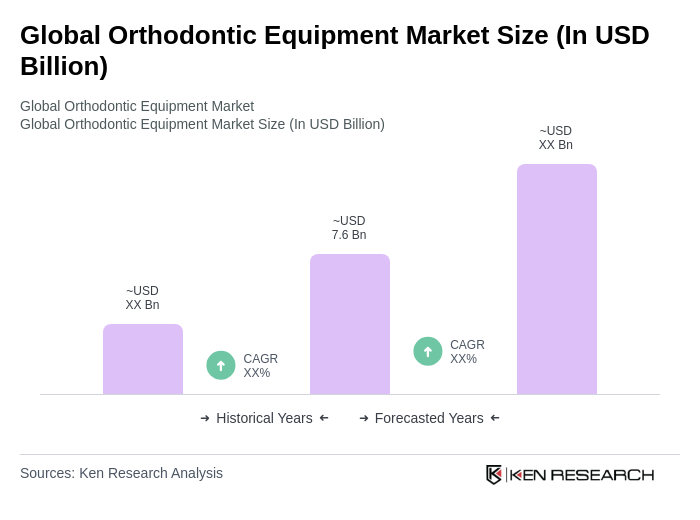
- The Global Orthodontic Equipment Market is valued at USD 7.6 billion, based on a five-year historical analysis. This growth is primarily driven by the increasing prevalence of dental disorders, rising awareness about oral health, and advancements in orthodontic technology. The demand for innovative orthodontic solutions, such as clear aligners and self-ligating brackets, has significantly contributed to market expansion. Recent trends highlight the surge in cosmetic dentistry, adoption of digital orthodontic tools, and minimally invasive procedures as key growth drivers.
- Key players in this market include the United States, Germany, and Japan, which dominate due to their advanced healthcare infrastructure, high disposable incomes, and a strong focus on dental aesthetics. The presence of leading orthodontic manufacturers and a growing number of orthodontic specialists in these regions further enhance their market position. North America holds the largest market share, supported by significant investments in research and development and high adoption rates of clear aligners and digital orthodontic equipment.
- In 2023, the U.S. government implemented regulations to improve the safety and efficacy of orthodontic devices. The Food and Drug Administration (FDA) introduced updated guidelines under the "Dental Devices; Orthodontic Appliances; Final Rule, 2023," requiring comprehensive clinical data for the approval of new orthodontic products. These regulations mandate manufacturers to provide robust evidence of safety and effectiveness, including clinical trial data, labeling requirements, and post-market surveillance. The rule aims to enhance consumer confidence and promote innovation in the orthodontic equipment sector.
Global Orthodontic Equipment Market Segmentation
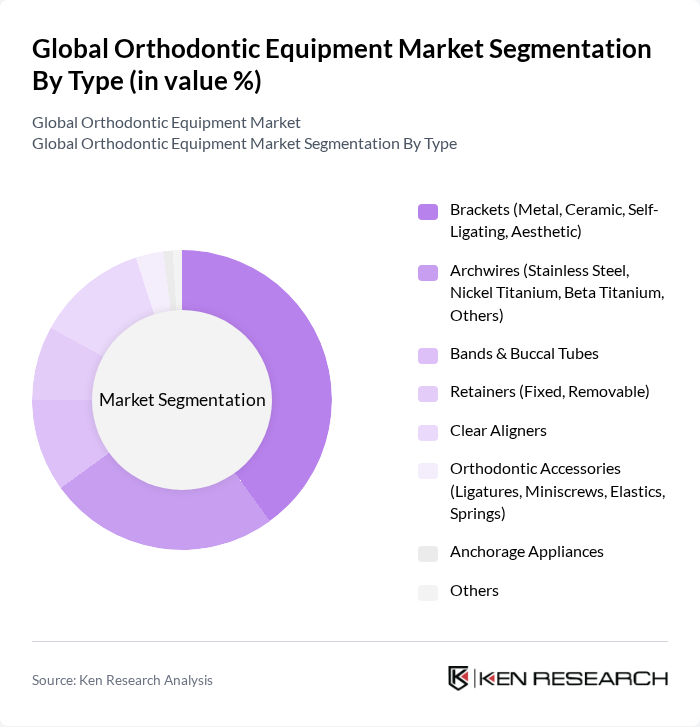
By Type:The orthodontic equipment market is segmented into various types, including brackets, archwires, bands & buccal tubes, retainers, clear aligners, orthodontic accessories, anchorage appliances, and others. Among these, brackets—particularly self-ligating and aesthetic types—lead the market due to their popularity among patients seeking less visible treatment options. Clear aligners are also gaining traction, driven by consumer preference for discreet orthodontic solutions and the rapid adoption of digital treatment planning.
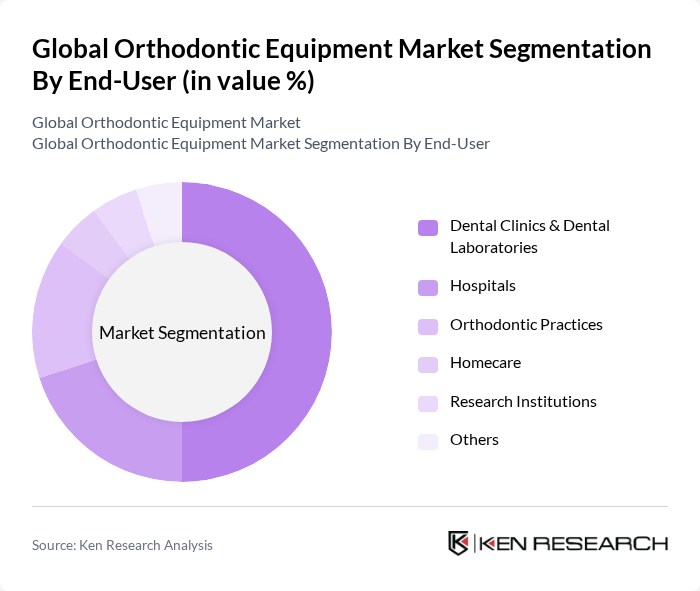
By End-User:The market is segmented by end-users, including dental clinics & dental laboratories, hospitals, orthodontic practices, homecare, research institutions, and others. Dental clinics and orthodontic practices are the primary end-users, as they are the main providers of orthodontic treatments. The increasing number of dental professionals and the rise in orthodontic procedures, especially cosmetic and preventive treatments, are driving growth in these segments.
Global Orthodontic Equipment Market Competitive Landscape
The Global Orthodontic Equipment Market is characterized by a dynamic mix of regional and international players. Leading participants such as Align Technology, Inc., 3M Company, Dentsply Sirona Inc., Ormco Corporation, Henry Schein, Inc., Straumann Holding AG, GC Corporation, American Orthodontics, Patterson Companies, Inc., KaVo Kerr, Dental Wings Inc., Biolase, Inc., SmileDirectClub, Inc., ClearCorrect, LLC, TBS Dental, Inc. contribute to innovation, geographic expansion, and service delivery in this space.
Global Orthodontic Equipment Market Industry Analysis
Growth Drivers
- Increasing Prevalence of Dental Disorders:The World Health Organization reported that approximately 3.5 billion people globally suffer from oral diseases, with dental caries being the most prevalent. In None, the incidence of dental disorders is projected to rise by 15% in future, driven by lifestyle changes and dietary habits. This surge in dental issues necessitates orthodontic interventions, thereby boosting the demand for orthodontic equipment. The increasing focus on oral health will further catalyze market growth in this region.
- Rising Awareness About Oral Health:Public health campaigns and educational initiatives have significantly increased awareness regarding oral hygiene and its impact on overall health. In None, dental health awareness programs have reached over 60% of the population, leading to a 20% increase in dental visits in future. This heightened awareness is driving more individuals to seek orthodontic treatments, thereby propelling the demand for advanced orthodontic equipment and services in the region.
- Technological Advancements in Orthodontic Equipment:The orthodontic sector is witnessing rapid technological innovations, including 3D printing and digital imaging. In None, the adoption of digital orthodontic solutions has increased by 30% in future, enhancing treatment precision and patient satisfaction. These advancements not only improve treatment outcomes but also attract more patients seeking modern orthodontic solutions, thus driving the market for orthodontic equipment in the region.
Market Challenges
- High Cost of Orthodontic Treatments:The average cost of orthodontic treatment in None can range from $3,000 to $8,000, which poses a significant barrier for many potential patients. With approximately 40% of the population living below the national average income level, affordability remains a critical challenge. This high cost limits access to necessary orthodontic care, thereby restraining market growth and leading to a potential decline in treatment uptake.
- Limited Access to Orthodontic Care in Rural Areas:In None, nearly 25% of the population resides in rural areas where access to orthodontic services is severely limited. A lack of qualified orthodontic practitioners and facilities in these regions results in a significant treatment gap. This disparity not only affects patient outcomes but also restricts the overall growth potential of the orthodontic equipment market, as demand remains unmet in these underserved areas.
Global Orthodontic Equipment Market Future Outlook
The orthodontic equipment market in None is poised for significant growth, driven by increasing consumer awareness and technological advancements. As more individuals prioritize oral health, the demand for innovative orthodontic solutions will rise. Additionally, the expansion of orthodontic services into rural areas is expected to enhance accessibility. The integration of digital technologies will further streamline treatment processes, making orthodontic care more efficient and appealing to a broader demographic, including adults seeking cosmetic solutions.
Market Opportunities
- Expansion of Orthodontic Services in Emerging Markets:There is a significant opportunity for orthodontic service providers to expand into emerging markets within None. With a growing middle class and increasing disposable incomes, more individuals are likely to seek orthodontic treatments. This expansion can lead to increased sales of orthodontic equipment, benefiting both manufacturers and service providers.
- Development of Innovative Orthodontic Products:The demand for innovative orthodontic products, such as clear aligners and 3D-printed braces, is on the rise. Companies that invest in research and development to create cutting-edge solutions can capture a larger market share. This innovation not only meets consumer preferences but also enhances treatment efficiency, providing a competitive edge in the orthodontic equipment market.
Scope of the Report
| Segment | Sub-Segments |
|---|---|
| By Type | Brackets (Metal, Ceramic, Self-Ligating, Aesthetic) Archwires (Stainless Steel, Nickel Titanium, Beta Titanium, Others) Bands & Buccal Tubes Retainers (Fixed, Removable) Clear Aligners Orthodontic Accessories (Ligatures, Miniscrews, Elastics, Springs) Anchorage Appliances Others |
| By End-User | Dental Clinics & Dental Laboratories Hospitals Orthodontic Practices Homecare Research Institutions Others |
| By Distribution Channel | Direct Sales Online Sales Distributors Retail Pharmacies Others |
| By Region | North America (U.S., Canada, Mexico) Europe (UK, Germany, France, Italy, Spain, Russia, Benelux, Nordics, Rest of Europe) Asia-Pacific (China, India, Japan, South Korea, ASEAN, Oceania, Rest of Asia-Pacific) Latin America (Brazil, Argentina, Rest of Latin America) Middle East & Africa (Turkey, Israel, GCC, North Africa, South Africa, Rest of MEA) Others |
| By Product Type | Fixed Appliances Removable Appliances Functional Appliances Others |
| By Age Group | Children Adolescents Adults Others |
| By Treatment Type | Preventive Treatment Corrective Treatment Retention Treatment Cosmetic Treatment Others |
Key Target Audience
Investors and Venture Capitalist Firms
Government and Regulatory Bodies (e.g., Food and Drug Administration, European Medicines Agency)
Manufacturers and Producers
Distributors and Retailers
Orthodontic Clinics and Practices
Dental Equipment Suppliers
Industry Associations (e.g., American Association of Orthodontists)
Financial Institutions
Players Mentioned in the Report:
Align Technology, Inc.
3M Company
Dentsply Sirona Inc.
Ormco Corporation
Henry Schein, Inc.
Straumann Holding AG
GC Corporation
American Orthodontics
Patterson Companies, Inc.
KaVo Kerr
Dental Wings Inc.
Biolase, Inc.
SmileDirectClub, Inc.
ClearCorrect, LLC
TBS Dental, Inc.
Table of Contents
Market Assessment Phase
1. Executive Summary and Approach
2. Global Orthodontic Equipment Market Overview
2.1 Key Insights and Strategic Recommendations
2.2 Global Orthodontic Equipment Market Overview
2.3 Definition and Scope
2.4 Evolution of Market Ecosystem
2.5 Timeline of Key Regulatory Milestones
2.6 Value Chain & Stakeholder Mapping
2.7 Business Cycle Analysis
2.8 Policy & Incentive Landscape
3. Global Orthodontic Equipment Market Analysis
3.1 Growth Drivers
3.1.1 Increasing prevalence of dental disorders
3.1.2 Rising awareness about oral health
3.1.3 Technological advancements in orthodontic equipment
3.1.4 Growth in disposable income and spending on dental care
3.2 Market Challenges
3.2.1 High cost of orthodontic treatments
3.2.2 Limited access to orthodontic care in rural areas
3.2.3 Stringent regulatory requirements
3.2.4 Competition from alternative dental solutions
3.3 Market Opportunities
3.3.1 Expansion of orthodontic services in emerging markets
3.3.2 Increasing demand for cosmetic dentistry
3.3.3 Development of innovative orthodontic products
3.3.4 Collaborations with dental professionals for better outreach
3.4 Market Trends
3.4.1 Growing popularity of clear aligners
3.4.2 Integration of digital technologies in orthodontics
3.4.3 Rise in orthodontic treatment among adults
3.4.4 Focus on preventive orthodontics
3.5 Government Regulation
3.5.1 Compliance with international dental standards
3.5.2 Regulations on dental equipment safety
3.5.3 Licensing requirements for orthodontic practitioners
3.5.4 Guidelines for advertising orthodontic services
4. SWOT Analysis
5. Stakeholder Analysis
6. Porter's Five Forces Analysis
7. Global Orthodontic Equipment Market Market Size, 2019-2024
7.1 By Value
7.2 By Volume
7.3 By Average Selling Price
8. Global Orthodontic Equipment Market Segmentation
8.1 By Type
8.1.1 Brackets (Metal, Ceramic, Self-Ligating, Aesthetic)
8.1.2 Archwires (Stainless Steel, Nickel Titanium, Beta Titanium, Others)
8.1.3 Bands & Buccal Tubes
8.1.4 Retainers (Fixed, Removable)
8.1.5 Clear Aligners
8.1.6 Orthodontic Accessories (Ligatures, Miniscrews, Elastics, Springs)
8.1.7 Anchorage Appliances
8.1.8 Others
8.2 By End-User
8.2.1 Dental Clinics & Dental Laboratories
8.2.2 Hospitals
8.2.3 Orthodontic Practices
8.2.4 Homecare
8.2.5 Research Institutions
8.2.6 Others
8.3 By Distribution Channel
8.3.1 Direct Sales
8.3.2 Online Sales
8.3.3 Distributors
8.3.4 Retail Pharmacies
8.3.5 Others
8.4 By Region
8.4.1 North America (U.S., Canada, Mexico)
8.4.2 Europe (UK, Germany, France, Italy, Spain, Russia, Benelux, Nordics, Rest of Europe)
8.4.3 Asia-Pacific (China, India, Japan, South Korea, ASEAN, Oceania, Rest of Asia-Pacific)
8.4.4 Latin America (Brazil, Argentina, Rest of Latin America)
8.4.5 Middle East & Africa (Turkey, Israel, GCC, North Africa, South Africa, Rest of MEA)
8.4.6 Others
8.5 By Product Type
8.5.1 Fixed Appliances
8.5.2 Removable Appliances
8.5.3 Functional Appliances
8.5.4 Others
8.6 By Age Group
8.6.1 Children
8.6.2 Adolescents
8.6.3 Adults
8.6.4 Others
8.7 By Treatment Type
8.7.1 Preventive Treatment
8.7.2 Corrective Treatment
8.7.3 Retention Treatment
8.7.4 Cosmetic Treatment
8.7.5 Others
9. Global Orthodontic Equipment Market Competitive Analysis
9.1 Market Share of Key Players(Micro, Small, Medium, Large Enterprises)
9.2 Cross Comparison of Key Players
9.2.1 Company Name
9.2.2 Group Size (Large, Medium, or Small as per industry convention)
9.2.3 Revenue (USD, latest fiscal year)
9.2.4 Revenue Growth Rate (CAGR %)
9.2.5 Market Share (%)
9.2.6 Geographic Presence (No. of countries/regions)
9.2.7 Product Portfolio Breadth (No. of product lines)
9.2.8 R&D Investment (% of revenue)
9.2.9 Product Innovation Rate (No. of new launches per year)
9.2.10 Distribution Network Efficiency (No. of distribution partners, global reach)
9.2.11 Pricing Strategy (Premium, Value, Competitive)
9.2.12 Brand Recognition Score (Survey-based or index)
9.2.13 Customer Satisfaction Index (Survey-based or NPS)
9.2.14 Regulatory Compliance Record (No. of recalls, warnings)
9.2.15 Sustainability/ESG Initiatives (Qualitative/Quantitative)
9.3 SWOT Analysis of Top Players
9.4 Pricing Analysis(By Class and Payload)
9.5 Detailed Profile of Major Companies
9.5.1 Align Technology, Inc.
9.5.2 3M Company
9.5.3 Dentsply Sirona Inc.
9.5.4 Ormco Corporation
9.5.5 Henry Schein, Inc.
9.5.6 Straumann Holding AG
9.5.7 GC Corporation
9.5.8 American Orthodontics
9.5.9 Patterson Companies, Inc.
9.5.10 KaVo Kerr
9.5.11 Dental Wings Inc.
9.5.12 Biolase, Inc.
9.5.13 SmileDirectClub, Inc.
9.5.14 ClearCorrect, LLC
9.5.15 TBS Dental, Inc.
10. Global Orthodontic Equipment Market End-User Analysis
10.1 Procurement Behavior of Key Ministries
10.1.1 Budget Allocation for Dental Health
10.1.2 Procurement Processes and Regulations
10.1.3 Preferred Suppliers and Partnerships
10.2 Corporate Spend on Infrastructure & Energy
10.2.1 Investment in Dental Facilities
10.2.2 Spending on Equipment Upgrades
10.2.3 Budget for Staff Training and Development
10.3 Pain Point Analysis by End-User Category
10.3.1 Accessibility to Orthodontic Services
10.3.2 Affordability of Treatments
10.3.3 Quality of Care and Equipment
10.4 User Readiness for Adoption
10.4.1 Awareness of Orthodontic Options
10.4.2 Willingness to Invest in Orthodontic Care
10.4.3 Availability of Information and Resources
10.5 Post-Deployment ROI and Use Case Expansion
10.5.1 Measurement of Treatment Outcomes
10.5.2 Patient Satisfaction and Feedback
10.5.3 Opportunities for Service Expansion
11. Global Orthodontic Equipment Market Future Size, 2025-2030
11.1 By Value
11.2 By Volume
11.3 By Average Selling Price
Go-To-Market Strategy Phase
1. Whitespace Analysis + Business Model Canvas
1.1 Market Gaps Identification
1.2 Value Proposition Development
1.3 Revenue Streams Analysis
1.4 Customer Segmentation
1.5 Key Partnerships
1.6 Cost Structure
1.7 Channels of Distribution
2. Marketing and Positioning Recommendations
2.1 Branding Strategies
2.2 Product USPs
2.3 Target Audience Identification
2.4 Marketing Channels
2.5 Promotional Strategies
3. Distribution Plan
3.1 Urban Retail Strategies
3.2 Rural NGO Tie-ups
3.3 Online Distribution Channels
3.4 Partnerships with Dental Clinics
4. Channel & Pricing Gaps
4.1 Underserved Routes
4.2 Pricing Bands Analysis
4.3 Competitor Pricing Strategies
5. Unmet Demand & Latent Needs
5.1 Category Gaps
5.2 Consumer Segments Analysis
5.3 Emerging Trends
6. Customer Relationship
6.1 Loyalty Programs
6.2 After-sales Service
6.3 Customer Feedback Mechanisms
7. Value Proposition
7.1 Sustainability Initiatives
7.2 Integrated Supply Chains
7.3 Customer-Centric Approaches
8. Key Activities
8.1 Regulatory Compliance
8.2 Branding Efforts
8.3 Distribution Setup
9. Entry Strategy Evaluation
9.1 Domestic Market Entry Strategy
9.1.1 Product Mix Considerations
9.1.2 Pricing Band Strategy
9.1.3 Packaging Innovations
9.2 Export Entry Strategy
9.2.1 Target Countries Identification
9.2.2 Compliance Roadmap Development
10. Entry Mode Assessment
10.1 Joint Ventures
10.2 Greenfield Investments
10.3 Mergers & Acquisitions
10.4 Distributor Model Evaluation
11. Capital and Timeline Estimation
11.1 Capital Requirements
11.2 Timelines for Implementation
12. Control vs Risk Trade-Off
12.1 Ownership vs Partnerships
13. Profitability Outlook
13.1 Breakeven Analysis
13.2 Long-term Sustainability Strategies
14. Potential Partner List
14.1 Distributors
14.2 Joint Ventures
14.3 Acquisition Targets
15. Execution Roadmap
15.1 Phased Plan for Market Entry
15.1.1 Market Setup
15.1.2 Market Entry
15.1.3 Growth Acceleration
15.1.4 Scale & Stabilize
15.2 Key Activities and Milestones
15.2.1 Milestone Planning
15.2.2 Activity Tracking
Research Methodology
Phase 1: Approach1
Desk Research
- Industry reports from orthodontic associations and dental journals
- Market analysis from healthcare databases and trade publications
- Regulatory updates from health authorities and dental boards
Primary Research
- Interviews with orthodontists and dental practitioners
- Surveys with equipment manufacturers and suppliers
- Field visits to dental clinics and orthodontic practices
Validation & Triangulation
- Cross-validation using historical sales data and market trends
- Triangulation of insights from primary and secondary research
- Sanity check through expert panel reviews and feedback
Phase 2: Market Size Estimation1
Top-down Assessment
- Analysis of global dental care expenditure and orthodontic services
- Segmentation by product types such as braces, aligners, and instruments
- Incorporation of demographic trends influencing orthodontic demand
Bottom-up Modeling
- Volume estimates based on sales data from leading orthodontic equipment manufacturers
- Cost analysis of orthodontic procedures and equipment pricing
- Estimation of market share based on regional sales performance
Forecasting & Scenario Analysis
- Multi-factor regression analysis considering population growth and dental health awareness
- Scenario modeling based on technological advancements and market disruptions
- Baseline, optimistic, and pessimistic forecasts through 2030
Phase 3: CATI Sample Composition1
| Scope Item/Segment | Sample Size | Target Respondent Profiles |
|---|---|---|
| Orthodontic Equipment Manufacturers | 60 | Product Managers, Sales Directors |
| Dental Clinics and Practices | 120 | Orthodontists, Practice Owners |
| Dental Supply Distributors | 50 | Distribution Managers, Procurement Officers |
| Dental Equipment Retailers | 40 | Store Managers, Sales Representatives |
| Industry Experts and Consultants | 45 | Market Analysts, Dental Technology Consultants |
Frequently Asked Questions
What is the current value of the Global Orthodontic Equipment Market?
The Global Orthodontic Equipment Market is valued at approximately USD 7.6 billion, reflecting significant growth driven by increasing dental disorders, heightened awareness of oral health, and advancements in orthodontic technology.
What factors are driving the growth of the orthodontic equipment market?
Which regions dominate the Global Orthodontic Equipment Market?
What are the main types of orthodontic equipment available in the market?
Other Regional/Country Reports
Indonesia Orthodontic Equipment Market
Malaysia Orthodontic Equipment Market
APAC Orthodontic Equipment Market
SEA Orthodontic Equipment Market
Other Adjacent Reports
Belgium Periodontics Equipment Market
South Africa Endodontics Equipment Market
APAC dental prosthetics market report Size, Share, Growth Drivers, Trends, Opportunities & Forecast 2025–2030Qatar teeth whitening market report size, share, growth drivers, trends, opportunities & forecast 2025–2030Why Buy From Us?

What makes us stand out is that our consultants follow Robust, Refine and Result (RRR) methodology. Robust for clear definitions, approaches and sanity checking, Refine for differentiating respondents' facts and opinions, and Result for presenting data with story.

We have set a benchmark in the industry by offering our clients with syndicated and customized market research reports featuring coverage of entire market as well as meticulous research and analyst insights.

While we don't replace traditional research, we flip the method upside down. Our dual approach of Top Bottom & Bottom Top ensures quality deliverable by not just verifying company fundamentals but also looking at the sector and macroeconomic factors.

With one step in the future, our research team constantly tries to show you the bigger picture. We help with some of the tough questions you may encounter along the way: How is the industry positioned? Best marketing channel? KPI's of competitors? By aligning every element, we help maximize success.

Our report gives you instant access to the answers and sources that other companies might choose to hide. We elaborate each steps of research methodology we have used and showcase you the sample size to earn your trust.

If you need any support, we are here! We pride ourselves on universe strength, data quality, and quick, friendly, and professional service.