Region:Asia
Author(s):Rebecca
Product Code:KRAA7149
Pages:93
Published On:January 2026
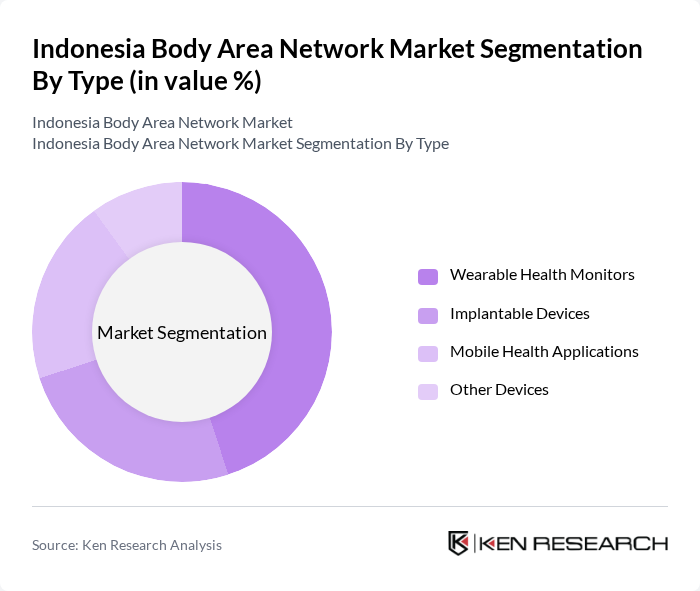
By Type:The Body Area Network market can be segmented into various types, including wearable health monitors, implantable devices, mobile health applications, and other devices. Among these, wearable health monitors are gaining significant traction due to their convenience and ability to provide real-time health data to users. The increasing focus on preventive healthcare and fitness tracking is driving the demand for these devices, making them the leading subsegment in the market.
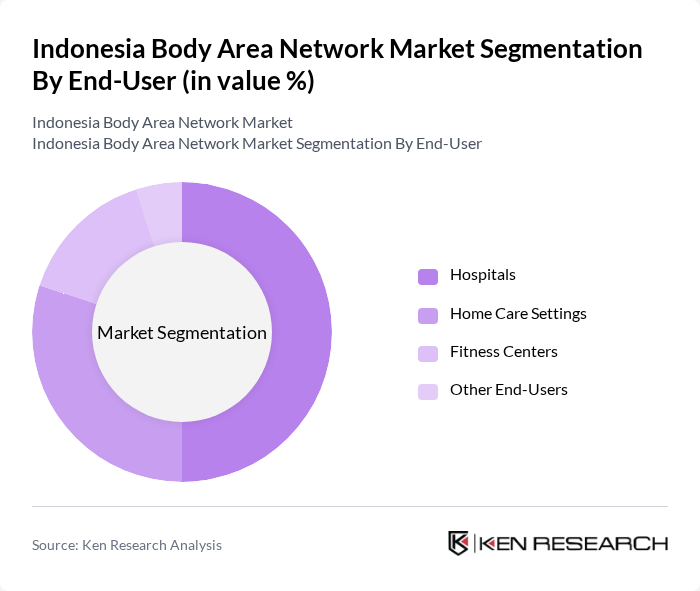
By End-User:The market is also segmented by end-users, which include hospitals, home care settings, fitness centers, and other end-users. Hospitals are the dominant end-user segment, driven by the increasing adoption of advanced healthcare technologies and the need for efficient patient monitoring systems. The growing trend of personalized healthcare solutions is further enhancing the demand for Body Area Network technologies in hospital settings.
The Indonesia Body Area Network market is characterized by a dynamic mix of regional and international players. Leading participants such as PT. Telekomunikasi Indonesia Tbk, PT. Medtronic Indonesia, PT. Philips Indonesia, PT. Samsung Electronics Indonesia, PT. Fitbit Indonesia, PT. Xiaomi Indonesia, PT. Apple Indonesia, PT. Huawei Technologies Indonesia, PT. Abbott Indonesia, PT. Johnson & Johnson Indonesia, PT. A&D Company, Limited, PT. Omron Healthcare Indonesia, PT. Garmin Indonesia, PT. Withings Indonesia, PT. AliveCor Indonesia contribute to innovation, geographic expansion, and service delivery in this space.
The future of the Body Area Network market in Indonesia appears promising, driven by technological innovations and increasing health awareness. As telehealth services expand, the integration of AI and IoT in health monitoring devices will likely enhance user experience and engagement. Additionally, the government's support for digital health initiatives is expected to foster a conducive environment for startups and established companies alike, paving the way for innovative solutions that cater to the evolving healthcare landscape in Indonesia.
| Segment | Sub-Segments |
|---|---|
| By Type | Wearable Health Monitors Implantable Devices Mobile Health Applications Other Devices |
| By End-User | Hospitals Home Care Settings Fitness Centers Other End-Users |
| By Application | Chronic Disease Management Fitness Tracking Emergency Response Other Applications |
| By Technology | Bluetooth Technology Zigbee Technology Wi-Fi Technology Other Technologies |
| By Distribution Channel | Online Retail Offline Retail Direct Sales Other Channels |
| By Region | Java Sumatra Bali Other Regions |
| By Policy Support | Government Subsidies Tax Incentives Research Grants Other Support Mechanisms |
| Scope Item/Segment | Sample Size | Target Respondent Profiles |
|---|---|---|
| Healthcare Providers | 100 | Doctors, Nurses, Health IT Managers |
| Wearable Device Users | 120 | Fitness Enthusiasts, Patients with Chronic Conditions |
| Health Insurance Companies | 80 | Product Managers, Underwriters |
| Technology Developers | 70 | Product Developers, R&D Managers |
| Regulatory Bodies | 50 | Policy Makers, Compliance Officers |
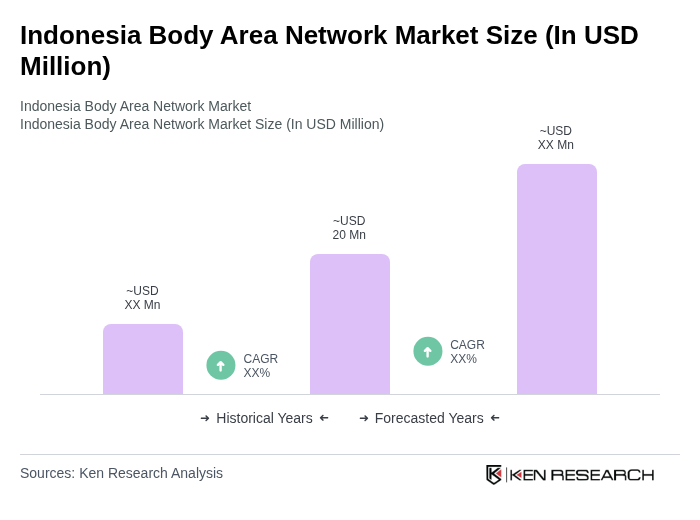
The Indonesia Body Area Network market is valued at approximately USD 20 million, reflecting a significant growth driven by the rising prevalence of chronic diseases and the increasing adoption of wearable health technologies among consumers.

What makes us stand out is that our consultants follow Robust, Refine and Result (RRR) methodology. Robust for clear definitions, approaches and sanity checking, Refine for differentiating respondents' facts and opinions, and Result for presenting data with story.

We have set a benchmark in the industry by offering our clients with syndicated and customized market research reports featuring coverage of entire market as well as meticulous research and analyst insights.

While we don't replace traditional research, we flip the method upside down. Our dual approach of Top Bottom & Bottom Top ensures quality deliverable by not just verifying company fundamentals but also looking at the sector and macroeconomic factors.

With one step in the future, our research team constantly tries to show you the bigger picture. We help with some of the tough questions you may encounter along the way: How is the industry positioned? Best marketing channel? KPI's of competitors? By aligning every element, we help maximize success.

Our report gives you instant access to the answers and sources that other companies might choose to hide. We elaborate each steps of research methodology we have used and showcase you the sample size to earn your trust.

If you need any support, we are here! We pride ourselves on universe strength, data quality, and quick, friendly, and professional service.













