About the Report
Base Year 2024Japan Cross Border Import E Commerce Market Overview
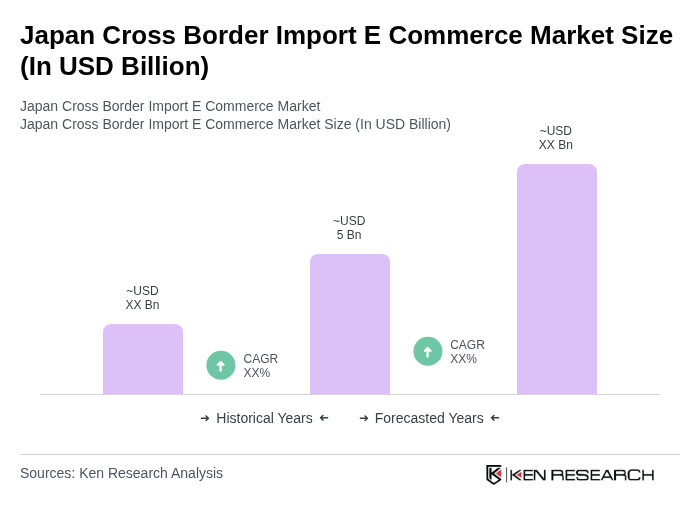
- The Japan Cross Border Import E Commerce Market is valued at USD 5 billion, based on a five-year historical analysis. This growth is primarily driven by the increasing adoption of online shopping, enhanced logistics capabilities, growing consumer preference for international brands, high internet penetration rates around 93-95%, and demand for diverse products like health and beauty items, fashion apparel, electronics, and gourmet food not readily available domestically. The market has seen a significant rise in cross-border transactions, fueled by the convenience of e-commerce platforms such as Amazon, eBay, and AliExpress, the availability of diverse product offerings, and the impact of COVID-19 which accelerated online shopping for overseas goods.
- Key regions in this market include East Japan, West Japan, and Central Japan, which dominate due to their advanced infrastructure, high internet penetration rates, and a tech-savvy population. These regions serve as major hubs for logistics and distribution, facilitating efficient cross-border trade and attracting international e-commerce businesses looking to tap into the Japanese market.
- The Customs Act, 1954 amended by the Ministry of Finance requires simplified customs clearance procedures for low-value goods under JPY 10,000, exempting them from formal entry declaration and duties to facilitate cross-border e-commerce imports. This binding instrument mandates electronic submission of manifests via the NACCS system, applies to parcels below the threshold with compliance through designated courier operators, and supports efficient processing for consumer access to foreign products.
Japan Cross Border Import E Commerce Market Segmentation
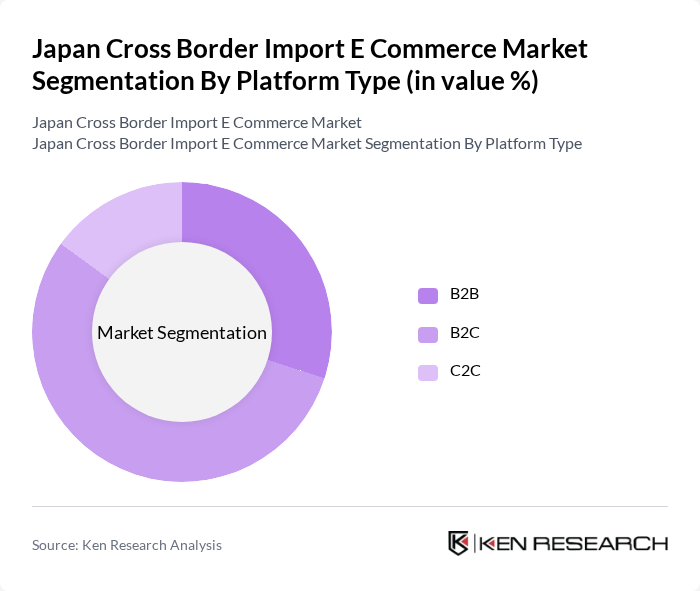
By Platform Type:The market is segmented into three primary platform types: B2B, B2C, and C2C. Among these, the B2C segment is the most dominant, driven by the increasing number of consumers shopping online for international products. The convenience of direct-to-consumer sales and the growing trust in online payment systems have significantly contributed to the B2C segment's growth. The B2B segment also shows promise, particularly as businesses seek to source products from international suppliers, while the C2C segment remains popular for second-hand goods and unique items.
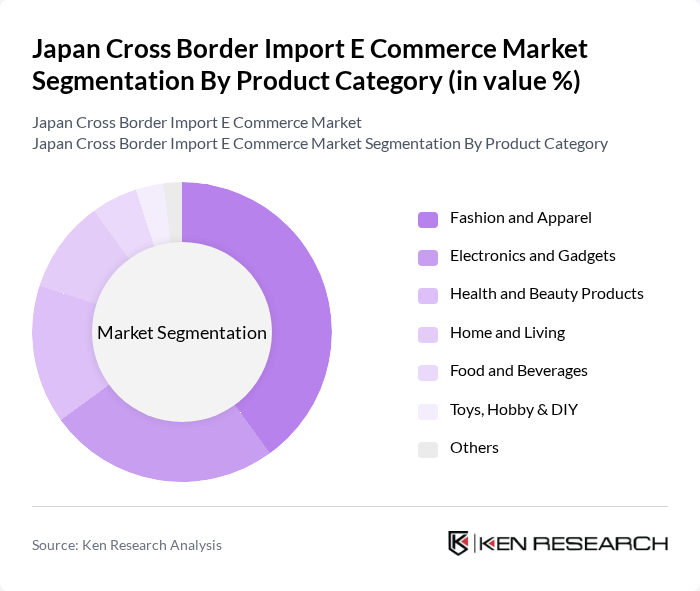
By Product Category:The market is further segmented into various product categories, including Fashion and Apparel, Electronics and Gadgets, Health and Beauty Products, Home and Living, Food and Beverages, Toys, Hobby & DIY, and Others. The Fashion and Apparel category leads the market, driven by the popularity of international brands and the growing trend of online shopping for clothing. Electronics and Gadgets also hold a significant share, as consumers increasingly seek the latest technology products from abroad. Other categories, such as Health and Beauty and Home and Living, are gaining traction as consumers become more comfortable purchasing these items online.
Japan Cross Border Import E Commerce Market Competitive Landscape
The Japan Cross Border Import E Commerce Market is characterized by a dynamic mix of regional and international players. Leading participants such as Rakuten, Inc., Amazon.com, Inc., ZOZO, Inc., Yahoo Japan Corporation, Mercari, Inc., Qoo10 Pte. Ltd., AliExpress, eBay, DMM.com, Ltd., Kakaku.com, Inc., YODOBASHI CAMERA CO., LTD., Apple Inc., Shopee, Temu, Tmall International contribute to innovation, geographic expansion, and service delivery in this space.
Japan Cross Border Import E Commerce Market Industry Analysis
Growth Drivers
- Increasing Internet Penetration:Japan's internet penetration rate reached 93% in future, with approximately 126 million users accessing online platforms. This widespread connectivity facilitates cross-border e-commerce, allowing consumers to explore international products easily. The growth of mobile internet usage, which accounted for 80% of total internet traffic, further enhances accessibility. As more consumers engage online, the demand for cross-border imports is expected to rise, driving market expansion significantly.
- Rising Consumer Demand for International Products:In future, Japanese consumers spent over ¥1.5 trillion (approximately $13.5 billion) on cross-border e-commerce, reflecting a growing preference for international brands. This trend is driven by the desire for unique products not available domestically, particularly in fashion, electronics, and health products. The increasing willingness to purchase from foreign retailers indicates a robust market potential, as consumers seek quality and variety in their shopping experiences.
- Enhanced Logistics and Delivery Services:The logistics sector in Japan has seen significant improvements, with the average delivery time for cross-border shipments reduced to 3-5 days in future. Companies like Yamato Transport and Sagawa Express have invested heavily in technology to streamline operations. This efficiency not only boosts customer satisfaction but also encourages more consumers to engage in cross-border shopping, as timely delivery becomes a key factor in purchasing decisions.
Market Challenges
- Complex Customs Regulations:Navigating Japan's customs regulations can be challenging for international sellers, with over 1,000 tariff lines subject to specific import restrictions. In future, the average customs clearance time was approximately 48 hours, which can deter potential sellers. Additionally, the need for compliance with various documentation requirements complicates the process, leading to delays and increased costs for businesses attempting to enter the market.
- High Competition from Local E Commerce Platforms:The Japanese e-commerce market is dominated by local giants like Rakuten and Amazon Japan, which collectively hold over 60% market share. These platforms offer extensive product ranges and localized services, making it difficult for international sellers to compete. In future, local platforms reported a combined revenue of ¥4 trillion (approximately $36 billion), highlighting the intense competition that foreign entrants must navigate to gain market traction.
Japan Cross Border Import E Commerce Market Future Outlook
The future of Japan's cross-border import e-commerce market appears promising, driven by technological advancements and evolving consumer preferences. As logistics continue to improve, and mobile commerce expands, more consumers are likely to engage in international shopping. Additionally, the increasing integration of AI and data analytics will enable businesses to tailor their offerings, enhancing customer experiences. This dynamic environment presents opportunities for growth, particularly for niche markets and innovative product categories that resonate with Japanese consumers.
Market Opportunities
- Expansion of Mobile Commerce:With mobile commerce projected to account for 70% of total e-commerce sales in Japan in future, businesses can leverage this trend to enhance their mobile platforms. Investing in user-friendly mobile applications and optimizing websites for mobile use can significantly increase customer engagement and sales, tapping into the growing base of mobile shoppers.
- Growth of Niche Markets:The demand for niche products, such as organic foods and eco-friendly goods, is on the rise, with sales in these categories increasing by 15% annually. By focusing on specialized offerings that cater to specific consumer interests, businesses can differentiate themselves in a competitive landscape, capturing the attention of discerning Japanese consumers seeking unique and sustainable options.
Scope of the Report
| Segment | Sub-Segments |
|---|---|
| By Platform Type | B2B B2C C2C |
| By Product Category | Fashion and Apparel Electronics and Gadgets Health and Beauty Products Home and Living Food and Beverages Toys, Hobby & DIY Others |
| By Source Country | China United States Other Countries |
| By Enterprise Size | Small and Medium Enterprises (SMEs) Large Enterprises |
| By Payment Method | Credit/Debit Cards Digital Wallets Bank Transfers Cash on Delivery Others |
| By Device Used | Mobile Devices Desktop Computers Tablets Others |
Key Target Audience
Investors and Venture Capitalist Firms
Government and Regulatory Bodies (e.g., Ministry of Economy, Trade and Industry; Japan External Trade Organization)
Logistics and Shipping Companies
E-commerce Platforms and Marketplaces
Payment Service Providers
Customs and Border Protection Agencies
Trade Associations and Chambers of Commerce
Importers and Exporters
Players Mentioned in the Report:
Rakuten, Inc.
Amazon.com, Inc.
ZOZO, Inc.
Yahoo Japan Corporation
Mercari, Inc.
Qoo10 Pte. Ltd.
AliExpress
eBay
DMM.com, Ltd.
Kakaku.com, Inc.
YODOBASHI CAMERA CO., LTD.
Apple Inc.
Shopee
Temu
Tmall International
Table of Contents
Market Assessment Phase
1. Executive Summary and Approach
2. Japan Cross Border Import E Commerce Market Overview
2.1 Key Insights and Strategic Recommendations
2.2 Japan Cross Border Import E Commerce Market Overview
2.3 Definition and Scope
2.4 Evolution of Market Ecosystem
2.5 Timeline of Key Regulatory Milestones
2.6 Value Chain & Stakeholder Mapping
2.7 Business Cycle Analysis
2.8 Policy & Incentive Landscape
3. Japan Cross Border Import E Commerce Market Analysis
3.1 Growth Drivers
3.1.1 Increasing Internet Penetration
3.1.2 Rising Consumer Demand for International Products
3.1.3 Enhanced Logistics and Delivery Services
3.1.4 Favorable Exchange Rates
3.2 Market Challenges
3.2.1 Complex Customs Regulations
3.2.2 High Competition from Local E Commerce Platforms
3.2.3 Language Barriers for International Sellers
3.2.4 Payment Processing Issues
3.3 Market Opportunities
3.3.1 Expansion of Mobile Commerce
3.3.2 Growth of Niche Markets
3.3.3 Partnerships with Local Influencers
3.3.4 Adoption of AI and Data Analytics
3.4 Market Trends
3.4.1 Shift Towards Sustainable Products
3.4.2 Increasing Use of Social Media for Shopping
3.4.3 Rise of Subscription-Based Models
3.4.4 Growth in Cross-Border Payment Solutions
3.5 Government Regulation
3.5.1 E Commerce Taxation Policies
3.5.2 Consumer Protection Laws
3.5.3 Data Privacy Regulations
3.5.4 Import Tariffs and Duties
4. SWOT Analysis
5. Stakeholder Analysis
6. Porter's Five Forces Analysis
7. Japan Cross Border Import E Commerce Market Market Size, 2019-2024
7.1 By Value
7.2 By Volume
7.3 By Average Selling Price
8. Japan Cross Border Import E Commerce Market Segmentation
8.1 By Platform Type
8.1.1 B2B
8.1.2 B2C
8.1.3 C2C
8.2 By Product Category
8.2.1 Fashion and Apparel
8.2.2 Electronics and Gadgets
8.2.3 Health and Beauty Products
8.2.4 Home and Living
8.2.5 Food and Beverages
8.2.6 Toys, Hobby & DIY
8.2.7 Others
8.3 By Source Country
8.3.1 China
8.3.2 United States
8.3.3 Other Countries
8.4 By Enterprise Size
8.4.1 Small and Medium Enterprises (SMEs)
8.4.2 Large Enterprises
8.5 By Payment Method
8.5.1 Credit/Debit Cards
8.5.2 Digital Wallets
8.5.3 Bank Transfers
8.5.4 Cash on Delivery
8.5.5 Others
8.6 By Device Used
8.6.1 Mobile Devices
8.6.2 Desktop Computers
8.6.3 Tablets
8.6.4 Others
9. Japan Cross Border Import E Commerce Market Competitive Analysis
9.1 Market Share of Key Players (Micro, Small, Medium, Large Enterprises)
9.2 Cross Comparison of Key Players
9.2.1 Company Name
9.2.2 Group Size (Large, Medium, or Small as per industry convention)
9.2.3 Customer Acquisition Cost
9.2.4 Average Order Value
9.2.5 Conversion Rate
9.2.6 Customer Retention Rate
9.2.7 Gross Merchandise Value (GMV)
9.2.8 Return on Advertising Spend
9.2.9 Net Promoter Score
9.2.10 Market Penetration Rate
9.3 SWOT Analysis of Top Players
9.4 Pricing Analysis (By Category and Price Point)
9.5 Detailed Profile of Major Companies
9.5.1 Rakuten, Inc.
9.5.2 Amazon.com, Inc.
9.5.3 ZOZO, Inc.
9.5.4 Yahoo Japan Corporation
9.5.5 Mercari, Inc.
9.5.6 Qoo10 Pte. Ltd.
9.5.7 AliExpress
9.5.8 eBay
9.5.9 DMM.com, Ltd.
9.5.10 Kakaku.com, Inc.
9.5.11 YODOBASHI CAMERA CO., LTD.
9.5.12 Apple Inc.
9.5.13 Shopee
9.5.14 Temu
9.5.15 Tmall International
10. Japan Cross Border Import E Commerce Market End-User Analysis
10.1 Procurement Behavior of Key Ministries
10.1.1 Ministry of Economy, Trade and Industry
10.1.2 Ministry of Internal Affairs and Communications
10.1.3 Ministry of Foreign Affairs
10.1.4 Others
10.2 Corporate Spend on Infrastructure & Energy
10.2.1 Investment in E Commerce Platforms
10.2.2 Spending on Logistics and Supply Chain
10.2.3 Technology Upgrades
10.2.4 Others
10.3 Pain Point Analysis by End-User Category
10.3.1 Consumer Electronics Buyers
10.3.2 Fashion Shoppers
10.3.3 Health and Beauty Consumers
10.3.4 Others
10.4 User Readiness for Adoption
10.4.1 Awareness of Cross Border E Commerce
10.4.2 Comfort with Online Payments
10.4.3 Familiarity with International Shipping
10.4.4 Others
10.5 Post-Deployment ROI and Use Case Expansion
10.5.1 Measurement of Customer Satisfaction
10.5.2 Analysis of Repeat Purchases
10.5.3 Evaluation of Market Expansion Opportunities
10.5.4 Others
11. Japan Cross Border Import E Commerce Market Future Size, 2025-2030
11.1 By Value
11.2 By Volume
11.3 By Average Selling Price
Go-To-Market Strategy Phase
12. Whitespace Analysis + Business Model Canvas
12.1 Market Gaps Identification
12.2 Business Model Development
13. Marketing and Positioning Recommendations
13.1 Branding Strategies
13.2 Product USPs
14. Distribution Plan
14.1 Urban Retail vs Rural NGO Tie-ups
15. Channel & Pricing Gaps
15.1 Underserved Routes
15.2 Pricing Bands
16. Unmet Demand & Latent Needs
16.1 Category Gaps
16.2 Consumer Segments
17. Customer Relationship
17.1 Loyalty Programs
17.2 After-sales Service
18. Value Proposition
18.1 Sustainability
18.2 Integrated Supply Chains
19. Key Activities
19.1 Regulatory Compliance
19.2 Branding
19.3 Distribution Setup
20. Entry Strategy Evaluation
20.1 Domestic Market Entry Strategy
20.1.1 Product Mix
20.1.2 Pricing Band
20.1.3 Packaging
20.2 Export Entry Strategy
20.2.1 Target Countries
20.2.2 Compliance Roadmap
21. Entry Mode Assessment
21.1 JV
21.2 Greenfield
21.3 M&A
21.4 Distributor Model
22. Capital and Timeline Estimation
22.1 Capital Requirements
22.2 Timelines
23. Control vs Risk Trade-Off
23.1 Ownership vs Partnerships
24. Profitability Outlook
24.1 Breakeven Analysis
24.2 Long-term Sustainability
25. Potential Partner List
25.1 Distributors
25.2 JVs
25.3 Acquisition Targets
26. Execution Roadmap
26.1 Phased Plan for Market Entry
26.1.1 Market Setup
26.1.2 Market Entry
26.1.3 Growth Acceleration
26.1.4 Scale & Stabilize
26.2 Key Activities and Milestones
26.2.1 Activity Planning
26.2.2 Milestone Tracking
27. Disclaimer
Research Methodology
Phase 1: Approach1
Desk Research
- Analysis of Japan's e-commerce market reports and trade statistics from government sources
- Review of industry publications and white papers focusing on cross-border e-commerce trends
- Examination of consumer behavior studies and demographic data relevant to online shopping in Japan
Primary Research
- Interviews with key stakeholders in logistics and supply chain management within the e-commerce sector
- Surveys targeting Japanese consumers who engage in cross-border online shopping
- Focus groups with e-commerce platform operators to understand operational challenges and opportunities
Validation & Triangulation
- Cross-validation of findings through comparison with international e-commerce growth patterns
- Triangulation of data from consumer surveys, expert interviews, and market reports
- Sanity checks conducted through expert panel discussions to ensure data reliability
Phase 2: Market Size Estimation1
Top-down Assessment
- Estimation of total e-commerce sales in Japan and identification of the cross-border segment
- Analysis of import data to determine the volume and value of goods purchased from overseas
- Incorporation of trends in consumer preferences and spending patterns on international products
Bottom-up Modeling
- Collection of sales data from major e-commerce platforms operating in Japan
- Estimation of average order values and frequency of cross-border purchases
- Calculation of market size based on product categories and consumer demographics
Forecasting & Scenario Analysis
- Development of growth projections based on historical data and market trends
- Scenario analysis considering potential regulatory changes and economic factors affecting cross-border trade
- Creation of multiple forecasts (baseline, optimistic, and pessimistic) through 2030
Phase 3: CATI Sample Composition1
| Scope Item/Segment | Sample Size | Target Respondent Profiles |
|---|---|---|
| Consumer Cross-Border Purchases | 120 | Online Shoppers, Frequent International Buyers |
| Logistics Providers for E-commerce | 85 | Logistics Managers, Operations Directors |
| Marketplaces and E-commerce Platforms | 75 | Product Managers, Business Development Executives |
| Regulatory and Compliance Experts | 45 | Legal Advisors, Compliance Officers |
| Consumer Behavior Analysts | 60 | Market Researchers, Data Analysts |
Frequently Asked Questions
What is the current value of the Japan Cross Border Import E Commerce Market?
The Japan Cross Border Import E Commerce Market is valued at approximately USD 5 billion, reflecting significant growth driven by increased online shopping, enhanced logistics, and consumer demand for international brands and diverse products.
What are the main drivers of growth in Japan's cross-border e-commerce market?
Which regions in Japan dominate the cross-border e-commerce market?
What are the customs regulations for low-value goods in Japan?
Other Regional/Country Reports
Other Adjacent Reports
Thailand International Shipping Market
Vietnam Digital Payments Market Size, Share & Forecast, By Product Type, Customer Segment & Distribution Channel, 2025–2032Kuwait Fashion Retail Market
Philippines Consumer Electronics Market Size, Share & Forecast, By Product Type, Price Tier & Distribution Channel, 2025–2032Philippines Health and Beauty Products Market
Egypt Food and Beverage Import Market
Global Mobile Commerce Market Outlook to 2030Nigeria Supply Chain Technology Market Size, Share & Forecast, By Solution Type, Deployment Model & End-Use Industry, 2025-2032Kuwait Online Marketplace Platforms Market
Why Buy From Us?

What makes us stand out is that our consultants follow Robust, Refine and Result (RRR) methodology. Robust for clear definitions, approaches and sanity checking, Refine for differentiating respondents' facts and opinions, and Result for presenting data with story.

We have set a benchmark in the industry by offering our clients with syndicated and customized market research reports featuring coverage of entire market as well as meticulous research and analyst insights.

While we don't replace traditional research, we flip the method upside down. Our dual approach of Top Bottom & Bottom Top ensures quality deliverable by not just verifying company fundamentals but also looking at the sector and macroeconomic factors.

With one step in the future, our research team constantly tries to show you the bigger picture. We help with some of the tough questions you may encounter along the way: How is the industry positioned? Best marketing channel? KPI's of competitors? By aligning every element, we help maximize success.

Our report gives you instant access to the answers and sources that other companies might choose to hide. We elaborate each steps of research methodology we have used and showcase you the sample size to earn your trust.

If you need any support, we are here! We pride ourselves on universe strength, data quality, and quick, friendly, and professional service.