














Region:Middle East
Author(s):Geetanshi
Product Code:KRAE00003
Pages:108
Published On:December 2025
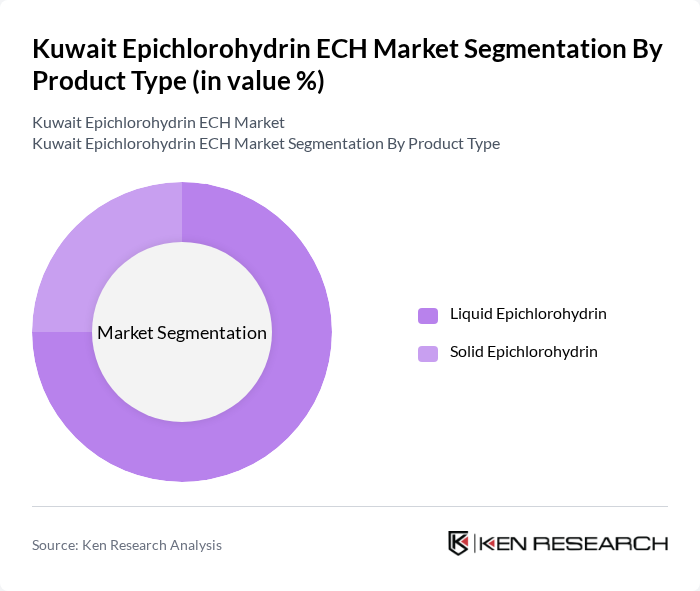
By Product Type:The market is segmented into two primary product types: Liquid Epichlorohydrin and Solid Epichlorohydrin. Liquid Epichlorohydrin is the dominant product type, accounting for a significant portion of the market due to its extensive use in the production of epoxy resins, which are widely utilized in various industries. Solid Epichlorohydrin, while less prevalent, serves niche applications that require specific properties not found in liquid forms.
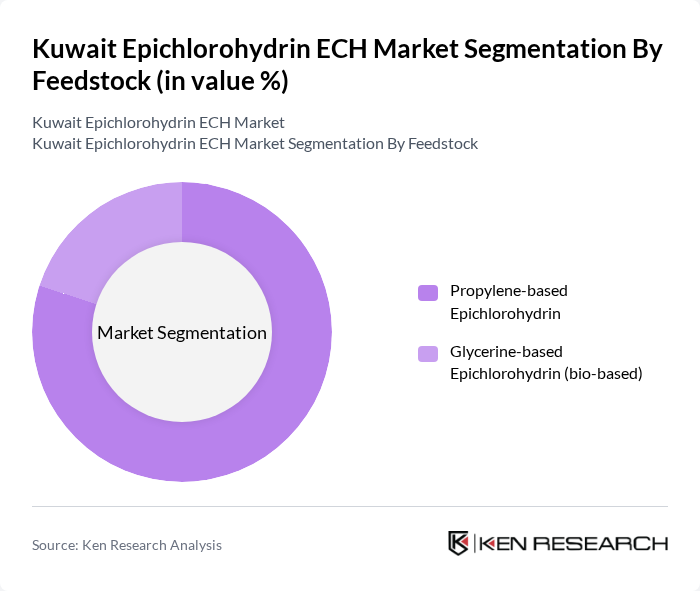
By Feedstock:The feedstock segment includes Propylene-based Epichlorohydrin and Glycerine-based Epichlorohydrin (bio-based). Propylene-based Epichlorohydrin is the leading feedstock due to its availability and cost-effectiveness, making it the preferred choice for most manufacturers. However, the bio-based segment is gaining significant traction as companies seek to align with sustainability initiatives and reduce their carbon footprint, with glycerin-derived epichlorohydrin emerging as a commercially viable alternative.
The Kuwait Epichlorohydrin ECH Market is characterized by a dynamic mix of regional and international players. Leading participants such as Kuwait Petroleum Corporation (KPC), Petrochemical Industries Company (PIC), Kuwait Chemical Industries Company (KCIC), Gulf Epoxy Resins Company, National Petrochemical Company (NPC), Al-Khaleej Trading & Contracting Company, Agility Public Warehousing Company (Chemical Distribution Division), Al-Sayer Group (Chemical Distribution), Al-Fouzan Trading & Contracting Company, Gulf Chemical Industries, Al-Bahar Group, Al-Mansour Group contribute to innovation, geographic expansion, and service delivery in this space.
The future of the Kuwait epichlorohydrin market appears promising, driven by technological advancements and a growing emphasis on sustainability. As manufacturers adopt innovative production techniques, efficiency is expected to improve, reducing costs and environmental impact. Additionally, the increasing focus on renewable energy applications will likely create new avenues for epichlorohydrin usage, particularly in the development of bio-based products, aligning with global sustainability trends and enhancing market resilience.
| Segment | Sub-Segments |
|---|---|
| By Product Type | Liquid Epichlorohydrin (75% market share) Solid Epichlorohydrin |
| By Feedstock | Propylene-based Epichlorohydrin Glycerine-based Epichlorohydrin (bio-based) |
| By Application | Epoxy Resins (86.5% of global consumption) Synthetic Glycerine Water Treatment Chemicals Pharmaceutical Intermediates Adhesives Coatings Elastomers Textiles |
| By End-User Industry | Construction & Infrastructure Automotive & Transportation Electronics & Electrical Paints & Coatings Healthcare & Pharmaceuticals Oil & Gas |
| By Distribution Channel | Direct Sales to End-Users Chemical Distributors & Traders Online B2B Platforms |
| By Geography (Kuwait) | Industrial Zones (Shuwaikh, Subiya) Free Trade Zones Port-based Distribution |
| Scope Item/Segment | Sample Size | Target Respondent Profiles |
|---|---|---|
| Adhesives and Sealants Manufacturers | 45 | Production Managers, R&D Directors |
| Coatings and Paints Producers | 38 | Quality Control Managers, Product Development Heads |
| Plastics and Resins Companies | 42 | Procurement Managers, Operations Directors |
| Pharmaceuticals and Agrochemicals Sector | 35 | Regulatory Affairs Specialists, Supply Chain Managers |
| Research Institutions and Universities | 28 | Academic Researchers, Industry Analysts |
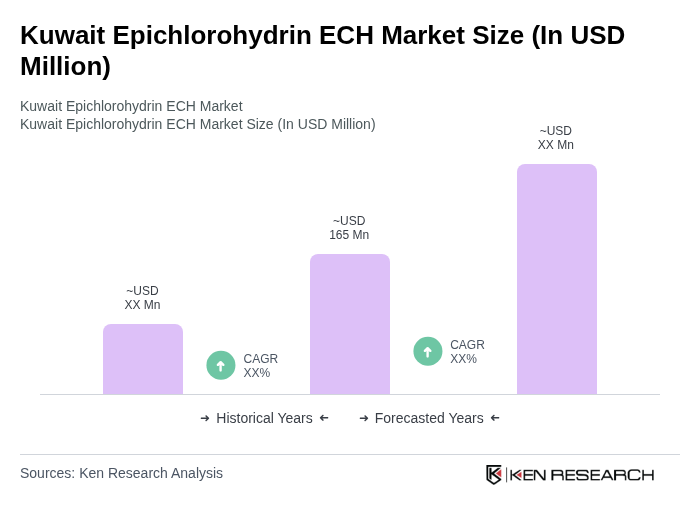
The Kuwait Epichlorohydrin ECH Market is valued at approximately USD 165 million, reflecting a five-year historical analysis. This valuation is primarily driven by the increasing demand for epoxy resins across various industries, including construction and automotive.

What makes us stand out is that our consultants follow Robust, Refine and Result (RRR) methodology. Robust for clear definitions, approaches and sanity checking, Refine for differentiating respondents' facts and opinions, and Result for presenting data with story.

We have set a benchmark in the industry by offering our clients with syndicated and customized market research reports featuring coverage of entire market as well as meticulous research and analyst insights.

While we don't replace traditional research, we flip the method upside down. Our dual approach of Top Bottom & Bottom Top ensures quality deliverable by not just verifying company fundamentals but also looking at the sector and macroeconomic factors.

With one step in the future, our research team constantly tries to show you the bigger picture. We help with some of the tough questions you may encounter along the way: How is the industry positioned? Best marketing channel? KPI's of competitors? By aligning every element, we help maximize success.

Our report gives you instant access to the answers and sources that other companies might choose to hide. We elaborate each steps of research methodology we have used and showcase you the sample size to earn your trust.

If you need any support, we are here! We pride ourselves on universe strength, data quality, and quick, friendly, and professional service.