Region:Middle East
Author(s):Rebecca
Product Code:KRAC1655
Pages:82
Published On:January 2026
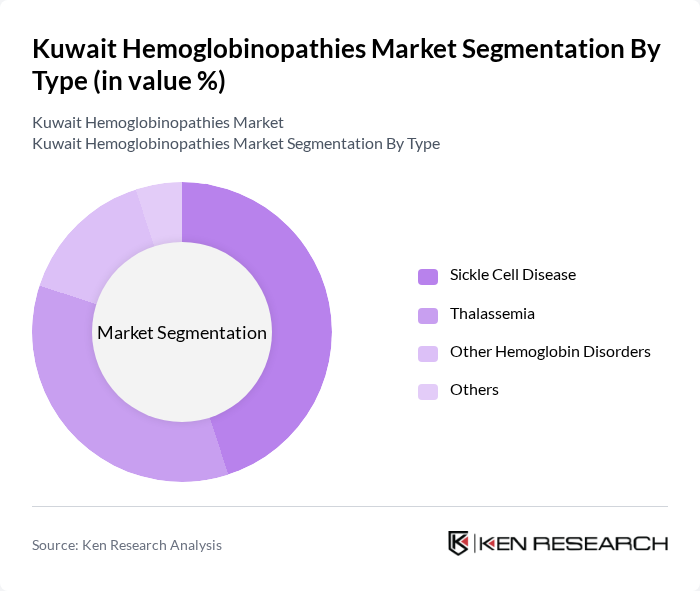
By Type:The market is segmented into various types of hemoglobin disorders, including Sickle Cell Disease, Thalassemia, Other Hemoglobin Disorders, and Others. Sickle Cell Disease and Thalassemia are the most prevalent, driven by genetic factors and the high incidence of these conditions in the region. The demand for effective treatment options and management strategies for these disorders is significant, leading to a robust market presence.
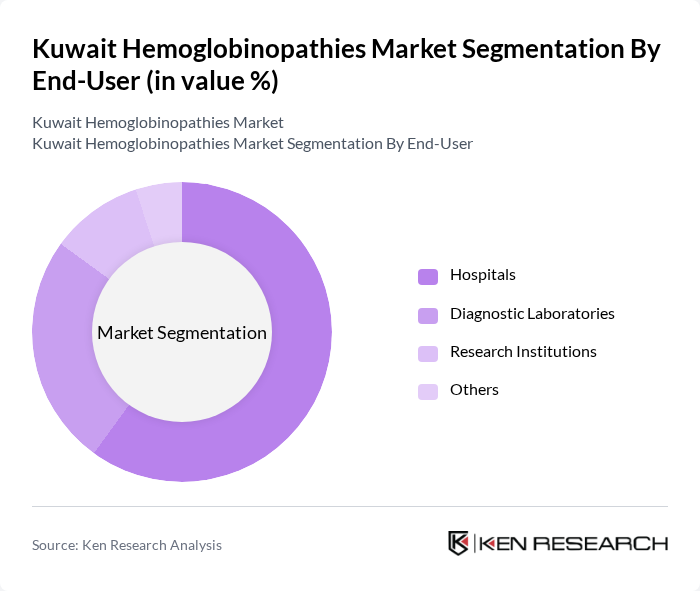
By End-User:The market is categorized based on end-users, including Hospitals, Diagnostic Laboratories, Research Institutions, and Others. Hospitals are the leading end-users due to their comprehensive treatment capabilities and access to advanced diagnostic tools. The increasing number of specialized centers for hemoglobin disorders further supports the growth of this segment.
The Kuwait Hemoglobinopathies Market is characterized by a dynamic mix of regional and international players. Leading participants such as Kuwait Cancer Control Center, Al-Diwan Al-Amiri, Kuwait Institute for Scientific Research, Gulf Pharmaceutical Industries, Kuwait Medical Association, Al-Sabah Medical Center, Kuwait University Health Sciences Center, National Guard Health Affairs, Ministry of Health, Kuwait, Kuwait Red Crescent Society, Al-Jahra Hospital, Mubarak Al-Kabeer Hospital, Farwaniya Hospital, Jaber Al-Ahmad Hospital, Adan Hospital contribute to innovation, geographic expansion, and service delivery in this space.
The future of the Kuwait hemoglobinopathies market appears promising, driven by ongoing investments in healthcare infrastructure and technology. The integration of advanced diagnostic tools and telemedicine is expected to enhance patient access to specialized care. Additionally, the expansion of public-private partnerships will likely improve service delivery for hemoglobinopathy patients. As awareness and education initiatives grow, early diagnosis and treatment will become more prevalent, ultimately leading to better health outcomes for affected individuals.
| Segment | Sub-Segments |
|---|---|
| By Type | Sickle Cell Disease Thalassemia Other Hemoglobin Disorders Others |
| By End-User | Hospitals Diagnostic Laboratories Research Institutions Others |
| By Age Group | Pediatric Adult Geriatric Others |
| By Treatment Type | Blood Transfusion Bone Marrow Transplant Gene Therapy Others |
| By Diagnostic Method | Hemoglobin Electrophoresis Genetic Testing Complete Blood Count (CBC) Others |
| By Healthcare Setting | Public Healthcare Facilities Private Healthcare Facilities Home Healthcare Others |
| By Region | Capital Governorate Hawalli Governorate Al Ahmadi Governorate Others |
| Scope Item/Segment | Sample Size | Target Respondent Profiles |
|---|---|---|
| Healthcare Providers | 100 | Hematologists, General Practitioners |
| Patient Advocacy Groups | 75 | Patient Representatives, Support Group Leaders |
| Pharmaceutical Stakeholders | 60 | Pharma Executives, Market Access Managers |
| Government Health Officials | 50 | Policy Makers, Health Program Directors |
| Research Institutions | 40 | Medical Researchers, Geneticists |
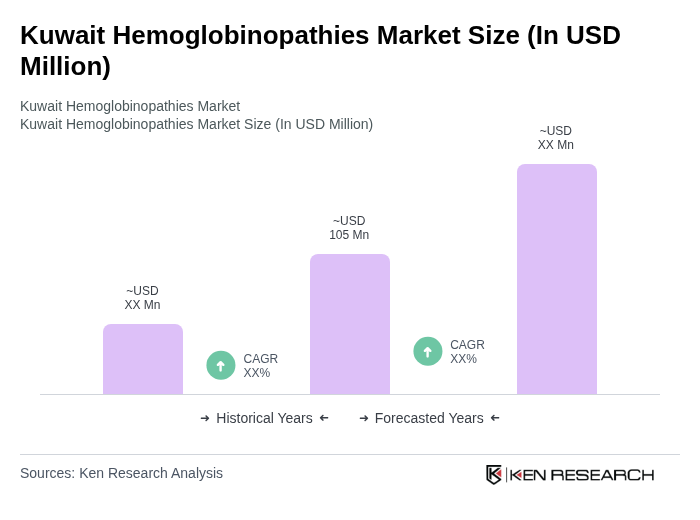
The Kuwait Hemoglobinopathies Market is valued at approximately USD 105 million, reflecting a five-year historical analysis. This growth is attributed to increased awareness of genetic blood disorders and advancements in diagnostic technologies.

What makes us stand out is that our consultants follow Robust, Refine and Result (RRR) methodology. Robust for clear definitions, approaches and sanity checking, Refine for differentiating respondents' facts and opinions, and Result for presenting data with story.

We have set a benchmark in the industry by offering our clients with syndicated and customized market research reports featuring coverage of entire market as well as meticulous research and analyst insights.

While we don't replace traditional research, we flip the method upside down. Our dual approach of Top Bottom & Bottom Top ensures quality deliverable by not just verifying company fundamentals but also looking at the sector and macroeconomic factors.

With one step in the future, our research team constantly tries to show you the bigger picture. We help with some of the tough questions you may encounter along the way: How is the industry positioned? Best marketing channel? KPI's of competitors? By aligning every element, we help maximize success.

Our report gives you instant access to the answers and sources that other companies might choose to hide. We elaborate each steps of research methodology we have used and showcase you the sample size to earn your trust.

If you need any support, we are here! We pride ourselves on universe strength, data quality, and quick, friendly, and professional service.













