Region:Middle East
Author(s):Geetanshi
Product Code:KRAC3825
Pages:80
Published On:October 2025
By Type:
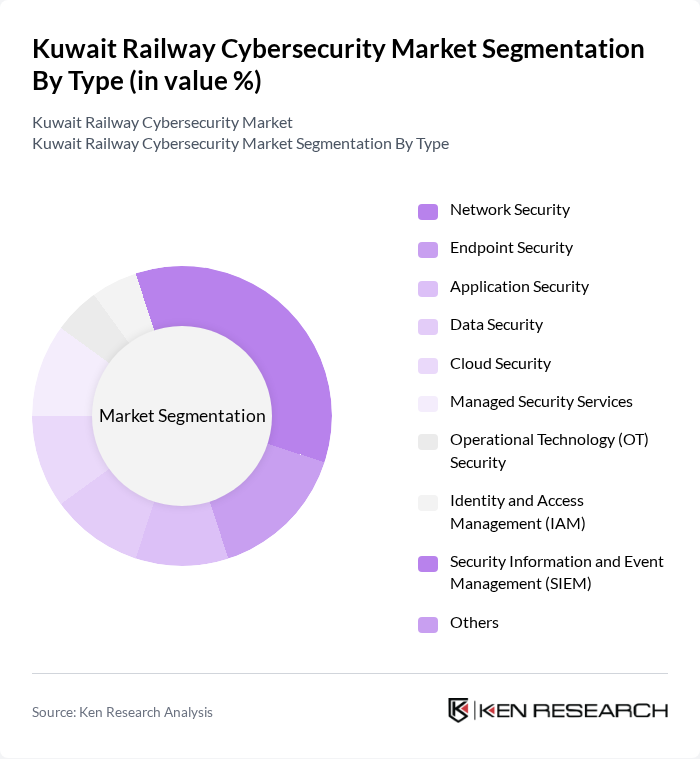
The market segmentation by type includes Network Security, Endpoint Security, Application Security, Data Security, Cloud Security, Managed Security Services, Operational Technology (OT) Security, Identity and Access Management (IAM), Security Information and Event Management (SIEM), and Others. Among these,Network Securityis the leading subsegment, driven by the increasing need to protect data and communication networks from cyber threats. The surge in cyberattacks targeting railway systems and the integration of IoT devices have heightened the demand for robust network security solutions, making it a priority for railway operators.
By End-User:
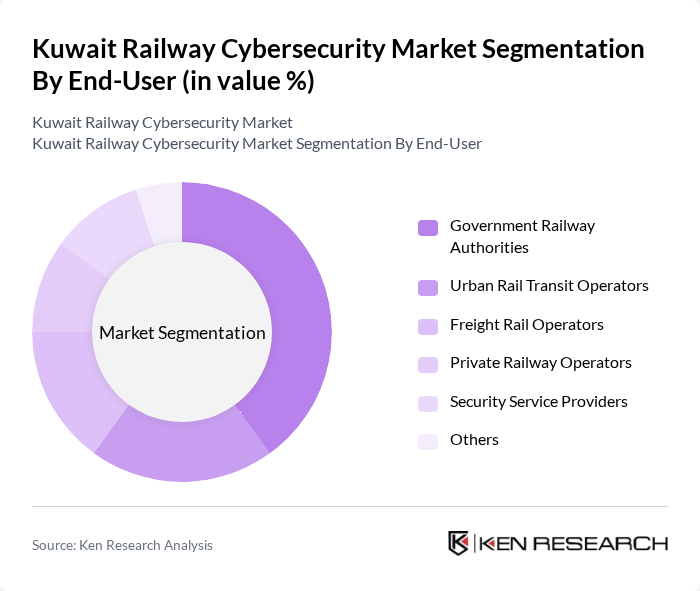
The end-user segmentation includes Government Railway Authorities, Urban Rail Transit Operators, Freight Rail Operators, Private Railway Operators, Security Service Providers, and Others.Government Railway Authoritiesdominate this segment due to their significant investments in cybersecurity to protect national infrastructure. The increasing focus on public safety, regulatory compliance, and the adoption of advanced security frameworks have led to heightened spending on cybersecurity solutions by government entities.
The Kuwait Railway Cybersecurity Market is characterized by a dynamic mix of regional and international players. Leading participants such as Cisco Systems, Inc., Palo Alto Networks, Inc., Fortinet, Inc., Check Point Software Technologies Ltd., IBM Corporation, McAfee Corp., Trellix (formerly FireEye, Inc. and McAfee Enterprise), Trend Micro Incorporated, Siemens AG, Thales Group, Honeywell International Inc., BAE Systems plc, Kaspersky Lab, Alstom SA, Hitachi Rail Limited, Wabtec Corporation, Huawei Technologies Co., Ltd., Bombardier Inc., Airbus S.A.S. contribute to innovation, geographic expansion, and service delivery in this space.
The future of the Kuwait railway cybersecurity market appears promising, driven by increasing government initiatives and technological advancements. As the railway sector modernizes, the demand for advanced cybersecurity solutions will rise, particularly in response to the growing integration of IoT devices. Additionally, public-private partnerships are expected to play a crucial role in enhancing cybersecurity frameworks, fostering collaboration among stakeholders to address emerging threats effectively and ensure the safety of railway operations.
| Segment | Sub-Segments |
|---|---|
| By Type | Network Security Endpoint Security Application Security Data Security Cloud Security Managed Security Services Operational Technology (OT) Security Identity and Access Management (IAM) Security Information and Event Management (SIEM) Others |
| By End-User | Government Railway Authorities Urban Rail Transit Operators Freight Rail Operators Private Railway Operators Security Service Providers Others |
| By Component | Hardware Software Services Others |
| By Application | Threat Detection & Prevention Incident Response & Recovery Risk & Vulnerability Management Compliance & Audit Management Network Monitoring Others |
| By Deployment Mode | On-Premises Cloud-Based Hybrid Others |
| By Sales Channel | Direct Sales Distributors Online Sales System Integrators Others |
| By Policy Support | Government Subsidies Tax Incentives Grants for Cybersecurity Initiatives Regulatory Mandates Others |
| Scope Item/Segment | Sample Size | Target Respondent Profiles |
|---|---|---|
| Railway Cybersecurity Solutions | 60 | IT Security Managers, Cybersecurity Analysts |
| Government Regulatory Bodies | 40 | Policy Makers, Regulatory Compliance Officers |
| Railway Operations Management | 50 | Operations Managers, Safety Officers |
| Cybersecurity Technology Providers | 50 | Product Managers, Sales Directors |
| Consulting Firms Specializing in Cybersecurity | 40 | Consultants, Industry Experts |
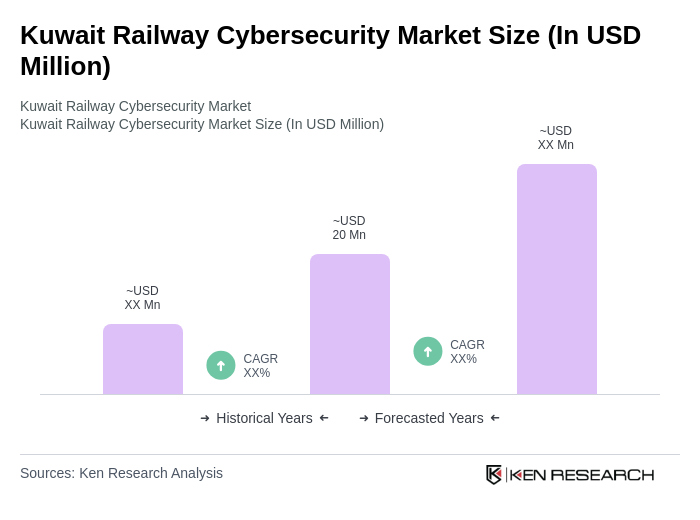
The Kuwait Railway Cybersecurity Market is valued at approximately USD 20 million, based on a five-year historical analysis. This valuation reflects Kuwait's share within the Middle East cybersecurity sector and the early development stage of its railway infrastructure.

What makes us stand out is that our consultants follow Robust, Refine and Result (RRR) methodology. Robust for clear definitions, approaches and sanity checking, Refine for differentiating respondents' facts and opinions, and Result for presenting data with story.

We have set a benchmark in the industry by offering our clients with syndicated and customized market research reports featuring coverage of entire market as well as meticulous research and analyst insights.

While we don't replace traditional research, we flip the method upside down. Our dual approach of Top Bottom & Bottom Top ensures quality deliverable by not just verifying company fundamentals but also looking at the sector and macroeconomic factors.

With one step in the future, our research team constantly tries to show you the bigger picture. We help with some of the tough questions you may encounter along the way: How is the industry positioned? Best marketing channel? KPI's of competitors? By aligning every element, we help maximize success.

Our report gives you instant access to the answers and sources that other companies might choose to hide. We elaborate each steps of research methodology we have used and showcase you the sample size to earn your trust.

If you need any support, we are here! We pride ourselves on universe strength, data quality, and quick, friendly, and professional service.













