Region:Middle East
Author(s):Rebecca
Product Code:KRAB7007
Pages:89
Published On:October 2025
By Type:The market is segmented into various types of sensors and devices that enhance cargo visibility. The primary subsegments include Temperature Sensors, Humidity Sensors, GPS Tracking Devices, Shock Sensors, RFID Tags, Camera Systems, and Others. Each of these technologies plays a crucial role in monitoring the conditions and location of cargo during transit.
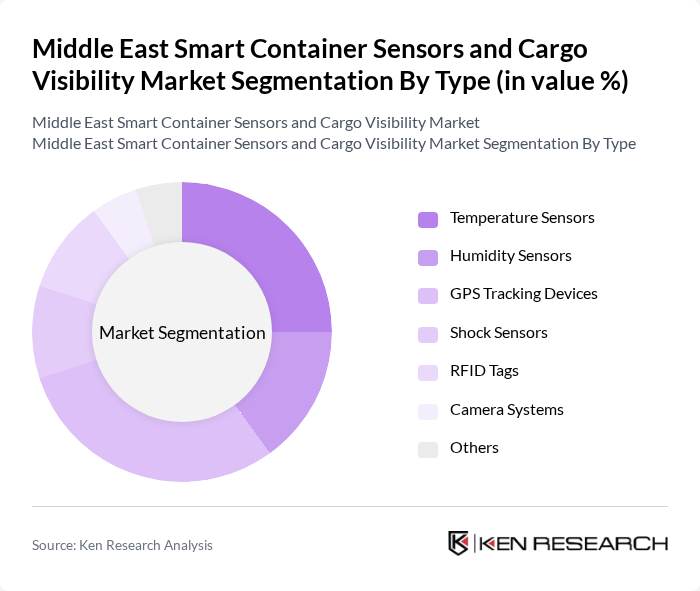
The GPS Tracking Devices subsegment is currently dominating the market due to their critical role in providing real-time location data, which is essential for logistics and supply chain management. The increasing need for transparency and efficiency in cargo transport has led to a surge in demand for GPS technology. Additionally, advancements in satellite technology and mobile connectivity have made GPS devices more reliable and accessible, further driving their adoption in the region.
By End-User:The market is segmented by end-users, including Shipping Companies, Freight Forwarders, Logistics Providers, Retailers, Manufacturers, Government Agencies, and Others. Each of these end-users has unique requirements for cargo visibility and monitoring, influencing their adoption of smart container technologies.
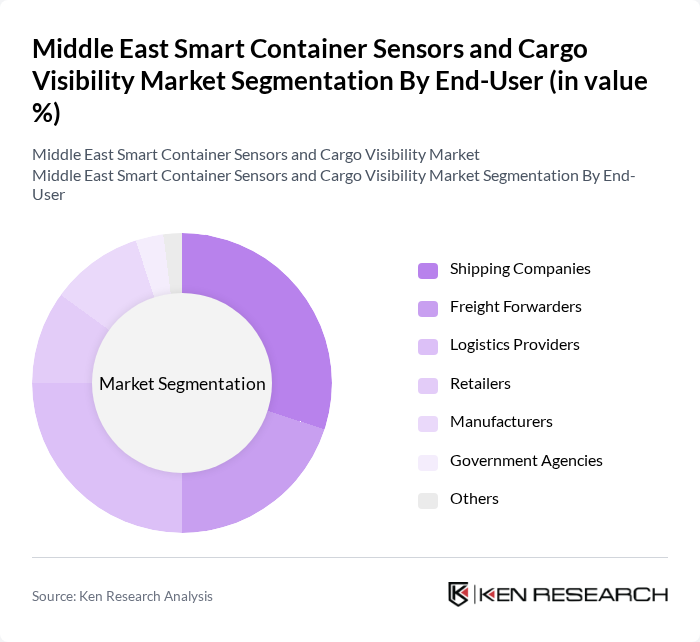
Shipping Companies are the leading end-users in the market, driven by their need for efficient cargo management and tracking solutions. The increasing volume of international trade and the complexity of global supply chains have heightened the demand for advanced tracking technologies. Shipping companies are investing in smart container solutions to enhance operational efficiency, reduce costs, and improve customer satisfaction.
The Middle East Smart Container Sensors and Cargo Visibility Market is characterized by a dynamic mix of regional and international players. Leading participants such as Maersk Line, DP World, Hapag-Lloyd, CMA CGM, ZIM Integrated Shipping Services, Mediterranean Shipping Company (MSC), Kuehne + Nagel, DB Schenker, DSV Panalpina, XPO Logistics, FedEx, UPS, Agility Logistics, Sinotrans Limited, Bolloré Logistics contribute to innovation, geographic expansion, and service delivery in this space.
The future of the Middle East smart container sensors and cargo visibility market appears promising, driven by technological advancements and increasing demand for efficient logistics solutions. As companies continue to prioritize supply chain transparency and real-time tracking, the integration of AI and IoT technologies will become more prevalent. Additionally, government initiatives aimed at promoting smart logistics will further enhance the adoption of innovative solutions, positioning the region as a leader in smart logistics advancements in future.
| Segment | Sub-Segments |
|---|---|
| By Type | Temperature Sensors Humidity Sensors GPS Tracking Devices Shock Sensors RFID Tags Camera Systems Others |
| By End-User | Shipping Companies Freight Forwarders Logistics Providers Retailers Manufacturers Government Agencies Others |
| By Application | Cold Chain Logistics Hazardous Material Transport General Cargo Transport E-commerce Deliveries Port Operations Others |
| By Distribution Channel | Direct Sales Online Sales Distributors Retail Outlets Others |
| By Region | GCC Countries Levant Region North Africa Others |
| By Payload Capacity | Less than 10 Tons 20 Tons 30 Tons More than 30 Tons Others |
| By Pricing Strategy | Premium Pricing Competitive Pricing Value-Based Pricing Others |
| Scope Item/Segment | Sample Size | Target Respondent Profiles |
|---|---|---|
| Shipping and Freight Forwarding | 150 | Logistics Managers, Operations Directors |
| Retail Supply Chain Management | 100 | Supply Chain Executives, Inventory Managers |
| Pharmaceutical Logistics | 80 | Quality Assurance Managers, Compliance Officers |
| Automotive Supply Chain | 70 | Procurement Managers, Warehouse Supervisors |
| Technology Providers for Cargo Tracking | 60 | Product Managers, Business Development Executives |
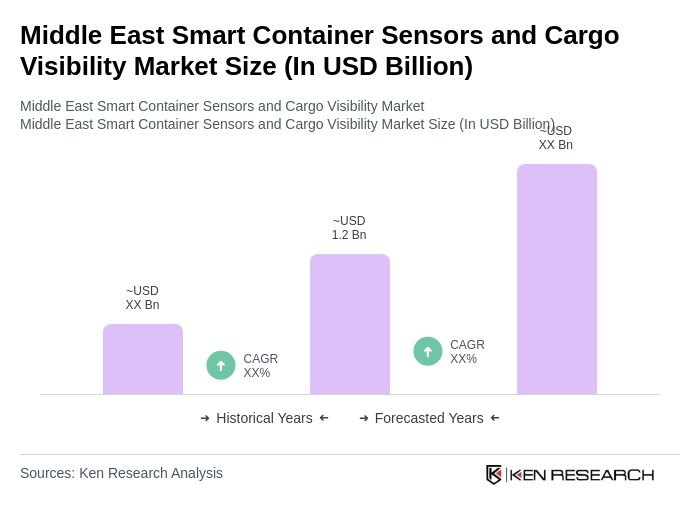
The Middle East Smart Container Sensors and Cargo Visibility Market is valued at approximately USD 1.2 billion, driven by the increasing demand for real-time cargo tracking and monitoring, which enhances supply chain efficiency and reduces losses.

What makes us stand out is that our consultants follow Robust, Refine and Result (RRR) methodology. Robust for clear definitions, approaches and sanity checking, Refine for differentiating respondents' facts and opinions, and Result for presenting data with story.

We have set a benchmark in the industry by offering our clients with syndicated and customized market research reports featuring coverage of entire market as well as meticulous research and analyst insights.

While we don't replace traditional research, we flip the method upside down. Our dual approach of Top Bottom & Bottom Top ensures quality deliverable by not just verifying company fundamentals but also looking at the sector and macroeconomic factors.

With one step in the future, our research team constantly tries to show you the bigger picture. We help with some of the tough questions you may encounter along the way: How is the industry positioned? Best marketing channel? KPI's of competitors? By aligning every element, we help maximize success.

Our report gives you instant access to the answers and sources that other companies might choose to hide. We elaborate each steps of research methodology we have used and showcase you the sample size to earn your trust.

If you need any support, we are here! We pride ourselves on universe strength, data quality, and quick, friendly, and professional service.













