About the Report
Base Year 2024New Zealand Graphics Card Market Overview
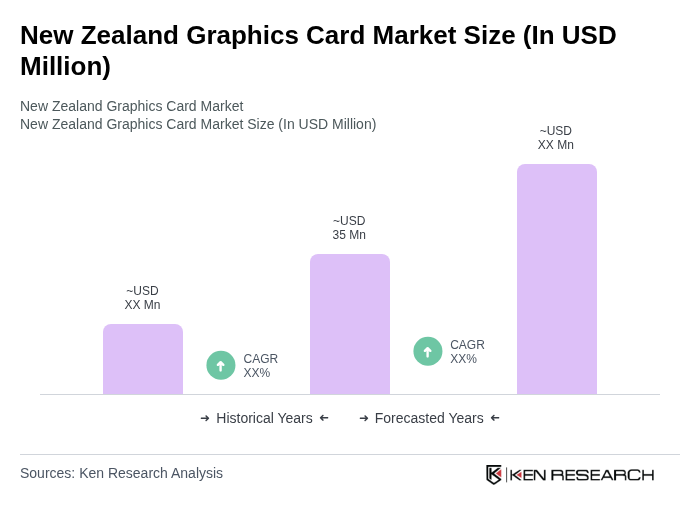
- The New Zealand Graphics Card Market is valued at USD 35 million, based on a five-year historical analysis. This growth is primarily driven by the increasing demand for high-performance computing in gaming, graphic design, and video editing sectors. The rise in eSports and online gaming has significantly contributed to the market's expansion, as consumers seek advanced graphics capabilities for an enhanced experience.
- Auckland and Wellington are the dominant cities in the New Zealand Graphics Card Market, primarily due to their robust technology infrastructure and a high concentration of gaming and tech enthusiasts. These cities host numerous gaming events and tech expos, fostering a vibrant community that drives demand for advanced graphics solutions.
- The Energy Efficiency (Standby Power and Networked Equipment) Regulations 2023 issued by the Ministry of Business, Innovation and Employment (MBIE) promote energy efficiency in electronic devices, including graphics cards. This initiative mandates that all graphics cards sold in the country meet specific energy consumption standards under MEPS (Minimum Energy Performance Standards), requiring compliance testing for power usage thresholds below 0.5W in standby mode and labelling for operational efficiency, aiming to reduce the environmental impact of electronic waste and promote sustainable technology practices.
New Zealand Graphics Card Market Segmentation
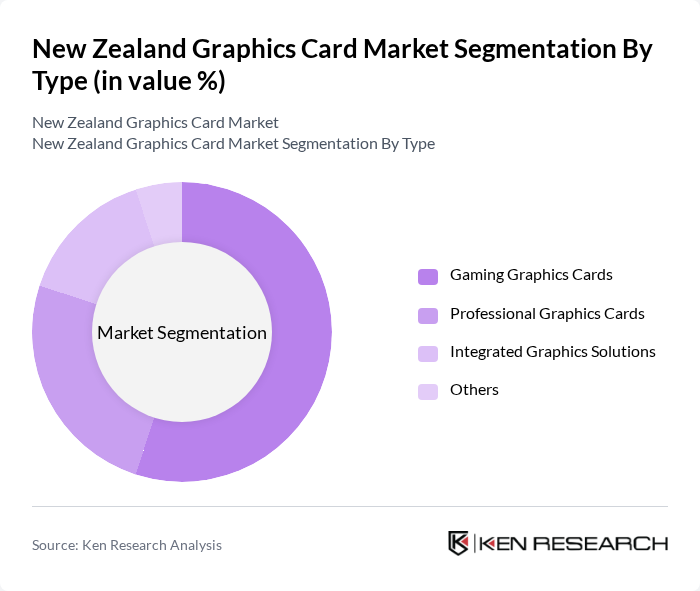
By Type:The market is segmented into various types of graphics cards, including Gaming Graphics Cards, Professional Graphics Cards, Integrated Graphics Solutions, and Others. Gaming Graphics Cards dominate the market due to the increasing popularity of gaming and the demand for high-performance hardware. The rise of competitive gaming and streaming has led to a surge in consumer interest in powerful graphics solutions that enhance gaming experiences. Professional Graphics Cards are also significant, catering to industries such as graphic design and video editing, where high-quality visuals are essential.
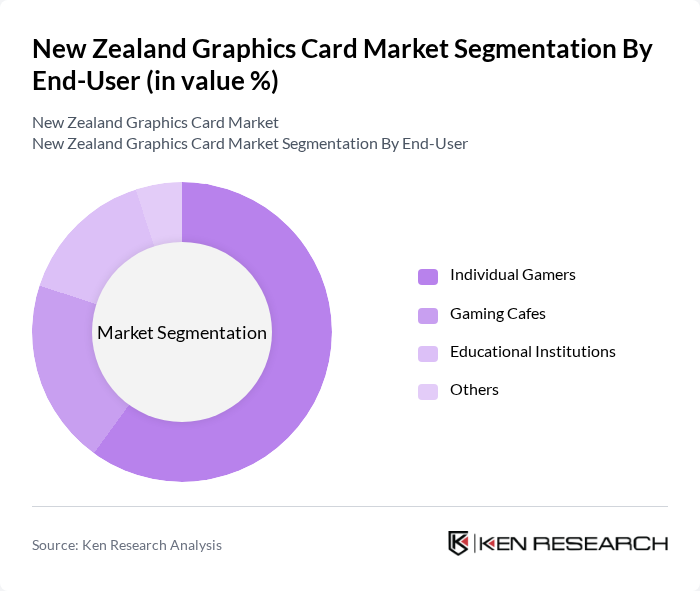
By End-User:The end-user segmentation includes Individual Gamers, Gaming Cafes, Educational Institutions, and Others. Individual Gamers represent the largest segment, driven by the growing gaming culture and the increasing number of gamers seeking high-performance graphics for immersive experiences. Gaming Cafes also contribute significantly, as they provide access to advanced gaming setups for users who may not own high-end hardware. Educational Institutions are increasingly adopting graphics cards for design and engineering programs, further expanding the market.
New Zealand Graphics Card Market Competitive Landscape
The New Zealand Graphics Card Market is characterized by a dynamic mix of regional and international players. Leading participants such as NVIDIA Corporation, AMD (Advanced Micro Devices), Intel Corporation, ASUS, MSI (Micro-Star International), Gigabyte Technology, EVGA Corporation, Zotac, PNY Technologies, Sapphire Technology, Palit Microsystems, XFX, Colorful Technology, Inno3D, PowerColor contribute to innovation, geographic expansion, and service delivery in this space.
New Zealand Graphics Card Market Industry Analysis
Growth Drivers
- Increasing Demand for Gaming:The gaming industry in New Zealand is projected to generate approximately NZD 1.5 billion in revenue in the future, driven by a growing base of gamers, which reached 1.8 million in the future. This surge in gaming enthusiasts is fueling the demand for high-performance graphics cards, as gamers seek enhanced visual experiences and faster processing capabilities. The rise of competitive gaming and the popularity of gaming consoles further contribute to this demand, creating a robust market for graphics card manufacturers.
- Rise in Cryptocurrency Mining Activities:New Zealand's cryptocurrency mining sector has seen significant growth, with an estimated 12,000 active miners in the future. The demand for powerful graphics cards is driven by the need for efficient mining operations, particularly for cryptocurrencies like Ethereum. As the price of Bitcoin and Ethereum fluctuates, miners are investing in high-performance graphics cards, which are essential for maximizing mining efficiency and profitability, thus bolstering the graphics card market.
- Advancements in Graphics Technology:The New Zealand graphics card market is benefiting from rapid advancements in technology, with companies investing over NZD 600 million in R&D in the future. Innovations such as ray tracing and AI-enhanced graphics are becoming standard features in new graphics cards, attracting consumers looking for cutting-edge performance. This technological evolution not only enhances gaming experiences but also supports applications in fields like AI and machine learning, further driving market growth.
Market Challenges
- Supply Chain Disruptions:The New Zealand graphics card market faces significant challenges due to ongoing supply chain disruptions, which have resulted in delays and increased costs. In the future, the average lead time for graphics card shipments increased by 40%, impacting availability. These disruptions are primarily caused by global semiconductor shortages and logistical issues, which hinder manufacturers' ability to meet the rising demand for graphics cards in the gaming and cryptocurrency sectors.
- High Import Tariffs and Taxes:Import tariffs on electronic components in New Zealand can reach up to 18%, significantly affecting the cost structure for graphics card manufacturers. In the future, these tariffs contributed to a 25% increase in retail prices for imported graphics cards. This financial burden can deter consumers from purchasing high-end graphics cards, limiting market growth and pushing potential buyers towards lower-cost alternatives, thereby impacting overall sales.
New Zealand Graphics Card Market Future Outlook
The New Zealand graphics card market is poised for continued growth, driven by technological advancements and increasing consumer demand for high-performance computing. As cloud gaming and virtual reality applications gain traction, the need for powerful graphics solutions will intensify. Additionally, manufacturers are likely to focus on sustainability, developing eco-friendly graphics solutions to meet consumer preferences. The collaboration between tech companies and gaming developers will further enhance product offerings, ensuring a dynamic and competitive market landscape in the future.
Market Opportunities
- Expansion of Online Retail Channels:The shift towards online shopping has created opportunities for graphics card manufacturers to reach a broader audience. In the future, online sales accounted for 50% of total electronics sales in New Zealand. By enhancing their online presence and optimizing e-commerce platforms, companies can tap into this growing market segment, increasing sales and brand visibility.
- Increasing Adoption of AI and Machine Learning:The integration of AI and machine learning technologies in various sectors is driving demand for advanced graphics cards. In the future, the AI market in New Zealand was valued at NZD 1.5 billion, with expectations of rapid growth. Graphics cards are essential for processing complex algorithms, presenting a significant opportunity for manufacturers to develop specialized products catering to this expanding market.
Scope of the Report
| Segment | Sub-Segments |
|---|---|
| By Type | Gaming Graphics Cards Professional Graphics Cards Integrated Graphics Solutions Others |
| By End-User | Individual Gamers Gaming Cafes Educational Institutions Others |
| By Brand | NVIDIA AMD Intel Others |
| By Distribution Channel | Online Retail Offline Retail Direct Sales Others |
| By Application | Gaming Graphic Design Video Editing Others |
| By Performance Level | Entry-Level Mid-Range High-End Others |
| By Price Range | Budget Mid-Range Premium Others |
Key Target Audience
Investors and Venture Capitalist Firms
Government and Regulatory Bodies (e.g., Ministry of Business, Innovation and Employment)
Manufacturers and Producers
Distributors and Retailers
Gaming and E-sports Organizations
Technology Providers
Industry Associations (e.g., New Zealand Technology Industry Association)
Financial Institutions
Players Mentioned in the Report:
NVIDIA Corporation
AMD (Advanced Micro Devices)
Intel Corporation
ASUS
MSI (Micro-Star International)
Gigabyte Technology
EVGA Corporation
Zotac
PNY Technologies
Sapphire Technology
Palit Microsystems
XFX
Colorful Technology
Inno3D
PowerColor
Table of Contents
Market Assessment Phase
1. Executive Summary and Approach
2. New Zealand Graphics Card Market Overview
2.1 Key Insights and Strategic Recommendations
2.2 New Zealand Graphics Card Market Overview
2.3 Definition and Scope
2.4 Evolution of Market Ecosystem
2.5 Timeline of Key Regulatory Milestones
2.6 Value Chain & Stakeholder Mapping
2.7 Business Cycle Analysis
2.8 Policy & Incentive Landscape
3. New Zealand Graphics Card Market Analysis
3.1 Growth Drivers
3.1.1 Increasing demand for gaming and high-performance computing
3.1.2 Rise in cryptocurrency mining activities
3.1.3 Advancements in graphics technology
3.1.4 Growth in eSports and streaming platforms
3.2 Market Challenges
3.2.1 Supply chain disruptions
3.2.2 High import tariffs and taxes
3.2.3 Rapid technological changes
3.2.4 Intense competition among manufacturers
3.3 Market Opportunities
3.3.1 Expansion of online retail channels
3.3.2 Increasing adoption of AI and machine learning
3.3.3 Collaborations with gaming companies
3.3.4 Development of eco-friendly graphics solutions
3.4 Market Trends
3.4.1 Shift towards cloud gaming
3.4.2 Growing popularity of VR and AR applications
3.4.3 Customization and personalization of graphics cards
3.4.4 Emergence of subscription-based models
3.5 Government Regulation
3.5.1 Import regulations on electronic components
3.5.2 Environmental compliance standards
3.5.3 Consumer protection laws
3.5.4 Tax incentives for technology innovation
4. SWOT Analysis
5. Stakeholder Analysis
6. Porter's Five Forces Analysis
7. New Zealand Graphics Card Market Market Size, 2019-2024
7.1 By Value
7.2 By Volume
7.3 By Average Selling Price
8. New Zealand Graphics Card Market Segmentation
8.1 By Type
8.1.1 Gaming Graphics Cards
8.1.2 Professional Graphics Cards
8.1.3 Integrated Graphics Solutions
8.1.4 Others
8.2 By End-User
8.2.1 Individual Gamers
8.2.2 Gaming Cafes
8.2.3 Educational Institutions
8.2.4 Others
8.3 By Brand
8.3.1 NVIDIA
8.3.2 AMD
8.3.3 Intel
8.3.4 Others
8.4 By Distribution Channel
8.4.1 Online Retail
8.4.2 Offline Retail
8.4.3 Direct Sales
8.4.4 Others
8.5 By Application
8.5.1 Gaming
8.5.2 Graphic Design
8.5.3 Video Editing
8.5.4 Others
8.6 By Performance Level
8.6.1 Entry-Level
8.6.2 Mid-Range
8.6.3 High-End
8.6.4 Others
8.7 By Price Range
8.7.1 Budget
8.7.2 Mid-Range
8.7.3 Premium
8.7.4 Others
9. New Zealand Graphics Card Market Competitive Analysis
9.1 Market Share of Key Players
9.2 Cross Comparison of Key Players
9.2.1 Company Name
9.2.2 Group Size (Large, Medium, or Small as per industry convention)
9.2.3 Revenue Growth Rate
9.2.4 Market Penetration Rate
9.2.5 Customer Retention Rate
9.2.6 Pricing Strategy
9.2.7 Product Innovation Rate
9.2.8 Distribution Efficiency
9.2.9 Brand Recognition Score
9.2.10 Customer Satisfaction Index
9.3 SWOT Analysis of Top Players
9.4 Pricing Analysis
9.5 Detailed Profile of Major Companies
9.5.1 NVIDIA Corporation
9.5.2 AMD (Advanced Micro Devices)
9.5.3 Intel Corporation
9.5.4 ASUS
9.5.5 MSI (Micro-Star International)
9.5.6 Gigabyte Technology
9.5.7 EVGA Corporation
9.5.8 Zotac
9.5.9 PNY Technologies
9.5.10 Sapphire Technology
9.5.11 Palit Microsystems
9.5.12 XFX
9.5.13 Colorful Technology
9.5.14 Inno3D
9.5.15 PowerColor
10. New Zealand Graphics Card Market End-User Analysis
10.1 Procurement Behavior of Key Ministries
10.1.1 Government procurement policies
10.1.2 Budget allocation for technology
10.1.3 Supplier selection criteria
10.1.4 Others
10.2 Corporate Spend on Infrastructure & Energy
10.2.1 Investment in IT infrastructure
10.2.2 Budget for graphics solutions
10.2.3 Trends in corporate spending
10.2.4 Others
10.3 Pain Point Analysis by End-User Category
10.3.1 Performance issues
10.3.2 Compatibility challenges
10.3.3 Cost concerns
10.3.4 Others
10.4 User Readiness for Adoption
10.4.1 Awareness of new technologies
10.4.2 Training and support needs
10.4.3 Budget readiness
10.4.4 Others
10.5 Post-Deployment ROI and Use Case Expansion
10.5.1 Measurement of ROI
10.5.2 Expansion into new use cases
10.5.3 User feedback and improvement
10.5.4 Others
11. New Zealand Graphics Card Market Future Size, 2025-2030
11.1 By Value
11.2 By Volume
11.3 By Average Selling Price
Go-To-Market Strategy Phase
1. Whitespace Analysis + Business Model Canvas
1.1 Market gaps identification
1.2 Business model development
1.3 Value proposition analysis
1.4 Others
2. Marketing and Positioning Recommendations
2.1 Branding strategies
2.2 Product USPs
2.3 Target audience identification
2.4 Others
3. Distribution Plan
3.1 Urban retail strategies
3.2 Rural NGO tie-ups
3.3 Online distribution channels
3.4 Others
4. Channel & Pricing Gaps
4.1 Underserved routes
4.2 Pricing bands analysis
4.3 Competitor pricing strategies
4.4 Others
5. Unmet Demand & Latent Needs
5.1 Category gaps
5.2 Consumer segments analysis
5.3 Emerging trends identification
5.4 Others
6. Customer Relationship
6.1 Loyalty programs
6.2 After-sales service
6.3 Customer engagement strategies
6.4 Others
7. Value Proposition
7.1 Sustainability initiatives
7.2 Integrated supply chains
7.3 Customer-centric approaches
7.4 Others
8. Key Activities
8.1 Regulatory compliance
8.2 Branding efforts
8.3 Distribution setup
8.4 Others
9. Entry Strategy Evaluation
9.1 Domestic Market Entry Strategy
9.1.1 Product mix considerations
9.1.2 Pricing band strategies
9.1.3 Packaging options
9.1.4 Others
9.2 Export Entry Strategy
9.2.1 Target countries analysis
9.2.2 Compliance roadmap
9.2.3 Market entry barriers
9.2.4 Others
10. Entry Mode Assessment
10.1 Joint Ventures
10.2 Greenfield Investments
10.3 Mergers & Acquisitions
10.4 Distributor Model
11. Capital and Timeline Estimation
11.1 Capital requirements
11.2 Timelines for market entry
12. Control vs Risk Trade-Off
12.1 Ownership considerations
12.2 Partnerships evaluation
13. Profitability Outlook
13.1 Breakeven analysis
13.2 Long-term sustainability strategies
14. Potential Partner List
14.1 Distributors
14.2 Joint Ventures
14.3 Acquisition targets
15. Execution Roadmap
15.1 Phased Plan for Market Entry
15.1.1 Market Setup
15.1.2 Market Entry
15.1.3 Growth Acceleration
15.1.4 Scale & Stabilize
15.2 Key Activities and Milestones
15.2.1 Activity timelines
15.2.2 Milestone tracking
Research Methodology
Phase 1: Approach1
Desk Research
- Analysis of market reports from industry associations and government publications
- Review of sales data and trends from major graphics card retailers in New Zealand
- Examination of online forums and tech blogs for consumer sentiment and product reviews
Primary Research
- Interviews with key stakeholders in the graphics card supply chain, including distributors and retailers
- Surveys targeting gamers and professionals to understand usage patterns and preferences
- Focus groups with tech enthusiasts to gather qualitative insights on brand loyalty and product features
Validation & Triangulation
- Cross-validation of findings with multiple data sources, including sales figures and consumer feedback
- Triangulation of insights from primary interviews with secondary data trends
- Sanity checks through expert reviews from industry analysts and market specialists
Phase 2: Market Size Estimation1
Top-down Assessment
- Estimation of total market size based on national electronics sales data and growth rates
- Segmentation of the market by consumer, gaming, and professional use cases
- Incorporation of trends in gaming and graphic-intensive applications driving demand
Bottom-up Modeling
- Collection of sales volume data from leading graphics card manufacturers and retailers
- Estimation of average selling prices based on product categories and specifications
- Calculation of market size using volume x price methodology for each segment
Forecasting & Scenario Analysis
- Multi-factor regression analysis incorporating gaming trends, technological advancements, and economic indicators
- Scenario modeling based on potential shifts in consumer behavior and market disruptions
- Development of baseline, optimistic, and pessimistic forecasts through 2030
Phase 3: CATI Sample Composition1
| Scope Item/Segment | Sample Size | Target Respondent Profiles |
|---|---|---|
| Gaming Enthusiasts | 120 | PC Gamers, Streamers, eSports Participants |
| Professional Users | 100 | Graphic Designers, Video Editors, 3D Modelers |
| Retail Sector Insights | 80 | Store Managers, Sales Representatives |
| Tech Influencers and Reviewers | 60 | Bloggers, YouTubers, Social Media Influencers |
| IT Procurement Officers | 70 | Corporate Buyers, IT Managers |
Frequently Asked Questions
What is the current value of the New Zealand Graphics Card Market?
The New Zealand Graphics Card Market is valued at approximately USD 35 million, reflecting a growing demand for high-performance computing in sectors such as gaming, graphic design, and video editing.
Which cities dominate the New Zealand Graphics Card Market?
What are the main drivers of growth in the New Zealand Graphics Card Market?
How do energy efficiency regulations impact the graphics card market in New Zealand?
Other Regional/Country Reports
Other Adjacent Reports
UAE Gaming Hardware Market
India Cryptocurrency Mining Hardware Market Size, Share & Forecast, By Hardware Type, Mining Algorithm & Sales Channel, 2025-2032Philippines High-Performance Computing Market
Mexico Semiconductor Chip Market
Japan Computer Processor Market
Global Motherboard Market Size, Share & Forecast, By Form Factor, Socket Type & Application, 2026-2031Japan Virtual Reality Hardware Market
Kuwait Artificial Intelligence Hardware Market
Thailand Video Editing Equipment Market
Malaysia Esports Equipment Market
Why Buy From Us?

What makes us stand out is that our consultants follow Robust, Refine and Result (RRR) methodology. Robust for clear definitions, approaches and sanity checking, Refine for differentiating respondents' facts and opinions, and Result for presenting data with story.

We have set a benchmark in the industry by offering our clients with syndicated and customized market research reports featuring coverage of entire market as well as meticulous research and analyst insights.

While we don't replace traditional research, we flip the method upside down. Our dual approach of Top Bottom & Bottom Top ensures quality deliverable by not just verifying company fundamentals but also looking at the sector and macroeconomic factors.

With one step in the future, our research team constantly tries to show you the bigger picture. We help with some of the tough questions you may encounter along the way: How is the industry positioned? Best marketing channel? KPI's of competitors? By aligning every element, we help maximize success.

Our report gives you instant access to the answers and sources that other companies might choose to hide. We elaborate each steps of research methodology we have used and showcase you the sample size to earn your trust.

If you need any support, we are here! We pride ourselves on universe strength, data quality, and quick, friendly, and professional service.