Region:Asia
Author(s):Shubham
Product Code:KRAE0350
Pages:91
Published On:December 2025
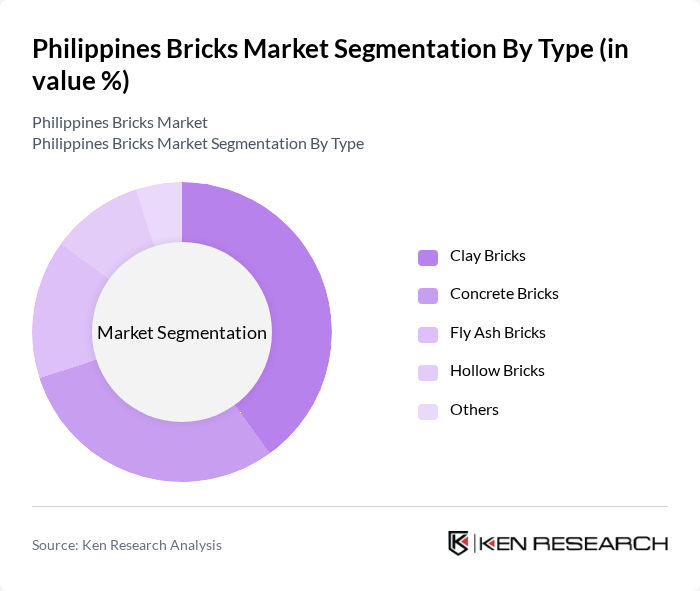
By Type:The bricks market in the Philippines is segmented into various types, including clay bricks, concrete bricks, fly ash bricks, hollow bricks, and others. Among these, clay bricks dominate the market due to their traditional use in construction, offering durability and aesthetic appeal. Concrete bricks are also gaining traction due to their strength and versatility, particularly in modern construction practices. The increasing focus on sustainable building materials is driving the adoption of fly ash bricks, which are considered eco-friendly alternatives.
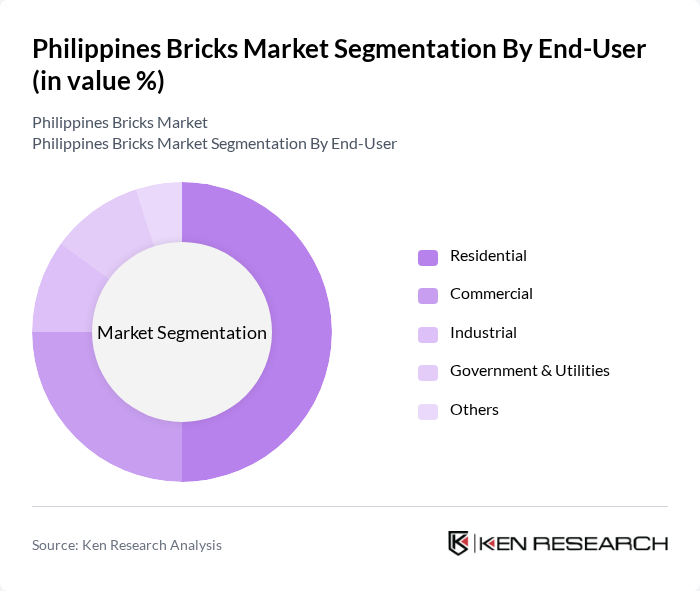
By End-User:The end-user segmentation of the bricks market includes residential, commercial, industrial, government & utilities, and others. The residential sector is the largest consumer of bricks, driven by ongoing housing projects and urbanization trends. The commercial sector follows closely, with increasing investments in office buildings and retail spaces. Government projects, particularly under the Build Better More initiative, are also significant contributors to the demand for bricks, as they require substantial quantities for infrastructure development.
The Philippines Bricks Market is characterized by a dynamic mix of regional and international players. Leading participants such as Holcim Philippines, Inc., Eagle Cement Corporation, Republic Cement & Building Materials, Inc., Lafarge Cement Services (Philippines) Inc., Northern Cement Corporation, Philconcrete, Inc., CEMEX Holdings Philippines, Inc., Solid Cement Corporation, Davao Oriental Cement Corporation, First Philippine Holdings Corporation, Aboitiz InfraCapital, Inc., San Miguel Corporation, DMCI Holdings, Inc., JG Summit Holdings, Inc., Vista Land & Lifescapes, Inc. contribute to innovation, geographic expansion, and service delivery in this space.
The Philippines bricks market is poised for significant transformation driven by urbanization and sustainability trends. In the future, the integration of advanced manufacturing technologies and eco-friendly materials will likely reshape production processes. Additionally, the government's commitment to infrastructure development will sustain demand for bricks. As the market evolves, manufacturers who adapt to regulatory changes and invest in sustainable practices will be better positioned to capitalize on emerging opportunities, ensuring long-term growth and resilience in a competitive landscape.
| Segment | Sub-Segments |
|---|---|
| By Type | Clay Bricks Concrete Bricks Fly Ash Bricks Hollow Bricks Others |
| By End-User | Residential Commercial Industrial Government & Utilities Others |
| By Region | Luzon Visayas Mindanao |
| By Application | Residential Construction Commercial Construction Infrastructure Projects Landscaping Others |
| By Investment Source | Domestic Investment Foreign Direct Investment (FDI) Public-Private Partnerships (PPP) Government Schemes |
| By Policy Support | Subsidies Tax Exemptions Regulatory Support Others |
| By Technology | Traditional Manufacturing Automated Production Sustainable Practices Others |
| Scope Item/Segment | Sample Size | Target Respondent Profiles |
|---|---|---|
| Residential Construction Projects | 150 | Contractors, Architects, Home Builders |
| Commercial Building Developments | 100 | Project Managers, Developers, Engineers |
| Infrastructure Projects | 80 | Government Officials, Civil Engineers, Urban Planners |
| Brick Manufacturing Insights | 70 | Production Managers, Quality Control Officers |
| Market Trends and Preferences | 90 | Industry Analysts, Market Researchers, Trade Association Members |
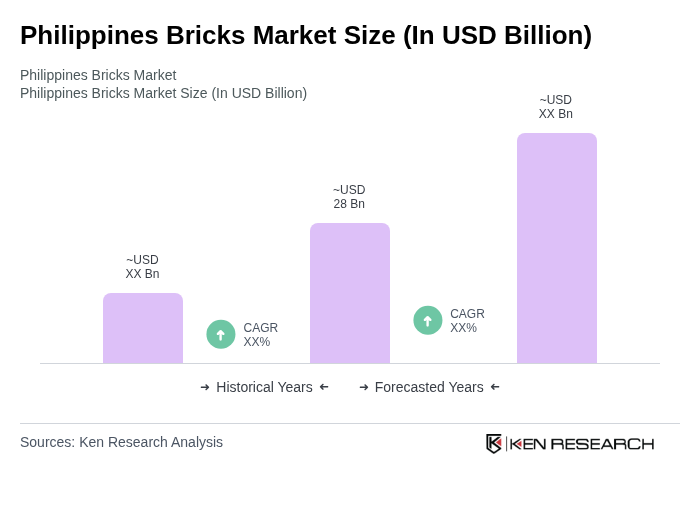
The Philippines Bricks Market is valued at approximately USD 28 billion, driven by significant demand for construction materials due to infrastructure projects and real estate development, particularly under the government's "Build Better More" initiative.

What makes us stand out is that our consultants follow Robust, Refine and Result (RRR) methodology. Robust for clear definitions, approaches and sanity checking, Refine for differentiating respondents' facts and opinions, and Result for presenting data with story.

We have set a benchmark in the industry by offering our clients with syndicated and customized market research reports featuring coverage of entire market as well as meticulous research and analyst insights.

While we don't replace traditional research, we flip the method upside down. Our dual approach of Top Bottom & Bottom Top ensures quality deliverable by not just verifying company fundamentals but also looking at the sector and macroeconomic factors.

With one step in the future, our research team constantly tries to show you the bigger picture. We help with some of the tough questions you may encounter along the way: How is the industry positioned? Best marketing channel? KPI's of competitors? By aligning every element, we help maximize success.

Our report gives you instant access to the answers and sources that other companies might choose to hide. We elaborate each steps of research methodology we have used and showcase you the sample size to earn your trust.

If you need any support, we are here! We pride ourselves on universe strength, data quality, and quick, friendly, and professional service.













