Qatar High Purity Plastics Medical Devices Implants Market Report Size, Share, Growth Drivers, Trends, Opportunities & Forecast 2025–2030

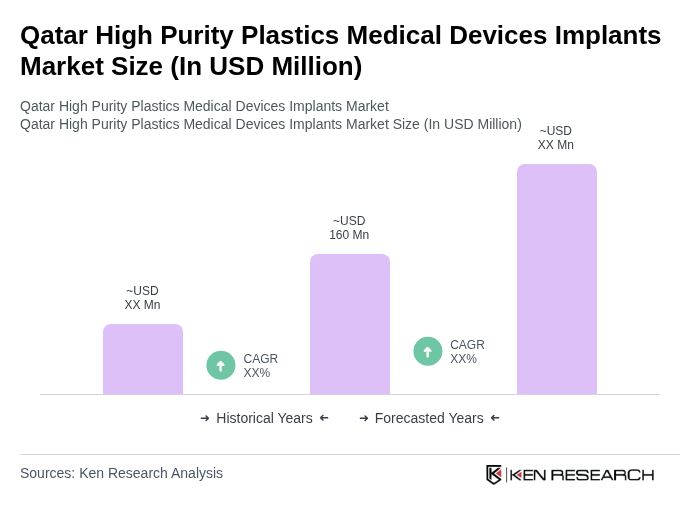
The Qatar high purity plastics medical devices implants market, valued at USD 160 million, is growing due to demand for biocompatible implants like PEEK and UHMWPE in orthopedic and cardiovascular applications.

Region:Middle East

Author(s):Rebecca

Product Code:KRAD7372

Pages:87

Published On:December 2025
About the Report

Base Year 2024

Qatar High Purity Plastics Medical Devices Implants Market Overview

  • The Qatar High Purity Plastics Medical Devices Implants Market is valued at USD 160 million, based on a five-year historical analysis and triangulation with the size of the overall Qatar medical devices and industrial plastics markets. This growth is primarily driven by the increasing demand for advanced medical technologies, rising healthcare expenditure, and a growing aging population requiring surgical interventions. The market is also supported by the expansion of healthcare facilities and the adoption of innovative medical devices that utilize high-purity plastics such as PEEK, UHMWPE and advanced medical?grade compounds for enhanced biocompatibility, durability, and minimally invasive procedures.
  • Key players in this market include Doha, Al Rayyan, and Al Wakrah, which dominate due to their advanced healthcare infrastructure and concentration of medical facilities. These cities are home to leading hospitals and clinics that utilize high-purity plastic implants, such as the Hamad Medical Corporation network in Doha and major private hospitals in Doha and Al Rayyan, thereby driving demand. The presence of skilled healthcare professionals, national strategies to strengthen tertiary and specialty care, and ongoing investments in digital health, surgical technologies, and trauma and orthopedic services further contribute to the market's growth in these regions.
  • In 2023, the Qatari government implemented a new regulation mandating that all medical devices, including high-purity plastic implants, must comply with ISO 13485 standards. This regulation aims to ensure quality management systems are in place for the design and manufacture of medical devices, thereby enhancing patient safety and product efficacy in the healthcare sector. In practice, medical devices in Qatar are subject to the requirements of the Medical Devices and Supplies Regulation issued by the Ministry of Public Health’s Healthcare Quality and Patient Safety Department in 2021, which adopts international standards such as ISO 13485 and requires registration, conformity assessment, and evidence of CE marking or FDA clearance for many device categories.
Qatar High Purity Plastics Medical Devices Implants Market Size

Qatar High Purity Plastics Medical Devices Implants Market Segmentation

By Type:The market is segmented into various types of implants, each catering to specific medical needs. The subsegments include orthopedic implants, cardiovascular implants, dental and maxillofacial implants, neurological and spinal implants, polymer-based surgical instruments, and implantable drug-delivery systems. This structure is aligned with the global high-purity plastics for medical devices and implants market, where implantable devices, orthopedic and cardiovascular applications are the major consumers of high-purity polymers. Among these, orthopedic implants are the most dominant due to the rising incidence of musculoskeletal disorders, osteoarthritis, and trauma cases, as well as the increasing number of joint replacement and spine surgeries performed annually in Qatar’s public and private hospitals. The demand for high-purity polymer-based orthopedic implants is driven by their superior biocompatibility, wear resistance, radiolucency, and mechanical properties, which support their use in joint components, spinal cages, and fixation devices and make them a preferred choice for surgeons seeking lighter, corrosion?free alternatives to metals.
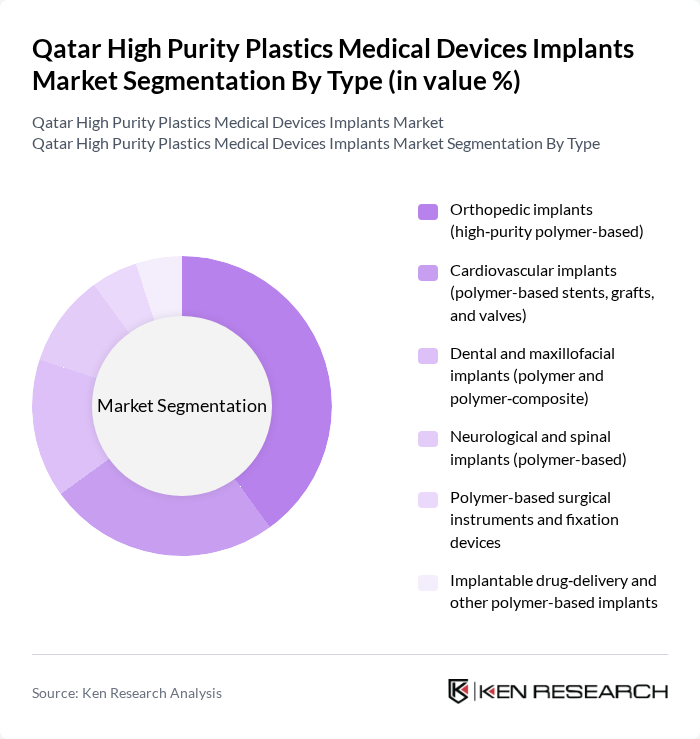
Qatar High Purity Plastics Medical Devices Implants Market segmentation by Type.

By End-User:The market is segmented based on end-users, including public hospitals, private hospitals, ambulatory surgical centers, dental and orthopedic centers, and others. Public hospitals, particularly those under the Hamad Medical Corporation, dominate the market due to their extensive patient base, advanced trauma, orthopedic, cardiovascular and oncology centers, and their central role in complex surgeries and implant procedures in Qatar. The increasing number of surgeries performed in these institutions, alongside national programs to expand elective surgery capacity and specialized centers, coupled with government support for healthcare infrastructure and universal health coverage initiatives, drives the demand for high-purity plastic implants in public hospitals. Private hospitals, day-surgery centers, and specialized dental and orthopedic clinics are also steadily increasing their use of polymer-based implants and devices as they expand minimally invasive and outpatient surgical offerings.
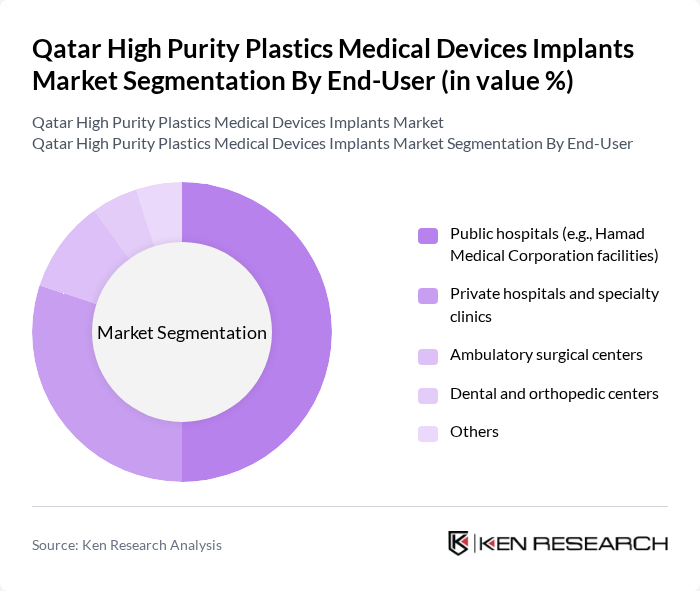
Qatar High Purity Plastics Medical Devices Implants Market segmentation by End-User.

Qatar High Purity Plastics Medical Devices Implants Market Competitive Landscape

The Qatar High Purity Plastics Medical Devices Implants Market is characterized by a dynamic mix of regional and international players. Leading participants such as Medtronic plc, Johnson & Johnson (DePuy Synthes, Ethicon), Stryker Corporation, Boston Scientific Corporation, Zimmer Biomet Holdings, Inc., Abbott Laboratories, B. Braun Melsungen AG, Smith & Nephew plc, NuVasive, Inc., CONMED Corporation, Aesculap AG (a B. Braun company), Orthofix Medical Inc., Integra LifeSciences Holdings Corporation, Halyard Health, Inc. (now Avanos Medical, Inc.), Medline Industries, LP contribute to innovation, geographic expansion, and service delivery in this space, reflecting their strong global positions in high-purity polymer-based implants, surgical instruments, and interventional devices.

Medtronic plc

1949

Dublin, Ireland

Johnson & Johnson (DePuy Synthes, Ethicon)

1886

New Brunswick, New Jersey, USA

Stryker Corporation

1941

Kalamazoo, Michigan, USA

Boston Scientific Corporation

1979

Marlborough, Massachusetts, USA

Zimmer Biomet Holdings, Inc.

1927

Warsaw, Indiana, USA

Company

Establishment Year

Headquarters

Group Size (global major, regional player, or local distributor)

Qatar revenue from high?purity polymer implants (USD million)

CAGR of Qatar polymer?implant revenues (historic and forecast)

Share of high?purity plastics within total implant portfolio (%)

Number of polymer?based implant SKUs registered in Qatar

Regulatory status (CE/FDA/ISO and local approvals coverage)

Qatar High Purity Plastics Medical Devices Implants Market Industry Analysis

Growth Drivers

  • Increasing Demand for Minimally Invasive Surgeries:The demand for minimally invasive surgeries in Qatar is projected to rise significantly, with an estimated 25% increase in procedures in the future. This trend is driven by patient preference for reduced recovery times and lower complication rates. The Qatar healthcare sector is expected to allocate approximately QAR 12 billion towards surgical advancements, enhancing the adoption of high purity plastics in medical devices, which are essential for these procedures.
  • Rising Geriatric Population:Qatar's geriatric population is anticipated to reach 1.5 million in the future, representing a 20% increase from 2020. This demographic shift is leading to a higher prevalence of chronic diseases requiring medical implants. The government’s healthcare expenditure is projected to grow to QAR 60 billion, focusing on improving healthcare services for the elderly, thereby driving demand for high purity plastics in medical devices and implants.
  • Technological Advancements in Medical Devices:The medical device sector in Qatar is experiencing rapid technological advancements, with investments expected to exceed QAR 6 billion in the future. Innovations such as 3D printing and smart materials are enhancing the functionality and safety of medical implants. These advancements are crucial for meeting the increasing demand for customized solutions, thereby propelling the growth of high purity plastics in the medical devices market.

Market Challenges

  • Stringent Regulatory Requirements:The regulatory landscape in Qatar poses significant challenges for medical device manufacturers. Compliance with international standards, such as ISO 13485, is mandatory, leading to increased operational costs. The approval process for new medical devices can take up to 20 months, which may hinder timely market entry. This regulatory environment can deter investment in the high purity plastics sector, impacting overall market growth.
  • High Cost of R&D for New Products:Research and development costs for new medical devices in Qatar can exceed QAR 3 million per project. This financial burden is particularly challenging for local manufacturers, who may lack the resources to invest in innovative technologies. The high cost of R&D can slow down the introduction of new high purity plastic products, limiting competitive advantage and market expansion opportunities.

Qatar High Purity Plastics Medical Devices Implants Market Future Outlook

The future of the Qatar high purity plastics medical devices implants market appears promising, driven by ongoing advancements in technology and increasing healthcare investments. As the healthcare infrastructure expands, the integration of smart technologies and personalized medicine will likely enhance patient outcomes. Additionally, the growing emphasis on sustainability may lead to a shift towards biodegradable materials, aligning with global trends. These factors will create a dynamic environment for innovation and growth in the sector.

Market Opportunities

  • Expansion of Healthcare Infrastructure:Qatar's government plans to invest QAR 25 billion in healthcare infrastructure in the future. This expansion will create opportunities for high purity plastics manufacturers to supply medical devices and implants, catering to the increasing demand for advanced healthcare solutions in newly established facilities.
  • Collaborations with Research Institutions:Collaborations between medical device companies and research institutions are expected to increase, with funding projected at QAR 1.5 billion for joint projects. These partnerships can drive innovation in high purity plastics, leading to the development of cutting-edge medical devices tailored to specific patient needs, enhancing market competitiveness.

Scope of the Report

SegmentSub-Segments
By Type

Orthopedic implants (high?purity polymer-based)

Cardiovascular implants (polymer-based stents, grafts, and valves)

Dental and maxillofacial implants (polymer and polymer?composite)

Neurological and spinal implants (polymer-based)

Polymer-based surgical instruments and fixation devices

Implantable drug?delivery and other polymer-based implants

By End-User

Public hospitals (e.g., Hamad Medical Corporation facilities)

Private hospitals and specialty clinics

Ambulatory surgical centers

Dental and orthopedic centers

Others

By Material Type

Ultra-high-molecular-weight polyethylene (UHMWPE)

Polyether ether ketone (PEEK)

Polytetrafluoroethylene (PTFE) and expanded PTFE (ePTFE)

Bioabsorbable polymers (PLA, PGA, PLGA, PDO)

Silicone and other high-purity medical-grade elastomers

Others

By Application

Joint reconstruction and orthopedic surgery

Cardiovascular and endovascular interventions

Dental restoration and oral surgery

Spinal and neurosurgery

Implantable drug-delivery and pain?management systems

Others

By Distribution Channel

Direct sales to hospitals and health systems

Local distributors and agents

Group purchasing and tender-based procurement

Online and e?procurement platforms

Others

By Region

Doha

Al Rayyan

Umm Salal

Al Wakrah

Others

By Regulatory Compliance

CE Marking (EU?MDR compliant devices)

FDA Approval (PMA, 510(k))

ISO 10993 and related biocompatibility standards

ISO 13485 and Qatari MoPH/SCH approvals

Others

Key Target Audience

Investors and Venture Capitalist Firms

Government and Regulatory Bodies (e.g., Qatar Ministry of Public Health, Qatar Food Safety and Health Authority)

Manufacturers and Producers of Medical Devices

Distributors and Retailers of Medical Supplies

Healthcare Providers and Hospitals

Technology Providers for Medical Device Manufacturing

Industry Associations (e.g., Qatar Medical Devices Association)

Financial Institutions and Investment Banks

Players Mentioned in the Report:

Medtronic plc

Johnson & Johnson (DePuy Synthes, Ethicon)

Stryker Corporation

Boston Scientific Corporation

Zimmer Biomet Holdings, Inc.

Abbott Laboratories

B. Braun Melsungen AG

Smith & Nephew plc

NuVasive, Inc.

CONMED Corporation

Aesculap AG (a B. Braun company)

Orthofix Medical Inc.

Integra LifeSciences Holdings Corporation

Halyard Health, Inc. (now Avanos Medical, Inc.)

Medline Industries, LP

Table of Contents

Market Assessment Phase

1. Executive Summary and Approach


2. Qatar High Purity Plastics Medical Devices Implants Market Overview

2.1 Key Insights and Strategic Recommendations

2.2 Qatar High Purity Plastics Medical Devices Implants Market Overview

2.3 Definition and Scope

2.4 Evolution of Market Ecosystem

2.5 Timeline of Key Regulatory Milestones

2.6 Value Chain & Stakeholder Mapping

2.7 Business Cycle Analysis

2.8 Policy & Incentive Landscape


3. Qatar High Purity Plastics Medical Devices Implants Market Analysis

3.1 Growth Drivers

3.1.1 Increasing demand for minimally invasive surgeries
3.1.2 Rising geriatric population
3.1.3 Technological advancements in medical devices
3.1.4 Growing healthcare expenditure in Qatar

3.2 Market Challenges

3.2.1 Stringent regulatory requirements
3.2.2 High cost of R&D for new products
3.2.3 Limited local manufacturing capabilities
3.2.4 Competition from established global players

3.3 Market Opportunities

3.3.1 Expansion of healthcare infrastructure
3.3.2 Increasing focus on personalized medicine
3.3.3 Collaborations with research institutions
3.3.4 Growth in medical tourism

3.4 Market Trends

3.4.1 Shift towards biodegradable materials
3.4.2 Integration of IoT in medical devices
3.4.3 Rise in telemedicine and remote monitoring
3.4.4 Focus on patient-centric designs

3.5 Government Regulation

3.5.1 Compliance with international standards
3.5.2 Approval processes for new medical devices
3.5.3 Incentives for local manufacturing
3.5.4 Regulations on material safety and efficacy

4. SWOT Analysis


5. Stakeholder Analysis


6. Porter's Five Forces Analysis


7. Qatar High Purity Plastics Medical Devices Implants Market Market Size, 2019-2024

7.1 By Value

7.2 By Volume

7.3 By Average Selling Price


8. Qatar High Purity Plastics Medical Devices Implants Market Segmentation

8.1 By Type

8.1.1 Orthopedic implants (high?purity polymer-based)
8.1.2 Cardiovascular implants (polymer-based stents, grafts, and valves)
8.1.3 Dental and maxillofacial implants (polymer and polymer?composite)
8.1.4 Neurological and spinal implants (polymer-based)
8.1.5 Polymer-based surgical instruments and fixation devices
8.1.6 Implantable drug?delivery and other polymer-based implants

8.2 By End-User

8.2.1 Public hospitals (e.g., Hamad Medical Corporation facilities)
8.2.2 Private hospitals and specialty clinics
8.2.3 Ambulatory surgical centers
8.2.4 Dental and orthopedic centers
8.2.5 Others

8.3 By Material Type

8.3.1 Ultra-high-molecular-weight polyethylene (UHMWPE)
8.3.2 Polyether ether ketone (PEEK)
8.3.3 Polytetrafluoroethylene (PTFE) and expanded PTFE (ePTFE)
8.3.4 Bioabsorbable polymers (PLA, PGA, PLGA, PDO)
8.3.5 Silicone and other high-purity medical-grade elastomers
8.3.6 Others

8.4 By Application

8.4.1 Joint reconstruction and orthopedic surgery
8.4.2 Cardiovascular and endovascular interventions
8.4.3 Dental restoration and oral surgery
8.4.4 Spinal and neurosurgery
8.4.5 Implantable drug-delivery and pain?management systems
8.4.6 Others

8.5 By Distribution Channel

8.5.1 Direct sales to hospitals and health systems
8.5.2 Local distributors and agents
8.5.3 Group purchasing and tender-based procurement
8.5.4 Online and e?procurement platforms
8.5.5 Others

8.6 By Region

8.6.1 Doha
8.6.2 Al Rayyan
8.6.3 Umm Salal
8.6.4 Al Wakrah
8.6.5 Others

8.7 By Regulatory Compliance

8.7.1 CE Marking (EU?MDR compliant devices)
8.7.2 FDA Approval (PMA, 510(k))
8.7.3 ISO 10993 and related biocompatibility standards
8.7.4 ISO 13485 and Qatari MoPH/SCH approvals
8.7.5 Others

9. Qatar High Purity Plastics Medical Devices Implants Market Competitive Analysis

9.1 Market Share of Key Players

9.2 Cross Comparison of Key Players

9.2.1 Company Name
9.2.2 Group Size (global major, regional player, or local distributor)
9.2.3 Qatar revenue from high?purity polymer implants (USD million)
9.2.4 CAGR of Qatar polymer?implant revenues (historic and forecast)
9.2.5 Share of high?purity plastics within total implant portfolio (%)
9.2.6 Number of polymer?based implant SKUs registered in Qatar
9.2.7 Regulatory status (CE/FDA/ISO and local approvals coverage)
9.2.8 Average selling price band in Qatar (premium/mid/value)
9.2.9 Tender win rate with key public buyers (HMC, MoPH) (%)
9.2.10 Depth of local presence (subsidiary vs. distributor-only)
9.2.11 R&D intensity in polymer implants (% of global revenue)
9.2.12 Clinical evidence base (number of pivotal trials / publications)

9.3 SWOT Analysis of Top Players

9.4 Pricing Analysis

9.5 Detailed Profile of Major Companies

9.5.1 Medtronic plc
9.5.2 Johnson & Johnson (DePuy Synthes, Ethicon)
9.5.3 Stryker Corporation
9.5.4 Boston Scientific Corporation
9.5.5 Zimmer Biomet Holdings, Inc.
9.5.6 Abbott Laboratories
9.5.7 B. Braun Melsungen AG
9.5.8 Smith & Nephew plc
9.5.9 NuVasive, Inc.
9.5.10 CONMED Corporation
9.5.11 Aesculap AG (a B. Braun company)
9.5.12 Orthofix Medical Inc.
9.5.13 Integra LifeSciences Holdings Corporation
9.5.14 Halyard Health, Inc. (now Avanos Medical, Inc.)
9.5.15 Medline Industries, LP

10. Qatar High Purity Plastics Medical Devices Implants Market End-User Analysis

10.1 Procurement Behavior of Key Ministries

10.1.1 Budget allocation for medical devices
10.1.2 Decision-making processes
10.1.3 Supplier evaluation criteria
10.1.4 Contract negotiation practices

10.2 Corporate Spend on Infrastructure & Energy

10.2.1 Investment in healthcare facilities
10.2.2 Funding for medical technology
10.2.3 Partnerships with private sector
10.2.4 Others

10.3 Pain Point Analysis by End-User Category

10.3.1 Supply chain disruptions
10.3.2 Quality assurance challenges
10.3.3 Cost management issues
10.3.4 Others

10.4 User Readiness for Adoption

10.4.1 Training and support needs
10.4.2 Technology acceptance levels
10.4.3 Infrastructure readiness
10.4.4 Others

10.5 Post-Deployment ROI and Use Case Expansion

10.5.1 Measurement of success metrics
10.5.2 Feedback mechanisms
10.5.3 Opportunities for scaling
10.5.4 Others

11. Qatar High Purity Plastics Medical Devices Implants Market Future Size, 2025-2030

11.1 By Value

11.2 By Volume

11.3 By Average Selling Price


Go-To-Market Strategy Phase

1. Whitespace Analysis + Business Model Canvas

1.1 Market gaps identification

1.2 Value proposition development

1.3 Revenue model exploration

1.4 Customer segmentation analysis

1.5 Competitive landscape overview

1.6 Key partnerships identification

1.7 Risk assessment


2. Marketing and Positioning Recommendations

2.1 Branding strategies

2.2 Product USPs

2.3 Target audience definition

2.4 Communication strategies

2.5 Digital marketing initiatives


3. Distribution Plan

3.1 Urban retail strategies

3.2 Rural NGO tie-ups

3.3 E-commerce integration

3.4 Logistics and supply chain management


4. Channel & Pricing Gaps

4.1 Underserved routes

4.2 Pricing bands analysis

4.3 Competitor pricing strategies


5. Unmet Demand & Latent Needs

5.1 Category gaps identification

5.2 Consumer segments analysis

5.3 Product development opportunities


6. Customer Relationship

6.1 Loyalty programs

6.2 After-sales service

6.3 Customer feedback mechanisms


7. Value Proposition

7.1 Sustainability initiatives

7.2 Integrated supply chains

7.3 Competitive advantages


8. Key Activities

8.1 Regulatory compliance

8.2 Branding efforts

8.3 Distribution setup


9. Entry Strategy Evaluation

9.1 Domestic Market Entry Strategy

9.1.1 Product mix considerations
9.1.2 Pricing band strategies
9.1.3 Packaging innovations

9.2 Export Entry Strategy

9.2.1 Target countries analysis
9.2.2 Compliance roadmap development

10. Entry Mode Assessment

10.1 Joint Ventures

10.2 Greenfield investments

10.3 Mergers & Acquisitions

10.4 Distributor Model


11. Capital and Timeline Estimation

11.1 Capital requirements

11.2 Timelines for market entry


12. Control vs Risk Trade-Off

12.1 Ownership considerations

12.2 Partnerships evaluation


13. Profitability Outlook

13.1 Breakeven analysis

13.2 Long-term sustainability strategies


14. Potential Partner List

14.1 Distributors

14.2 Joint Ventures

14.3 Acquisition targets


15. Execution Roadmap

15.1 Phased Plan for Market Entry

15.1.1 Market Setup
15.1.2 Market Entry
15.1.3 Growth Acceleration
15.1.4 Scale & Stabilize

15.2 Key Activities and Milestones

15.2.1 Milestone tracking
15.2.2 Activity scheduling

Research Methodology

ApproachModellingSample

Phase 1: Approach1

Desk Research

  • Analysis of industry reports from healthcare and medical device associations in Qatar
  • Review of market studies and white papers on high purity plastics and medical device trends
  • Examination of regulatory frameworks and compliance guidelines from Qatar's Ministry of Public Health

Primary Research

  • Interviews with product managers at leading medical device manufacturers in Qatar
  • Surveys with healthcare professionals and procurement officers in hospitals and clinics
  • Field interviews with R&D teams focused on medical implants and materials science

Validation & Triangulation

  • Cross-validation of findings through multiple data sources including trade publications and expert opinions
  • Triangulation of market data with insights from industry conferences and seminars
  • Sanity checks conducted through expert panel reviews comprising industry veterans

Phase 2: Market Size Estimation1

Top-down Assessment

  • Estimation of market size based on national healthcare expenditure and medical device import data
  • Segmentation of the market by application areas such as orthopedic, cardiovascular, and dental implants
  • Incorporation of growth trends in the healthcare sector and demographic factors influencing demand

Bottom-up Modeling

  • Collection of sales data from key players in the high purity plastics sector
  • Estimation of production capacities and output levels of local manufacturers
  • Volume and pricing analysis based on product categories and market demand

Forecasting & Scenario Analysis

  • Multi-variable forecasting using historical growth rates and emerging market trends
  • Scenario analysis based on potential regulatory changes and technological advancements
  • Development of baseline, optimistic, and pessimistic market projections through 2030

Phase 3: CATI Sample Composition1

Scope Item/SegmentSample SizeTarget Respondent Profiles
Orthopedic Implants Market100Surgeons, Hospital Administrators
Cardiovascular Devices Sector80Cardiologists, Procurement Managers
Dental Implant Market70Dentists, Dental Clinic Owners
Regulatory Compliance Insights60Quality Assurance Managers, Regulatory Affairs Specialists
Research & Development Trends90R&D Directors, Material Scientists

Frequently Asked Questions

What is the current value of the Qatar High Purity Plastics Medical Devices Implants Market?

The Qatar High Purity Plastics Medical Devices Implants Market is valued at approximately USD 160 million, reflecting growth driven by advanced medical technologies, increased healthcare expenditure, and a rising aging population requiring surgical interventions.

What types of implants are included in the Qatar High Purity Plastics Medical Devices Implants Market?

Which cities in Qatar are key players in the medical devices market?

What are the main growth drivers for the Qatar High Purity Plastics Medical Devices Implants Market?

Other Regional/Country Reports

Indonesia High Purity Plastics Medical Devices Implants Market

Malaysia High Purity Plastics Medical Devices Implants Market

KSA High Purity Plastics Medical Devices Implants Market

APAC High Purity Plastics Medical Devices Implants Market

SEA High Purity Plastics Medical Devices Implants Market

Vietnam High Purity Plastics Medical Devices Implants Market

Why Buy From Us?

Refine Robust Result (RRR) Framework

What makes us stand out is that our consultants follow Robust, Refine and Result (RRR) methodology. Robust for clear definitions, approaches and sanity checking, Refine for differentiating respondents' facts and opinions, and Result for presenting data with story.

Our Reach Is Unmatched

We have set a benchmark in the industry by offering our clients with syndicated and customized market research reports featuring coverage of entire market as well as meticulous research and analyst insights.

Shifting the Research Paradigm

While we don't replace traditional research, we flip the method upside down. Our dual approach of Top Bottom & Bottom Top ensures quality deliverable by not just verifying company fundamentals but also looking at the sector and macroeconomic factors.

More Insights-Better Decisions

With one step in the future, our research team constantly tries to show you the bigger picture. We help with some of the tough questions you may encounter along the way: How is the industry positioned? Best marketing channel? KPI's of competitors? By aligning every element, we help maximize success.

Transparency and Trust

Our report gives you instant access to the answers and sources that other companies might choose to hide. We elaborate each steps of research methodology we have used and showcase you the sample size to earn your trust.

Round the Clock Support

If you need any support, we are here! We pride ourselves on universe strength, data quality, and quick, friendly, and professional service.

Why Clients Choose Us?

400000+
Reports in repository
150+
Consulting projects a year
100+
Analysts
8000+
Client Queries in 2022








