Region:Middle East
Author(s):Dev
Product Code:KRAD3381
Pages:90
Published On:November 2025
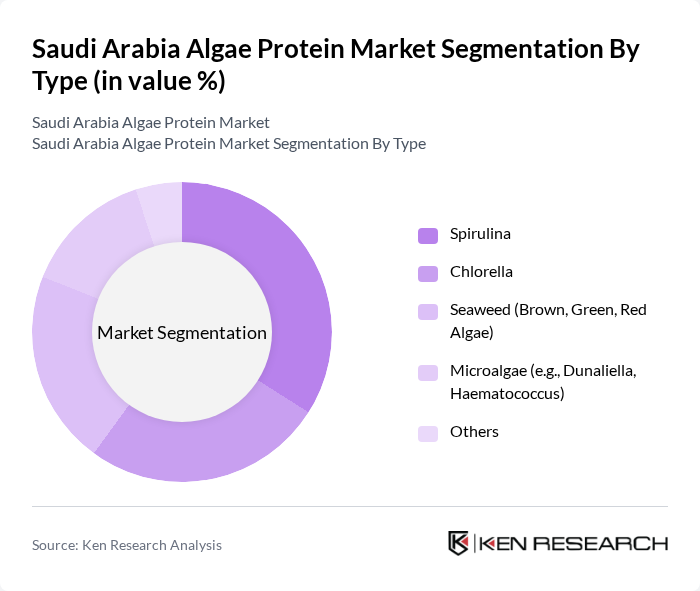
By Type:The algae protein market can be segmented into various types, including Spirulina, Chlorella, Seaweed (Brown, Green, Red Algae), Microalgae (e.g., Dunaliella, Haematococcus), and Others. Spirulina and Chlorella are particularly popular due to their high nutritional value and are widely used in dietary supplements and health foods. Seaweeds are gaining traction in culinary applications, while microalgae are increasingly recognized for their potential in pharmaceuticals and cosmetics .
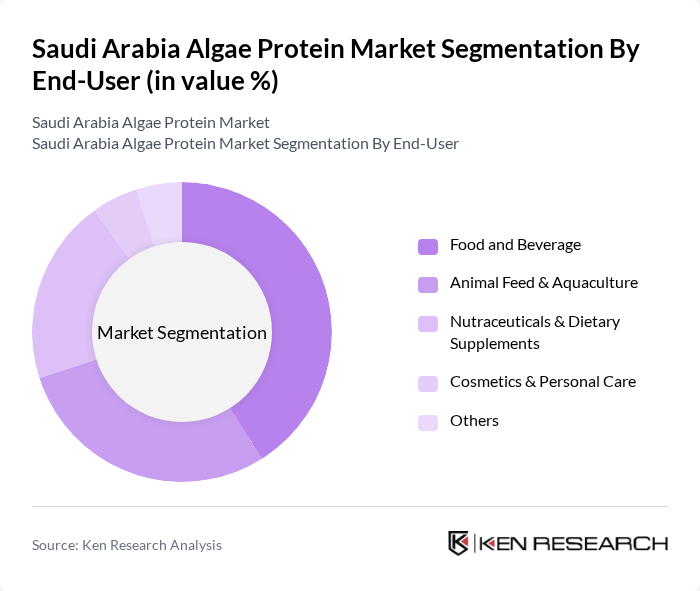
By End-User:The end-user segmentation includes Food and Beverage, Animal Feed & Aquaculture, Nutraceuticals & Dietary Supplements, Cosmetics & Personal Care, and Others. The Food and Beverage sector is the largest consumer of algae protein, driven by the increasing incorporation of health supplements and functional foods. The Animal Feed segment is also significant, as algae are recognized for their nutritional benefits in aquaculture and livestock .
The Saudi Arabia Algae Protein Market is characterized by a dynamic mix of regional and international players. Leading participants such as Algatech Ltd. (Algatechnologies), Cyanotech Corporation, Algaia S.A., Earthrise Nutritionals LLC, Corbion N.V. (AlgaPrime DHA), BASF SE, DSM Nutritional Products AG, Parry Nutraceuticals (Murugappa Group), Solazyme, Inc. (now TerraVia Holdings, Inc.), Algae Health Sciences (division of BGG World), PhycoBio, Saudi BioTech Company, BioCare Copenhagen, Green Plains Inc., TerraVia Holdings, Inc., Saudi Aquaculture Society, King Abdullah University of Science and Technology (KAUST) - Algae Research Group contribute to innovation, geographic expansion, and service delivery in this space.
The Saudi Arabia algae protein market is poised for significant growth, driven by increasing consumer demand for sustainable and healthy food options. Innovations in algae processing technology are expected to lower production costs, making algae protein more accessible. Additionally, as the government continues to support algae cultivation through funding and research initiatives, the market is likely to see enhanced production capabilities. This evolving landscape presents a promising future for algae protein as a viable alternative to traditional protein sources.
| Segment | Sub-Segments |
|---|---|
| By Type | Spirulina Chlorella Seaweed (Brown, Green, Red Algae) Microalgae (e.g., Dunaliella, Haematococcus) Others |
| By End-User | Food and Beverage Animal Feed & Aquaculture Nutraceuticals & Dietary Supplements Cosmetics & Personal Care Others |
| By Application | Dietary Supplements Functional Foods Animal Nutrition Cosmetics Pharmaceuticals Others |
| By Distribution Channel | Online Retail Supermarkets/Hypermarkets Health Food Stores Pharmacies Others |
| By Region | Central Region Eastern Region Western Region Southern Region |
| By Product Form | Powder Liquid Tablets/Capsules Paste Others |
| By Market Segment | B2B (Manufacturers, Ingredient Suppliers) B2C (Retail, Direct to Consumer) Others |
| Scope Item/Segment | Sample Size | Target Respondent Profiles |
|---|---|---|
| Food Manufacturing Sector | 100 | Product Development Managers, Quality Assurance Specialists |
| Nutraceutical Companies | 60 | Research and Development Heads, Marketing Directors |
| Animal Feed Producers | 50 | Procurement Managers, Nutritionists |
| Algae Cultivation Enterprises | 40 | Operations Managers, Sustainability Officers |
| Regulatory Bodies and Associations | 40 | Policy Makers, Industry Analysts |
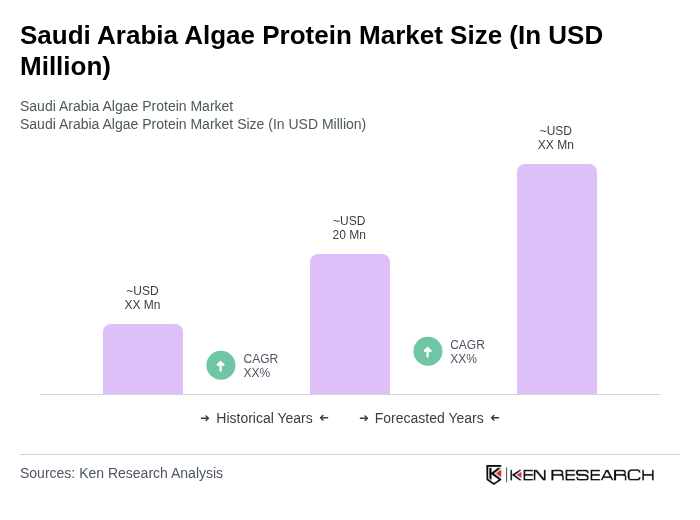
The Saudi Arabia Algae Protein Market is valued at approximately USD 20 million, reflecting a growing interest in sustainable food sources and health benefits associated with algae protein, particularly among younger and urban populations.

What makes us stand out is that our consultants follow Robust, Refine and Result (RRR) methodology. Robust for clear definitions, approaches and sanity checking, Refine for differentiating respondents' facts and opinions, and Result for presenting data with story.

We have set a benchmark in the industry by offering our clients with syndicated and customized market research reports featuring coverage of entire market as well as meticulous research and analyst insights.

While we don't replace traditional research, we flip the method upside down. Our dual approach of Top Bottom & Bottom Top ensures quality deliverable by not just verifying company fundamentals but also looking at the sector and macroeconomic factors.

With one step in the future, our research team constantly tries to show you the bigger picture. We help with some of the tough questions you may encounter along the way: How is the industry positioned? Best marketing channel? KPI's of competitors? By aligning every element, we help maximize success.

Our report gives you instant access to the answers and sources that other companies might choose to hide. We elaborate each steps of research methodology we have used and showcase you the sample size to earn your trust.

If you need any support, we are here! We pride ourselves on universe strength, data quality, and quick, friendly, and professional service.













