Region:Middle East
Author(s):Dev
Product Code:KRAC4742
Pages:81
Published On:October 2025
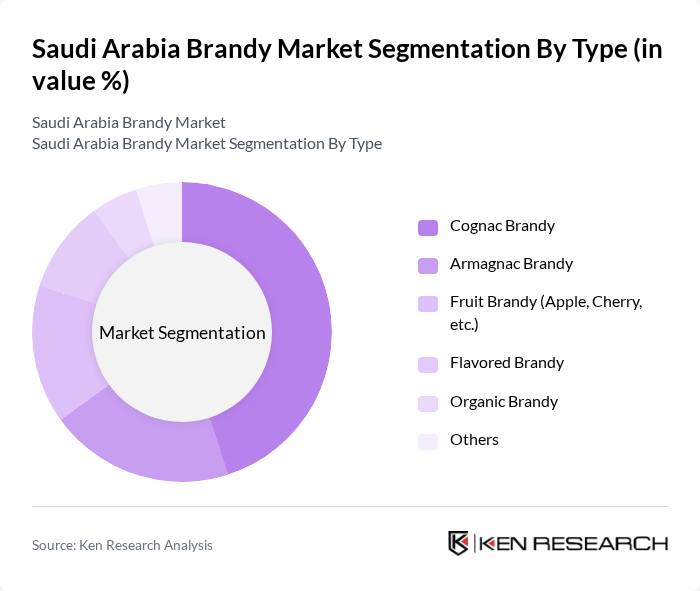
By Type:The brandy market is segmented into Cognac Brandy, Armagnac Brandy, Fruit Brandy (Apple, Cherry, etc.), Flavored Brandy, Organic Brandy, and Others. Cognac Brandy remains the most sought-after type, driven by its association with luxury and established heritage. The demand for Armagnac and flavored brandies is increasing, particularly among younger and cosmopolitan consumers who seek novel taste experiences and premiumization. Fruit and organic brandies are also gaining visibility as consumers explore artisanal and health-conscious options.
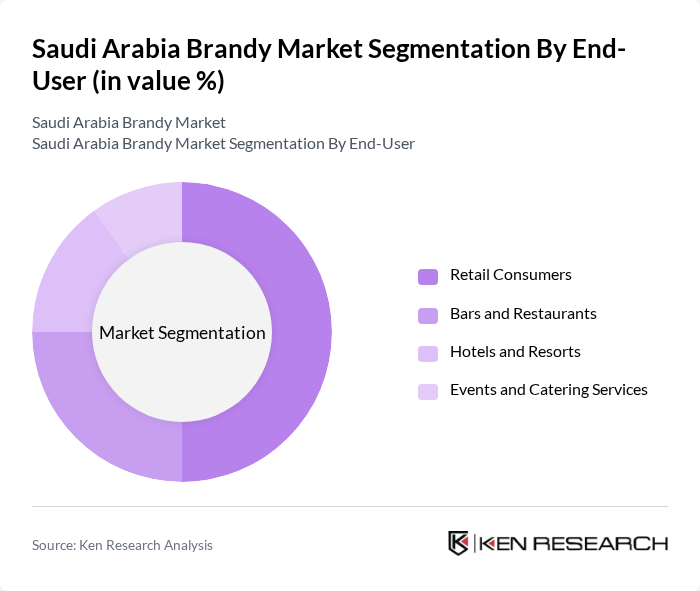
By End-User:The brandy market is segmented by end-users: Retail Consumers, Bars and Restaurants, Hotels and Resorts, and Events and Catering Services. Retail Consumers account for the largest share, reflecting the growing trend of home consumption and gifting among expatriate and diplomatic communities. Bars and restaurants are significant channels, especially in international hotels and private clubs, while the hospitality sector’s expansion continues to drive demand from hotels, resorts, and event venues.
The Saudi Arabia Brandy Market is characterized by a dynamic mix of regional and international players. Leading participants such as Hennessy (LVMH), Rémy Martin (Rémy Cointreau), Martell (Pernod Ricard), Courvoisier (Beam Suntory), Camus, Torres Brandy, Diageo (Brandy Portfolio), Brown-Forman (Brandy Portfolio), E&J Gallo Winery, St-Rémy, Bardinet, Sula Vineyards (India, Exported Brands), Beam Suntory (Brandy Portfolio), KWV (South Africa, Exported Brands), Alvisa (Spain, Exported Brands) contribute to innovation, geographic expansion, and service delivery in this space.
The future of the Saudi Arabia brandy market appears cautiously optimistic, driven by increasing consumer interest in premium products and the expansion of the hospitality sector. As the government continues to promote tourism and economic diversification, brandy sales are likely to benefit from enhanced distribution channels and marketing strategies. However, the market must navigate cultural sensitivities and regulatory challenges to fully capitalize on growth opportunities, particularly among younger consumers who are gradually embracing premium alcoholic beverages.
| Segment | Sub-Segments |
|---|---|
| By Type | Cognac Brandy Armagnac Brandy Fruit Brandy (Apple, Cherry, etc.) Flavored Brandy Organic Brandy Others |
| By End-User | Retail Consumers Bars and Restaurants Hotels and Resorts Events and Catering Services |
| By Sales Channel | Offline Retail (Supermarkets, Hypermarkets, Specialty Stores) Online Retail Duty-Free Shops |
| By Packaging Type | Glass Bottles Tetra Packs Others |
| By Price Range | Premium Mid-Range Economy |
| By Distribution Mode | Direct Sales Indirect Sales |
| By Brand Loyalty | Established Brands Emerging Brands Private Labels |
| Scope Item/Segment | Sample Size | Target Respondent Profiles |
|---|---|---|
| Retail Sector Insights | 100 | Store Managers, Beverage Buyers |
| Consumer Preferences | 120 | Brandy Consumers, Alcohol Enthusiasts |
| Distribution Channel Analysis | 80 | Distributors, Logistics Managers |
| Market Trends Evaluation | 70 | Market Analysts, Industry Experts |
| Regulatory Impact Assessment | 60 | Legal Advisors, Compliance Officers |
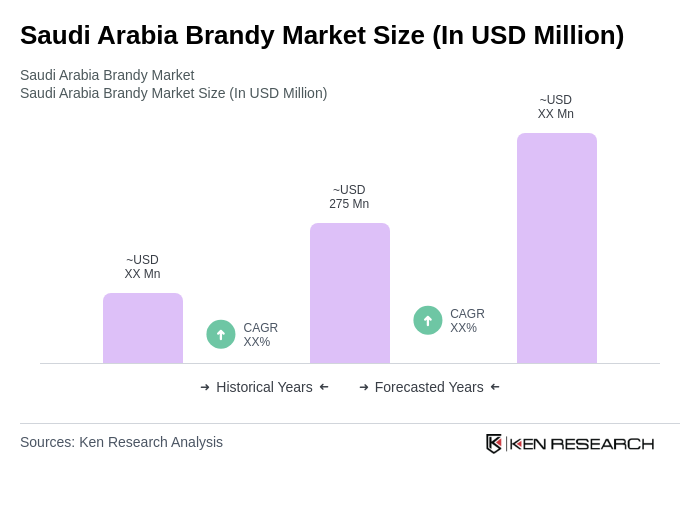
The Saudi Arabia Brandy Market is valued at approximately USD 275 million, reflecting its growth within the broader alcoholic drinks sector, driven by increasing consumer demand for premium beverages and the expansion of hospitality services.

What makes us stand out is that our consultants follow Robust, Refine and Result (RRR) methodology. Robust for clear definitions, approaches and sanity checking, Refine for differentiating respondents' facts and opinions, and Result for presenting data with story.

We have set a benchmark in the industry by offering our clients with syndicated and customized market research reports featuring coverage of entire market as well as meticulous research and analyst insights.

While we don't replace traditional research, we flip the method upside down. Our dual approach of Top Bottom & Bottom Top ensures quality deliverable by not just verifying company fundamentals but also looking at the sector and macroeconomic factors.

With one step in the future, our research team constantly tries to show you the bigger picture. We help with some of the tough questions you may encounter along the way: How is the industry positioned? Best marketing channel? KPI's of competitors? By aligning every element, we help maximize success.

Our report gives you instant access to the answers and sources that other companies might choose to hide. We elaborate each steps of research methodology we have used and showcase you the sample size to earn your trust.

If you need any support, we are here! We pride ourselves on universe strength, data quality, and quick, friendly, and professional service.













