Region:Europe
Author(s):Rebecca
Product Code:KRAA5841
Pages:95
Published On:September 2025
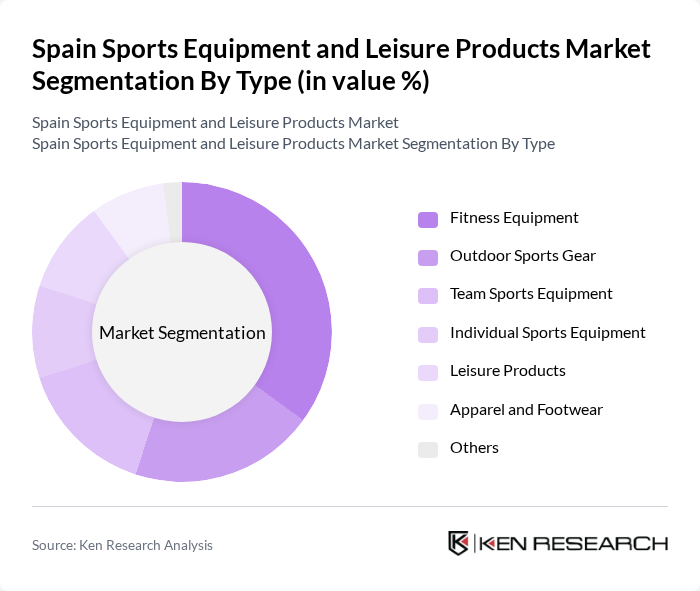
By Type:The market is segmented into various types of sports equipment and leisure products, including fitness equipment, outdoor sports gear, team sports equipment, individual sports equipment, leisure products, apparel and footwear, and others. Among these, fitness equipment has emerged as a dominant segment due to the increasing trend of home workouts and gym memberships. The growing awareness of health and fitness has led consumers to invest more in high-quality fitness gear, driving significant sales in this category.
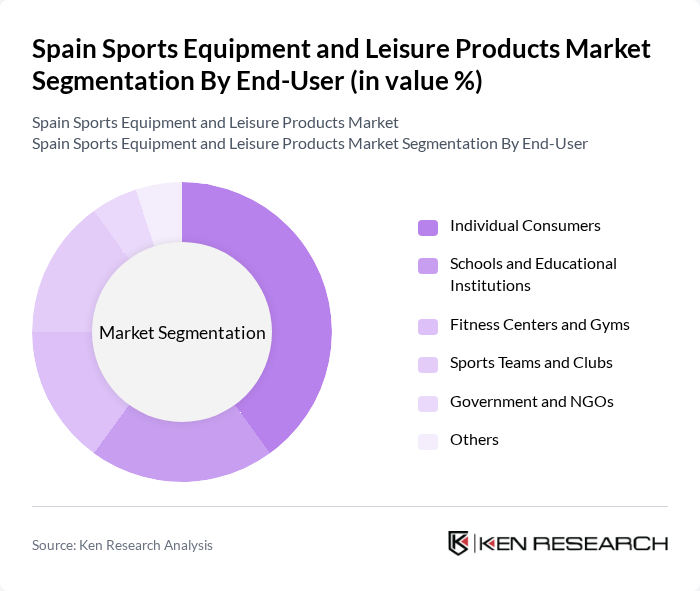
By End-User:The end-user segmentation includes individual consumers, schools and educational institutions, fitness centers and gyms, sports teams and clubs, government and NGOs, and others. Individual consumers represent the largest segment, driven by the increasing trend of personal fitness and wellness. The rise in health awareness has led to more individuals purchasing sports equipment for personal use, significantly impacting market dynamics.
The Spain Sports Equipment and Leisure Products Market is characterized by a dynamic mix of regional and international players. Leading participants such as Decathlon S.A., Nike, Inc., Adidas AG, Under Armour, Inc., Puma SE, ASICS Corporation, Wilson Sporting Goods Co., Amer Sports Corporation, Head N.V., Mizuno Corporation, Salomon S.A., Kappa S.p.A., Spalding, Yonex Co., Ltd., New Balance Athletics, Inc. contribute to innovation, geographic expansion, and service delivery in this space.
The future of the sports equipment and leisure products market in Spain appears promising, driven by increasing health consciousness and technological advancements. As consumers seek personalized and innovative products, companies are likely to invest in research and development. Additionally, the integration of smart technology into sports equipment is expected to enhance user experience, while sustainability trends will push brands to adopt eco-friendly practices, aligning with consumer preferences for responsible consumption.
| Segment | Sub-Segments |
|---|---|
| By Type | Fitness Equipment Outdoor Sports Gear Team Sports Equipment Individual Sports Equipment Leisure Products Apparel and Footwear Others |
| By End-User | Individual Consumers Schools and Educational Institutions Fitness Centers and Gyms Sports Teams and Clubs Government and NGOs Others |
| By Distribution Channel | Online Retail Specialty Sports Stores Department Stores Direct Sales Others |
| By Price Range | Budget Mid-range Premium Luxury |
| By Brand Loyalty | Brand Loyal Customers Price-sensitive Customers Quality-focused Customers Others |
| By Product Lifecycle Stage | Introduction Stage Growth Stage Maturity Stage Decline Stage |
| By Occasion | Seasonal Sports Year-round Activities Special Events Others |
| Scope Item/Segment | Sample Size | Target Respondent Profiles |
|---|---|---|
| Retail Sports Equipment Sales | 150 | Store Managers, Sales Representatives |
| Consumer Preferences in Leisure Products | 100 | Active Consumers, Fitness Enthusiasts |
| Market Trends in Outdoor Sports Gear | 80 | Product Developers, Brand Managers |
| Impact of E-commerce on Sports Equipment Sales | 120 | eCommerce Managers, Digital Marketing Specialists |
| Trends in Team Sports Participation | 90 | Coaches, Sports Club Administrators |
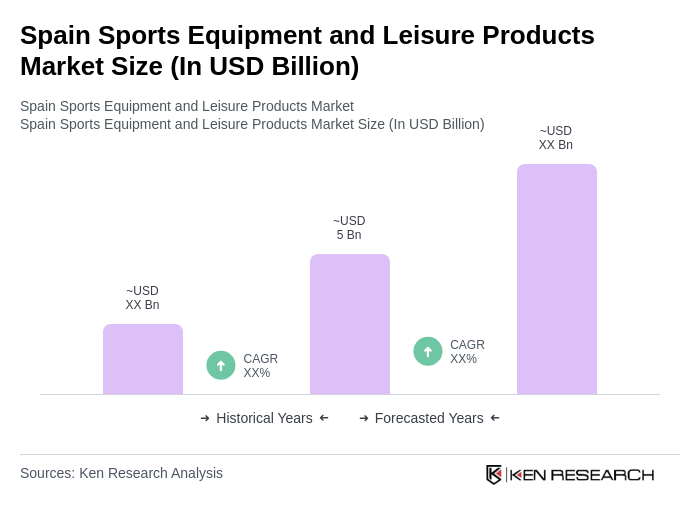
The Spain Sports Equipment and Leisure Products Market is valued at approximately USD 5 billion, reflecting a significant growth trend driven by increased health consciousness, outdoor activities, and fitness trends among consumers.

What makes us stand out is that our consultants follow Robust, Refine and Result (RRR) methodology. Robust for clear definitions, approaches and sanity checking, Refine for differentiating respondents' facts and opinions, and Result for presenting data with story.

We have set a benchmark in the industry by offering our clients with syndicated and customized market research reports featuring coverage of entire market as well as meticulous research and analyst insights.

While we don't replace traditional research, we flip the method upside down. Our dual approach of Top Bottom & Bottom Top ensures quality deliverable by not just verifying company fundamentals but also looking at the sector and macroeconomic factors.

With one step in the future, our research team constantly tries to show you the bigger picture. We help with some of the tough questions you may encounter along the way: How is the industry positioned? Best marketing channel? KPI's of competitors? By aligning every element, we help maximize success.

Our report gives you instant access to the answers and sources that other companies might choose to hide. We elaborate each steps of research methodology we have used and showcase you the sample size to earn your trust.

If you need any support, we are here! We pride ourselves on universe strength, data quality, and quick, friendly, and professional service.













