About the Report
Base Year 2024Thailand Cross Border Import E Commerce Market Overview
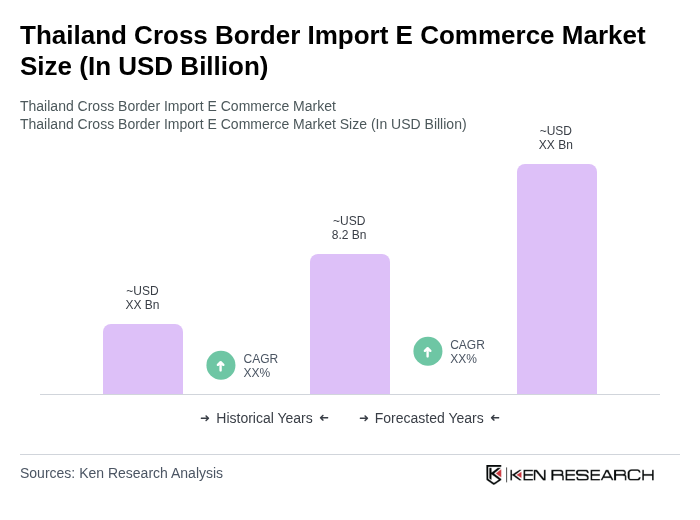
- The Thailand Cross Border Import E Commerce Market is valued at USD 8.2 billion, based on a five-year historical analysis. This growth is primarily driven by the increasing internet penetration at 85.3%, widespread smartphone usage, and a growing preference for online shopping among consumers. The rise in disposable income, convenience of cross-border shopping, and the influence of social commerce and live-selling platforms have further fueled this market's expansion.
- Key logistics hubs including Bangkok, Chiang Mai, and Phuket dominate the market due to their robust infrastructure, high population density, and significant tourist influx. These cities serve as major distribution centers, facilitating efficient shipping and delivery services, thus enhancing the overall consumer experience in cross-border e-commerce.
- The Thai government has established regulatory frameworks governing e-commerce transactions, including provisions for platform registration, data protection compliance, and consumer safeguards. These regulations aim to enhance consumer protection and foster trust in cross-border transactions by ensuring standardized operational requirements across all e-commerce platforms operating within Thailand.
Thailand Cross Border Import E Commerce Market Segmentation
By Business Model:
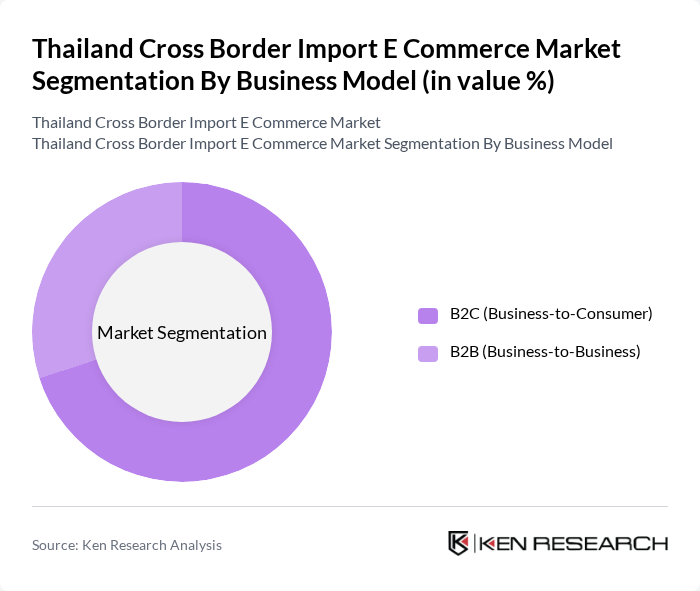
The two primary business models in the Thailand Cross Border Import E Commerce Market are B2C (Business-to-Consumer) and B2B (Business-to-Business). The B2C segment continues to dominate the market due to the increasing number of consumers opting for online shopping. This trend is driven by the convenience of purchasing goods from international retailers, often at competitive prices, with strong participation from Gen Z and Millennials. The B2B segment, while growing at a steady pace, primarily serves businesses looking to source products from overseas suppliers, which remains less prevalent compared to direct consumer purchases.
By Product Category:
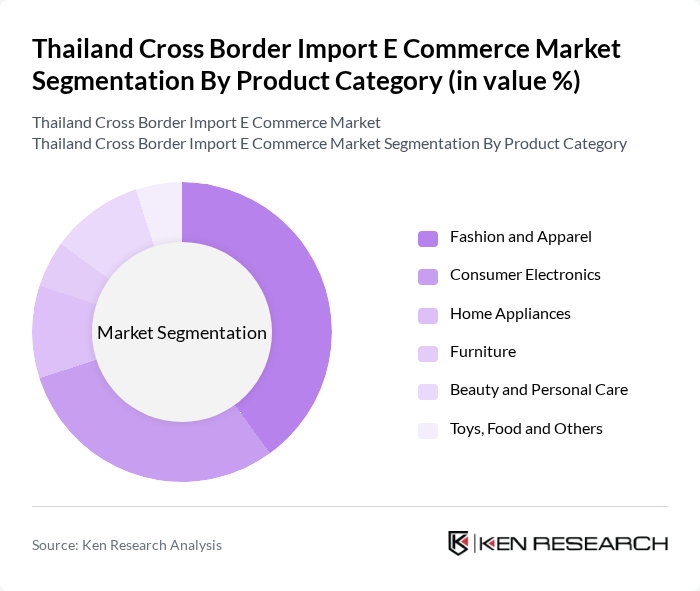
The product categories in the Thailand Cross Border Import E Commerce Market include Fashion and Apparel, Consumer Electronics, Home Appliances, Furniture, Beauty and Personal Care, and Toys, Food and Others. Fashion and Apparel lead the market, driven by the popularity of international brands and the influence of social media and short-video platforms on consumer purchasing decisions. Consumer Electronics also hold a significant share, as tech-savvy consumers seek the latest gadgets from abroad, with tariff reductions on Chinese and Korean goods enhancing price competitiveness. Other categories are growing but do not match the dominance of fashion and electronics.
Thailand Cross Border Import E Commerce Market Competitive Landscape
The Thailand Cross Border Import E Commerce Market is characterized by a dynamic mix of regional and international players. Leading participants such as Lazada, Shopee, TikTok Shop, JD Central, Alibaba, Amazon, Zalora, LINE Shopping, 11Street, Qoo10, Central Group, Big C, Tesco Lotus, HomePro, B2S contribute to innovation, geographic expansion, and service delivery in this space.
Thailand Cross Border Import E Commerce Market Industry Analysis
Growth Drivers
- Increasing Internet Penetration:Thailand's internet penetration rate reached 82% in the future, with approximately 57 million users accessing online services. This growth is driven by affordable mobile data plans and increased smartphone adoption, which is projected to reach 95% in the future. Enhanced connectivity facilitates cross-border e-commerce, allowing consumers to access international products easily. The rise in digital literacy among the population further supports this trend, as more individuals engage in online shopping, contributing to the market's expansion.
- Rising Middle-Class Population:The middle-class population in Thailand is expected to grow to 22 million in the future, representing a significant consumer base for cross-border e-commerce. This demographic shift is characterized by increased disposable income, with average household income projected to rise to THB 35,000 per month. As the middle class expands, so does the demand for diverse international products, driving growth in cross-border e-commerce. This trend is further supported by changing consumer preferences towards quality and variety in products.
- Enhanced Logistics and Delivery Services:Thailand's logistics sector is projected to grow by 12% in the future, driven by investments in infrastructure and technology. The government has allocated THB 120 billion for logistics improvements, including the development of smart logistics systems. Enhanced delivery services, such as same-day delivery options, are becoming increasingly common, improving customer satisfaction and encouraging cross-border purchases. Efficient logistics networks facilitate faster and more reliable shipping, which is crucial for the growth of the e-commerce market.
Market Challenges
- Regulatory Compliance Issues:Navigating Thailand's complex regulatory landscape poses significant challenges for cross-border e-commerce. The country has stringent import regulations, with over 1,200 items requiring special permits. Additionally, compliance with e-commerce taxation policies, which are evolving, can be burdensome for foreign businesses. Failure to adhere to these regulations can result in fines and delays, hindering market entry and growth for international e-commerce players.
- Payment Security Concerns:Payment security remains a critical challenge in Thailand's e-commerce landscape, with 45% of consumers expressing concerns about online transaction safety. The rise in cybercrime incidents, including data breaches and fraud, has heightened these fears. As a result, many consumers prefer cash-on-delivery options, which can slow down the growth of cross-border e-commerce. Addressing these security concerns through robust payment systems and consumer education is essential for fostering trust in online transactions.
Thailand Cross Border Import E Commerce Market Future Outlook
The future of Thailand's cross-border import e-commerce market appears promising, driven by technological advancements and changing consumer behaviors. As internet penetration continues to rise, more consumers will engage in online shopping, particularly for international products. Additionally, the integration of advanced logistics solutions and payment systems will enhance the overall shopping experience. Companies that adapt to these trends and invest in localized marketing strategies will likely capture a larger share of the growing market, fostering sustainable growth in the coming years.
Market Opportunities
- Expansion of Mobile Commerce:With mobile commerce expected to account for 65% of total e-commerce sales in the future, businesses can capitalize on this trend by optimizing their platforms for mobile users. This shift presents an opportunity to reach a broader audience, particularly among younger consumers who prefer shopping via smartphones. Investing in mobile-friendly websites and apps can significantly enhance user engagement and conversion rates.
- Utilization of Social Media for Marketing:Social media platforms in Thailand have over 55 million active users, making them a powerful tool for marketing cross-border products. Brands can leverage these platforms to engage with consumers, promote products, and drive traffic to their e-commerce sites. By utilizing targeted advertising and influencer partnerships, businesses can effectively reach potential customers, enhancing brand visibility and sales in the competitive market.
Scope of the Report
| Segment | Sub-Segments |
|---|---|
| By Business Model | B2C (Business-to-Consumer) B2B (Business-to-Business) |
| By Product Category | Fashion and Apparel Consumer Electronics Home Appliances Furniture Beauty and Personal Care Toys, Food and Others |
| By Sales Channel | Online Marketplaces Direct-to-Consumer (Webstores) Social Commerce (Live, Chat) |
| By Shipping Method | Standard Shipping Express Shipping Same-Day Delivery Click and Collect Parcel Lockers |
| By Payment Method | Credit/Debit Cards E-Wallets Bank Transfers Cash on Delivery Mobile Payments |
| By Customer Demographics | Age Group (Gen Z, Millennials, Gen X, Boomers) Gender Income Level Urban vs Rural |
| By Customer Engagement Level | Active Customers Inactive Customers New Customers Returning Customers |
Key Target Audience
Investors and Venture Capitalist Firms
Government and Regulatory Bodies (e.g., Ministry of Commerce, Customs Department)
Logistics and Shipping Companies
Payment Gateway Providers
E-commerce Platforms and Marketplaces
Import and Export Trade Associations
Digital Marketing Agencies
Consumer Goods Manufacturers
Players Mentioned in the Report:
Lazada
Shopee
TikTok Shop
JD Central
Alibaba
Amazon
Zalora
LINE Shopping
11Street
Qoo10
Central Group
Big C
Tesco Lotus
HomePro
B2S
Table of Contents
Market Assessment Phase
1. Executive Summary and Approach
2. Thailand Cross Border Import E Commerce Market Overview
2.1 Key Insights and Strategic Recommendations
2.2 Thailand Cross Border Import E Commerce Market Overview
2.3 Definition and Scope
2.4 Evolution of Market Ecosystem
2.5 Timeline of Key Regulatory Milestones
2.6 Value Chain & Stakeholder Mapping
2.7 Business Cycle Analysis
2.8 Policy & Incentive Landscape
3. Thailand Cross Border Import E Commerce Market Analysis
3.1 Growth Drivers
3.1.1 Increasing Internet Penetration
3.1.2 Rising Middle-Class Population
3.1.3 Enhanced Logistics and Delivery Services
3.1.4 Growing Demand for International Products
3.2 Market Challenges
3.2.1 Regulatory Compliance Issues
3.2.2 High Competition from Local E-Commerce Platforms
3.2.3 Payment Security Concerns
3.2.4 Language and Cultural Barriers
3.3 Market Opportunities
3.3.1 Expansion of Mobile Commerce
3.3.2 Partnerships with Local Retailers
3.3.3 Niche Market Development
3.3.4 Utilization of Social Media for Marketing
3.4 Market Trends
3.4.1 Personalization of Shopping Experiences
3.4.2 Growth of Subscription Services
3.4.3 Increased Focus on Sustainability
3.4.4 Adoption of AI and Chatbots in Customer Service
3.5 Government Regulation
3.5.1 E-Commerce Taxation Policies
3.5.2 Data Protection Regulations
3.5.3 Import Tariffs on Goods
3.5.4 Consumer Protection Laws
4. SWOT Analysis
5. Stakeholder Analysis
6. Porter's Five Forces Analysis
7. Thailand Cross Border Import E Commerce Market Market Size, 2019-2024
7.1 By Value
7.2 By Volume
7.3 By Average Selling Price
8. Thailand Cross Border Import E Commerce Market Segmentation
8.1 By Business Model
8.1.1 B2C (Business-to-Consumer)
8.1.2 B2B (Business-to-Business)
8.2 By Product Category
8.2.1 Fashion and Apparel
8.2.2 Consumer Electronics
8.2.3 Home Appliances
8.2.4 Furniture
8.2.5 Beauty and Personal Care
8.2.6 Toys, Food and Others
8.3 By Sales Channel
8.3.1 Online Marketplaces
8.3.2 Direct-to-Consumer (Webstores)
8.3.3 Social Commerce (Live, Chat)
8.4 By Shipping Method
8.4.1 Standard Shipping
8.4.2 Express Shipping
8.4.3 Same-Day Delivery
8.4.4 Click and Collect
8.4.5 Parcel Lockers
8.5 By Payment Method
8.5.1 Credit/Debit Cards
8.5.2 E-Wallets
8.5.3 Bank Transfers
8.5.4 Cash on Delivery
8.5.5 Mobile Payments
8.6 By Customer Demographics
8.6.1 Age Group (Gen Z, Millennials, Gen X, Boomers)
8.6.2 Gender
8.6.3 Income Level
8.6.4 Urban vs Rural
8.7 By Customer Engagement Level
8.7.1 Active Customers
8.7.2 Inactive Customers
8.7.3 New Customers
8.7.4 Returning Customers
9. Thailand Cross Border Import E Commerce Market Competitive Analysis
9.1 Market Share of Key Players
9.2 Cross Comparison of Key Players
9.2.1 Company Name
9.2.2 Group Size (Large, Medium, or Small as per industry convention)
9.2.3 Customer Acquisition Cost (CAC)
9.2.4 Average Order Value (AOV)
9.2.5 Conversion Rate (%)
9.2.6 Customer Retention Rate (%)
9.2.7 Customer Lifetime Value (CLV)
9.2.8 Return on Advertising Spend (ROAS)
9.2.9 Net Promoter Score (NPS)
9.2.10 Year-over-Year Revenue Growth Rate (%)
9.3 SWOT Analysis of Top Players
9.4 Pricing Analysis
9.5 Detailed Profile of Major Companies
9.5.1 Lazada
9.5.2 Shopee
9.5.3 TikTok Shop
9.5.4 JD Central
9.5.5 Alibaba
9.5.6 Amazon
9.5.7 Zalora
9.5.8 LINE Shopping
9.5.9 11Street
9.5.10 Qoo10
9.5.11 Central Group
9.5.12 Big C
9.5.13 Tesco Lotus
9.5.14 HomePro
9.5.15 B2S
10. Thailand Cross Border Import E Commerce Market End-User Analysis
10.1 Procurement Behavior of Key Ministries
10.1.1 Ministry of Commerce
10.1.2 Ministry of Digital Economy and Society
10.1.3 Ministry of Finance
10.1.4 Ministry of Industry
10.2 Corporate Spend on Infrastructure & Energy
10.2.1 Investment in E-Commerce Infrastructure
10.2.2 Spending on Digital Marketing
10.2.3 Budget for Logistics and Delivery
10.2.4 Expenditure on Customer Service Technologies
10.3 Pain Point Analysis by End-User Category
10.3.1 Small Businesses
10.3.2 Large Enterprises
10.3.3 Government Agencies
10.3.4 Individual Consumers
10.4 User Readiness for Adoption
10.4.1 Awareness of Cross Border E-Commerce
10.4.2 Technological Proficiency
10.4.3 Trust in Online Transactions
10.4.4 Accessibility of Payment Methods
10.5 Post-Deployment ROI and Use Case Expansion
10.5.1 Measurement of ROI
10.5.2 Expansion into New Product Categories
10.5.3 Scaling Operations
10.5.4 Customer Feedback and Iteration
11. Thailand Cross Border Import E Commerce Market Future Size, 2025-2030
11.1 By Value
11.2 By Volume
11.3 By Average Selling Price
Go-To-Market Strategy Phase
12. Whitespace Analysis + Business Model Canvas
12.1 Market Gaps Identification
12.2 Business Model Development
13. Marketing and Positioning Recommendations
13.1 Branding Strategies
13.2 Product USPs
14. Distribution Plan
14.1 Urban Retail vs Rural NGO Tie-ups
15. Channel & Pricing Gaps
15.1 Underserved Routes
15.2 Pricing Bands
16. Unmet Demand & Latent Needs
16.1 Category Gaps
16.2 Consumer Segments
17. Customer Relationship
17.1 Loyalty Programs
17.2 After-sales Service
18. Value Proposition
18.1 Sustainability
18.2 Integrated Supply Chains
19. Key Activities
19.1 Regulatory Compliance
19.2 Branding
19.3 Distribution Setup
20. Entry Strategy Evaluation
20.1 Domestic Market Entry Strategy
20.1.1 Product Mix
20.1.2 Pricing Band
20.1.3 Packaging
20.2 Export Entry Strategy
20.2.1 Target Countries
20.2.2 Compliance Roadmap
21. Entry Mode Assessment
21.1 JV
21.2 Greenfield
21.3 M&A
21.4 Distributor Model
22. Capital and Timeline Estimation
22.1 Capital Requirements
22.2 Timelines
23. Control vs Risk Trade-Off
23.1 Ownership vs Partnerships
24. Profitability Outlook
24.1 Breakeven Analysis
24.2 Long-term Sustainability
25. Potential Partner List
25.1 Distributors
25.2 JVs
25.3 Acquisition Targets
26. Execution Roadmap
26.1 Phased Plan for Market Entry
26.1.1 Market Setup
26.1.2 Market Entry
26.1.3 Growth Acceleration
26.1.4 Scale & Stabilize
26.2 Key Activities and Milestones
26.2.1 Activity Planning
26.2.2 Milestone Tracking
27. Disclaimer
Research Methodology
Phase 1: Approach1
Desk Research
- Analysis of trade statistics from the Thai Customs Department and e-commerce platforms
- Review of market reports and white papers from industry associations and government agencies
- Examination of consumer behavior studies and demographic data from national statistics offices
Primary Research
- Interviews with key stakeholders in logistics and supply chain management within the e-commerce sector
- Surveys targeting online retailers and cross-border e-commerce platforms operating in Thailand
- Focus groups with consumers who frequently engage in cross-border online shopping
Validation & Triangulation
- Cross-validation of findings through multiple data sources, including trade data and consumer surveys
- Triangulation of insights from industry experts and market analysts to ensure accuracy
- Sanity checks through expert panel discussions to validate assumptions and findings
Phase 2: Market Size Estimation1
Top-down Assessment
- Estimation of total e-commerce market size in Thailand and its growth trajectory
- Segmentation of the market by product categories and consumer demographics
- Incorporation of government initiatives promoting cross-border trade and e-commerce
Bottom-up Modeling
- Collection of sales data from leading e-commerce platforms and retailers engaged in cross-border trade
- Estimation of average transaction values and frequency of cross-border purchases
- Analysis of logistics costs and operational expenses associated with cross-border e-commerce
Forecasting & Scenario Analysis
- Development of forecasting models based on historical growth rates and market trends
- Scenario analysis considering factors such as regulatory changes and shifts in consumer preferences
- Creation of multiple projections (baseline, optimistic, and pessimistic) through 2030
Phase 3: CATI Sample Composition1
| Scope Item/Segment | Sample Size | Target Respondent Profiles |
|---|---|---|
| Cross-Border E-commerce Retailers | 150 | Business Owners, E-commerce Managers |
| Logistics Providers for E-commerce | 100 | Operations Managers, Logistics Coordinators |
| Consumer Insights on Cross-Border Shopping | 120 | Frequent Online Shoppers, Demographic Segments |
| Payment Solutions for E-commerce | 80 | Product Managers, Financial Analysts |
| Regulatory Impact on E-commerce | 60 | Policy Makers, Compliance Officers |
Frequently Asked Questions
What is the current value of the Thailand Cross Border Import E Commerce Market?
The Thailand Cross Border Import E Commerce Market is valued at approximately USD 8.2 billion, reflecting significant growth driven by increased internet penetration, smartphone usage, and a rising preference for online shopping among consumers.
What are the main drivers of growth in Thailand's cross-border e-commerce market?
Which cities are the primary logistics hubs for cross-border e-commerce in Thailand?
What regulatory frameworks govern e-commerce transactions in Thailand?
Other Regional/Country Reports
Other Adjacent Reports
South Korea Fashion E-Commerce Market
South Korea Consumer Electronics E-Commerce Market
India Beauty and Personal Care Market Size, Share & Forecast, By Product Type, Price Tier & Distribution Channel, 2026-2031China Home Appliances Market Size, Share & Forecast, By Product Type, Price Tier & Distribution Channel, 2026–2031India Supply Chain Management Market Size, Share & Forecast, By Solution Type, Deployment Model & End-Use Industry, 2026-2031KSA International Shipping Market
Why Buy From Us?

What makes us stand out is that our consultants follow Robust, Refine and Result (RRR) methodology. Robust for clear definitions, approaches and sanity checking, Refine for differentiating respondents' facts and opinions, and Result for presenting data with story.

We have set a benchmark in the industry by offering our clients with syndicated and customized market research reports featuring coverage of entire market as well as meticulous research and analyst insights.

While we don't replace traditional research, we flip the method upside down. Our dual approach of Top Bottom & Bottom Top ensures quality deliverable by not just verifying company fundamentals but also looking at the sector and macroeconomic factors.

With one step in the future, our research team constantly tries to show you the bigger picture. We help with some of the tough questions you may encounter along the way: How is the industry positioned? Best marketing channel? KPI's of competitors? By aligning every element, we help maximize success.

Our report gives you instant access to the answers and sources that other companies might choose to hide. We elaborate each steps of research methodology we have used and showcase you the sample size to earn your trust.

If you need any support, we are here! We pride ourselves on universe strength, data quality, and quick, friendly, and professional service.