About the Report
Base Year 2024US Event Management Market Overview
- The US Event Management Market is valued at USD 400 billion, based on a five-year historical analysis. This substantial market size reflects the robust demand for corporate events, social gatherings, weddings, and the integration of advanced technologies in event planning and execution. The resurgence of in-person events post-pandemic, combined with the adoption of hybrid formats, has expanded the reach and accessibility of events, while digital platforms and event management software have streamlined organization and enhanced attendee engagement. Personalization, immersive experiences, and the use of augmented and virtual reality are increasingly central to event strategies, driving higher engagement and stronger brand connections.
- Key players in this market include major cities such as New York, Los Angeles, and Chicago, which dominate due to their robust infrastructure, diverse venues, and a high concentration of businesses and cultural activities. These cities attract a significant number of events, ranging from corporate conferences to entertainment festivals, making them pivotal in the event management landscape. For example, Las Vegas also stands out as a major hub for large-scale gatherings like CES, which draws over 130,000 professionals annually and has a notable local economic impact.
- In 2023, the US government implemented the Event Safety and Security Act, issued by the Department of Homeland Security, which requires organizers of large-scale public events to conduct comprehensive risk assessments, develop detailed emergency response plans, and comply with enhanced security standards. These measures are designed to ensure the safety of attendees and align with local regulations, thereby fostering a secure environment for public gatherings and boosting consumer confidence in attending events.

US Event Management Market Segmentation
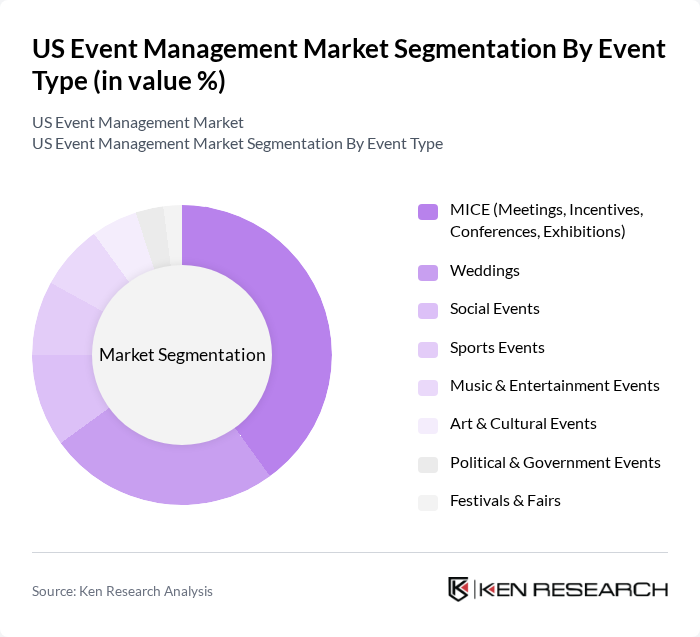
By Event Type:The event type segmentation includes various categories such as MICE (Meetings, Incentives, Conferences, Exhibitions), Weddings, Social Events, Sports Events, Music & Entertainment Events, Art & Cultural Events, Political & Government Events, and Festivals & Fairs. Among these, MICE events are currently dominating the market due to the increasing number of corporate meetings and conferences, which are essential for business networking and knowledge sharing. The demand for professional gatherings has surged, particularly in urban centers, as companies recognize the value of face-to-face interactions in building relationships and driving business growth. Corporate events lead the event type category, reflecting the high volume of business activities and professional gatherings in the US market.
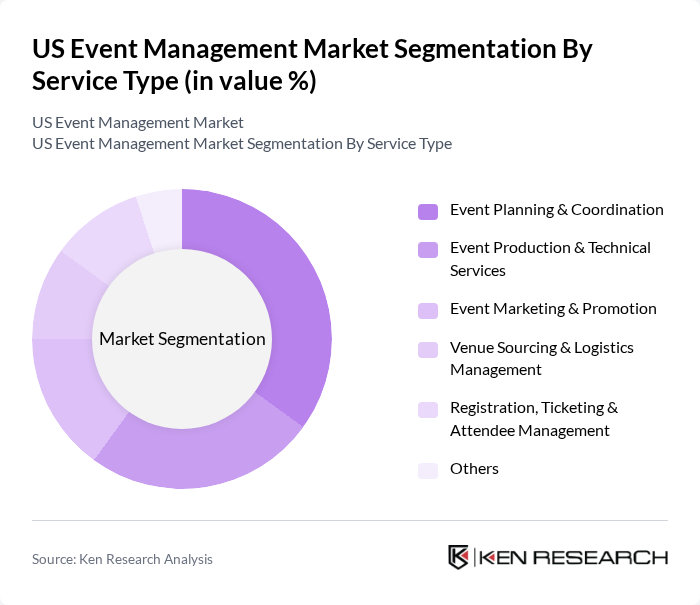
By Service Type:The service type segmentation encompasses Event Planning & Coordination, Event Production & Technical Services, Event Marketing & Promotion, Venue Sourcing & Logistics Management, Registration, Ticketing & Attendee Management, and Others. Event Planning & Coordination is the leading sub-segment, as it involves comprehensive management of all aspects of an event, from conceptualization to execution. The increasing complexity of events and the need for professional expertise in logistics and coordination have made this service essential for successful event outcomes. Event planning dominates the service type segment, reflecting its critical role in event execution.
US Event Management Market Competitive Landscape
The US Event Management Market is characterized by a dynamic mix of regional and international players. Leading participants such as Eventbrite, Cvent, Freeman, Informa, Reed Exhibitions, Live Nation Entertainment, Bizzabo, Social Tables, Splash, Whova, Gather, Certain, Aventri, MeetingPlay, MKG Productions, LLC, Maritz Holdings Inc., EA Collective, LLC, BCD Meetings & Events, EGG Events, George P. Johnson Company, Event Solutions, TeamOut, AMP Event Group contribute to innovation, geographic expansion, and service delivery in this space.
US Event Management Market Industry Analysis
Growth Drivers
- Increasing Corporate Events:The US corporate events sector is projected to generate approximately $200 billion in revenue in the future, driven by a surge in business meetings, conferences, and trade shows. Companies are increasingly investing in events to enhance brand visibility and foster networking opportunities. According to the Event Marketing Institute, 80% of marketers believe live events are critical for their success, indicating a robust demand for professional event management services in the corporate sector.
- Rise in Social Events:The social events segment, including weddings, parties, and community gatherings, is expected to reach $100 billion in the future. This growth is fueled by a cultural shift towards experiential celebrations, with consumers prioritizing unique and personalized experiences. The National Association of Wedding Professionals reports that the average wedding budget has increased to $34,000, highlighting the willingness of consumers to invest in high-quality event management services for memorable occasions.
- Technological Advancements in Event Management:The integration of technology in event management is revolutionizing the industry, with the market for event technology projected to exceed $10 billion in the future. Innovations such as event management software, mobile apps, and virtual reality are enhancing attendee engagement and streamlining operations. A report by Eventbrite indicates that 70% of event organizers are adopting technology to improve event experiences, showcasing the critical role of tech in driving market growth.
Market Challenges
- High Competition:The US event management market is characterized by intense competition, with over 100,000 event planning companies operating nationwide. This saturation leads to price wars and reduced profit margins, making it challenging for new entrants to establish a foothold. According to IBISWorld, the industry’s average profit margin is only 6%, underscoring the need for differentiation and innovation to succeed in this crowded marketplace.
- Economic Uncertainty:Economic fluctuations pose significant challenges to the event management industry, as companies often cut back on event spending during downturns. The IMF forecasts a 1.5% growth in the US economy in the future, which may lead to cautious spending by businesses. This uncertainty can result in reduced budgets for corporate events and a decline in overall event attendance, impacting revenue for event management firms.
US Event Management Market Future Outlook
The US event management market is poised for significant transformation, driven by evolving consumer preferences and technological advancements. As hybrid events gain traction, combining in-person and virtual experiences, organizers will need to adapt their strategies to meet diverse audience needs. Additionally, the focus on sustainability will shape event planning, with more companies seeking eco-friendly solutions. The integration of data analytics will further enhance event personalization, ensuring that experiences are tailored to individual preferences and expectations.
Market Opportunities
- Expansion of Hybrid Events:The hybrid event model is expected to grow significantly, with an estimated 60% of events incorporating both in-person and virtual elements in the future. This shift presents opportunities for event planners to reach broader audiences and enhance engagement through innovative technologies, ultimately driving revenue growth and customer satisfaction.
- Increased Investment in Event Technology:As organizations recognize the value of technology in enhancing event experiences, investment in event tech is projected to rise by 25% annually in the future. This trend will enable event planners to leverage advanced tools for better planning, execution, and attendee engagement, creating a competitive advantage in the market.
Scope of the Report
| Segment | Sub-Segments |
|---|---|
| By Event Type | MICE (Meetings, Incentives, Conferences, Exhibitions) Weddings Social Events Sports Events Music & Entertainment Events Art & Cultural Events Political & Government Events Festivals & Fairs |
| By Service Type | Event Planning & Coordination Event Production & Technical Services Event Marketing & Promotion Venue Sourcing & Logistics Management Registration, Ticketing & Attendee Management Others |
| By Delivery Mode | In-Person Virtual Hybrid |
| By End-User | Corporations Non-Profit Organizations Government Agencies Educational Institutions Individuals Others |
| By Event Size | Small Events Medium Events Large Events |
| By Geographic Focus | Urban Areas Suburban Areas Rural Areas |
| By Technology Utilization | Event Management Software Mobile Applications Virtual Reality Tools |
| By Pricing Model | Fixed Pricing Tiered Pricing Pay-Per-Event Pricing Subscription-Based Pricing |
Key Target Audience
Investors and Venture Capitalist Firms
Government and Regulatory Bodies (e.g., Federal Emergency Management Agency, Occupational Safety and Health Administration)
Event Venues and Facilities
Event Technology Providers
Event Marketing and Promotion Agencies
Corporate Event Planners
Non-Profit Organizations and Charities
Trade Associations and Industry Groups
Players Mentioned in the Report:
Eventbrite
Cvent
Freeman
Informa
Reed Exhibitions
Live Nation Entertainment
Bizzabo
Social Tables
Splash
Whova
Gather
Certain
Aventri
MeetingPlay
MKG Productions, LLC
Maritz Holdings Inc.
EA Collective, LLC
BCD Meetings & Events
EGG Events
George P. Johnson Company
Event Solutions
TeamOut
AMP Event Group
Table of Contents
Market Assessment Phase
1. Executive Summary and Approach
2. US Event Management Market Overview
2.1 Key Insights and Strategic Recommendations
2.2 US Event Management Market Overview
2.3 Definition and Scope
2.4 Evolution of Market Ecosystem
2.5 Timeline of Key Regulatory Milestones
2.6 Value Chain & Stakeholder Mapping
2.7 Business Cycle Analysis
2.8 Policy & Incentive Landscape
3. US Event Management Market Analysis
3.1 Growth Drivers
3.1.1 Increasing Corporate Events
3.1.2 Rise in Social Events
3.1.3 Technological Advancements in Event Management
3.1.4 Growing Demand for Virtual Events
3.2 Market Challenges
3.2.1 High Competition
3.2.2 Economic Uncertainty
3.2.3 Regulatory Compliance Issues
3.2.4 Changing Consumer Preferences
3.3 Market Opportunities
3.3.1 Expansion of Hybrid Events
3.3.2 Increased Investment in Event Technology
3.3.3 Growing Interest in Sustainable Events
3.3.4 Partnerships with Influencers and Brands
3.4 Market Trends
3.4.1 Personalization of Event Experiences
3.4.2 Use of Data Analytics for Event Planning
3.4.3 Integration of Augmented Reality
3.4.4 Focus on Health and Safety Protocols
3.5 Government Regulation
3.5.1 Safety Regulations for Public Gatherings
3.5.2 Licensing Requirements for Event Venues
3.5.3 Tax Incentives for Event Organizers
3.5.4 Environmental Regulations for Event Waste Management
4. SWOT Analysis
5. Stakeholder Analysis
6. Porter's Five Forces Analysis
7. US Event Management Market Market Size, 2019-2024
7.1 By Value
7.2 By Volume
7.3 By Average Selling Price
8. US Event Management Market Segmentation
8.1 By Event Type
8.1.1 MICE (Meetings, Incentives, Conferences, Exhibitions)
8.1.2 Weddings
8.1.3 Social Events
8.1.4 Sports Events
8.1.5 Music & Entertainment Events
8.1.6 Art & Cultural Events
8.1.7 Political & Government Events
8.1.8 Festivals & Fairs
8.2 By Service Type
8.2.1 Event Planning & Coordination
8.2.2 Event Production & Technical Services
8.2.3 Event Marketing & Promotion
8.2.4 Venue Sourcing & Logistics Management
8.2.5 Registration, Ticketing & Attendee Management
8.2.6 Others
8.3 By Delivery Mode
8.3.1 In-Person
8.3.2 Virtual
8.3.3 Hybrid
8.4 By End-User
8.4.1 Corporations
8.4.2 Non-Profit Organizations
8.4.3 Government Agencies
8.4.4 Educational Institutions
8.4.5 Individuals
8.4.6 Others
8.5 By Event Size
8.5.1 Small Events
8.5.2 Medium Events
8.5.3 Large Events
8.6 By Geographic Focus
8.6.1 Urban Areas
8.6.2 Suburban Areas
8.6.3 Rural Areas
8.7 By Technology Utilization
8.7.1 Event Management Software
8.7.2 Mobile Applications
8.7.3 Virtual Reality Tools
8.8 By Pricing Model
8.8.1 Fixed Pricing
8.8.2 Tiered Pricing
8.8.3 Pay-Per-Event Pricing
8.8.4 Subscription-Based Pricing
9. US Event Management Market Competitive Analysis
9.1 Market Share of Key Players
9.2 KPIs for Cross Comparison of Key Players
9.2.1 Company Name
9.2.2 Group Size (Large, Medium, Small)
9.2.3 Annual Revenue (USD)
9.2.4 Revenue Growth Rate (%)
9.2.5 Customer Retention Rate (%)
9.2.6 Average Event Size Managed (Attendees)
9.2.7 Number of Events Managed Annually
9.2.8 Market Penetration Rate (%)
9.2.9 Pricing Strategy (Fixed, Tiered, Subscription, Custom)
9.2.10 Customer Satisfaction Score (NPS or equivalent)
9.2.11 Brand Recognition Index
9.2.12 Technology Adoption Level (e.g., use of event management software, hybrid/virtual capabilities)
9.3 SWOT Analysis of Top Players
9.4 Pricing Analysis
9.5 List of Major Companies
9.5.1 Eventbrite
9.5.2 Cvent
9.5.3 Freeman
9.5.4 Informa
9.5.5 Reed Exhibitions
9.5.6 Live Nation Entertainment
9.5.7 Bizzabo
9.5.8 Social Tables
9.5.9 Splash
9.5.10 Whova
9.5.11 Gather
9.5.12 Certain
9.5.13 Aventri
9.5.14 MeetingPlay
9.5.15 MKG Productions, LLC
9.5.16 Maritz Holdings Inc.
9.5.17 EA Collective, LLC
9.5.18 BCD Meetings & Events
9.5.19 EGG Events
9.5.20 George P. Johnson Company
9.5.21 Event Solutions
9.5.22 TeamOut
9.5.23 AMP Event Group
10. US Event Management Market End-User Analysis
10.1 Procurement Behavior of Key Ministries
10.1.1 Budget Allocation for Events
10.1.2 Decision-Making Process
10.1.3 Preferred Vendors
10.2 Corporate Spend on Infrastructure & Energy
10.2.1 Investment in Event Infrastructure
10.2.2 Spending on Event Technology
10.2.3 Budgeting for Sustainability Initiatives
10.3 Pain Point Analysis by End-User Category
10.3.1 Budget Constraints
10.3.2 Quality of Service Issues
10.3.3 Venue Availability
10.4 User Readiness for Adoption
10.4.1 Technology Adoption Rates
10.4.2 Training and Support Needs
10.5 Post-Deployment ROI and Use Case Expansion
10.5.1 Measurement of Event Success
10.5.2 Opportunities for Future Events
11. US Event Management Market Future Size, 2025-2030
11.1 By Value
11.2 By Volume
11.3 By Average Selling Price
Go-To-Market Strategy Phase
1. Whitespace Analysis + Business Model Canvas
1.1 Market Gaps Identification
1.2 Business Model Development
2. Marketing and Positioning Recommendations
2.1 Branding Strategies
2.2 Product USPs
3. Distribution Plan
3.1 Urban Retail vs Rural NGO Tie-Ups
4. Channel & Pricing Gaps
4.1 Underserved Routes
4.2 Pricing Bands
5. Unmet Demand & Latent Needs
5.1 Category Gaps
5.2 Consumer Segments
6. Customer Relationship
6.1 Loyalty Programs
6.2 After-Sales Service
7. Value Proposition
7.1 Sustainability
7.2 Integrated Supply Chains
8. Key Activities
8.1 Regulatory Compliance
8.2 Branding
8.3 Distribution Setup
9. Entry Strategy Evaluation
9.1 Domestic Market Entry Strategy
9.1.1 Product Mix
9.1.2 Pricing Band
9.1.3 Packaging
9.2 Export Entry Strategy
9.2.1 Target Countries
9.2.2 Compliance Roadmap
10. Entry Mode Assessment
10.1 JV
10.2 Greenfield
10.3 M&A
10.4 Distributor Model
11. Capital and Timeline Estimation
11.1 Capital Requirements
11.2 Timelines
12. Control vs Risk Trade-Off
12.1 Ownership vs Partnerships
13. Profitability Outlook
13.1 Breakeven Analysis
13.2 Long-Term Sustainability
14. Potential Partner List
14.1 Distributors
14.2 JVs
14.3 Acquisition Targets
15. Execution Roadmap
15.1 Phased Plan for Market Entry
15.1.1 Market Setup
15.1.2 Market Entry
15.1.3 Growth Acceleration
15.1.4 Scale & Stabilize
15.2 Key Activities and Milestones
15.2.1 Activity Planning
15.2.2 Milestone Tracking
Research Methodology
Phase 1: Approach1
Desk Research
- Analysis of industry reports from event management associations and market research firms
- Review of government publications and statistics related to the events sector
- Examination of case studies and white papers from leading event management companies
Primary Research
- Interviews with event planners and coordinators across various sectors
- Surveys targeting venue managers and suppliers in the event management ecosystem
- Focus groups with attendees and exhibitors to gather insights on event experiences
Validation & Triangulation
- Cross-validation of findings through multiple data sources, including trade publications and expert opinions
- Triangulation of qualitative insights from interviews with quantitative data from surveys
- Sanity checks conducted through expert panel reviews and industry roundtables
Phase 2: Market Size Estimation1
Top-down Assessment
- Estimation of total market size based on national spending on events and conferences
- Segmentation of the market by event type, including corporate, social, and entertainment events
- Incorporation of trends in virtual and hybrid events into market size calculations
Bottom-up Modeling
- Data collection from leading event management firms to establish revenue benchmarks
- Cost analysis of event production, including venue, staffing, and technology expenses
- Volume x average spend basis for different event types and sizes
Forecasting & Scenario Analysis
- Multi-factor regression analysis incorporating economic indicators and consumer spending trends
- Scenario modeling based on potential impacts of public health policies and technological advancements
- Baseline, optimistic, and pessimistic projections for market growth through 2030
Phase 3: CATI Sample Composition1
| Scope Item/Segment | Sample Size | Target Respondent Profiles |
|---|---|---|
| Corporate Event Planning | 120 | Event Managers, Corporate Executives |
| Wedding and Social Events | 90 | Wedding Planners, Venue Coordinators |
| Trade Shows and Expos | 80 | Exhibition Managers, Marketing Directors |
| Virtual and Hybrid Events | 70 | Technology Providers, Event Producers |
| Entertainment and Festivals | 90 | Festival Organizers, Sponsorship Managers |
Frequently Asked Questions
What is the current value of the US Event Management Market?
The US Event Management Market is valued at approximately USD 400 billion, reflecting strong demand for various events, including corporate gatherings, weddings, and social events, particularly as in-person events have surged post-pandemic.
What are the main types of events in the US Event Management Market?
How has technology impacted the US Event Management Market?
What are the growth drivers for the US Event Management Market?
Other Regional/Country Reports
Indonesia Event Management Market
Malaysia Event Management Market
Other Adjacent Reports
Kuwait Event Technology Market
Oman Hospitality MarketCosta Rica Tourism MarketSouth Africa Entertainment Market
Philippines Marketing Services Market
Japan Conference and Exhibition Market
Bahrain Wedding Planning Market
UAE Sports Event Management Market
UAE digital advertising market report Size, Share, Growth Drivers, Trends, Opportunities & Forecast 2025–2030UAE Audio Visual Equipment Market
Why Buy From Us?

What makes us stand out is that our consultants follow Robust, Refine and Result (RRR) methodology. Robust for clear definitions, approaches and sanity checking, Refine for differentiating respondents' facts and opinions, and Result for presenting data with story.

We have set a benchmark in the industry by offering our clients with syndicated and customized market research reports featuring coverage of entire market as well as meticulous research and analyst insights.

While we don't replace traditional research, we flip the method upside down. Our dual approach of Top Bottom & Bottom Top ensures quality deliverable by not just verifying company fundamentals but also looking at the sector and macroeconomic factors.

With one step in the future, our research team constantly tries to show you the bigger picture. We help with some of the tough questions you may encounter along the way: How is the industry positioned? Best marketing channel? KPI's of competitors? By aligning every element, we help maximize success.

Our report gives you instant access to the answers and sources that other companies might choose to hide. We elaborate each steps of research methodology we have used and showcase you the sample size to earn your trust.

If you need any support, we are here! We pride ourselves on universe strength, data quality, and quick, friendly, and professional service.