Region:Asia
Author(s):Rebecca
Product Code:KRAA4320
Pages:95
Published On:January 2026
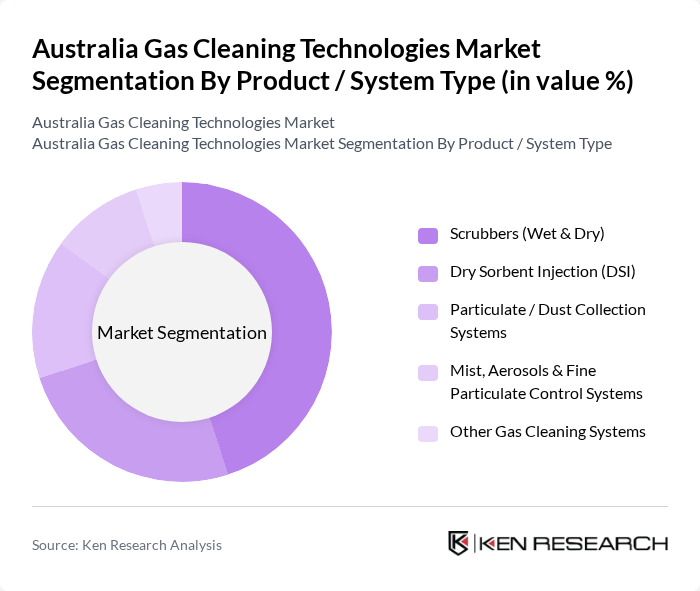
By Product / System Type:The product/system type segmentation includes various technologies designed to clean gases emitted from industrial processes, including flue gas from boilers and kilns, process vents, and fugitive emission control systems. The dominant sub-segment in this category is Scrubbers (Wet & Dry), which are widely used due to their effectiveness in removing acidic gases such as sulfur dioxide, hydrogen chloride, ammonia, as well as coarse and fine particulate matter from flue gases in power, chemical, refining, and waste-to-energy plants. The increasing regulatory pressure on industries to minimize emissions and the versatility of scrubber designs (wet, dry, and semi?dry) have led to a surge in the adoption of scrubbers, making them a preferred choice for many companies. Other notable sub-segments include Dry Sorbent Injection (DSI) systems, which inject sorbents such as lime or sodium-based reagents into flue gas for targeted acid-gas removal, and Particulate / Dust Collection Systems (including cyclones and bag filters), which play significant roles in capturing dust and particulate matter in mining, cement, metal processing, and bulk material handling operations.
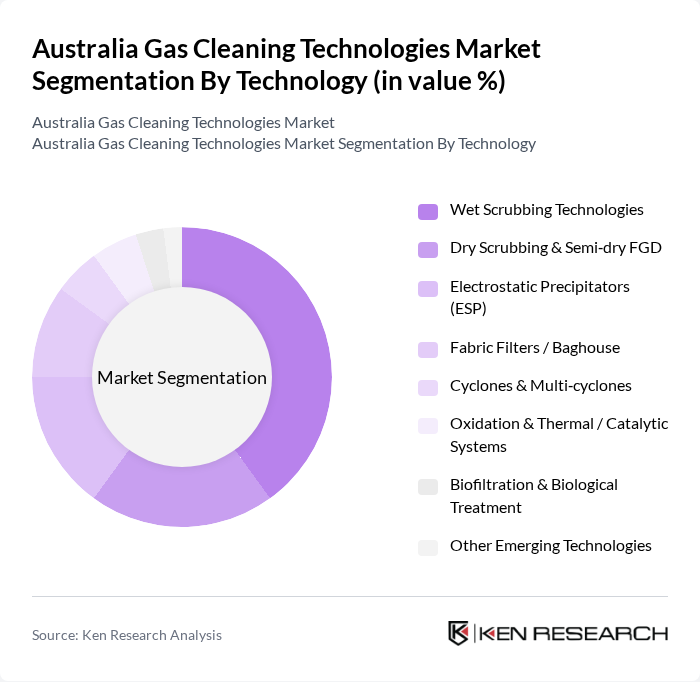
By Technology:The technology segmentation encompasses various methods employed in gas cleaning processes, from primary particulate removal to advanced acid-gas and volatile organic compound control. Wet Scrubbing Technologies lead this segment, favored for their efficiency in removing sulfur oxides, hydrogen chloride, soluble gases, and particulate matter from exhaust gases in coal and gas power plants, industrial boilers, refineries, and waste incineration facilities. The growing emphasis on reducing emissions from industrial sources, combined with the ability of wet scrubbers to handle variable gas loads and multiple pollutants, has propelled the adoption of these technologies. Other significant technologies include Electrostatic Precipitators (ESP), which are widely utilized in power, cement, and metals industries for high-efficiency particulate removal at large gas flow rates, and Fabric Filters / Baghouse, which provide very high collection efficiency for fine dust and are extensively used in cement, mining, and process industries to meet stringent emission standards. Cyclones and multi?cyclones are commonly applied as pre?cleaners for coarse particles, while oxidation and thermal/catalytic systems are used for volatile organic compounds and odour control; biofiltration and biological treatment are increasingly applied in wastewater, waste management, and some process industries as low?energy, sustainable options.
The Australia Gas Cleaning Technologies Market is characterized by a dynamic mix of regional and international players. Leading participants such as Cleanaway Waste Management Limited, Veolia Environmental Services (Australia) Pty Ltd, SUEZ Recycling & Recovery Australia Pty Ltd, AGL Energy Limited, Origin Energy Limited, EnergyAustralia Pty Ltd, APA Group, Jemena Gas Networks (NSW) Ltd, Envirosuite Limited, Downer EDI Limited, Cardno Limited, GHD Group Pty Ltd, WSP Australia Pty Ltd, RPS Group (Australia), EnviroWaste Services Limited contribute to innovation, geographic expansion, and service delivery in this space.
The future of the Australia gas cleaning technologies market appears promising, driven by increasing environmental awareness and regulatory pressures. As industries adapt to stringent emission standards, the demand for innovative gas cleaning solutions is expected to rise. Furthermore, the integration of smart technologies, such as IoT and AI, will enhance operational efficiencies and monitoring capabilities, making gas cleaning systems more attractive. This evolution will likely foster a competitive landscape, encouraging continuous improvement and investment in sustainable practices.
| Segment | Sub-Segments |
|---|---|
| By Product / System Type | Scrubbers (Wet & Dry) Dry Sorbent Injection (DSI) Particulate / Dust Collection Systems Mist, Aerosols & Fine Particulate Control Systems Other Gas Cleaning Systems |
| By Technology | Wet Scrubbing Technologies Dry Scrubbing & Semi?dry FGD Electrostatic Precipitators (ESP) Fabric Filters / Baghouse Cyclones & Multi?cyclones Oxidation & Thermal / Catalytic Systems Biofiltration & Biological Treatment Other Emerging Technologies |
| By End-User Industry | Power Generation (Coal, Gas & Renewables-Integrated) Chemicals & Petrochemicals Oil & Gas (Upstream, Midstream, Downstream) Mining & Metals Cement & Construction Materials Pulp & Paper, Food, and Other Manufacturing Municipal & Waste Management Facilities |
| By Application | Flue Gas Desulfurization (SOx Control) Particulate Matter (PM) & Dust Control NOx & Other Criteria Pollutant Control VOC & Odour Control Acid Gas & Hazardous Air Pollutant Removal CO? and Greenhouse Gas Management / Pre-treatment Other Industrial Emissions Control |
| By Ownership / Investment Type | Captive Installations by Industrial End-Users EPC & Turnkey Projects Third-Party Service / BOO & BOOT Models Government & Public Sector Projects |
| By Project Size | Small-Scale (Up to AUD X Million Capex) Medium-Scale (AUD X–Y Million Capex) Large-Scale (Above AUD Y Million Capex) |
| By Geography (Australia) | New South Wales Victoria Queensland Western Australia South Australia Tasmania, ACT & Northern Territory |
| Scope Item/Segment | Sample Size | Target Respondent Profiles |
|---|---|---|
| Industrial Gas Cleaning Systems | 120 | Plant Managers, Environmental Compliance Officers |
| Commercial Air Filtration Solutions | 90 | Facility Managers, Sustainability Coordinators |
| Residential Emission Control Technologies | 50 | Homeowners, HVAC Technicians |
| Mining Sector Gas Treatment | 60 | Mining Engineers, Environmental Managers |
| Regulatory Compliance in Gas Emissions | 70 | Policy Makers, Environmental Consultants |
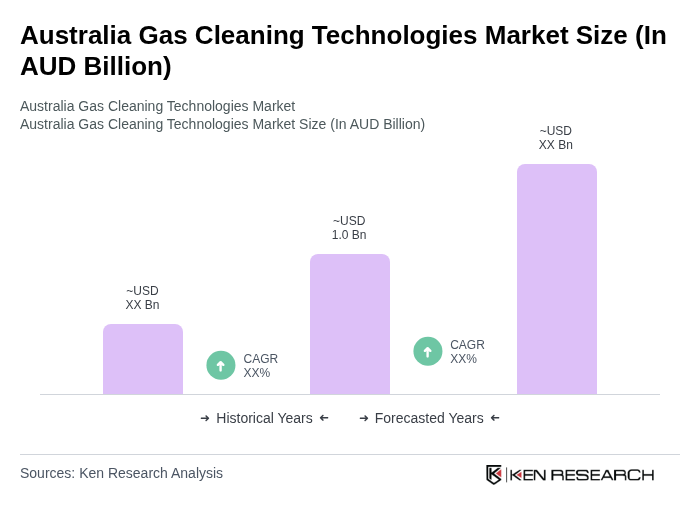
The Australia Gas Cleaning Technologies Market is valued at approximately AUD 1.0 billion, driven by stringent environmental regulations, increasing industrial activity, and a focus on sustainable practices across various sectors such as power generation, mining, and manufacturing.

What makes us stand out is that our consultants follow Robust, Refine and Result (RRR) methodology. Robust for clear definitions, approaches and sanity checking, Refine for differentiating respondents' facts and opinions, and Result for presenting data with story.

We have set a benchmark in the industry by offering our clients with syndicated and customized market research reports featuring coverage of entire market as well as meticulous research and analyst insights.

While we don't replace traditional research, we flip the method upside down. Our dual approach of Top Bottom & Bottom Top ensures quality deliverable by not just verifying company fundamentals but also looking at the sector and macroeconomic factors.

With one step in the future, our research team constantly tries to show you the bigger picture. We help with some of the tough questions you may encounter along the way: How is the industry positioned? Best marketing channel? KPI's of competitors? By aligning every element, we help maximize success.

Our report gives you instant access to the answers and sources that other companies might choose to hide. We elaborate each steps of research methodology we have used and showcase you the sample size to earn your trust.

If you need any support, we are here! We pride ourselves on universe strength, data quality, and quick, friendly, and professional service.













