Region:Middle East
Author(s):Shubham
Product Code:KRAD3629
Pages:89
Published On:November 2025
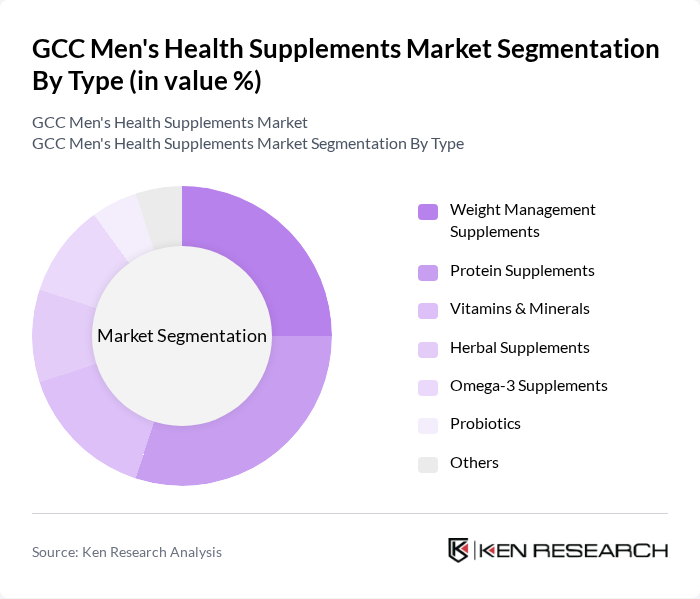
By Type:The market is segmented into various types of supplements, including Weight Management Supplements, Protein Supplements, Vitamins & Minerals, Herbal Supplements, Omega-3 Supplements, Probiotics, and Others. Among these, Protein Supplements have gained significant traction due to the increasing number of fitness enthusiasts and athletes seeking to enhance muscle mass and recovery. Weight Management Supplements also hold a substantial share as more men focus on maintaining a healthy weight. The demand for herbal and natural supplements is rising, reflecting a consumer preference for products perceived as safer and more holistic .
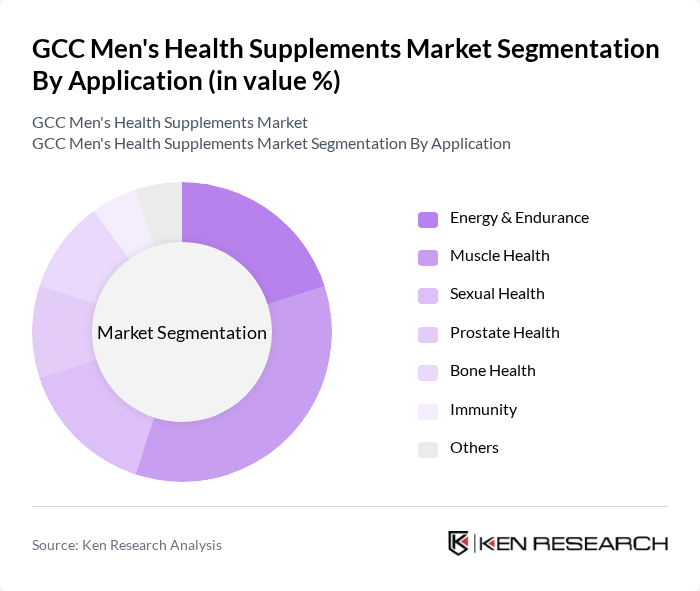
By Application:The applications of men's health supplements include Energy & Endurance, Muscle Health, Sexual Health, Prostate Health, Bone Health, Immunity, and Others. The Muscle Health segment is particularly dominant, driven by the increasing popularity of fitness and bodybuilding among men. Energy & Endurance supplements also see significant demand as more men engage in high-intensity workouts and sports activities. The growing awareness of age-related health issues has also increased the demand for supplements targeting sexual health and prostate health .
The GCC Men's Health Supplements Market is characterized by a dynamic mix of regional and international players. Leading participants such as Herbalife Nutrition Ltd., GNC Holdings, Inc., Amway Corporation, Optimum Nutrition (Glanbia plc), MuscleTech (Iovate Health Sciences), BSN (Bio-Engineered Supplements and Nutrition), NOW Foods, Nature's Way Products, LLC, Garden of Life, Solgar Inc., Quest Nutrition, Evlution Nutrition, Nutrex Research, Universal Nutrition, Cellucor (IOVATE Health Sciences) contribute to innovation, geographic expansion, and service delivery in this space.
The GCC men's health supplements market is poised for significant evolution, driven by increasing consumer demand for transparency and efficacy in products. As health awareness continues to rise, brands that prioritize natural ingredients and scientific validation are likely to gain a competitive edge. Additionally, the integration of technology in health monitoring and personalized nutrition is expected to reshape product offerings, catering to the unique needs of consumers. This dynamic landscape presents both challenges and opportunities for growth in the coming years.
| Segment | Sub-Segments |
|---|---|
| By Type | Weight Management Supplements Protein Supplements Vitamins & Minerals Herbal Supplements Omega-3 Supplements Probiotics Others |
| By Application | Energy & Endurance Muscle Health Sexual Health Prostate Health Bone Health Immunity Others |
| By Distribution Channel | Offline Retail (Pharmacies, Specialty Stores, Supermarkets) Online Retail Direct Sales Others |
| By Formulation | Capsules Tablets Powders Gummies Liquids Others |
| By Age Group | 30 Years 45 Years 60 Years + Years |
| By Consumer Segment | Fitness Enthusiasts & Athletes Health-Conscious Individuals Aging Population Others |
| Scope Item/Segment | Sample Size | Target Respondent Profiles |
|---|---|---|
| Retail Sales of Men's Health Supplements | 120 | Store Managers, Category Buyers |
| Online Purchase Behavior | 100 | eCommerce Managers, Digital Marketing Specialists |
| Consumer Preferences and Trends | 150 | Health-Conscious Male Consumers, Fitness Enthusiasts |
| Healthcare Professional Insights | 80 | Nutritionists, Personal Trainers |
| Market Entry Strategies for New Brands | 60 | Business Development Managers, Brand Strategists |
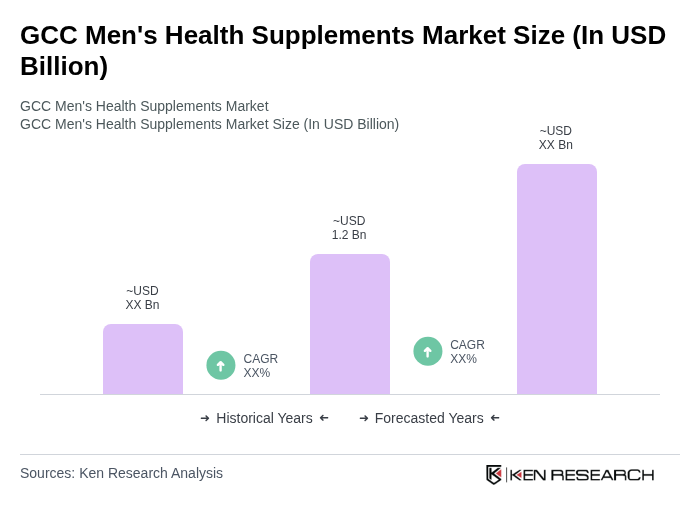
The GCC Men's Health Supplements Market is valued at approximately USD 1.2 billion, reflecting a significant growth trend driven by increased health awareness, rising disposable incomes, and a growing fitness culture among men in the region.

What makes us stand out is that our consultants follow Robust, Refine and Result (RRR) methodology. Robust for clear definitions, approaches and sanity checking, Refine for differentiating respondents' facts and opinions, and Result for presenting data with story.

We have set a benchmark in the industry by offering our clients with syndicated and customized market research reports featuring coverage of entire market as well as meticulous research and analyst insights.

While we don't replace traditional research, we flip the method upside down. Our dual approach of Top Bottom & Bottom Top ensures quality deliverable by not just verifying company fundamentals but also looking at the sector and macroeconomic factors.

With one step in the future, our research team constantly tries to show you the bigger picture. We help with some of the tough questions you may encounter along the way: How is the industry positioned? Best marketing channel? KPI's of competitors? By aligning every element, we help maximize success.

Our report gives you instant access to the answers and sources that other companies might choose to hide. We elaborate each steps of research methodology we have used and showcase you the sample size to earn your trust.

If you need any support, we are here! We pride ourselves on universe strength, data quality, and quick, friendly, and professional service.













