Region:Asia
Author(s):Dev
Product Code:KRAA7021
Pages:91
Published On:January 2026
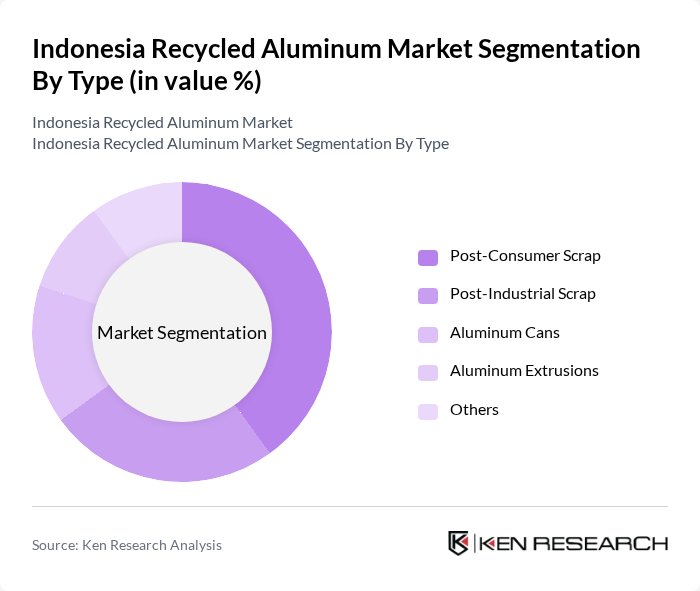
By Type:The market is segmented into various types of recycled aluminum, including Post-Consumer Scrap, Post-Industrial Scrap, Aluminum Cans, Aluminum Extrusions, and Others. Among these, Post-Consumer Scrap is the leading sub-segment due to the increasing consumer awareness regarding recycling and sustainability. The growing trend of recycling aluminum cans and other consumer products has significantly contributed to the market's expansion. Post-Industrial Scrap also plays a vital role, particularly in industries that generate aluminum waste during manufacturing processes.
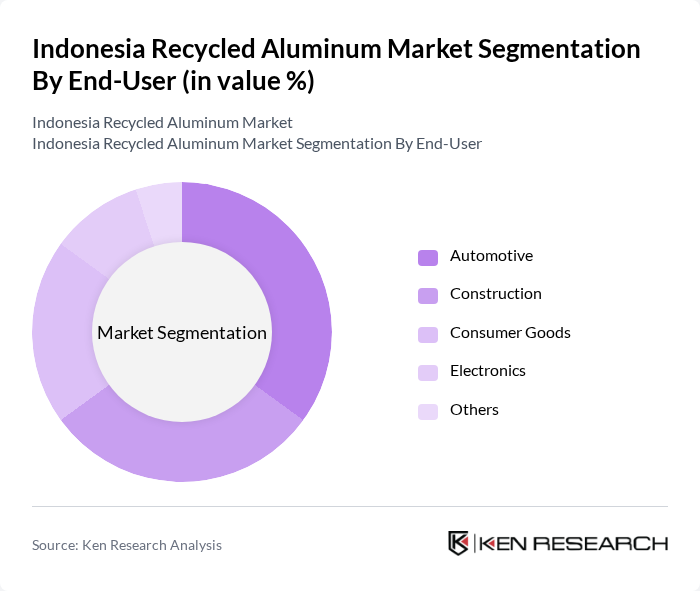
By End-User:The end-user segmentation includes Automotive, Construction, Consumer Goods, Electronics, and Others. The Automotive sector is the dominant end-user of recycled aluminum, driven by the industry's shift towards lightweight materials to improve fuel efficiency and reduce emissions. The Construction sector also significantly contributes to the market, as recycled aluminum is increasingly used in building materials and infrastructure projects. Consumer Goods and Electronics are growing segments, reflecting the rising demand for sustainable products.
The Indonesia Recycled Aluminum Market is characterized by a dynamic mix of regional and international players. Leading participants such as PT. Alumindo Light Metal Industry Tbk, PT. Indonesia Asahan Aluminium (Inalum), PT. Citra Tubindo Tbk, PT. Bintan Alumina Indonesia, PT. Sumberdaya Sewatama, PT. Adaro Energy Tbk, PT. Trimegah Bangun Persada, PT. Surya Semesta Internusa Tbk, PT. Pupuk Indonesia Holding Company, PT. Krakatau Steel (Persero) Tbk, PT. Timah (Persero) Tbk, PT. Aneka Tambang Tbk, PT. Semen Indonesia (Persero) Tbk, PT. Wijaya Karya (Persero) Tbk, PT. Jasa Marga (Persero) Tbk contribute to innovation, geographic expansion, and service delivery in this space.
The future of the recycled aluminum market in Indonesia appears promising, driven by increasing consumer awareness and government support for sustainable practices. As the country aims to enhance its recycling rates, the establishment of new facilities and technological advancements will play a crucial role. Additionally, the growing trend towards circular economy initiatives will further stimulate demand for recycled aluminum, positioning Indonesia as a key player in the Southeast Asian market for sustainable materials in future.
| Segment | Sub-Segments |
|---|---|
| By Type | Post-Consumer Scrap Post-Industrial Scrap Aluminum Cans Aluminum Extrusions Others |
| By End-User | Automotive Construction Consumer Goods Electronics Others |
| By Application | Packaging Building & Construction Transportation Electrical Others |
| By Source of Scrap | Household Collection Industrial Collection Commercial Collection Others |
| By Processing Method | Mechanical Recycling Pyrometallurgical Recycling Hydrometallurgical Recycling Others |
| By Quality Grade | High-Grade Aluminum Low-Grade Aluminum Others |
| By Region | Java Sumatra Kalimantan Sulawesi Others |
| Scope Item/Segment | Sample Size | Target Respondent Profiles |
|---|---|---|
| Recycling Facility Operations | 100 | Facility Managers, Operations Directors |
| End-User Demand in Automotive Sector | 80 | Procurement Managers, Product Development Engineers |
| Construction Industry Usage | 70 | Project Managers, Sustainability Coordinators |
| Packaging Sector Insights | 60 | Supply Chain Managers, Quality Assurance Officers |
| Government Policy Impact Assessment | 50 | Regulatory Affairs Specialists, Environmental Policy Analysts |
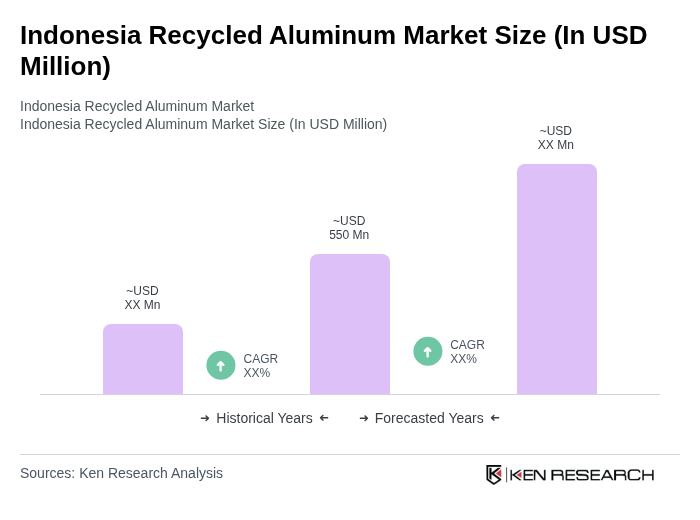
The Indonesia Recycled Aluminum Market is valued at approximately USD 550 million, reflecting a significant growth trend driven by increasing environmental awareness and government initiatives promoting recycling and sustainable materials across various industries.

What makes us stand out is that our consultants follow Robust, Refine and Result (RRR) methodology. Robust for clear definitions, approaches and sanity checking, Refine for differentiating respondents' facts and opinions, and Result for presenting data with story.

We have set a benchmark in the industry by offering our clients with syndicated and customized market research reports featuring coverage of entire market as well as meticulous research and analyst insights.

While we don't replace traditional research, we flip the method upside down. Our dual approach of Top Bottom & Bottom Top ensures quality deliverable by not just verifying company fundamentals but also looking at the sector and macroeconomic factors.

With one step in the future, our research team constantly tries to show you the bigger picture. We help with some of the tough questions you may encounter along the way: How is the industry positioned? Best marketing channel? KPI's of competitors? By aligning every element, we help maximize success.

Our report gives you instant access to the answers and sources that other companies might choose to hide. We elaborate each steps of research methodology we have used and showcase you the sample size to earn your trust.

If you need any support, we are here! We pride ourselves on universe strength, data quality, and quick, friendly, and professional service.













