Region:Middle East
Author(s):Geetanshi
Product Code:KRAD1097
Pages:91
Published On:November 2025
 Market.png "Kuwait Ambulatory Surgery Center (ASC) Market Size")
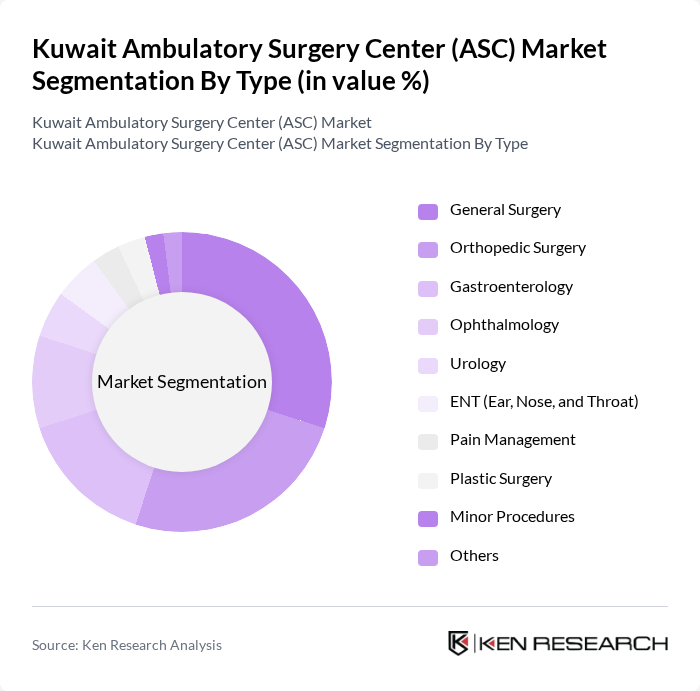
By Type:The market is segmented into various types of surgical procedures performed in ambulatory settings. The key subsegments include General Surgery, Orthopedic Surgery, Gastroenterology, Ophthalmology, Urology, ENT (Ear, Nose, and Throat), Pain Management, Plastic Surgery, Minor Procedures, and Others. Among these, General Surgery and Orthopedic Surgery are the most prominent due to their high demand and the prevalence of conditions requiring surgical intervention. The increasing adoption of minimally invasive techniques and the rising number of chronic disease cases are driving growth in these segments .
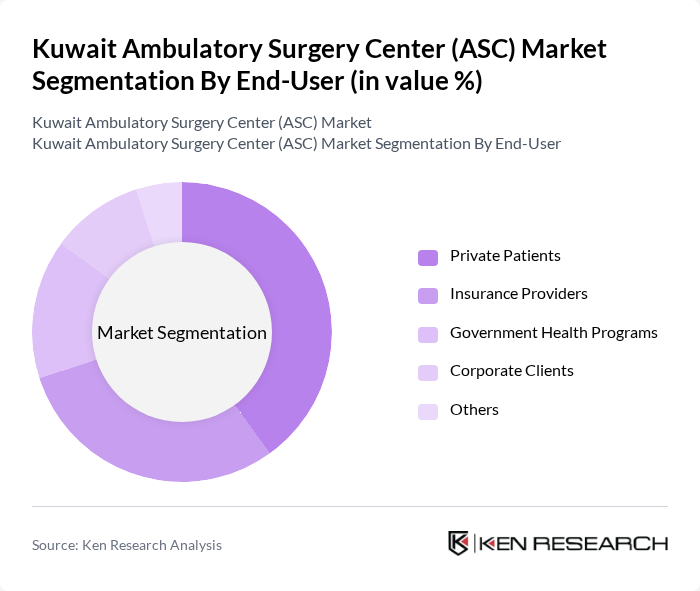
By End-User:The end-user segmentation includes Private Patients, Insurance Providers, Government Health Programs, Corporate Clients, and Others. Private Patients represent the largest segment, driven by the increasing preference for outpatient procedures and the willingness to pay for quicker access to healthcare services. Insurance Providers also play a significant role, as they facilitate coverage for various surgical procedures. The expansion of government health programs and corporate healthcare packages further supports market growth .
The Kuwait Ambulatory Surgery Center (ASC) Market is characterized by a dynamic mix of regional and international players. Leading participants such as Al Seef Hospital, Kuwait Medical Center, New Mowasat Hospital, Al Razi Hospital, Dar Al Shifa Hospital, Al Salam International Hospital, Kuwait Surgical Center, Al Adan Hospital, Ibn Sina Hospital, Royal Hayat Hospital, Al Farwaniyah Hospital, Al Jazeera Hospital, Al Kindi Hospital, Al Mowasat Hospital, Al Qabas Hospital, Taiba Hospital, Wara Hospital, Hadi Clinic, and Al Ahmadi Hospital contribute to innovation, geographic expansion, and service delivery in this space.
The future of the Kuwait ASC market appears promising, driven by ongoing technological advancements and a shift towards patient-centered care. As healthcare providers increasingly adopt minimally invasive techniques, the volume of outpatient procedures is expected to rise. Additionally, government support for ASCs will likely enhance their operational capabilities. However, addressing regulatory challenges and competition from traditional hospitals will be crucial for ASCs to thrive in this evolving landscape, ensuring they meet patient needs effectively.
| Segment | Sub-Segments |
|---|---|
| By Type | General Surgery Orthopedic Surgery Gastroenterology Ophthalmology Urology ENT (Ear, Nose, and Throat) Pain Management Plastic Surgery Minor Procedures Others |
| By End-User | Private Patients Insurance Providers Government Health Programs Corporate Clients Others |
| By Specialty | Ophthalmology Orthopedics Gastroenterology Pain Management Plastic Surgery ENT Others |
| By Patient Demographics | Pediatric Patients Adult Patients Geriatric Patients Others |
| By Geographic Distribution | Urban Areas Rural Areas Suburban Areas Others |
| By Payment Model | Fee-for-Service Capitation Bundled Payments Others |
| By Service Duration | Short-term Procedures Long-term Procedures Others |
| Scope Item/Segment | Sample Size | Target Respondent Profiles |
|---|---|---|
| General Surgery Procedures | 45 | Surgeons, ASC Administrators |
| Orthopedic Outpatient Surgeries | 38 | Orthopedic Surgeons, Physical Therapists |
| Ophthalmology Services | 32 | Ophthalmologists, Clinic Managers |
| Gastroenterology Procedures | 28 | Gastroenterologists, Nursing Staff |
| Patient Experience in ASCs | 42 | Patients, Healthcare Quality Assessors |
The Kuwait Ambulatory Surgery Center (ASC) market is valued at approximately USD 100 million, reflecting a significant growth driven by the increasing demand for outpatient surgical procedures and advancements in medical technology.

What makes us stand out is that our consultants follow Robust, Refine and Result (RRR) methodology. Robust for clear definitions, approaches and sanity checking, Refine for differentiating respondents' facts and opinions, and Result for presenting data with story.

We have set a benchmark in the industry by offering our clients with syndicated and customized market research reports featuring coverage of entire market as well as meticulous research and analyst insights.

While we don't replace traditional research, we flip the method upside down. Our dual approach of Top Bottom & Bottom Top ensures quality deliverable by not just verifying company fundamentals but also looking at the sector and macroeconomic factors.

With one step in the future, our research team constantly tries to show you the bigger picture. We help with some of the tough questions you may encounter along the way: How is the industry positioned? Best marketing channel? KPI's of competitors? By aligning every element, we help maximize success.

Our report gives you instant access to the answers and sources that other companies might choose to hide. We elaborate each steps of research methodology we have used and showcase you the sample size to earn your trust.

If you need any support, we are here! We pride ourselves on universe strength, data quality, and quick, friendly, and professional service.













