Region:Central and South America
Author(s):Shubham
Product Code:KRAB1202
Pages:84
Published On:October 2025
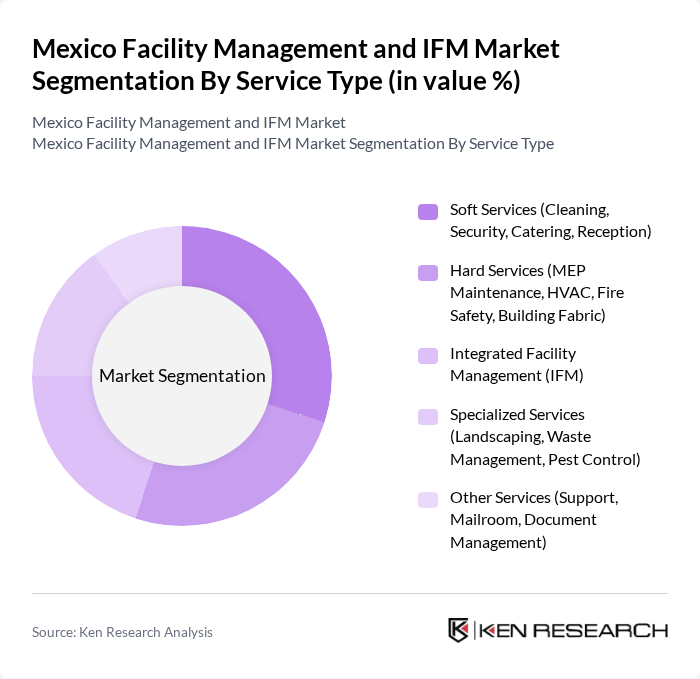
By Service Type:The service type segmentation includes various categories such as Soft Services, Hard Services, Integrated Facility Management, Specialized Services, and Other Services. Each of these subsegments plays a crucial role in the overall market dynamics, catering to different client needs and preferences. The market is witnessing a shift toward integrated and bundled service contracts, with growing demand for technology-enabled solutions and sustainability-focused offerings .
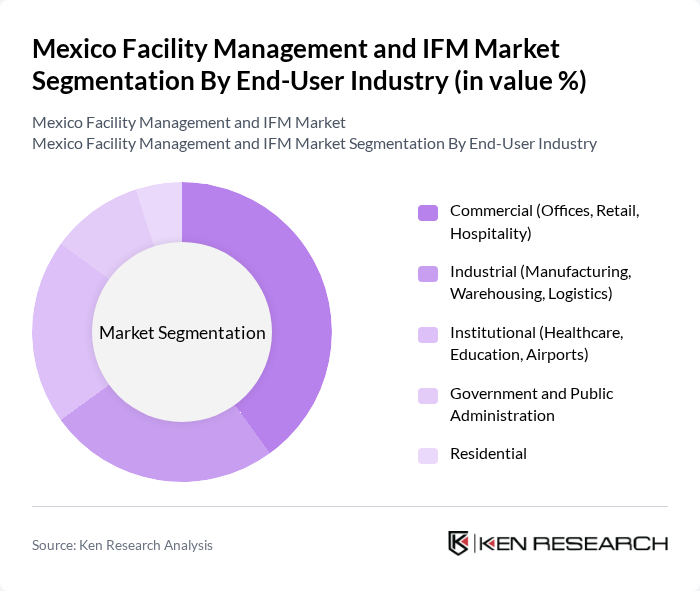
By End-User Industry:The end-user industry segmentation encompasses Commercial, Industrial, Institutional, Government and Public Administration, and Residential sectors. Each sector has unique requirements and demands, influencing the types of services utilized and the overall market landscape. The commercial sector remains the dominant end-user, driven by the proliferation of office spaces, retail, and hospitality, while industrial and institutional segments are also experiencing robust growth due to manufacturing expansion and infrastructure modernization .
The Mexico Facility Management and IFM Market is characterized by a dynamic mix of regional and international players. Leading participants such as ISS Facility Services México, CBRE Group, Inc., JLL (Jones Lang LaSalle México), Sodexo México, Aramark México, Grupo EULEN México, Compass Group México, Cushman & Wakefield México, ABM Industries México, GSI Servicios Integrales, Johnson Controls México, OCS Group México, Securitas México, Grupo Multisistemas de Seguridad Industrial, and Servicom contribute to innovation, geographic expansion, and service delivery in this space.
The future of the facility management market in Mexico appears promising, driven by technological innovations and a growing emphasis on sustainability. As urbanization continues, the demand for integrated facility management solutions will likely increase, enabling businesses to streamline operations. Additionally, the rise of smart building technologies will enhance energy efficiency and operational effectiveness, positioning facility management as a critical component in urban development strategies. Companies that adapt to these trends will be well-positioned for growth.
| Segment | Sub-Segments |
|---|---|
| By Service Type | Soft Services (Cleaning, Security, Catering, Reception) Hard Services (MEP Maintenance, HVAC, Fire Safety, Building Fabric) Integrated Facility Management (IFM) Specialized Services (Landscaping, Waste Management, Pest Control) Other Services (Support, Mailroom, Document Management) |
| By End-User Industry | Commercial (Offices, Retail, Hospitality) Industrial (Manufacturing, Warehousing, Logistics) Institutional (Healthcare, Education, Airports) Government and Public Administration Residential |
| By Service Delivery Model | Outsourced Facility Management In-House Facility Management Hybrid Model |
| By Region | Northern Mexico Central Mexico Southern Mexico |
| By Application | Office Buildings Retail Spaces Healthcare Facilities Educational Institutions Industrial Parks & Plants |
| By Investment Source | Private Investment Public Funding Foreign Direct Investment |
| By Policy Support | Government Subsidies Tax Incentives Regulatory Support |
| Scope Item/Segment | Sample Size | Target Respondent Profiles |
|---|---|---|
| Commercial Facility Management | 120 | Facility Managers, Operations Directors |
| Integrated Facilities Management (IFM) | 90 | Service Providers, Business Development Managers |
| Residential Property Management | 60 | Property Managers, Real Estate Developers |
| Industrial Facility Operations | 50 | Plant Managers, Safety Officers |
| Government and Institutional Facilities | 40 | Public Sector Facility Managers, Procurement Officers |
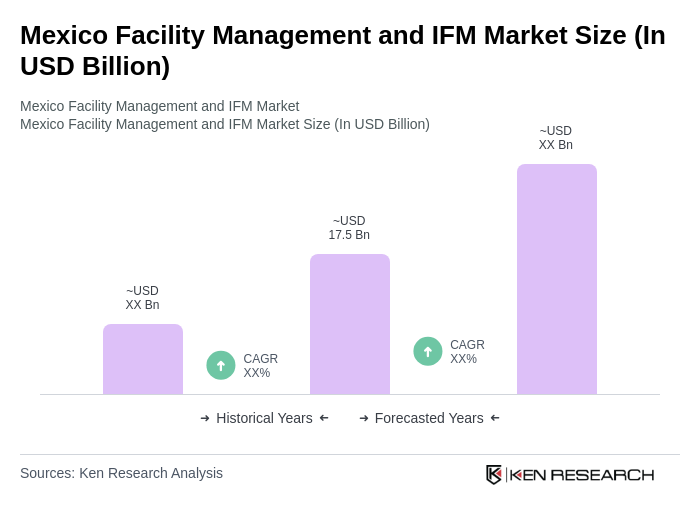
The Mexico Facility Management and IFM Market is valued at approximately USD 17.5 billion, driven by the demand for efficient building management solutions, urbanization, and the growth of commercial real estate.

What makes us stand out is that our consultants follow Robust, Refine and Result (RRR) methodology. Robust for clear definitions, approaches and sanity checking, Refine for differentiating respondents' facts and opinions, and Result for presenting data with story.

We have set a benchmark in the industry by offering our clients with syndicated and customized market research reports featuring coverage of entire market as well as meticulous research and analyst insights.

While we don't replace traditional research, we flip the method upside down. Our dual approach of Top Bottom & Bottom Top ensures quality deliverable by not just verifying company fundamentals but also looking at the sector and macroeconomic factors.

With one step in the future, our research team constantly tries to show you the bigger picture. We help with some of the tough questions you may encounter along the way: How is the industry positioned? Best marketing channel? KPI's of competitors? By aligning every element, we help maximize success.

Our report gives you instant access to the answers and sources that other companies might choose to hide. We elaborate each steps of research methodology we have used and showcase you the sample size to earn your trust.

If you need any support, we are here! We pride ourselves on universe strength, data quality, and quick, friendly, and professional service.













