Region:Europe
Author(s):Dev
Product Code:KRAA3546
Pages:82
Published On:September 2025
By Learning Mode:
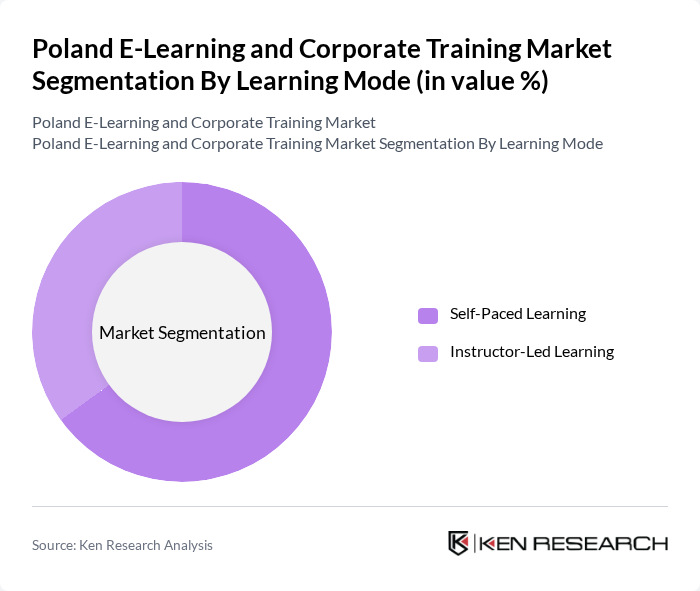
The learning mode segmentation includesSelf-Paced LearningandInstructor-Led Learning. Self-Paced Learning is currently the dominant sub-segment, as it enables learners to progress at their own speed, accommodating diverse learning styles and schedules. This flexibility is particularly attractive to working professionals balancing education with job responsibilities. Instructor-Led Learning, while still significant, is increasingly being supplemented by digital resources and virtual classrooms, as organizations seek scalable, interactive training solutions that reach geographically dispersed teams.
By Delivery Mode:
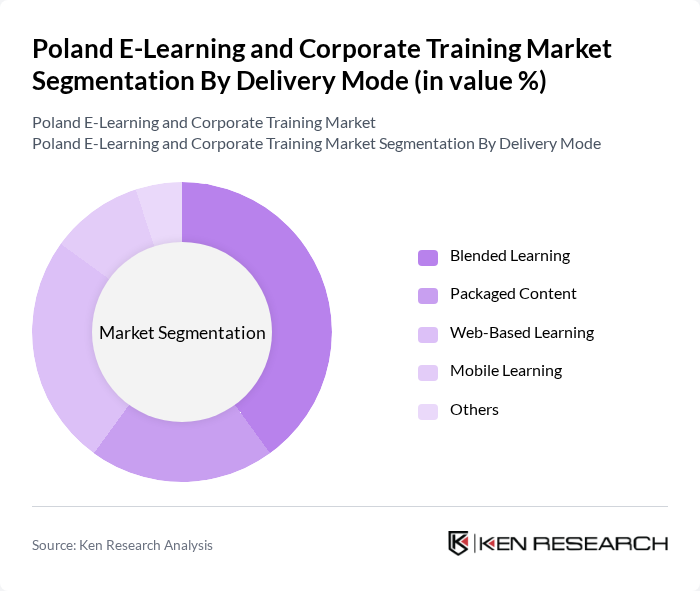
The delivery mode segmentation encompassesBlended Learning, Packaged Content, Web-Based Learning, Mobile Learning,andOthers. Blended Learning leads the segment, combining traditional face-to-face instruction with digital modules to enhance engagement and retention. Mobile learning is rapidly gaining traction, driven by widespread smartphone adoption and the need for flexible, on-the-go access to training materials. This adaptability is essential for modern workforces that require learning solutions accessible anytime and anywhere.
The Poland E-Learning and Corporate Training Market is characterized by a dynamic mix of regional and international players. Leading participants such as Edukacja Online, eTutor, Funmedia, LearnWay, LangMedia, Sages, Altkom Akademia, ClickMeeting, Webcomm, Skillveo, Future Collars, Coursera, Udemy, LinkedIn Learning, and Moodle contribute to innovation, geographic expansion, and service delivery in this space.
The future of the e-learning and corporate training market in Poland appears promising, driven by ongoing technological advancements and increasing acceptance of digital learning methods. As organizations continue to invest in employee development, the integration of AI and personalized learning experiences will likely enhance training effectiveness. Additionally, the expansion of mobile learning solutions will cater to the growing demand for flexible education options, ensuring that learners can access training anytime, anywhere, thus fostering a culture of continuous learning.
| Segment | Sub-Segments |
|---|---|
| By Learning Mode | Self-Paced Learning Instructor-Led Learning |
| By Delivery Mode | Blended Learning Packaged Content Web-Based Learning Mobile Learning Others |
| By Content Type | Text-Based Content Multimedia Content Interactive Content Assessments and Quizzes Others |
| By Technology Type | Learning Management System (LMS) Mobile E-Learning Virtual Classroom Simulation-Based Learning Others |
| By End-User | Corporates Academic Institutions Individual Learners Government Organizations Healthcare Sector Non-Profit Organizations Others |
| By Application | Employee Onboarding Compliance Training Skills Development Leadership Training Product Training Others |
| By Pricing Model | Subscription-Based Pay-Per-Course Freemium Model Corporate Licensing Others |
| By Industry | IT and Software Healthcare Finance Manufacturing Retail Others |
| Scope Item/Segment | Sample Size | Target Respondent Profiles |
|---|---|---|
| Corporate E-Learning Adoption | 100 | HR Managers, Training Coordinators |
| Sector-Specific Training Programs | 60 | Industry Trainers, Learning & Development Specialists |
| Employee Engagement in E-Learning | 50 | Employees, Team Leaders |
| Technology Utilization in Training | 40 | IT Managers, E-Learning Platform Administrators |
| Impact of E-Learning on Performance | 45 | Performance Analysts, Business Unit Managers |
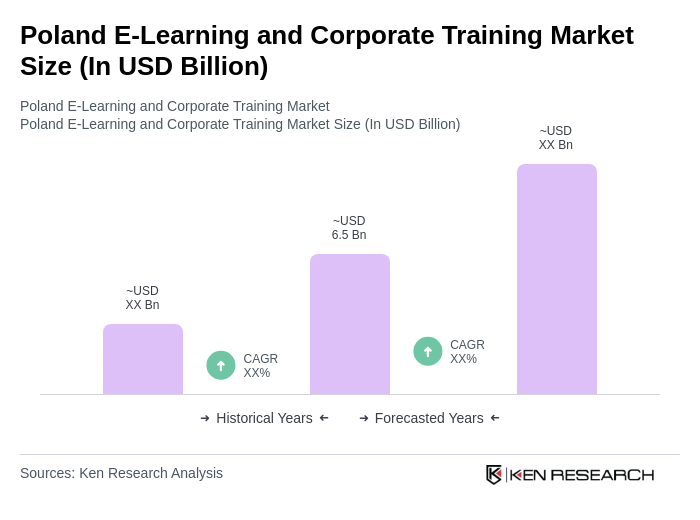
The Poland E-Learning and Corporate Training Market is valued at approximately USD 6.5 billion, reflecting significant growth driven by the increasing adoption of digital learning solutions and the demand for continuous employee upskilling in a rapidly evolving labor market.

What makes us stand out is that our consultants follow Robust, Refine and Result (RRR) methodology. Robust for clear definitions, approaches and sanity checking, Refine for differentiating respondents' facts and opinions, and Result for presenting data with story.

We have set a benchmark in the industry by offering our clients with syndicated and customized market research reports featuring coverage of entire market as well as meticulous research and analyst insights.

While we don't replace traditional research, we flip the method upside down. Our dual approach of Top Bottom & Bottom Top ensures quality deliverable by not just verifying company fundamentals but also looking at the sector and macroeconomic factors.

With one step in the future, our research team constantly tries to show you the bigger picture. We help with some of the tough questions you may encounter along the way: How is the industry positioned? Best marketing channel? KPI's of competitors? By aligning every element, we help maximize success.

Our report gives you instant access to the answers and sources that other companies might choose to hide. We elaborate each steps of research methodology we have used and showcase you the sample size to earn your trust.

If you need any support, we are here! We pride ourselves on universe strength, data quality, and quick, friendly, and professional service.













