About the Report
Base Year 2024Qatar Cross Border Import E Commerce Market Overview
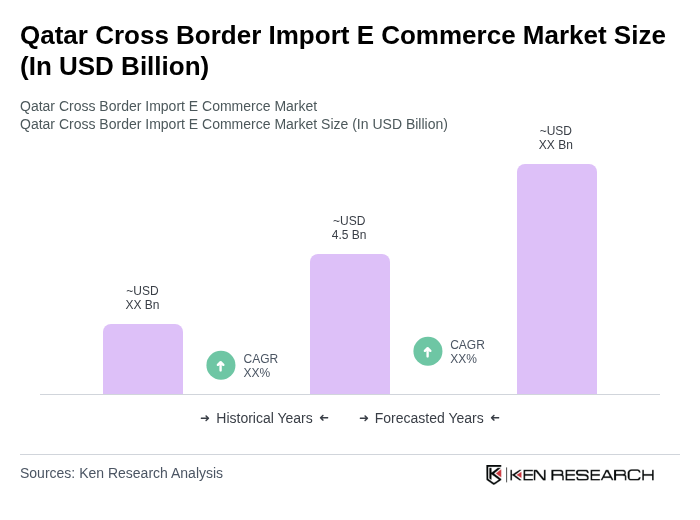
- The Qatar Cross Border Import E Commerce Market is valued at USD 4.5 billion, based on a five-year historical analysis. This growth is primarily driven by the increasing internet penetration, a rise in smartphone usage, and a growing preference for online shopping among consumers. The market has seen a significant shift towards digital platforms, with consumers increasingly seeking convenience and variety in their purchasing options.
- Key regions in this market include Doha, Al Rayyan, and Al Wakrah. These regions dominate due to their high population density, affluent consumer base, and robust logistics infrastructure. The presence of international shipping companies and local e-commerce platforms further enhances their position, making them attractive hubs for cross-border e-commerce activities. Doha maintains the strongest digital infrastructure and consumer concentration, while Al Rayyan is experiencing the fastest growth in mobile commerce adoption.
- The Qatari government has established a supportive regulatory framework for e-commerce businesses through its comprehensive digital transformation initiatives and investment in digital infrastructure. These measures promote cashless transactions, digital literacy, and simplified customs procedures for cross-border commerce, creating an enabling environment for sector growth and consumer protection in online transactions.
Qatar Cross Border Import E Commerce Market Segmentation
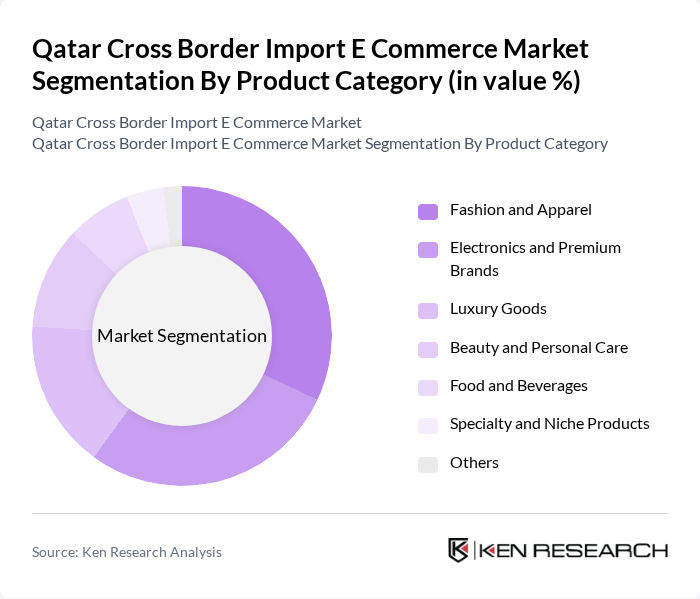
By Product Category:The product category segmentation reveals a diverse range of offerings in the market. The leading sub-segment is Fashion and Apparel, driven by the growing trend of online shopping for clothing and accessories. Consumers are increasingly attracted to the convenience of purchasing fashion items online, coupled with the availability of international brands. Electronics and Premium Brands also hold a significant share, as tech-savvy consumers seek the latest gadgets and devices. Luxury Goods are gaining traction among affluent consumers looking for exclusive products. Beauty and Personal Care products are popular due to the rise in online beauty shopping, while Food and Beverages are increasingly being purchased online for convenience. Specialty and Niche Products cater to specific consumer interests, while Others encompass a variety of miscellaneous items.
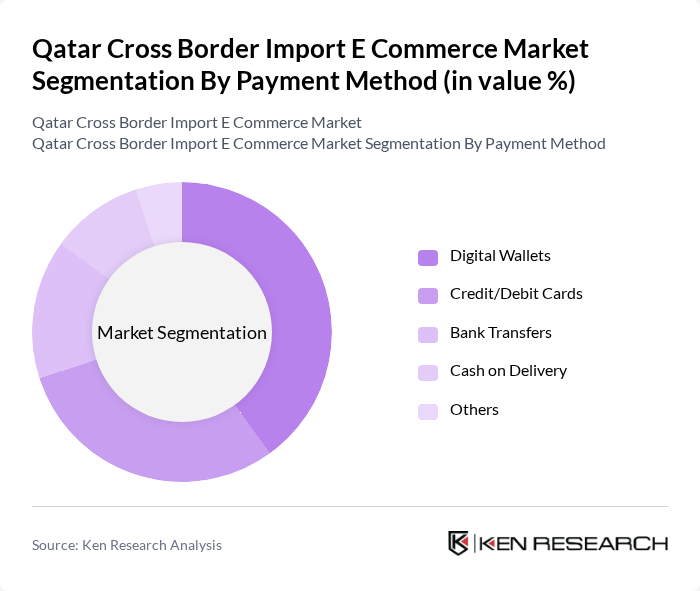
By Payment Method:The payment method segmentation highlights the various ways consumers prefer to transact in the cross-border e-commerce market. Digital Wallets are the most popular payment option, favored for their convenience and security. Credit/Debit Cards follow closely, as they are widely accepted and trusted by consumers. Bank Transfers are also utilized, particularly for larger purchases, while Cash on Delivery remains a preferred choice for those wary of online payments. Other payment methods include emerging options like cryptocurrency and buy-now-pay-later services, catering to diverse consumer preferences.
Qatar Cross Border Import E Commerce Market Competitive Landscape
The Qatar Cross Border Import E Commerce Market is characterized by a dynamic mix of regional and international players. Leading participants such as Amazon, Noon, AliExpress, Talabat, Souq.com, Carrefour Qatar, Lulu Hypermarket, Jumbo Electronics, Monoprix Qatar, Al Meera, Qatar Post, Fone Zone, Vodafone Qatar, Ooredoo, Qatar Airways Cargo contribute to innovation, geographic expansion, and service delivery in this space.
Qatar Cross Border Import E Commerce Market Industry Analysis
Growth Drivers
- Increasing Internet Penetration:Qatar's internet penetration rate reached 99% in the future, according to the International Telecommunication Union. This high connectivity facilitates online shopping, enabling consumers to access international e-commerce platforms easily. The World Bank reported that the digital economy in Qatar is projected to contribute approximately $3 billion to the GDP in the future, driven by increased online transactions and digital services, further enhancing the cross-border e-commerce landscape.
- Rising Consumer Demand for International Products:In the future, Qatar's import of consumer goods surged to $15 billion, reflecting a growing appetite for international products. The Qatar Chamber of Commerce noted that 70% of consumers prefer purchasing foreign brands, particularly in electronics and fashion. This trend is expected to continue, with the demand for diverse product offerings driving cross-border e-commerce growth, as consumers seek quality and variety unavailable in local markets.
- Enhanced Logistics and Delivery Services:Qatar's logistics sector is projected to grow by 8% annually, supported by investments in infrastructure and technology. The Qatar Logistics Strategy aims to improve supply chain efficiency, reducing delivery times to an average of 24-48 hours for cross-border shipments. This improvement in logistics capabilities is crucial for e-commerce, as it enhances customer satisfaction and encourages more consumers to engage in online shopping from international retailers.
Market Challenges
- Regulatory Compliance Issues:E-commerce businesses in Qatar face complex regulatory frameworks, including compliance with the E-Commerce Law established in 2019. The Ministry of Commerce and Industry reported that 45% of e-commerce companies struggle with understanding and adhering to these regulations, which can lead to fines and operational delays. This challenge can deter international retailers from entering the Qatari market, limiting consumer choices.
- High Shipping Costs:Shipping costs for cross-border e-commerce in Qatar can reach up to $35 per kilogram, significantly impacting the overall price of imported goods. The Qatar Chamber of Commerce highlighted that these costs are among the highest in the region, primarily due to limited shipping options and high fuel prices. This financial burden can discourage consumers from purchasing international products, affecting market growth.
Qatar Cross Border Import E Commerce Market Future Outlook
The future of Qatar's cross-border import e-commerce market appears promising, driven by technological advancements and evolving consumer preferences. As mobile commerce continues to expand, with over 75% of online transactions expected to occur via mobile devices in the future, businesses must adapt to this trend. Additionally, the integration of AI and data analytics will enhance personalized shopping experiences, fostering customer loyalty and increasing sales. The market is poised for significant growth as these trends unfold.
Market Opportunities
- Expansion of Mobile Commerce:With mobile internet users projected to reach 3 million in Qatar in the future, there is a substantial opportunity for e-commerce platforms to optimize their mobile interfaces. This shift can enhance user experience and drive sales, as consumers increasingly prefer shopping via smartphones, making it essential for businesses to invest in mobile-friendly solutions.
- Growth of Social Media Marketing:Qatar's social media penetration is at 99%, providing a fertile ground for e-commerce businesses to leverage platforms like Instagram and Facebook for marketing. By utilizing targeted advertising and influencer partnerships, companies can effectively reach potential customers, driving traffic to their online stores and increasing brand visibility in a competitive market.
Scope of the Report
| Segment | Sub-Segments |
|---|---|
| By Product Category | Fashion and Apparel Electronics and Premium Brands Luxury Goods Beauty and Personal Care Food and Beverages Specialty and Niche Products Others |
| By Payment Method | Digital Wallets Credit/Debit Cards Bank Transfers Cash on Delivery Others |
| By Platform Type | Mobile Applications Web-based Platforms Social Commerce Marketplace Platforms Others |
| By Shipping Origin | Asia Europe North America Middle East Others |
| By Customer Demographics | Age Group (18-24, 25-34, 35-44, 45+) Gender Income Level Urban vs Rural Expatriate vs Local |
| By Delivery Method | Standard Shipping Express Delivery Click and Collect Same-Day Delivery Others |
| By Geographic Region | Doha Region Al Rayyan Region Al Wakrah Region Other Regions |
Key Target Audience
Investors and Venture Capitalist Firms
Government and Regulatory Bodies (e.g., Qatar Ministry of Commerce and Industry)
Logistics and Shipping Companies
Payment Gateway Providers
Import and Export Agencies (e.g., Qatar Customs)
Local E-commerce Platforms
Trade Associations
Marketplaces and Aggregators
Players Mentioned in the Report:
Amazon
Noon
AliExpress
Talabat
Souq.com
Carrefour Qatar
Lulu Hypermarket
Jumbo Electronics
Monoprix Qatar
Al Meera
Qatar Post
Fone Zone
Vodafone Qatar
Ooredoo
Qatar Airways Cargo
Table of Contents
Market Assessment Phase
1. Executive Summary and Approach
2. Qatar Cross Border Import E Commerce Market Overview
2.1 Key Insights and Strategic Recommendations
2.2 Qatar Cross Border Import E Commerce Market Overview
2.3 Definition and Scope
2.4 Evolution of Market Ecosystem
2.5 Timeline of Key Regulatory Milestones
2.6 Value Chain & Stakeholder Mapping
2.7 Business Cycle Analysis
2.8 Policy & Incentive Landscape
3. Qatar Cross Border Import E Commerce Market Analysis
3.1 Growth Drivers
3.1.1 Increasing Internet Penetration
3.1.2 Rising Consumer Demand for International Products
3.1.3 Enhanced Logistics and Delivery Services
3.1.4 Supportive Government Policies
3.2 Market Challenges
3.2.1 Regulatory Compliance Issues
3.2.2 High Shipping Costs
3.2.3 Competition from Local E Commerce Platforms
3.2.4 Payment Security Concerns
3.3 Market Opportunities
3.3.1 Expansion of Mobile Commerce
3.3.2 Growth of Social Media Marketing
3.3.3 Partnerships with Local Retailers
3.3.4 Development of Niche Markets
3.4 Market Trends
3.4.1 Increasing Use of AI in Customer Service
3.4.2 Personalization of Shopping Experiences
3.4.3 Sustainability in Packaging and Delivery
3.4.4 Rise of Subscription-Based Models
3.5 Government Regulation
3.5.1 E Commerce Law Compliance
3.5.2 Import Tariffs and Duties
3.5.3 Consumer Protection Regulations
3.5.4 Data Privacy Laws
4. SWOT Analysis
5. Stakeholder Analysis
6. Porter's Five Forces Analysis
7. Qatar Cross Border Import E Commerce Market Market Size, 2019-2024
7.1 By Value
7.2 By Volume
7.3 By Average Selling Price
8. Qatar Cross Border Import E Commerce Market Segmentation
8.1 By Product Category
8.1.1 Fashion and Apparel
8.1.2 Electronics and Premium Brands
8.1.3 Luxury Goods
8.1.4 Beauty and Personal Care
8.1.5 Food and Beverages
8.1.6 Specialty and Niche Products
8.1.7 Others
8.2 By Payment Method
8.2.1 Digital Wallets
8.2.2 Credit/Debit Cards
8.2.3 Bank Transfers
8.2.4 Cash on Delivery
8.2.5 Others
8.3 By Platform Type
8.3.1 Mobile Applications
8.3.2 Web-based Platforms
8.3.3 Social Commerce
8.3.4 Marketplace Platforms
8.3.5 Others
8.4 By Shipping Origin
8.4.1 Asia
8.4.2 Europe
8.4.3 North America
8.4.4 Middle East
8.4.5 Others
8.5 By Customer Demographics
8.5.1 Age Group (18-24, 25-34, 35-44, 45+)
8.5.2 Gender
8.5.3 Income Level
8.5.4 Urban vs Rural
8.5.5 Expatriate vs Local
8.6 By Delivery Method
8.6.1 Standard Shipping
8.6.2 Express Delivery
8.6.3 Click and Collect
8.6.4 Same-Day Delivery
8.6.5 Others
8.7 By Geographic Region
8.7.1 Doha Region
8.7.2 Al Rayyan Region
8.7.3 Al Wakrah Region
8.7.4 Other Regions
9. Qatar Cross Border Import E Commerce Market Competitive Analysis
9.1 Market Share of Key Players (Micro, Small, Medium, Large Enterprises)
9.2 Cross Comparison of Key Players
9.2.1 Company Name
9.2.2 Group Size (Large, Medium, or Small as per industry convention)
9.2.3 Average Order Value (AOV)
9.2.4 Conversion Rate
9.2.5 Customer Acquisition Cost (CAC)
9.2.6 Customer Retention Rate
9.2.7 Gross Merchandise Value (GMV)
9.2.8 Return on Advertising Spend (ROAS)
9.2.9 Net Promoter Score (NPS)
9.2.10 Market Penetration Rate
9.3 SWOT Analysis of Top Players
9.4 Pricing Analysis (By Class and Payload)
9.5 Detailed Profile of Major Companies
9.5.1 Amazon
9.5.2 Noon
9.5.3 AliExpress
9.5.4 Talabat
9.5.5 Souq.com
9.5.6 Carrefour Qatar
9.5.7 Lulu Hypermarket
9.5.8 Jumbo Electronics
9.5.9 Monoprix Qatar
9.5.10 Al Meera
9.5.11 Qatar Post
9.5.12 Fone Zone
9.5.13 Vodafone Qatar
9.5.14 Ooredoo
9.5.15 Qatar Airways Cargo
10. Qatar Cross Border Import E Commerce Market End-User Analysis
10.1 Procurement Behavior of Key Ministries
10.1.1 Ministry of Commerce and Industry
10.1.2 Ministry of Transport and Communications
10.1.3 Ministry of Finance
10.1.4 Ministry of Public Health
10.2 Corporate Spend on Infrastructure & Energy
10.2.1 Investment in Digital Infrastructure
10.2.2 Spending on Logistics and Supply Chain
10.2.3 Budget for E Commerce Platforms
10.2.4 Expenditure on Cybersecurity
10.3 Pain Point Analysis by End-User Category
10.3.1 Delays in Delivery
10.3.2 Product Quality Issues
10.3.3 Customer Service Challenges
10.3.4 Payment Processing Delays
10.4 User Readiness for Adoption
10.4.1 Awareness of E Commerce Benefits
10.4.2 Accessibility of Technology
10.4.3 Trust in Online Transactions
10.4.4 Availability of Support Services
10.5 Post-Deployment ROI and Use Case Expansion
10.5.1 Measurement of ROI
10.5.2 Expansion into New Product Lines
10.5.3 Customer Feedback Integration
10.5.4 Long-term Strategic Partnerships
11. Qatar Cross Border Import E Commerce Market Future Size, 2025-2030
11.1 By Value
11.2 By Volume
11.3 By Average Selling Price
Go-To-Market Strategy Phase
1. Whitespace Analysis + Business Model Canvas
1.1 Market Gaps Identification
1.2 Business Model Framework
1.3 Value Proposition Canvas
1.4 Revenue Streams Analysis
1.5 Cost Structure Overview
2. Marketing and Positioning Recommendations
2.1 Branding Strategies
2.2 Product USPs
2.3 Target Audience Segmentation
2.4 Communication Channels
2.5 Marketing Budget Allocation
3. Distribution Plan
3.1 Urban Retail Strategies
3.2 Rural NGO Tie-ups
3.3 Online vs Offline Distribution
3.4 Logistics Partnerships
3.5 Inventory Management Solutions
4. Channel & Pricing Gaps
4.1 Underserved Routes
4.2 Pricing Bands Analysis
4.3 Competitor Pricing Strategies
4.4 Customer Willingness to Pay
4.5 Dynamic Pricing Models
5. Unmet Demand & Latent Needs
5.1 Category Gaps
5.2 Consumer Segments Analysis
5.3 Emerging Trends Identification
5.4 Product Development Opportunities
5.5 Customer Feedback Mechanisms
6. Customer Relationship
6.1 Loyalty Programs Design
6.2 After-sales Service Strategies
6.3 Customer Engagement Tactics
6.4 Feedback and Improvement Loops
6.5 Community Building Initiatives
7. Value Proposition
7.1 Sustainability Initiatives
7.2 Integrated Supply Chains
7.3 Customer-Centric Innovations
7.4 Competitive Differentiation
7.5 Long-term Value Creation
8. Key Activities
8.1 Regulatory Compliance
8.2 Branding Initiatives
8.3 Distribution Setup
8.4 Training and Development
8.5 Performance Monitoring
9. Entry Strategy Evaluation
9.1 Domestic Market Entry Strategy
9.1.1 Product Mix Considerations
9.1.2 Pricing Band Strategy
9.1.3 Packaging Innovations
9.2 Export Entry Strategy
9.2.1 Target Countries Identification
9.2.2 Compliance Roadmap Development
10. Entry Mode Assessment
10.1 Joint Ventures
10.2 Greenfield Investments
10.3 Mergers and Acquisitions
10.4 Distributor Model Evaluation
10.5 Risk Assessment
11. Capital and Timeline Estimation
11.1 Capital Requirements Overview
11.2 Timelines for Implementation
11.3 Funding Sources Identification
11.4 Financial Projections
11.5 Contingency Planning
12. Control vs Risk Trade-Off
12.1 Ownership Considerations
12.2 Partnership Dynamics
12.3 Risk Mitigation Strategies
12.4 Control Mechanisms
12.5 Long-term Strategic Goals
13. Profitability Outlook
13.1 Breakeven Analysis
13.2 Long-term Sustainability Strategies
13.3 Profit Margin Optimization
13.4 Revenue Growth Projections
13.5 Cost Management Techniques
14. Potential Partner List
14.1 Distributors Identification
14.2 Joint Ventures Opportunities
14.3 Acquisition Targets
14.4 Strategic Alliances
14.5 Partnership Evaluation Criteria
15. Execution Roadmap
15.1 Phased Plan for Market Entry
15.1.1 Market Setup
15.1.2 Market Entry
15.1.3 Growth Acceleration
15.1.4 Scale & Stabilize
15.2 Key Activities and Milestones
15.2.1 Milestone Planning
15.2.2 Activity Tracking
15.2.3 Performance Metrics
15.2.4 Reporting Mechanisms
Research Methodology
Phase 1: Approach1
Desk Research
- Analysis of e-commerce growth statistics from Qatar's Ministry of Commerce and Industry
- Review of import data from Qatar Customs and trade associations
- Examination of consumer behavior reports from local market research firms
Primary Research
- Interviews with key stakeholders in the logistics and supply chain sectors
- Surveys targeting e-commerce platform managers and online retailers
- Focus groups with consumers to understand purchasing preferences and challenges
Validation & Triangulation
- Cross-validation of findings with industry reports and government publications
- Triangulation of data from consumer surveys and expert interviews
- Sanity checks through feedback from a panel of industry experts
Phase 2: Market Size Estimation1
Top-down Assessment
- Estimation of total e-commerce market size based on national GDP and digital penetration rates
- Segmentation of the market by product categories and consumer demographics
- Incorporation of trends in cross-border shopping behavior among Qatari consumers
Bottom-up Modeling
- Collection of sales data from leading e-commerce platforms operating in Qatar
- Estimation of average order values and frequency of cross-border purchases
- Analysis of logistics costs associated with cross-border transactions
Forecasting & Scenario Analysis
- Multi-factor regression analysis incorporating economic indicators and consumer trends
- Scenario modeling based on potential regulatory changes affecting cross-border trade
- Development of baseline, optimistic, and pessimistic forecasts through 2030
Phase 3: CATI Sample Composition1
| Scope Item/Segment | Sample Size | Target Respondent Profiles |
|---|---|---|
| Online Retailers in Electronics | 100 | E-commerce Managers, Product Category Heads |
| Fashion and Apparel E-commerce | 80 | Marketing Directors, Customer Experience Managers |
| Consumer Goods Importers | 70 | Supply Chain Managers, Procurement Specialists |
| Logistics Providers for E-commerce | 90 | Operations Managers, Logistics Coordinators |
| Cross-border E-commerce Consumers | 120 | Frequent Online Shoppers, Demographic Segments |
Frequently Asked Questions
What is the current value of the Qatar Cross Border Import E Commerce Market?
The Qatar Cross Border Import E Commerce Market is valued at approximately USD 4.5 billion, reflecting significant growth driven by increased internet penetration, smartphone usage, and consumer preference for online shopping.
Which regions in Qatar are key players in the cross-border e-commerce market?
What are the main product categories in Qatar's cross-border e-commerce market?
What payment methods are popular among consumers in Qatar's e-commerce market?
Other Regional/Country Reports
Other Adjacent Reports
Kuwait Fashion and Apparel Market
New Zealand Consumer Electronics Market Size Share Growth Drivers Trends Opportunities & Forecast 2025–2030South Korea Luxury Goods MarketIndia Beauty and Personal Care Market Outlook to 2030KSA Food and Beverage Market Outlook to 2030Global Mobile Commerce Market Outlook to 2030Why Buy From Us?

What makes us stand out is that our consultants follow Robust, Refine and Result (RRR) methodology. Robust for clear definitions, approaches and sanity checking, Refine for differentiating respondents' facts and opinions, and Result for presenting data with story.

We have set a benchmark in the industry by offering our clients with syndicated and customized market research reports featuring coverage of entire market as well as meticulous research and analyst insights.

While we don't replace traditional research, we flip the method upside down. Our dual approach of Top Bottom & Bottom Top ensures quality deliverable by not just verifying company fundamentals but also looking at the sector and macroeconomic factors.

With one step in the future, our research team constantly tries to show you the bigger picture. We help with some of the tough questions you may encounter along the way: How is the industry positioned? Best marketing channel? KPI's of competitors? By aligning every element, we help maximize success.

Our report gives you instant access to the answers and sources that other companies might choose to hide. We elaborate each steps of research methodology we have used and showcase you the sample size to earn your trust.

If you need any support, we are here! We pride ourselves on universe strength, data quality, and quick, friendly, and professional service.