About the Report
Base Year 2024Listen to the audio summary
Qatar Heritage Tourism Market Overview
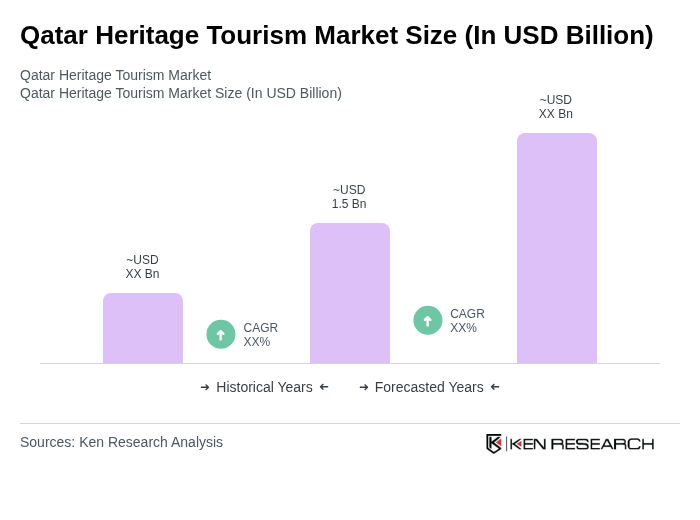
- The Qatar Heritage Tourism Market is valued at USD 1.5 billion, based on a five-year historical analysis. This growth is primarily driven by increasing interest in cultural experiences, robust government initiatives to promote heritage sites, and a sustained rise in international tourist arrivals. The market has seen a significant boost from global events such as the FIFA World Cup, which showcased Qatar's rich cultural heritage and contributed to record visitor numbers and heightened global awareness of its tourism offerings .
- Key destinations in this market include Doha, Al Rayyan, and Al Wakrah. Doha, as the capital, is the primary hub for cultural tourism, featuring numerous museums, galleries, and historical sites. Al Rayyan and Al Wakrah complement this by offering unique cultural festivals and traditional experiences, making them attractive destinations for both domestic and international tourists .
- The National Tourism Strategy 2030, issued by Qatar Tourism in 2023, aims to enhance the country's cultural tourism offerings through targeted investments in infrastructure, promotion of heritage sites, and partnerships with local and international organizations. The strategy mandates the development of new tourism products, improvement of visitor experiences, and the integration of sustainability standards across the sector .
Qatar Heritage Tourism Market Segmentation
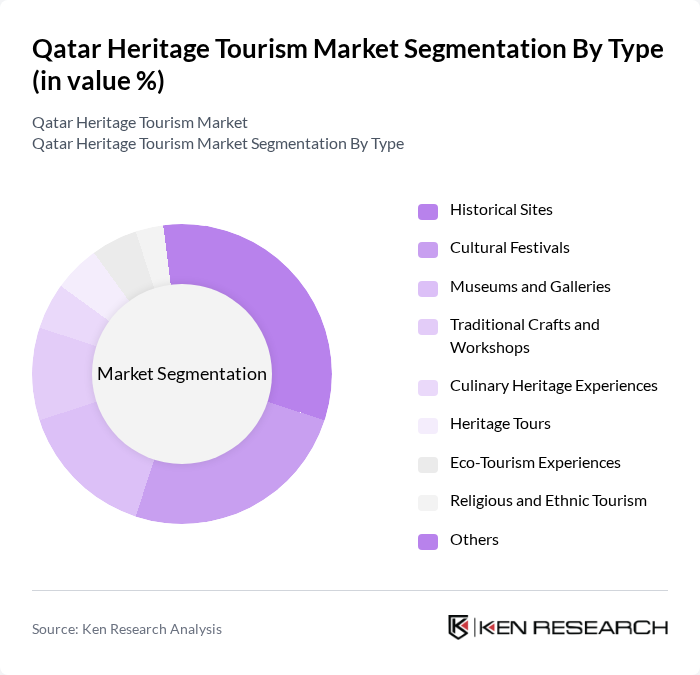
By Type:The market is segmented into various types, including Historical Sites, Cultural Festivals, Museums and Galleries, Traditional Crafts and Workshops, Culinary Heritage Experiences, Heritage Tours, Eco-Tourism Experiences, Religious and Ethnic Tourism, and Others. Among these, Historical Sites and Cultural Festivals are the most prominent, attracting significant visitor numbers due to their cultural significance and immersive experiences. Historical sites such as the Museum of Islamic Art and the National Museum of Qatar are particularly popular, drawing both local and international tourists eager to explore Qatar's rich history .
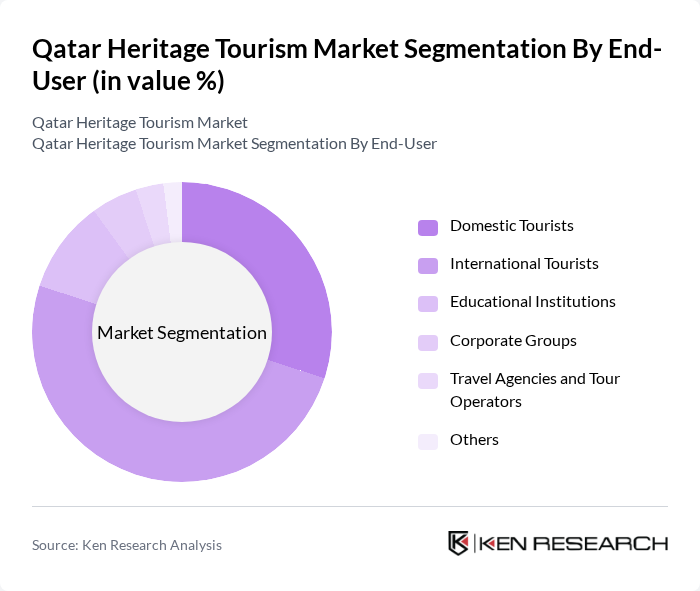
By End-User:The end-user segmentation includes Domestic Tourists, International Tourists, Educational Institutions, Corporate Groups, Travel Agencies and Tour Operators, and Others. International tourists represent the largest segment, driven by Qatar's strategic marketing efforts, major international events, and its appeal as a cultural destination. Domestic tourists also contribute significantly, as local residents engage in cultural experiences and heritage tourism, particularly during festivals and public holidays .
Qatar Heritage Tourism Market Competitive Landscape
The Qatar Heritage Tourism Market is characterized by a dynamic mix of regional and international players. Leading participants such as Qatar Museums, Qatar Tourism, Souq Waqif Boutique Hotels, Katara Cultural Village Foundation, Museum of Islamic Art, National Museum of Qatar, Al Zubarah Archaeological Site, Doha Film Institute, Qatar Foundation, Qatar Airways, The Pearl-Qatar, Msheireb Properties, Qatar National Tourism Council, Qatar Heritage and Identity Center, and Qatar Cultural and Heritage Center contribute to innovation, geographic expansion, and service delivery in this space.
Qatar Heritage Tourism Market Industry Analysis
Growth Drivers
- Cultural Significance of Heritage Sites:Qatar's heritage sites, such as the Al Zubarah Archaeological Site, attract over 100,000 visitors annually, showcasing the nation's rich history. The UNESCO World Heritage designation enhances global visibility, contributing to a 15% increase in cultural tourism in future. The government’s focus on preserving these sites aligns with the national vision to promote cultural identity, making heritage tourism a pivotal growth driver in the region.
- Government Initiatives and Funding:The Qatari government allocated approximately $20 billion for tourism development in future, emphasizing heritage tourism. Initiatives like the Qatar National Tourism Strategy aim to increase visitor numbers to 6 million in future. This funding supports infrastructure improvements and promotional campaigns, enhancing the overall tourist experience and positioning Qatar as a leading cultural destination in the Middle East.
- Increasing Global Interest in Cultural Tourism:The global cultural tourism market is projected to reach $1.2 trillion in future, with Qatar poised to capture a share due to its unique heritage offerings. The rise in experiential travel, where tourists seek authentic cultural experiences, has led to a 25% increase in bookings for heritage tours in Qatar. This trend aligns with the growing demand for immersive travel experiences, driving growth in the heritage tourism sector.
Market Challenges
- Competition from Other Regional Destinations:Qatar faces stiff competition from neighboring countries like the UAE and Oman, which have established robust heritage tourism sectors. In future, the UAE attracted over 16 million tourists, while Qatar received only 2.5 million. This disparity highlights the need for Qatar to enhance its marketing strategies and diversify its offerings to remain competitive in the regional tourism landscape.
- Seasonal Fluctuations in Tourist Arrivals:Qatar experiences significant seasonal fluctuations, with peak tourist arrivals in winter months, leading to a 40% drop in visitors during the summer. This inconsistency poses challenges for businesses reliant on steady tourist traffic. To mitigate this, stakeholders must develop year-round attractions and events to attract visitors during off-peak seasons, ensuring a more stable revenue stream.
Qatar Heritage Tourism Market Future Outlook
The future of Qatar's heritage tourism market appears promising, driven by increasing global interest in cultural experiences and substantial government investment. As Qatar enhances its infrastructure and marketing efforts, the nation is likely to attract a more diverse tourist demographic. Additionally, the integration of technology in heritage tours and a focus on sustainable practices will further enhance visitor engagement, positioning Qatar as a leading destination for cultural tourism in the region.
Market Opportunities
- Development of New Heritage Attractions:Qatar can capitalize on the growing interest in cultural tourism by developing new heritage attractions. Projects like the Qatar Museum of Islamic Art, set to open in future, are expected to draw significant visitor numbers, enhancing the overall tourism experience and contributing to economic growth in the region.
- Collaboration with International Tourism Bodies:Partnering with international tourism organizations can enhance Qatar's visibility in the global market. Collaborations can lead to joint marketing campaigns and cultural exchange programs, potentially increasing tourist arrivals by 20% in future, thereby boosting the local economy and promoting cultural heritage.
Scope of the Report
| Segment | Sub-Segments |
|---|---|
| By Type | Historical Sites Cultural Festivals Museums and Galleries Traditional Crafts and Workshops Culinary Heritage Experiences Heritage Tours Eco-Tourism Experiences Religious and Ethnic Tourism Others |
| By End-User | Domestic Tourists International Tourists Educational Institutions Corporate Groups Travel Agencies and Tour Operators Others |
| By Visitor Demographics | Age Groups Family vs. Solo Travelers Cultural Background Others |
| By Duration of Stay | Short-term Visitors Long-term Visitors Weekend Getaways Others |
| By Marketing Channel | Online Travel Agencies Direct Bookings Travel Agents Social Media Campaigns Travel Expos and Fairs Others |
| By Package Type | Group Packages Individual Packages Customizable Packages All-Inclusive Packages Others |
| By Seasonality | Peak Season (Winter and Spring) Off-Peak Season (Summer and Fall) Holiday Seasons Others |
| By Price Range | Budget Mid-Range Luxury |
Key Target Audience
Investors and Venture Capitalist Firms
Government and Regulatory Bodies (e.g., Qatar Tourism Authority, Ministry of Culture and Sports)
Heritage Site Management Organizations
Local Artisans and Craft Producers
Tour Operators and Travel Agencies
Hospitality and Accommodation Providers
Cultural Event Organizers
Media and Marketing Agencies
Players Mentioned in the Report:
Qatar Museums
Qatar Tourism
Souq Waqif Boutique Hotels
Katara Cultural Village Foundation
Museum of Islamic Art
National Museum of Qatar
Al Zubarah Archaeological Site
Doha Film Institute
Qatar Foundation
Qatar Airways
The Pearl-Qatar
Msheireb Properties
Qatar National Tourism Council
Qatar Heritage and Identity Center
Qatar Cultural and Heritage Center
Table of Contents
Market Assessment Phase
1. Executive Summary and Approach
2. Qatar Heritage Tourism Market Overview
2.1 Key Insights and Strategic Recommendations
2.2 Qatar Heritage Tourism Market Overview
2.3 Definition and Scope
2.4 Evolution of Market Ecosystem
2.5 Timeline of Key Regulatory Milestones
2.6 Value Chain & Stakeholder Mapping
2.7 Business Cycle Analysis
2.8 Policy & Incentive Landscape
3. Qatar Heritage Tourism Market Analysis
3.1 Growth Drivers
3.1.1 Cultural Significance of Heritage Sites
3.1.2 Government Initiatives and Funding
3.1.3 Increasing Global Interest in Cultural Tourism
3.1.4 Development of Infrastructure and Accessibility
3.2 Market Challenges
3.2.1 Competition from Other Regional Destinations
3.2.2 Seasonal Fluctuations in Tourist Arrivals
3.2.3 Limited Awareness of Heritage Offerings
3.2.4 Regulatory Hurdles and Compliance Issues
3.3 Market Opportunities
3.3.1 Development of New Heritage Attractions
3.3.2 Collaboration with International Tourism Bodies
3.3.3 Promotion of Sustainable Tourism Practices
3.3.4 Digital Marketing and Online Engagement
3.4 Market Trends
3.4.1 Rise of Experiential Travel
3.4.2 Integration of Technology in Heritage Tours
3.4.3 Focus on Authentic Cultural Experiences
3.4.4 Growth of Eco-Friendly Tourism Options
3.5 Government Regulation
3.5.1 Heritage Site Protection Laws
3.5.2 Tourism Development Policies
3.5.3 Environmental Regulations
3.5.4 Licensing and Operational Guidelines
4. SWOT Analysis
5. Stakeholder Analysis
6. Porter's Five Forces Analysis
7. Qatar Heritage Tourism Market Market Size, 2019-2024
7.1 By Value
7.2 By Volume
7.3 By Average Selling Price
8. Qatar Heritage Tourism Market Segmentation
8.1 By Type
8.1.1 Historical Sites
8.1.2 Cultural Festivals
8.1.3 Museums and Galleries
8.1.4 Traditional Crafts and Workshops
8.1.5 Culinary Heritage Experiences
8.1.6 Heritage Tours
8.1.7 Eco-Tourism Experiences
8.1.8 Religious and Ethnic Tourism
8.1.9 Others
8.2 By End-User
8.2.1 Domestic Tourists
8.2.2 International Tourists
8.2.3 Educational Institutions
8.2.4 Corporate Groups
8.2.5 Travel Agencies and Tour Operators
8.2.6 Others
8.3 By Visitor Demographics
8.3.1 Age Groups
8.3.2 Family vs. Solo Travelers
8.3.3 Cultural Background
8.3.4 Others
8.4 By Duration of Stay
8.4.1 Short-term Visitors
8.4.2 Long-term Visitors
8.4.3 Weekend Getaways
8.4.4 Others
8.5 By Marketing Channel
8.5.1 Online Travel Agencies
8.5.2 Direct Bookings
8.5.3 Travel Agents
8.5.4 Social Media Campaigns
8.5.5 Travel Expos and Fairs
8.5.6 Others
8.6 By Package Type
8.6.1 Group Packages
8.6.2 Individual Packages
8.6.3 Customizable Packages
8.6.4 All-Inclusive Packages
8.6.5 Others
8.7 By Seasonality
8.7.1 Peak Season (Winter and Spring)
8.7.2 Off-Peak Season (Summer and Fall)
8.7.3 Holiday Seasons
8.7.4 Others
8.8 By Price Range
8.8.1 Budget
8.8.2 Mid-Range
8.8.3 Luxury
9. Qatar Heritage Tourism Market Competitive Analysis
9.1 Market Share of Key Players
9.2 Cross Comparison of Key Players
9.2.1 Company Name
9.2.2 Group Size (Large, Medium, or Small as per industry convention)
9.2.3 Annual Visitor Numbers
9.2.4 Revenue Growth Rate
9.2.5 Market Penetration Rate
9.2.6 Customer Retention Rate
9.2.7 Average Visitor Spend
9.2.8 Visitor Satisfaction Score
9.2.9 Brand Recognition Index
9.2.10 Digital Engagement Metrics (website traffic, social media reach)
9.2.11 Average Length of Stay
9.2.12 Number of Heritage Sites/Attractions Managed
9.2.13 Partnerships with Local/International Organizations
9.3 SWOT Analysis of Top Players
9.4 Pricing Analysis
9.5 Detailed Profile of Major Companies
9.5.1 Qatar Museums
9.5.2 Qatar Tourism
9.5.3 Souq Waqif Boutique Hotels
9.5.4 Katara Cultural Village Foundation
9.5.5 Museum of Islamic Art
9.5.6 National Museum of Qatar
9.5.7 Al Zubarah Archaeological Site
9.5.8 Doha Film Institute
9.5.9 Qatar Foundation
9.5.10 Qatar Airways
9.5.11 The Pearl-Qatar
9.5.12 Msheireb Properties
9.5.13 Qatar National Tourism Council
9.5.14 Qatar Heritage and Identity Center
9.5.15 Qatar Cultural and Heritage Center
10. Qatar Heritage Tourism Market End-User Analysis
10.1 Procurement Behavior of Key Ministries
10.1.1 Ministry of Culture and Sports
10.1.2 Ministry of Municipality and Environment
10.1.3 Ministry of Education and Higher Education
10.1.4 Others
10.2 Corporate Spend on Infrastructure & Energy
10.2.1 Investment in Heritage Sites
10.2.2 Funding for Cultural Events
10.2.3 Infrastructure Development for Tourism
10.2.4 Others
10.3 Pain Point Analysis by End-User Category
10.3.1 Accessibility Issues
10.3.2 Lack of Information
10.3.3 High Costs of Heritage Experiences
10.3.4 Others
10.4 User Readiness for Adoption
10.4.1 Awareness of Heritage Offerings
10.4.2 Interest in Cultural Experiences
10.4.3 Willingness to Pay
10.4.4 Others
10.5 Post-Deployment ROI and Use Case Expansion
10.5.1 Visitor Feedback and Satisfaction
10.5.2 Repeat Visits
10.5.3 Expansion of Heritage Programs
10.5.4 Others
11. Qatar Heritage Tourism Market Future Size, 2025-2030
11.1 By Value
11.2 By Volume
11.3 By Average Selling Price
Go-To-Market Strategy Phase
1. Whitespace Analysis + Business Model Canvas
1.1 Market Gaps Identification
1.2 Business Model Development
2. Marketing and Positioning Recommendations
2.1 Branding Strategies
2.2 Product USPs
3. Distribution Plan
3.1 Urban Retail vs Rural NGO Tie-ups
4. Channel & Pricing Gaps
4.1 Underserved Routes
4.2 Pricing Bands
5. Unmet Demand & Latent Needs
5.1 Category Gaps
5.2 Consumer Segments
6. Customer Relationship
6.1 Loyalty Programs
6.2 After-sales Service
7. Value Proposition
7.1 Sustainability
7.2 Integrated Supply Chains
8. Key Activities
8.1 Regulatory Compliance
8.2 Branding
8.3 Distribution Setup
9. Entry Strategy Evaluation
9.1 Domestic Market Entry Strategy
9.1.1 Product Mix
9.1.2 Pricing Band
9.1.3 Packaging
9.2 Export Entry Strategy
9.2.1 Target Countries
9.2.2 Compliance Roadmap
10. Entry Mode Assessment
10.1 JV
10.2 Greenfield
10.3 M&A
10.4 Distributor Model
11. Capital and Timeline Estimation
11.1 Capital Requirements
11.2 Timelines
12. Control vs Risk Trade-Off
12.1 Ownership vs Partnerships
13. Profitability Outlook
13.1 Breakeven Analysis
13.2 Long-term Sustainability
14. Potential Partner List
14.1 Distributors
14.2 JVs
14.3 Acquisition Targets
15. Execution Roadmap
15.1 Phased Plan for Market Entry
15.1.1 Market Setup
15.1.2 Market Entry
15.1.3 Growth Acceleration
15.1.4 Scale & Stabilize
15.2 Key Activities and Milestones
15.2.1 Milestone Planning
15.2.2 Activity Tracking
Research Methodology
Phase 1: Approach1
Desk Research
- Analysis of tourism statistics from Qatar National Tourism Council and Ministry of Culture and Sports
- Review of academic papers and market reports on heritage tourism trends in the Middle East
- Examination of government publications on cultural heritage initiatives and tourism policies
Primary Research
- Interviews with local heritage site managers and cultural event organizers
- Surveys with tourists who have visited heritage sites in Qatar
- Focus groups with stakeholders in the tourism and hospitality sectors
Validation & Triangulation
- Cross-validation of findings through multiple data sources, including tourism boards and local businesses
- Triangulation of qualitative insights from interviews with quantitative data from surveys
- Sanity checks through expert reviews from cultural tourism specialists
Phase 2: Market Size Estimation1
Top-down Assessment
- Estimation of total tourism revenue attributed to heritage tourism based on national tourism expenditure
- Segmentation of heritage tourism by visitor demographics and spending patterns
- Incorporation of government initiatives aimed at promoting cultural heritage tourism
Bottom-up Modeling
- Data collection from local heritage sites on visitor numbers and ticket sales
- Analysis of spending behavior of tourists at heritage sites and related services
- Estimation of economic impact through direct and indirect contributions to local businesses
Forecasting & Scenario Analysis
- Multi-factor regression analysis incorporating variables such as global tourism trends and local economic conditions
- Scenario modeling based on potential changes in tourism policies and international travel restrictions
- Development of baseline, optimistic, and pessimistic forecasts for heritage tourism growth through 2030
Phase 3: CATI Sample Composition1
| Scope Item/Segment | Sample Size | Target Respondent Profiles |
|---|---|---|
| Local Heritage Site Visitors | 120 | Domestic and International Tourists |
| Cultural Event Attendees | 90 | Event Organizers, Cultural Enthusiasts |
| Hospitality Sector Stakeholders | 75 | Hotel Managers, Tour Operators |
| Government Tourism Officials | 45 | Policy Makers, Tourism Development Officers |
| Local Business Owners in Tourism | 60 | Restaurant Owners, Souvenir Shop Managers |
Frequently Asked Questions
What is the current value of the Qatar Heritage Tourism Market?
The Qatar Heritage Tourism Market is valued at approximately USD 1.5 billion, reflecting a significant growth driven by cultural experiences, government initiatives, and increased international tourist arrivals, particularly following global events like the FIFA World Cup.
What are the key destinations for heritage tourism in Qatar?
What initiatives are being taken to promote heritage tourism in Qatar?
What types of heritage tourism experiences are available in Qatar?
Other Regional/Country Reports
Indonesia Heritage Tourism Market
Malaysia Heritage Tourism Market
Other Adjacent Reports
Malaysia Cultural Tourism Market
Eco-Tourism MarketUAE Adventure Tourism Market Size, Share & Forecast, By Activity Type, Traveler Type & Booking Channel, 2026–2032South Korea Luxury Hospitality Market
Global Medical Tourism Market Size, Share & Forecast, By Treatment Type, Care Setting & Patient Origin, 2026-2031Middle East Event Management Market Size, Share & Forecast, By Event Type, Service Type & Delivery Mode, 2026-2031Singapore Museum Operations Market
Belgium Travel Agency Services Market
UAE Sustainable Tourism Market
Germany Culinary Experiences Market
Why Buy From Us?

What makes us stand out is that our consultants follow Robust, Refine and Result (RRR) methodology. Robust for clear definitions, approaches and sanity checking, Refine for differentiating respondents' facts and opinions, and Result for presenting data with story.

We have set a benchmark in the industry by offering our clients with syndicated and customized market research reports featuring coverage of entire market as well as meticulous research and analyst insights.

While we don't replace traditional research, we flip the method upside down. Our dual approach of Top Bottom & Bottom Top ensures quality deliverable by not just verifying company fundamentals but also looking at the sector and macroeconomic factors.

With one step in the future, our research team constantly tries to show you the bigger picture. We help with some of the tough questions you may encounter along the way: How is the industry positioned? Best marketing channel? KPI's of competitors? By aligning every element, we help maximize success.

Our report gives you instant access to the answers and sources that other companies might choose to hide. We elaborate each steps of research methodology we have used and showcase you the sample size to earn your trust.

If you need any support, we are here! We pride ourselves on universe strength, data quality, and quick, friendly, and professional service.