About the Report
Base Year 2024Saudi Arabia Consumer Electronics Market Overview
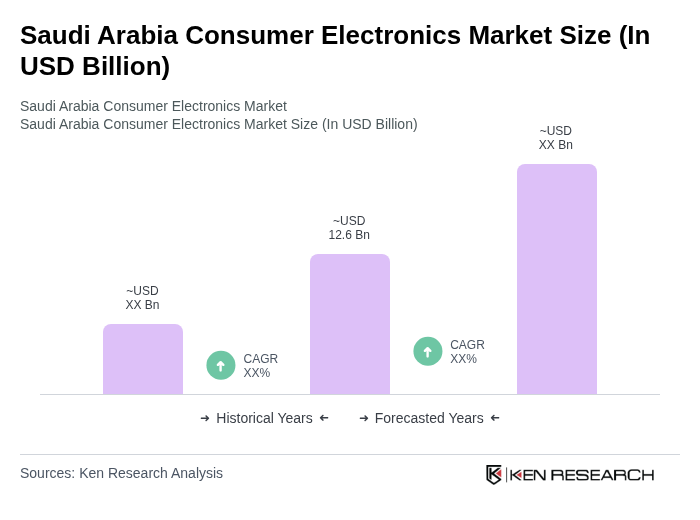
- The Saudi Arabia Consumer Electronics Market is valued at USD 12.6 billion, based on a five-year historical analysis. This growth is primarily driven by increasing disposable incomes, rapid urbanization, growing digital literacy, a youthful tech-savvy population, and a growing preference for smart and connected devices among consumers under Saudi Vision 2030. The market has seen a significant rise in demand for innovative products, particularly in the smartphone, smart TV, air conditioner, computing, and wearable segments, reflecting the changing consumer lifestyle, technological advancements, and post-pandemic shifts toward gaming, wireless audio, and hybrid work models.
- Key cities such as Riyadh, Jeddah, and Dammam dominate the consumer electronics market due to their high population density, urban infrastructure, and economic activities. Riyadh, as the capital, serves as a commercial hub, while Jeddah's strategic location as a port city facilitates the import of electronics. Dammam, being an industrial center, also contributes to the demand for consumer electronics, making these cities pivotal in shaping market trends.
- The Saudi Energy Efficiency Standards for Household and Similar Electrical Appliances, 2019 issued by the Saudi Standards, Metrology and Quality Organization (SASO) mandates minimum energy performance standards for consumer electronics including air conditioners, refrigerators, televisions, and washing machines sold in the country. This regulation requires products to achieve specified energy efficiency ratios and labeling, with compliance verified through testing and registration thresholds for imports exceeding certain volumes, thereby promoting sustainable consumption and reducing energy costs for consumers.
Saudi Arabia Consumer Electronics Market Segmentation
By Product Type:
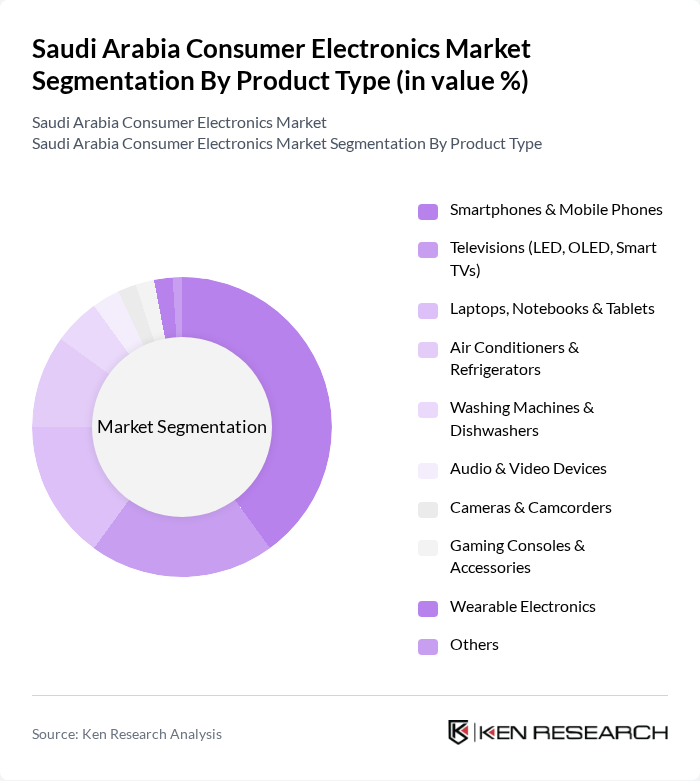
The product type segmentation of the consumer electronics market includes various subsegments such as Smartphones & Mobile Phones, Televisions (LED, OLED, Smart TVs), Laptops, Notebooks & Tablets, Air Conditioners & Refrigerators, Washing Machines & Dishwashers, Audio & Video Devices, Cameras & Camcorders, Gaming Consoles & Accessories, Wearable Electronics, and Others. Among these, Smartphones & Mobile Phones dominate the market due to the increasing penetration of mobile internet and the growing trend of digital communication. The demand for high-performance smartphones with advanced features continues to rise, driven by consumer preferences for connectivity and multimedia capabilities.
By Connectivity Type:
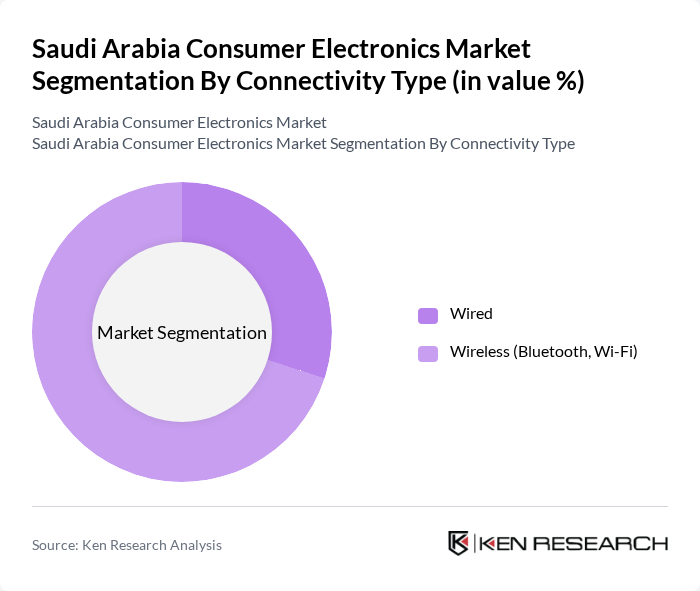
The connectivity type segmentation includes Wired and Wireless (Bluetooth, Wi-Fi). The wireless segment is currently leading the market, driven by the increasing adoption of smart devices and the demand for seamless connectivity. Consumers are increasingly favoring wireless solutions for their convenience and flexibility, which has led to a significant rise in the sales of wireless-enabled consumer electronics.
Saudi Arabia Consumer Electronics Market Competitive Landscape
The Saudi Arabia Consumer Electronics Market is characterized by a dynamic mix of regional and international players. Leading participants such as Samsung Electronics, LG Electronics, Sony Corporation, Huawei Technologies, Apple Inc., Xiaomi Corporation, Panasonic Corporation, Philips Electronics, Dell Technologies, Lenovo Group, AsusTek Computer Inc., Microsoft Corporation, HP Inc., TCL Technology, Oppo Electronics contribute to innovation, geographic expansion, and service delivery in this space.
Saudi Arabia Consumer Electronics Market Industry Analysis
Growth Drivers
- Increasing Disposable Income:The average disposable income in Saudi Arabia is projected to reach approximately SAR 85,000 (USD 22,666) per capita in future, reflecting a significant increase from SAR 80,000 (USD 21,333) in the previous year. This rise in income enables consumers to spend more on consumer electronics, particularly on high-end devices such as smartphones and laptops. As purchasing power increases, the demand for advanced technology products is expected to surge, driving market growth.
- Rapid Urbanization:Urbanization in Saudi Arabia is accelerating, with over 86% of the population expected to reside in urban areas in future. This shift is accompanied by a growing demand for modern consumer electronics, as urban dwellers seek smart home devices and connected technologies. The urban population's access to better infrastructure and services further enhances the market for consumer electronics, fostering innovation and adoption of new technologies.
- High Demand for Smart Devices:The demand for smart devices in Saudi Arabia is projected to reach 13 million units in future, up from 12 million in the previous year. This growth is driven by increasing consumer interest in smart home technologies, wearables, and IoT devices. As consumers become more tech-savvy, the preference for integrated and smart solutions is expected to rise, propelling the consumer electronics market forward and encouraging manufacturers to innovate.
Market Challenges
- Intense Competition:The consumer electronics market in Saudi Arabia is characterized by fierce competition, with over 210 brands vying for market share. This saturation leads to price wars and reduced profit margins, making it challenging for new entrants to establish themselves. Established brands must continuously innovate and differentiate their products to maintain their market position, which can strain resources and impact overall profitability.
- Supply Chain Disruptions:The global supply chain disruptions, exacerbated by geopolitical tensions and the COVID-19 pandemic, have significantly impacted the availability of electronic components. In future, it is estimated that 35% of consumer electronics manufacturers in Saudi Arabia will face delays in production due to these disruptions. This situation can lead to inventory shortages, increased costs, and ultimately, a negative impact on consumer satisfaction and sales.
Saudi Arabia Consumer Electronics Market Future Outlook
The Saudi Arabia consumer electronics market is poised for significant transformation, driven by technological advancements and changing consumer preferences. As the adoption of 5G technology expands, consumers will increasingly seek high-speed connectivity for their devices. Additionally, the integration of artificial intelligence in consumer electronics will enhance user experiences, making products more intuitive and efficient. Sustainability will also play a crucial role, as consumers demand eco-friendly options, prompting manufacturers to innovate in energy-efficient technologies.
Market Opportunities
- Growth in E-commerce:E-commerce sales in Saudi Arabia are expected to reach SAR 35 billion (USD 9.33 billion) in future, up from SAR 30 billion (USD 8 billion) in the previous year. This growth presents a significant opportunity for consumer electronics brands to expand their online presence and reach a broader audience, particularly among tech-savvy younger consumers who prefer online shopping for convenience and variety.
- Expansion of 5G Technology:The rollout of 5G technology is anticipated to cover 85% of urban areas in Saudi Arabia in future. This expansion will facilitate the growth of smart devices and IoT applications, creating new market opportunities for consumer electronics. As consumers seek faster and more reliable connectivity, manufacturers can capitalize on this trend by developing innovative products that leverage 5G capabilities.
Scope of the Report
| Segment | Sub-Segments |
|---|---|
| By Product Type | Smartphones & Mobile Phones Televisions (LED, OLED, Smart TVs) Laptops, Notebooks & Tablets Air Conditioners & Refrigerators Washing Machines & Dishwashers Audio & Video Devices Cameras & Camcorders Gaming Consoles & Accessories Wearable Electronics Others |
| By Connectivity Type | Wired Wireless (Bluetooth, Wi-Fi) |
| By Distribution Channel | Online Retail Offline Retail Direct Sales Others |
Key Target Audience
Investors and Venture Capitalist Firms
Government and Regulatory Bodies (e.g., Saudi Arabian Standards Organization, Communications and Information Technology Commission)
Manufacturers and Producers
Distributors and Retailers
Telecommunications Companies
Consumer Electronics Importers
Industry Associations (e.g., Saudi Electronics and Home Appliances Institute)
Financial Institutions
Players Mentioned in the Report:
Samsung Electronics
LG Electronics
Sony Corporation
Huawei Technologies
Apple Inc.
Xiaomi Corporation
Panasonic Corporation
Philips Electronics
Dell Technologies
Lenovo Group
AsusTek Computer Inc.
Microsoft Corporation
HP Inc.
TCL Technology
Oppo Electronics
Table of Contents
Market Assessment Phase
1. Executive Summary and Approach
2. Saudi Arabia Consumer Electronics Market Overview
2.1 Key Insights and Strategic Recommendations
2.2 Saudi Arabia Consumer Electronics Market Overview
2.3 Definition and Scope
2.4 Evolution of Market Ecosystem
2.5 Timeline of Key Regulatory Milestones
2.6 Value Chain & Stakeholder Mapping
2.7 Business Cycle Analysis
2.8 Policy & Incentive Landscape
3. Saudi Arabia Consumer Electronics Market Analysis
3.1 Growth Drivers
3.1.1 Increasing disposable income
3.1.2 Rapid urbanization
3.1.3 High demand for smart devices
3.1.4 Government initiatives for digital transformation
3.2 Market Challenges
3.2.1 Intense competition
3.2.2 Supply chain disruptions
3.2.3 Regulatory compliance issues
3.2.4 Consumer price sensitivity
3.3 Market Opportunities
3.3.1 Growth in e-commerce
3.3.2 Expansion of 5G technology
3.3.3 Increasing demand for eco-friendly products
3.3.4 Rise in online gaming and entertainment
3.4 Market Trends
3.4.1 Shift towards smart home devices
3.4.2 Integration of AI in consumer electronics
3.4.3 Growth of wearable technology
3.4.4 Focus on sustainability and energy efficiency
3.5 Government Regulation
3.5.1 Import tariffs on electronics
3.5.2 Standards for energy efficiency
3.5.3 Consumer protection laws
3.5.4 Data privacy regulations
4. SWOT Analysis
5. Stakeholder Analysis
6. Porter's Five Forces Analysis
7. Saudi Arabia Consumer Electronics Market Market Size, 2019-2024
7.1 By Value
7.2 By Volume
7.3 By Average Selling Price
8. Saudi Arabia Consumer Electronics Market Segmentation
8.1 By Product Type
8.1.1 Smartphones & Mobile Phones
8.1.2 Televisions (LED, OLED, Smart TVs)
8.1.3 Laptops, Notebooks & Tablets
8.1.4 Air Conditioners & Refrigerators
8.1.5 Washing Machines & Dishwashers
8.1.6 Audio & Video Devices
8.1.7 Cameras & Camcorders
8.1.8 Gaming Consoles & Accessories
8.1.9 Wearable Electronics
8.1.10 Others
8.2 By Connectivity Type
8.2.1 Wired
8.2.2 Wireless (Bluetooth, Wi-Fi)
8.3 By Distribution Channel
8.3.1 Online Retail
8.3.2 Offline Retail
8.3.3 Direct Sales
8.3.4 Others
9. Saudi Arabia Consumer Electronics Market Competitive Analysis
9.1 Market Share of Key Players
9.2 Cross Comparison of Key Players
9.2.1 Company Name
9.2.2 Revenue (USD Billion)
9.2.3 CAGR (%)
9.2.4 Market Share (%)
9.2.5 EBITDA Margin (%)
9.2.6 ROE (%)
9.2.7 Average Selling Price (USD)
9.2.8 Distribution Coverage (%)
9.2.9 R&D Investment (% of Revenue)
9.2.10 Net Promoter Score (NPS)
9.3 SWOT Analysis of Top Players
9.4 Pricing Analysis
9.5 Detailed Profile of Major Companies
9.5.1 Samsung Electronics
9.5.2 LG Electronics
9.5.3 Sony Corporation
9.5.4 Huawei Technologies
9.5.5 Apple Inc.
9.5.6 Xiaomi Corporation
9.5.7 Panasonic Corporation
9.5.8 Philips Electronics
9.5.9 Dell Technologies
9.5.10 Lenovo Group
9.5.11 AsusTek Computer Inc.
9.5.12 Microsoft Corporation
9.5.13 HP Inc.
9.5.14 TCL Technology
9.5.15 Oppo Electronics
10. Saudi Arabia Consumer Electronics Market End-User Analysis
10.1 Procurement Behavior of Key Ministries
10.1.1 Ministry of Communications and Information Technology
10.1.2 Ministry of Education
10.1.3 Ministry of Health
10.1.4 Ministry of Interior
10.2 Corporate Spend on Infrastructure & Energy
10.2.1 Corporate Investments in Technology
10.2.2 Budget Allocations for Electronics
10.2.3 Trends in Corporate Spending
10.3 Pain Point Analysis by End-User Category
10.3.1 Residential Users
10.3.2 Commercial Users
10.3.3 Industrial Users
10.3.4 Government Users
10.4 User Readiness for Adoption
10.4.1 Awareness of New Technologies
10.4.2 Willingness to Invest
10.4.3 Training and Support Needs
10.5 Post-Deployment ROI and Use Case Expansion
10.5.1 Measurement of ROI
10.5.2 Expansion Opportunities
10.5.3 User Feedback and Adaptation
11. Saudi Arabia Consumer Electronics Market Future Size, 2025-2030
11.1 By Value
11.2 By Volume
11.3 By Average Selling Price
Go-To-Market Strategy Phase
1. Whitespace Analysis + Business Model Canvas
1.1 Market Gaps Identification
1.2 Business Model Development
2. Marketing and Positioning Recommendations
2.1 Branding Strategies
2.2 Product USPs
3. Distribution Plan
3.1 Urban Retail vs Rural NGO Tie-ups
4. Channel & Pricing Gaps
4.1 Underserved Routes
4.2 Pricing Bands
5. Unmet Demand & Latent Needs
5.1 Category Gaps
5.2 Consumer Segments
6. Customer Relationship
6.1 Loyalty Programs
6.2 After-sales Service
7. Value Proposition
7.1 Sustainability
7.2 Integrated Supply Chains
8. Key Activities
8.1 Regulatory Compliance
8.2 Branding
8.3 Distribution Setup
9. Entry Strategy Evaluation
9.1 Domestic Market Entry Strategy
9.1.1 Product Mix
9.1.2 Pricing Band
9.1.3 Packaging
9.2 Export Entry Strategy
9.2.1 Target Countries
9.2.2 Compliance Roadmap
10. Entry Mode Assessment
10.1 JV
10.2 Greenfield
10.3 M&A
10.4 Distributor Model
11. Capital and Timeline Estimation
11.1 Capital Requirements
11.2 Timelines
12. Control vs Risk Trade-Off
12.1 Ownership vs Partnerships
13. Profitability Outlook
13.1 Breakeven Analysis
13.2 Long-term Sustainability
14. Potential Partner List
14.1 Distributors
14.2 JVs
14.3 Acquisition Targets
15. Execution Roadmap
15.1 Phased Plan for Market Entry
15.1.1 Market Setup
15.1.2 Market Entry
15.1.3 Growth Acceleration
15.1.4 Scale & Stabilize
15.2 Key Activities and Milestones
15.2.1 Milestone Planning
15.2.2 Activity Tracking
Research Methodology
Phase 1: Approach1
Desk Research
- Analysis of market reports from industry associations and government publications
- Review of consumer electronics sales data from retail and e-commerce platforms
- Examination of demographic and economic indicators from national statistics agencies
Primary Research
- Interviews with key stakeholders in the consumer electronics supply chain, including manufacturers and distributors
- Surveys targeting end-users to understand purchasing behavior and preferences
- Focus groups with tech-savvy consumers to gauge trends and product expectations
Validation & Triangulation
- Cross-validation of findings through multiple data sources, including sales figures and consumer feedback
- Triangulation of insights from industry experts and market analysts
- Sanity checks through comparative analysis with regional market trends
Phase 2: Market Size Estimation1
Top-down Assessment
- Estimation of total market size based on national consumer electronics expenditure
- Segmentation of market by product categories such as smartphones, laptops, and home appliances
- Incorporation of growth rates from historical data and economic forecasts
Bottom-up Modeling
- Collection of sales data from leading consumer electronics retailers and manufacturers
- Estimation of average selling prices and unit sales across different product segments
- Analysis of distribution channels and their impact on market penetration
Forecasting & Scenario Analysis
- Development of predictive models based on consumer trends and technological advancements
- Scenario planning considering economic fluctuations and regulatory changes
- Projections of market growth under various conditions through 2030
Phase 3: CATI Sample Composition1
| Scope Item/Segment | Sample Size | Target Respondent Profiles |
|---|---|---|
| Smartphone Market Insights | 120 | Retail Managers, End-Users |
| Laptop Consumer Preferences | 100 | End-Users, Business Professionals |
| Home Appliance Trends | 80 | Homeowners, Appliance Retailers |
| Wearable Technology Adoption | 75 | End-Users, Tech Enthusiasts |
| Consumer Electronics E-commerce Behavior | 90 | Online Shoppers, E-commerce Professionals |
Frequently Asked Questions
What is the current value of the Saudi Arabia Consumer Electronics Market?
The Saudi Arabia Consumer Electronics Market is valued at approximately USD 12.6 billion, reflecting significant growth driven by increasing disposable incomes, urbanization, and a tech-savvy population, particularly under the initiatives of Saudi Vision 2030.
What are the key growth drivers of the Saudi Arabia Consumer Electronics Market?
Which cities dominate the consumer electronics market in Saudi Arabia?
What types of products are included in the Saudi Arabia Consumer Electronics Market?
Other Regional/Country Reports
Other Adjacent Reports
Japan Smart Home Devices Market
Thailand Telecommunications Equipment Market
China Home Appliances Market Size, Share & Forecast, By Product Type, Price Tier & Distribution Channel, 2026–2031Global Wearable Technology Market Size, Share & Forecast, By Product Type, Application & Distribution Channel, 2026-2031Bahrain Gaming Consoles Market
Egypt E-commerce Platforms Market
India Internet of Things Market Size, Share & Forecast, By Solution Type, End-Use Industry & Application, 2026-2031Brazil 5G Technology Market
Qatar Artificial Intelligence Market Size, Share & Forecast, By Solution Type, Deployment Model & End-Use Industry, 2026–2032Qatar Semiconductor Components Market
Why Buy From Us?

What makes us stand out is that our consultants follow Robust, Refine and Result (RRR) methodology. Robust for clear definitions, approaches and sanity checking, Refine for differentiating respondents' facts and opinions, and Result for presenting data with story.

We have set a benchmark in the industry by offering our clients with syndicated and customized market research reports featuring coverage of entire market as well as meticulous research and analyst insights.

While we don't replace traditional research, we flip the method upside down. Our dual approach of Top Bottom & Bottom Top ensures quality deliverable by not just verifying company fundamentals but also looking at the sector and macroeconomic factors.

With one step in the future, our research team constantly tries to show you the bigger picture. We help with some of the tough questions you may encounter along the way: How is the industry positioned? Best marketing channel? KPI's of competitors? By aligning every element, we help maximize success.

Our report gives you instant access to the answers and sources that other companies might choose to hide. We elaborate each steps of research methodology we have used and showcase you the sample size to earn your trust.

If you need any support, we are here! We pride ourselves on universe strength, data quality, and quick, friendly, and professional service.