Region:Asia
Author(s):Geetanshi
Product Code:KRAA0311
Pages:97
Published On:August 2025
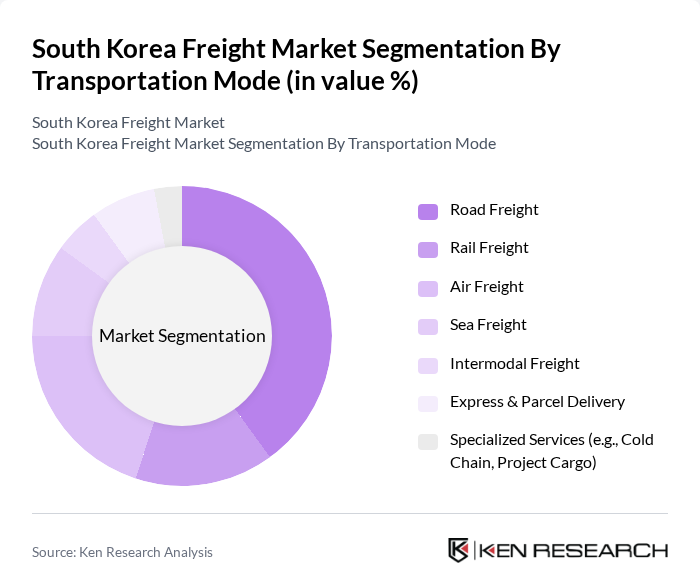
By Transportation Mode:The transportation mode segmentation of the freight market includes various methods such as road, rail, air, sea, intermodal, express & parcel delivery, and specialized services. Among these, road freight is the most utilized due to its flexibility and extensive network, catering to both short and long-distance deliveries. Rail freight is significant for bulk goods, while air freight is preferred for high-value and time-sensitive shipments. Sea freight remains essential for international trade, leveraging South Korea’s major ports. The express & parcel delivery segment has seen rapid growth, driven by the e-commerce boom and consumer demand for faster delivery. Intermodal and specialized services, such as cold chain and project cargo, are increasingly important for complex logistics needs .
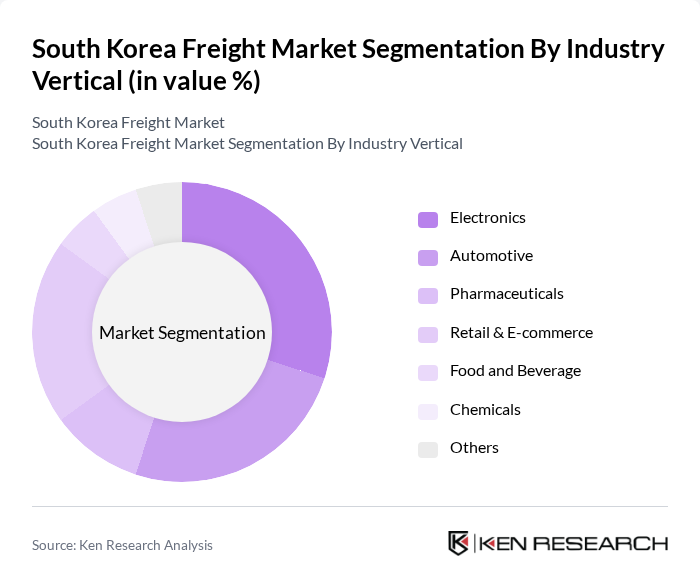
By Industry Vertical:The freight market is segmented by industry verticals, including electronics, automotive, pharmaceuticals, retail & e-commerce, food and beverage, chemicals, and others. The electronics sector is a major contributor, driven by South Korea's strong technology manufacturing base and export-oriented production. The automotive industry also plays a significant role, with high demand for both domestic and international logistics. Retail & e-commerce has surged, particularly during and after the pandemic, leading to increased freight activity across various modes. Pharmaceuticals, food and beverage, and chemicals require specialized logistics solutions, such as temperature control and hazardous material handling, further diversifying the market .
The South Korea Freight Market is characterized by a dynamic mix of regional and international players. Leading participants such as Hyundai Glovis, CJ Logistics, Hanjin Transportation, Samsung C&T Corporation, Daewoo Logistics, Lotte Global Logistics, SK Networks, Dongbang Transport Logistics, KCTC (Korea Container Terminal Co.), Pan Ocean, Korea Marine Transport Co. (KMTC), Sejung Shipping, Hanil Express, Logen, Pantos Logistics (LG CNS) contribute to innovation, geographic expansion, and service delivery in this space.
The South Korean freight market is poised for significant transformation, driven by technological advancements and evolving consumer preferences. As e-commerce continues to expand, logistics companies will increasingly invest in automation and AI to enhance efficiency. Additionally, the focus on sustainability will lead to the adoption of green logistics practices. Strategic partnerships with technology firms will further facilitate digital transformation, enabling the freight sector to adapt to changing market dynamics and consumer expectations effectively.
| Segment | Sub-Segments |
|---|---|
| By Transportation Mode | Road Freight Rail Freight Air Freight Sea Freight Intermodal Freight Express & Parcel Delivery Specialized Services (e.g., Cold Chain, Project Cargo) |
| By Industry Vertical | Electronics Automotive Pharmaceuticals Retail & E-commerce Food and Beverage Chemicals Others |
| By Region | Seoul Busan Incheon Daegu Daejeon Gwangju Others |
| By Service Model | PL (Second-Party Logistics) PL (Third-Party Logistics) PL (Fourth-Party Logistics) Freight Forwarding Warehousing and Distribution Others |
| By Cargo Type | Dry Cargo Liquid Cargo Hazardous Materials Perishable Goods Heavy Machinery Others |
| By Delivery Speed | Same-Day Delivery Next-Day Delivery Standard Delivery Scheduled Delivery Others |
| By Payment Model | Prepaid Postpaid Subscription-Based Pay-As-You-Go Others |
| Scope Item/Segment | Sample Size | Target Respondent Profiles |
|---|---|---|
| Road Freight Operations | 100 | Logistics Managers, Fleet Supervisors |
| Maritime Freight Services | 60 | Shipping Line Executives, Port Operations Managers |
| Air Cargo Management | 50 | Airline Cargo Managers, Freight Forwarders |
| Rail Freight Logistics | 40 | Railway Operations Managers, Supply Chain Analysts |
| Cold Chain Logistics | 40 | Cold Chain Managers, Quality Assurance Officers |
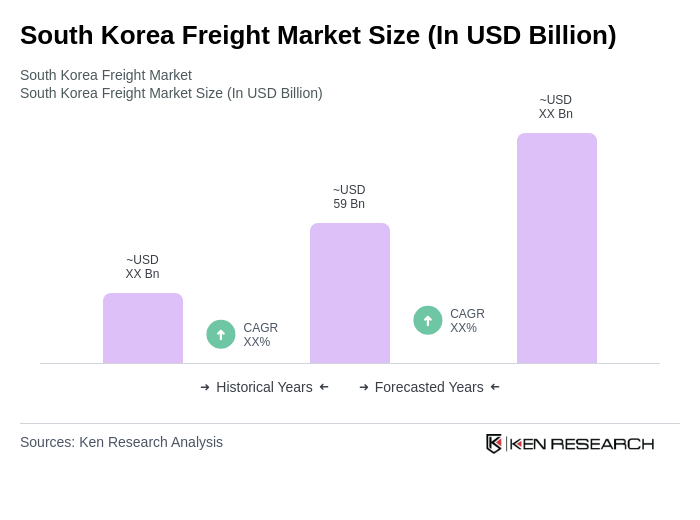
The South Korea Freight Market is valued at approximately USD 59 billion, driven by factors such as a strong manufacturing sector, increasing international trade, and the rise of e-commerce, alongside advancements in logistics technologies.

What makes us stand out is that our consultants follow Robust, Refine and Result (RRR) methodology. Robust for clear definitions, approaches and sanity checking, Refine for differentiating respondents' facts and opinions, and Result for presenting data with story.

We have set a benchmark in the industry by offering our clients with syndicated and customized market research reports featuring coverage of entire market as well as meticulous research and analyst insights.

While we don't replace traditional research, we flip the method upside down. Our dual approach of Top Bottom & Bottom Top ensures quality deliverable by not just verifying company fundamentals but also looking at the sector and macroeconomic factors.

With one step in the future, our research team constantly tries to show you the bigger picture. We help with some of the tough questions you may encounter along the way: How is the industry positioned? Best marketing channel? KPI's of competitors? By aligning every element, we help maximize success.

Our report gives you instant access to the answers and sources that other companies might choose to hide. We elaborate each steps of research methodology we have used and showcase you the sample size to earn your trust.

If you need any support, we are here! We pride ourselves on universe strength, data quality, and quick, friendly, and professional service.













