About the Report
Base Year 2024Listen to the audio summary
US Pet Food Market Overview
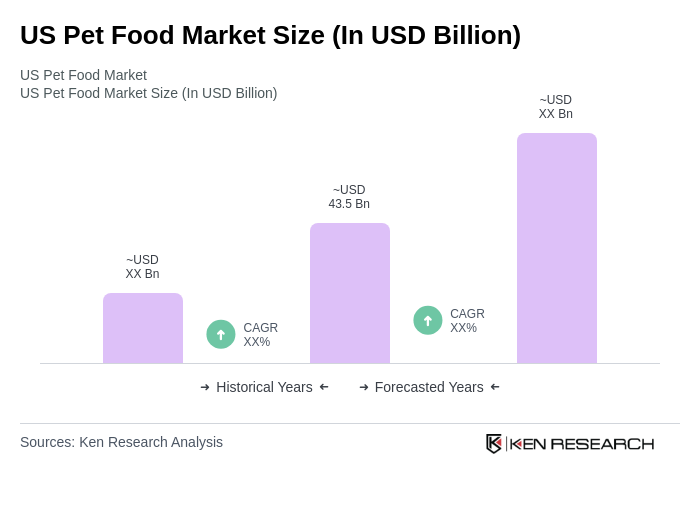
- The US Pet Food Market is valued at USD 43.5 billion, based on a five-year historical analysis. This value aligns with industry reporting that pegs U.S. pet food and treats as a distinct category within overall pet industry sales and is supported by estimates citing pet food market size in the low-to-mid USD 40 billions.
- Growth is primarily driven by rising pet ownership and the continued humanization of pets, which increases willingness to pay for premium, functional, and specialized nutrition; these trends are consistently cited as key demand drivers in the U.S. pet food category.
- Key contributors include large, pet-dense states such as California and Texas, and metro areas with diversified retail access and high income levels that support premiumization and e-commerce growth; industry coverage highlights broad channel expansion across mass, pet specialty, and online in these regions.
- Ingredient listing in descending order by weight has long been a core requirement for U.S. pet food labeling under AAFCO model regulations and FDA oversight; clarity and transparency in labeling remain ongoing regulatory priorities rather than a new 2023 rule.
US Pet Food Market Segmentation
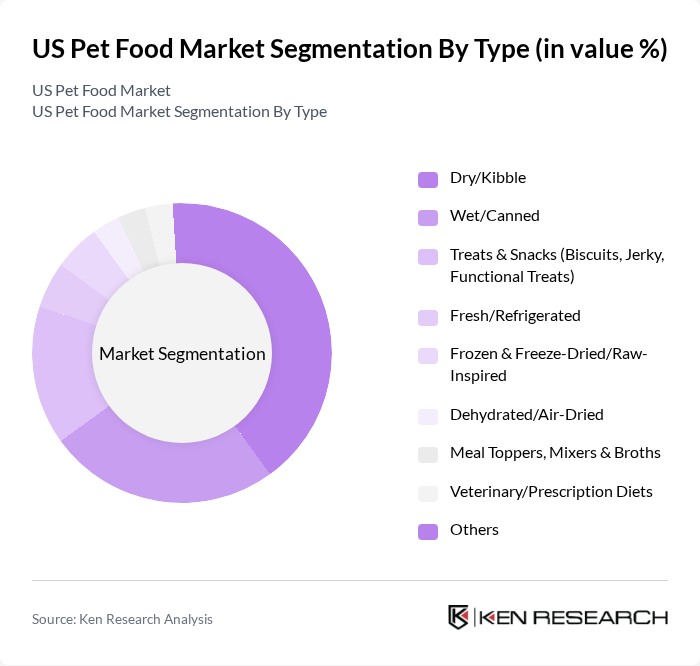
By Type:The pet food market is segmented into various types, including Dry/Kibble, Wet/Canned, Treats & Snacks, Fresh/Refrigerated, Frozen & Freeze-Dried/Raw-Inspired, Dehydrated/Air-Dried, Meal Toppers, Mixers & Broths, Veterinary/Prescription Diets, and Others. Among these, Dry/Kibble is the leading sub-segment due to its convenience, longer shelf life, and cost-effectiveness, appealing to a broad consumer base. Wet/Canned food is also gaining traction, particularly among pet owners seeking palatability and hydration for their pets. Premiumization, functional benefits (skin/coat, digestion, joint), and interest in natural/clean-label, raw-inspired, and minimally processed formats continue to shape product mix and innovation.
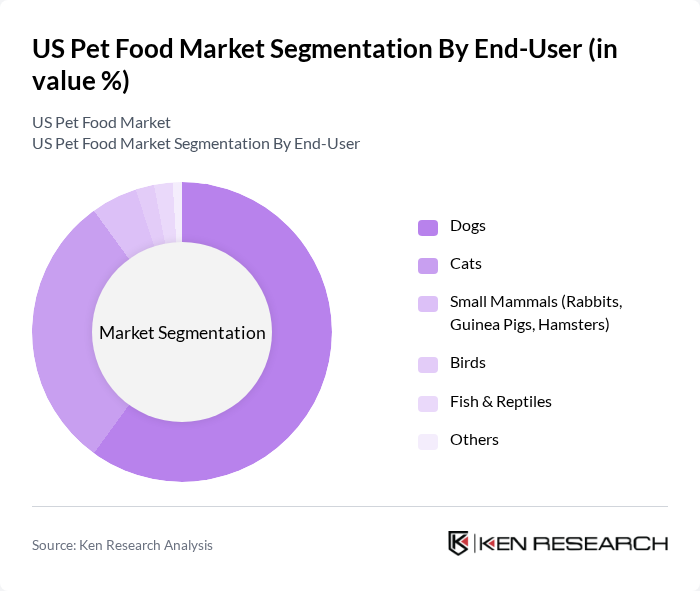
By End-User:The end-user segmentation includes Dogs, Cats, Small Mammals, Birds, Fish & Reptiles, and Others. The dog food segment dominates the market, supported by the higher share of dog ownership and spending per pet, while cat food continues to expand as owners prioritize health-forward, premium nutrition for felines.
US Pet Food Market Competitive Landscape
The US Pet Food Market is characterized by a dynamic mix of regional and international players. Leading participants such as Nestlé Purina PetCare, Mars Petcare, Hill's Pet Nutrition (Colgate-Palmolive), Blue Buffalo (General Mills), Spectrum Brands Holdings, Inc. (Tetra, FURminator; includes pet consumables via subsidiary), Diamond Pet Foods, WellPet LLC (Wellness, Old Mother Hubbard), The J. M. Smucker Co. (Milk-Bone, Meow Mix, 9Lives), PetSmart, LLC, Chewy, Inc., Petco Health and Wellness Company, Inc., Freshpet, Inc., Canidae Pet Food Co., Tuffy’s Pet Foods (KLN Family Brands), Nutro (Mars Petcare), Central Garden & Pet Company (Nylabone, Cadet; pet treats), Mid America Pet Food (Victor, Eagle Mountain), Champion Petfoods (ORIJEN, ACANA), Nestlé USA – Merrick Pet Care (Merrick, Castor & Pollux), Phillips Pet Food & Supplies contribute to innovation, geographic expansion, and service delivery in this space.
US Pet Food Market Industry Analysis
Growth Drivers
- Increasing Pet Ownership:The American Pet Products Association reported that approximately66%of U.S. households own a pet, translating to around65 million dogsand46.5 million catsin future. This growing trend in pet ownership is expected to continue, driven by urbanization and changing lifestyles. As more households adopt pets, the demand for pet food rises significantly, withpet food and treats sales reported by APPA at approximately USD 64 billion, indicating a robust market foundation for future growth.
- Rising Health Consciousness Among Pet Owners:A survey by the American Veterinary Medical Association indicated that60%of pet owners prioritize health and nutrition when selecting pet food. This trend is reflected in the increasing sales of premium and specialized pet food products, which accounted forUSD 15 billionin future. As pet owners become more health-conscious, they are willing to invest in higher-quality food options, further driving market growth and innovation in pet nutrition.
- E-commerce Growth in Pet Food Sales:E-commerce sales of pet food reachedUSD 10 billion, representing a25%increase from the previous year. The convenience of online shopping and the rise of subscription services have significantly contributed to this growth. With40%of pet owners now purchasing pet food online, this trend is expected to continue, reshaping the retail landscape and providing opportunities for brands to reach a broader audience through digital channels.
Market Challenges
- Supply Chain Disruptions:The pet food industry has faced significant supply chain challenges, particularly due to the COVID-19 pandemic. In future,30%of pet food manufacturers reported delays in ingredient sourcing, impacting production schedules. These disruptions have led to increased operational costs and inventory shortages, making it difficult for companies to meet rising consumer demand while maintaining product availability and quality.
- Competition from Private Labels:The rise of private label brands has intensified competition in the pet food market. In future, private labels captured25%of the market share, appealing to cost-conscious consumers. This trend poses a challenge for established brands, which must differentiate their products through quality and innovation. As private labels continue to gain traction, traditional brands may face pressure to adjust pricing strategies and enhance their value propositions.
US Pet Food Market Future Outlook
The US pet food market is poised for continued growth, driven by evolving consumer preferences and increasing pet ownership. Innovations in pet nutrition, particularly in organic and natural products, are expected to gain traction as health-conscious pet owners seek better options for their pets. Additionally, the expansion of e-commerce platforms will facilitate easier access to a wider range of products, enhancing consumer convenience and driving sales. Overall, the market is set to adapt to changing trends and consumer demands in the coming years.
Market Opportunities
- Growth in Organic and Natural Pet Foods:The organic pet food segment is projected to grow significantly, with sales reachingUSD 5 billionin future. This trend is driven by increasing consumer awareness of health and wellness, leading to a demand for natural ingredients. Companies that invest in organic product lines can capitalize on this growing market segment, appealing to health-conscious pet owners.
- Expansion into Emerging Markets:Emerging markets, particularly in Asia and Latin America, present significant growth opportunities for pet food companies. With pet ownership rising in these regions, the demand for quality pet food is expected to increase. Companies that strategically enter these markets can leverage local partnerships and adapt their offerings to meet regional preferences, potentially increasing their global market share.
Scope of the Report
| Segment | Sub-Segments |
|---|---|
| By Type | Dry/Kibble Wet/Canned Treats & Snacks (Biscuits, Jerky, Functional Treats) Fresh/Refrigerated Frozen & Freeze-Dried/Raw-Inspired Dehydrated/Air-Dried Meal Toppers, Mixers & Broths Veterinary/Prescription Diets Others |
| By End-User | Dogs Cats Small Mammals (Rabbits, Guinea Pigs, Hamsters) Birds Fish & Reptiles Others |
| By Distribution Channel | Supermarkets/Hypermarkets Pet Specialty (PetSmart, Petco, Independents) Online (Chewy, Amazon, DTC Brand Sites) Club & Mass Merchandisers (Costco, Walmart, Target) Veterinary Clinics Convenience & Others |
| By Price Tier | Super-Premium Premium Mid-Range Economy/Value Others |
| By Packaging Type | Multi-layer Bags (Paper/Plastic) Cans Pouches Trays & Tubs Chubs & Roll Packaging Others |
| By Ingredient/Nutrition Type | Animal Protein-Based (Chicken, Beef, Fish, etc.) Limited-Ingredient Diets Grain-Inclusive Grain-Free Functional/Condition-Specific (Digestive, Joint, Skin/Coat) Natural/Organic Plant-Based & Alternative Proteins (Insect, Vegan) Others |
| By Brand Ownership | National Brands Private Labels (Retailer Brands) DTC/Subscription Brands Regional/Independent Brands Others |
Key Target Audience
Investors and Venture Capitalist Firms
Government and Regulatory Bodies (e.g., Food and Drug Administration, United States Department of Agriculture)
Manufacturers and Producers
Distributors and Retailers
Pet Food Ingredient Suppliers
Pet Health and Nutrition Experts
Pet Industry Trade Associations
Financial Institutions
Players Mentioned in the Report:
Nestle Purina PetCare
Mars Petcare
Hill's Pet Nutrition (Colgate-Palmolive)
Blue Buffalo (General Mills)
Spectrum Brands Holdings, Inc. (Tetra, FURminator; includes pet consumables via subsidiary)
Diamond Pet Foods
WellPet LLC (Wellness, Old Mother Hubbard)
The J. M. Smucker Co. (Milk-Bone, Meow Mix, 9Lives)
PetSmart, LLC
Chewy, Inc.
Petco Health and Wellness Company, Inc.
Freshpet, Inc.
Canidae Pet Food Co.
Tuffys Pet Foods (KLN Family Brands)
Nutro (Mars Petcare)
Central Garden & Pet Company (Nylabone, Cadet; pet treats)
Mid America Pet Food (Victor, Eagle Mountain)
Champion Petfoods (ORIJEN, ACANA)
Nestle USA Merrick Pet Care (Merrick, Castor & Pollux)
Phillips Pet Food & Supplies
Table of Contents
Market Assessment Phase
1. Executive Summary and Approach
2. US Pet Food Market Overview
2.1 Key Insights and Strategic Recommendations
2.2 US Pet Food Market Overview
2.3 Definition and Scope
2.4 Evolution of Market Ecosystem
2.5 Timeline of Key Regulatory Milestones
2.6 Value Chain & Stakeholder Mapping
2.7 Business Cycle Analysis
2.8 Policy & Incentive Landscape
3. US Pet Food Market Analysis
3.1 Growth Drivers
3.1.1 Increasing Pet Ownership
3.1.2 Rising Health Consciousness Among Pet Owners
3.1.3 Premiumization of Pet Food Products
3.1.4 E-commerce Growth in Pet Food Sales
3.2 Market Challenges
3.2.1 Supply Chain Disruptions
3.2.2 Regulatory Compliance Costs
3.2.3 Competition from Private Labels
3.2.4 Fluctuating Raw Material Prices
3.3 Market Opportunities
3.3.1 Growth in Organic and Natural Pet Foods
3.3.2 Expansion into Emerging Markets
3.3.3 Innovations in Pet Nutrition
3.3.4 Increasing Demand for Pet Treats
3.4 Market Trends
3.4.1 Shift Towards Sustainable Packaging
3.4.2 Rise of Subscription Services for Pet Food
3.4.3 Customization of Pet Diets
3.4.4 Growth of Online Pet Food Retailers
3.5 Government Regulation
3.5.1 FDA Regulations on Pet Food Safety
3.5.2 AAFCO Guidelines for Pet Food Labeling
3.5.3 State-Specific Pet Food Regulations
3.5.4 Import Regulations for Pet Food Ingredients
4. SWOT Analysis
5. Stakeholder Analysis
6. Porter's Five Forces Analysis
7. US Pet Food Market Market Size, 2019-2024
7.1 By Value
7.2 By Volume
7.3 By Average Selling Price
8. US Pet Food Market Segmentation
8.1 By Type
8.1.1 Dry/Kibble
8.1.2 Wet/Canned
8.1.3 Treats & Snacks (Biscuits, Jerky, Functional Treats)
8.1.4 Fresh/Refrigerated
8.1.5 Frozen & Freeze-Dried/Raw-Inspired
8.1.6 Dehydrated/Air-Dried
8.1.7 Meal Toppers, Mixers & Broths
8.1.8 Veterinary/Prescription Diets
8.1.9 Others
8.2 By End-User
8.2.1 Dogs
8.2.2 Cats
8.2.3 Small Mammals (Rabbits, Guinea Pigs, Hamsters)
8.2.4 Birds
8.2.5 Fish & Reptiles
8.2.6 Others
8.3 By Distribution Channel
8.3.1 Supermarkets/Hypermarkets
8.3.2 Pet Specialty (PetSmart, Petco, Independents)
8.3.3 Online (Chewy, Amazon, DTC Brand Sites)
8.3.4 Club & Mass Merchandisers (Costco, Walmart, Target)
8.3.5 Veterinary Clinics
8.3.6 Convenience & Others
8.4 By Price Tier
8.4.1 Super-Premium
8.4.2 Premium
8.4.3 Mid-Range
8.4.4 Economy/Value
8.4.5 Others
8.5 By Packaging Type
8.5.1 Multi-layer Bags (Paper/Plastic)
8.5.2 Cans
8.5.3 Pouches
8.5.4 Trays & Tubs
8.5.5 Chubs & Roll Packaging
8.5.6 Others
8.6 By Ingredient/Nutrition Type
8.6.1 Animal Protein-Based (Chicken, Beef, Fish, etc.)
8.6.2 Limited-Ingredient Diets
8.6.3 Grain-Inclusive
8.6.4 Grain-Free
8.6.5 Functional/Condition-Specific (Digestive, Joint, Skin/Coat)
8.6.6 Natural/Organic
8.6.7 Plant-Based & Alternative Proteins (Insect, Vegan)
8.6.8 Others
8.7 By Brand Ownership
8.7.1 National Brands
8.7.2 Private Labels (Retailer Brands)
8.7.3 DTC/Subscription Brands
8.7.4 Regional/Independent Brands
8.7.5 Others
9. US Pet Food Market Competitive Analysis
9.1 Market Share of Key Players
9.2 Cross Comparison of Key Players
9.2.1 Company Name
9.2.2 Scale Category (Global Leader, National Leader, Challenger, Niche)
9.2.3 US Pet Food Revenue (Latest FY)
9.2.4 3-Year Revenue CAGR (US)
9.2.5 Channel Mix (% Pet Specialty / Mass & Grocery / Online / Vet)
9.2.6 Portfolio Mix (% Dry / Wet / Treats / Fresh-Frozen)
9.2.7 Average Selling Price Index (vs. category average = 100)
9.2.8 Household Penetration (Dogs/Cats, % of US HHs)
9.2.9 Repeat Purchase/Subscribe & Save Share (% of sales)
9.2.10 Innovation Velocity (# new SKUs/claims launched in last 12 months)
9.2.11 Vet/Clinical Endorsement Footprint (# SKUs Rx/vet-recommended)
9.2.12 Distribution Reach (# retail doors, % ACV)
9.2.13 Quality & Safety Metrics (recall count last 36 months)
9.2.14 Sustainability Attributes (% recyclable packaging, alt-protein SKUs)
9.3 SWOT Analysis of Top Players
9.4 Pricing Analysis
9.5 Detailed Profile of Major Companies
9.5.1 Nestlé Purina PetCare
9.5.2 Mars Petcare
9.5.3 Hill's Pet Nutrition (Colgate-Palmolive)
9.5.4 Blue Buffalo (General Mills)
9.5.5 Spectrum Brands Holdings, Inc. (Tetra, FURminator; includes pet consumables via subsidiary)
9.5.6 Diamond Pet Foods
9.5.7 WellPet LLC (Wellness, Old Mother Hubbard)
9.5.8 The J. M. Smucker Co. (Milk-Bone, Meow Mix, 9Lives)
9.5.9 PetSmart, LLC
9.5.10 Chewy, Inc.
9.5.11 Petco Health and Wellness Company, Inc.
9.5.12 Freshpet, Inc.
9.5.13 Canidae Pet Food Co.
9.5.14 Tuffy’s Pet Foods (KLN Family Brands)
9.5.15 Nutro (Mars Petcare)
9.5.16 Central Garden & Pet Company (Nylabone, Cadet; pet treats)
9.5.17 Mid America Pet Food (Victor, Eagle Mountain)
9.5.18 Champion Petfoods (ORIJEN, ACANA)
9.5.19 Nestlé USA – Merrick Pet Care (Merrick, Castor & Pollux)
9.5.20 Phillips Pet Food & Supplies
10. US Pet Food Market End-User Analysis
10.1 Procurement Behavior of Key Ministries
10.1.1 Trends in Pet Food Procurement
10.1.2 Budget Allocations for Pet Welfare
10.1.3 Supplier Selection Criteria
10.2 Corporate Spend on Infrastructure & Energy
10.2.1 Investment in Sustainable Practices
10.2.2 Budget for Pet Food Supply Chain
10.2.3 Infrastructure Development for Distribution
10.3 Pain Point Analysis by End-User Category
10.3.1 Quality Concerns
10.3.2 Price Sensitivity
10.3.3 Availability of Preferred Brands
10.4 User Readiness for Adoption
10.4.1 Awareness of Pet Nutrition
10.4.2 Willingness to Pay for Premium Products
10.4.3 Adoption of Online Purchasing
10.5 Post-Deployment ROI and Use Case Expansion
10.5.1 Customer Satisfaction Metrics
10.5.2 Repeat Purchase Rates
10.5.3 Expansion into New Product Lines
11. US Pet Food Market Future Size, 2025-2030
11.1 By Value
11.2 By Volume
11.3 By Average Selling Price
Go-To-Market Strategy Phase
1. Whitespace Analysis + Business Model Canvas
1.1 Market Gaps Identification
1.2 Business Model Framework
2. Marketing and Positioning Recommendations
2.1 Branding Strategies
2.2 Product USPs
3. Distribution Plan
3.1 Urban Retail Strategies
3.2 Rural NGO Tie-Ups
4. Channel & Pricing Gaps
4.1 Underserved Routes
4.2 Pricing Bands
5. Unmet Demand & Latent Needs
5.1 Category Gaps
5.2 Consumer Segments
6. Customer Relationship
6.1 Loyalty Programs
6.2 After-Sales Service
7. Value Proposition
7.1 Sustainability Initiatives
7.2 Integrated Supply Chains
8. Key Activities
8.1 Regulatory Compliance
8.2 Branding Efforts
8.3 Distribution Setup
9. Entry Strategy Evaluation
9.1 Domestic Market Entry Strategy
9.1.1 Product Mix Considerations
9.1.2 Pricing Band Strategy
9.1.3 Packaging Innovations
9.2 Export Entry Strategy
9.2.1 Target Countries
9.2.2 Compliance Roadmap
10. Entry Mode Assessment
10.1 Joint Ventures
10.2 Greenfield Investments
10.3 Mergers & Acquisitions
10.4 Distributor Model
11. Capital and Timeline Estimation
11.1 Capital Requirements
11.2 Timelines for Market Entry
12. Control vs Risk Trade-Off
12.1 Ownership vs Partnerships
13. Profitability Outlook
13.1 Breakeven Analysis
13.2 Long-Term Sustainability
14. Potential Partner List
14.1 Distributors
14.2 Joint Ventures
14.3 Acquisition Targets
15. Execution Roadmap
15.1 Phased Plan for Market Entry
15.1.1 Market Setup
15.1.2 Market Entry
15.1.3 Growth Acceleration
15.1.4 Scale & Stabilize
15.2 Key Activities and Milestones
15.2.1 Milestone Planning
15.2.2 Activity Tracking
Research Methodology
Phase 1: Approach1
Desk Research
- Analysis of industry reports from pet food associations and market research firms
- Review of government publications on pet ownership statistics and spending trends
- Examination of consumer behavior studies related to pet food purchasing patterns
Primary Research
- Interviews with veterinarians to understand pet dietary needs and trends
- Surveys with pet owners to gather insights on preferences and purchasing habits
- Focus groups with pet food retailers to discuss market dynamics and challenges
Validation & Triangulation
- Cross-validation of findings with multiple data sources, including sales data and consumer surveys
- Triangulation of insights from industry experts and market analysts
- Sanity checks through expert panel reviews to ensure data accuracy and relevance
Phase 2: Market Size Estimation1
Top-down Assessment
- Estimation of total market size based on national pet ownership statistics and average spending
- Segmentation of the market by product type (dry, wet, treats) and distribution channel
- Incorporation of growth rates from historical data and projected trends in pet ownership
Bottom-up Modeling
- Collection of sales data from leading pet food manufacturers and retailers
- Estimation of market share based on product offerings and pricing strategies
- Volume and revenue calculations based on unit sales and average price points
Forecasting & Scenario Analysis
- Multi-factor regression analysis incorporating economic indicators and pet ownership trends
- Scenario modeling based on potential shifts in consumer preferences and regulatory changes
- Development of baseline, optimistic, and pessimistic forecasts through 2030
Phase 3: CATI Sample Composition1
| Scope Item/Segment | Sample Size | Target Respondent Profiles |
|---|---|---|
| Pet Food Retailers | 120 | Store Managers, Category Buyers |
| Pet Owners | 150 | Dog Owners, Cat Owners, Multi-Pet Households |
| Veterinarians | 100 | Veterinary Practitioners, Animal Nutritionists |
| Pet Food Manufacturers | 80 | Product Development Managers, Marketing Directors |
| Pet Industry Experts | 50 | Market Analysts, Industry Consultants |
Frequently Asked Questions
What is the current value of the US pet food market?
The US pet food market is valued at approximately USD 43.5 billion, reflecting a robust segment within the overall pet industry. This valuation is supported by historical data and industry estimates indicating a consistent market size in the low-to-mid USD 40 billion range.
What factors are driving growth in the US pet food market?
Which states contribute most to the US pet food market?
What are the main types of pet food available in the US market?
Other Regional/Country Reports
Why Buy From Us?

What makes us stand out is that our consultants follow Robust, Refine and Result (RRR) methodology. Robust for clear definitions, approaches and sanity checking, Refine for differentiating respondents' facts and opinions, and Result for presenting data with story.

We have set a benchmark in the industry by offering our clients with syndicated and customized market research reports featuring coverage of entire market as well as meticulous research and analyst insights.

While we don't replace traditional research, we flip the method upside down. Our dual approach of Top Bottom & Bottom Top ensures quality deliverable by not just verifying company fundamentals but also looking at the sector and macroeconomic factors.

With one step in the future, our research team constantly tries to show you the bigger picture. We help with some of the tough questions you may encounter along the way: How is the industry positioned? Best marketing channel? KPI's of competitors? By aligning every element, we help maximize success.

Our report gives you instant access to the answers and sources that other companies might choose to hide. We elaborate each steps of research methodology we have used and showcase you the sample size to earn your trust.

If you need any support, we are here! We pride ourselves on universe strength, data quality, and quick, friendly, and professional service.