About the Report
Base Year 2024GCC Cycle Tourism Market Overview
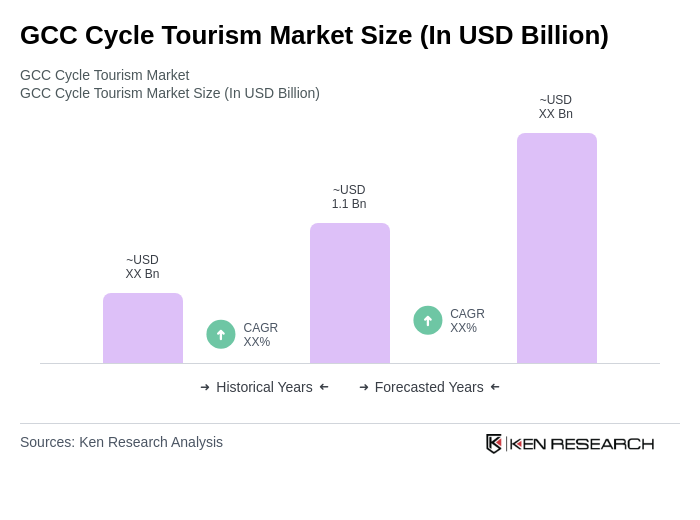
- The GCC Cycle Tourism Market is valued at USD 1.1 billion, based on a five-year historical analysis. This growth is primarily driven by increasing health consciousness, government initiatives promoting cycling as a sustainable mode of transport, and the rise in adventure tourism. The region’s appeal is further enhanced by investments in cycling infrastructure, the adoption of e-bikes, and a growing emphasis on eco-friendly travel experiences, reflecting broader global trends in cycle tourism growth .
- Key players in this market include theUAE, Saudi Arabia, and Qatar. The UAE stands out due to its well-developed infrastructure, including dedicated cycling paths and high-profile events such as the Dubai Tour. Saudi Arabia is rapidly emerging as a cycling hub, supported by its Vision 2030 initiative, which promotes outdoor activities and healthy lifestyles. Qatar’s investment in sports and tourism, including the development of cycling-friendly infrastructure, positions it as a significant player in the cycle tourism market .
- In 2023, the UAE government implemented theExecutive Regulation of Federal Law No. 21 of 1995 Concerning Traffic, as amended by Cabinet Resolution No. 178 of 2023, issued by the Ministry of Interior. This regulation mandates the establishment of dedicated cycling lanes in urban areas, requires compliance with technical standards for cycling infrastructure, and enforces safety measures for cyclists. The initiative aims to promote cycling as a primary mode of transport, enhance road safety, and support the UAE’s broader strategy to reduce carbon emissions and improve urban quality of life .
GCC Cycle Tourism Market Segmentation
By Type:The market is segmented into various types of bicycles, each catering to different consumer preferences and cycling experiences.Road bikesare popular for their speed and efficiency, whilemountain bikescater to adventure seekers looking for rugged terrains.Hybrid bikescombine features of both, appealing to casual cyclists.E-bikesare gaining traction due to their convenience and accessibility, especially among urban commuters and older demographics.Touring bikesare favored for long-distance travel,folding bikesoffer portability for city dwellers, and other types include specialty bikes such as gravel and fat bikes .
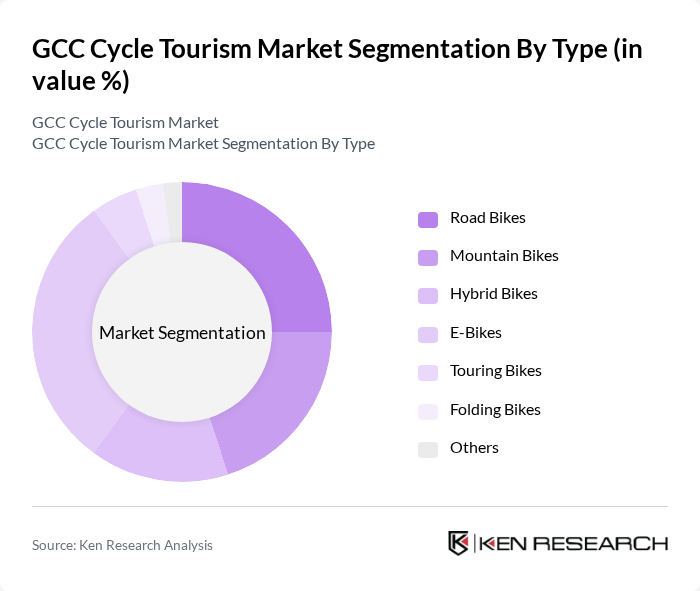
TheE-Bikessegment is currently dominating the market due to their increasing popularity among both casual and serious cyclists. The convenience of electric assistance appeals to a broader audience, including those who may not have considered cycling otherwise. Additionally, the growing emphasis on eco-friendly transportation options, rising fuel prices, and the expansion of urban cycling infrastructure have further propelled demand for e-bikes. As urban areas become more congested, the practicality of e-bikes for commuting is a significant factor in their market leadership .
By End-User:The end-user segmentation includesindividual tourists,corporate groups,educational institutions, andadventure tour operators. Individual tourists represent a significant portion of the market, driven by the growing trend of cycling as a leisure activity and a means of exploring new destinations. Corporate groups often engage in team-building cycling events, while educational institutions promote cycling for health and environmental awareness. Adventure tour operators cater to thrill-seekers looking for unique cycling experiences. The increasing availability of customized cycling packages and wellness-focused tours further supports the growth in these segments .
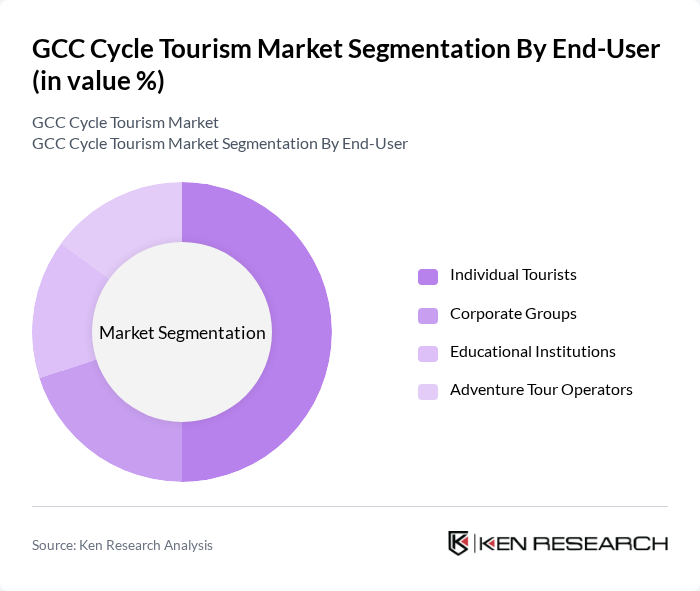
Individual touristsdominate the end-user segment, accounting for half of the market share. This trend is largely attributed to the increasing popularity of cycling as a recreational activity, the desire for sustainable travel options, and the availability of diverse cycling tours and packages tailored for individual preferences. The rise in health consciousness and demand for authentic travel experiences further fuel this growth .
GCC Cycle Tourism Market Competitive Landscape
The GCC Cycle Tourism Market is characterized by a dynamic mix of regional and international players. Leading participants such as Adventure Cycle Tours, Cycle Arabia, Gulf Cycle Tours, UAE Cycling Federation, Qatar Cycling Association, Oman Cycling Club, Bahrain Cycling Team, Saudi Cycling Federation, Cycle World, Eco-Cycle Tours, Bike & Hike Adventures, Green Trails, Cycle & Explore, Active Travel, and Pedal Power Tours contribute to innovation, geographic expansion, and service delivery in this space.
GCC Cycle Tourism Market Industry Analysis
Growth Drivers
- Increasing Health Consciousness:The GCC region has seen a significant rise in health awareness, with 65% of the population engaging in regular physical activities as of future. This trend is supported by government health campaigns promoting active lifestyles. The World Health Organization reported that physical inactivity costs the region approximately $3 billion annually in healthcare expenses. As cycling is a popular and accessible form of exercise, this growing health consciousness is driving demand for cycle tourism.
- Government Initiatives for Sustainable Tourism:In future, GCC governments allocated over $1.5 billion towards sustainable tourism initiatives, including cycling infrastructure development. The UAE's Vision aims to enhance the tourism sector, with cycling routes being a key focus. Qatar's National Tourism Strategy emphasizes eco-friendly travel, which includes promoting cycling as a sustainable transport option. These initiatives are expected to boost cycle tourism significantly, attracting both local and international tourists.
- Development of Cycling Infrastructure:The GCC has invested approximately $600 million in cycling infrastructure projects in future, including dedicated bike lanes and rental services. Cities like Dubai and Abu Dhabi have expanded their cycling networks, with over 1,200 kilometers of bike paths planned. This infrastructure development not only enhances safety for cyclists but also encourages more people to explore the region through cycling, thus driving the cycle tourism market forward.
Market Challenges
- Limited Awareness of Cycle Tourism:Despite the growth potential, awareness of cycle tourism remains low in the GCC, with only 30% of residents familiar with available cycling routes and tours. This lack of knowledge hinders participation and growth in the sector. Efforts to promote cycle tourism through marketing campaigns and partnerships with local businesses are essential to overcome this challenge and increase visibility among potential tourists.
- Safety Concerns for Cyclists:Safety remains a significant concern for cyclists in the GCC, with traffic-related accidents accounting for 25% of all road fatalities. The lack of dedicated cycling lanes in some areas exacerbates this issue, deterring potential cyclists from engaging in cycle tourism. Addressing safety through improved infrastructure and public awareness campaigns is crucial to fostering a safer environment for cyclists and encouraging tourism growth.
GCC Cycle Tourism Market Future Outlook
The future of cycle tourism in the GCC appears promising, driven by increasing health consciousness and government support for sustainable tourism. As infrastructure continues to improve, more tourists are likely to explore the region on two wheels. Additionally, the integration of technology in cycling experiences, such as mobile apps for route planning, will enhance the overall experience. With a focus on eco-friendly practices, the sector is poised for growth, attracting both local and international cyclists seeking adventure and sustainability.
Market Opportunities
- Expansion of Eco-Tourism:The GCC's commitment to eco-tourism presents a significant opportunity for cycle tourism. With over 75% of tourists expressing interest in sustainable travel options, developing eco-friendly cycling tours can attract environmentally conscious travelers. This aligns with global trends towards responsible tourism, potentially increasing visitor numbers and revenue for local businesses.
- Development of Cycling Events and Competitions:Organizing cycling events and competitions can significantly boost cycle tourism. In future, the GCC plans to host several international cycling events, expected to attract over 60,000 participants and spectators. These events not only promote cycling but also enhance local economies through increased tourism and hospitality spending, creating a vibrant cycling culture in the region.
Scope of the Report
| Segment | Sub-Segments |
|---|---|
| By Type | Road Bikes Mountain Bikes Hybrid Bikes E-Bikes Touring Bikes Folding Bikes Others |
| By End-User | Individual Tourists Corporate Groups Educational Institutions Adventure Tour Operators |
| By Tour Type | Guided Tours Self-Guided Tours Multi-Day Tours Day Trips |
| By Region | UAE Saudi Arabia Qatar Oman Bahrain Kuwait Others |
| By Service Type | Bike Rentals Guided Tours Support Services Accommodation Packages |
| By Customer Demographics | Age Groups Income Levels Experience Levels |
| By Duration of Tour | Short Tours (1-3 Days) Medium Tours (4-7 Days) Long Tours (8+ Days) |
Key Target Audience
Investors and Venture Capitalist Firms
Government and Regulatory Bodies (e.g., Ministry of Tourism, Ministry of Transport)
Tourism Boards and Authorities (e.g., Dubai Tourism, Qatar Tourism Authority)
Event Organizers and Promoters
Infrastructure Developers and Planners
Local Cycling Clubs and Associations
Travel Agencies and Tour Operators
Health and Fitness Organizations
Players Mentioned in the Report:
Adventure Cycle Tours
Cycle Arabia
Gulf Cycle Tours
UAE Cycling Federation
Qatar Cycling Association
Oman Cycling Club
Bahrain Cycling Team
Saudi Cycling Federation
Cycle World
Eco-Cycle Tours
Bike & Hike Adventures
Green Trails
Cycle & Explore
Active Travel
Pedal Power Tours
Table of Contents
Market Assessment Phase
1. Executive Summary and Approach
2. GCC Cycle Tourism Market Overview
2.1 Key Insights and Strategic Recommendations
2.2 GCC Cycle Tourism Market Overview
2.3 Definition and Scope
2.4 Evolution of Market Ecosystem
2.5 Timeline of Key Regulatory Milestones
2.6 Value Chain & Stakeholder Mapping
2.7 Business Cycle Analysis
2.8 Policy & Incentive Landscape
3. GCC Cycle Tourism Market Analysis
3.1 Growth Drivers
3.1.1 Increasing Health Consciousness
3.1.2 Government Initiatives for Sustainable Tourism
3.1.3 Rise in Adventure Tourism
3.1.4 Development of Cycling Infrastructure
3.2 Market Challenges
3.2.1 Limited Awareness of Cycle Tourism
3.2.2 Safety Concerns for Cyclists
3.2.3 Seasonal Weather Variability
3.2.4 Inadequate Support Services
3.3 Market Opportunities
3.3.1 Expansion of Eco-Tourism
3.3.2 Collaboration with Local Businesses
3.3.3 Development of Cycling Events and Competitions
3.3.4 Investment in Smart Cycling Technologies
3.4 Market Trends
3.4.1 Growth of E-Bikes in Tourism
3.4.2 Integration of Technology in Cycling Experiences
3.4.3 Increasing Popularity of Multi-Day Cycling Tours
3.4.4 Focus on Sustainable Practices in Tourism
3.5 Government Regulation
3.5.1 Safety Regulations for Cyclists
3.5.2 Environmental Protection Policies
3.5.3 Tourism Development Frameworks
3.5.4 Incentives for Eco-Friendly Transport
4. SWOT Analysis
5. Stakeholder Analysis
6. Porter's Five Forces Analysis
7. GCC Cycle Tourism Market Market Size, 2019-2024
7.1 By Value
7.2 By Volume
7.3 By Average Selling Price
8. GCC Cycle Tourism Market Segmentation
8.1 By Type
8.1.1 Road Bikes
8.1.2 Mountain Bikes
8.1.3 Hybrid Bikes
8.1.4 E-Bikes
8.1.5 Touring Bikes
8.1.6 Folding Bikes
8.1.7 Others
8.2 By End-User
8.2.1 Individual Tourists
8.2.2 Corporate Groups
8.2.3 Educational Institutions
8.2.4 Adventure Tour Operators
8.3 By Tour Type
8.3.1 Guided Tours
8.3.2 Self-Guided Tours
8.3.3 Multi-Day Tours
8.3.4 Day Trips
8.4 By Region
8.4.1 UAE
8.4.2 Saudi Arabia
8.4.3 Qatar
8.4.4 Oman
8.4.5 Bahrain
8.4.6 Kuwait
8.4.7 Others
8.5 By Service Type
8.5.1 Bike Rentals
8.5.2 Guided Tours
8.5.3 Support Services
8.5.4 Accommodation Packages
8.6 By Customer Demographics
8.6.1 Age Groups
8.6.2 Income Levels
8.6.3 Experience Levels
8.7 By Duration of Tour
8.7.1 Short Tours (1-3 Days)
8.7.2 Medium Tours (4-7 Days)
8.7.3 Long Tours (8+ Days)
9. GCC Cycle Tourism Market Competitive Analysis
9.1 Market Share of Key Players
9.2 Cross Comparison of Key Players
9.2.1 Company Name
9.2.2 Group Size (Large, Medium, or Small)
9.2.3 Revenue Growth Rate
9.2.4 Customer Acquisition Cost
9.2.5 Customer Retention Rate
9.2.6 Average Tour Price
9.2.7 Market Penetration Rate
9.2.8 Pricing Strategy
9.2.9 Customer Satisfaction Score
9.2.10 Brand Awareness Level
9.2.11 Sustainability Practices
9.2.12 Technology Integration
9.3 SWOT Analysis of Top Players
9.4 Pricing Analysis
9.5 Detailed Profile of Major Companies
9.5.1 Adventure Cycle Tours
9.5.2 Cycle Arabia
9.5.3 Gulf Cycle Tours
9.5.4 UAE Cycling Federation
9.5.5 Qatar Cycling Association
9.5.6 Oman Cycling Club
9.5.7 Bahrain Cycling Team
9.5.8 Saudi Cycling Federation
9.5.9 Cycle World
9.5.10 Eco-Cycle Tours
9.5.11 Bike & Hike Adventures
9.5.12 Green Trails
9.5.13 Cycle & Explore
9.5.14 Active Travel
9.5.15 Pedal Power Tours
10. GCC Cycle Tourism Market End-User Analysis
10.1 Procurement Behavior of Key Ministries
10.1.1 Budget Allocation for Tourism
10.1.2 Collaboration with Private Sector
10.1.3 Focus on Sustainable Practices
10.2 Corporate Spend on Infrastructure & Energy
10.2.1 Investment in Cycling Infrastructure
10.2.2 Sponsorship of Cycling Events
10.2.3 Partnerships with Local Businesses
10.3 Pain Point Analysis by End-User Category
10.3.1 Safety Concerns
10.3.2 Accessibility Issues
10.3.3 Lack of Information
10.4 User Readiness for Adoption
10.4.1 Awareness of Cycle Tourism
10.4.2 Interest in Eco-Friendly Travel
10.4.3 Willingness to Invest in Cycling
10.5 Post-Deployment ROI and Use Case Expansion
10.5.1 Evaluation of Tour Success
10.5.2 Customer Feedback Mechanisms
10.5.3 Opportunities for Expansion
11. GCC Cycle Tourism Market Future Size, 2025-2030
11.1 By Value
11.2 By Volume
11.3 By Average Selling Price
Go-To-Market Strategy Phase
1. Whitespace Analysis + Business Model Canvas
1.1 Market Gaps Identification
1.2 Business Model Development
2. Marketing and Positioning Recommendations
2.1 Branding Strategies
2.2 Product USPs
3. Distribution Plan
3.1 Urban Retail vs Rural NGO Tie-Ups
4. Channel & Pricing Gaps
4.1 Underserved Routes
4.2 Pricing Bands
5. Unmet Demand & Latent Needs
5.1 Category Gaps
5.2 Consumer Segments
6. Customer Relationship
6.1 Loyalty Programs
6.2 After-Sales Service
7. Value Proposition
7.1 Sustainability
7.2 Integrated Supply Chains
8. Key Activities
8.1 Regulatory Compliance
8.2 Branding
8.3 Distribution Setup
9. Entry Strategy Evaluation
9.1 Domestic Market Entry Strategy
9.1.1 Product Mix
9.1.2 Pricing Band
9.1.3 Packaging
9.2 Export Entry Strategy
9.2.1 Target Countries
9.2.2 Compliance Roadmap
10. Entry Mode Assessment
10.1 JV
10.2 Greenfield
10.3 M&A
10.4 Distributor Model
11. Capital and Timeline Estimation
11.1 Capital Requirements
11.2 Timelines
12. Control vs Risk Trade-Off
12.1 Ownership vs Partnerships
13. Profitability Outlook
13.1 Breakeven Analysis
13.2 Long-Term Sustainability
14. Potential Partner List
14.1 Distributors
14.2 JVs
14.3 Acquisition Targets
15. Execution Roadmap
15.1 Phased Plan for Market Entry
15.1.1 Market Setup
15.1.2 Market Entry
15.1.3 Growth Acceleration
15.1.4 Scale & Stabilize
15.2 Key Activities and Milestones
15.2.1 Activity Planning
15.2.2 Milestone Tracking
8. GCC Cycle Tourism Market Segmentation
9. GCC Cycle Tourism Market Competitive Analysis
9.2 Cross Comparison of Key Players
9.2.1 Company Name
9.2.2 Group Size (Large, Medium, or Small)
9.2.3 Revenue Growth Rate
9.2.4 Customer Acquisition Cost
9.2.5 Customer Retention Rate
9.2.6 Average Tour Price
9.2.7 Market Penetration Rate
9.2.8 Pricing Strategy
9.2.9 Customer Satisfaction Score
9.2.10 Brand Awareness Level
9.2.11 Sustainability Practices
9.2.12 Technology Integration
9.5 Detailed Profile of Major Companies
9.5.1 Adventure Cycle Tours
9.5.2 Cycle Arabia
9.5.3 Gulf Cycle Tours
9.5.4 UAE Cycling Federation
9.5.5 Qatar Cycling Association
9.5.6 Oman Cycling Club
9.5.7 Bahrain Cycling Team
9.5.8 Saudi Cycling Federation
9.5.9 Cycle World
9.5.10 Eco-Cycle Tours
9.5.11 Bike & Hike Adventures
9.5.12 Green Trails
9.5.13 Cycle & Explore
9.5.14 Active Travel
9.5.15 Pedal Power Tours
Research Methodology
Phase 1: Approach1
Desk Research
- Analysis of existing market reports and publications on cycle tourism in the GCC region
- Review of government tourism statistics and cycling infrastructure development plans
- Examination of travel and tourism trends from regional tourism boards and associations
Primary Research
- Interviews with key stakeholders in the cycling tourism industry, including tour operators and local government officials
- Surveys targeting cycling enthusiasts and tourists to gather insights on preferences and spending habits
- Field visits to popular cycling routes and events to observe participant demographics and behaviors
Validation & Triangulation
- Cross-validation of findings with data from international cycling tourism studies
- Triangulation of insights from primary interviews with secondary data sources
- Sanity checks through expert panel discussions with industry veterans and tourism experts
Phase 2: Market Size Estimation1
Top-down Assessment
- Estimation of total tourism revenue in the GCC and its allocation to cycling-related activities
- Analysis of demographic trends and their impact on cycling tourism growth
- Incorporation of government initiatives promoting cycling as a sustainable transport option
Bottom-up Modeling
- Collection of data on the number of cycling events and participants in the GCC region
- Estimation of average spending per cyclist on tours, equipment, and accommodations
- Aggregation of local business revenues generated from cycling tourism activities
Forecasting & Scenario Analysis
- Multi-factor regression analysis considering factors such as population growth, urbanization, and health trends
- Scenario modeling based on potential changes in tourism policies and infrastructure investments
- Development of baseline, optimistic, and pessimistic forecasts for the cycling tourism market through 2030
Phase 3: CATI Sample Composition1
| Scope Item/Segment | Sample Size | Target Respondent Profiles |
|---|---|---|
| Cycling Tour Operators | 45 | Business Owners, Tour Managers |
| Cycling Enthusiasts | 75 | Regular Cyclists, Event Participants |
| Local Government Officials | 28 | Tourism Development Officers, Urban Planners |
| Accommodation Providers | 42 | Hotel Managers, Guesthouse Owners |
| Equipment Retailers | 35 | Store Managers, Sales Representatives |
Frequently Asked Questions
What is the current value of the GCC Cycle Tourism Market?
The GCC Cycle Tourism Market is valued at approximately USD 1.1 billion, reflecting a significant growth trend driven by health consciousness, government initiatives, and investments in cycling infrastructure across the region.
What factors are driving the growth of cycle tourism in the GCC?
Which countries are the main players in the GCC Cycle Tourism Market?
What government initiatives support cycling in the GCC region?
Other Regional/Country Reports
Indonesia Cycle Tourism Market
Malaysia Cycle Tourism Market
Other Adjacent Reports
Japan Bicycle Rental Market
Bahrain Cycling Infrastructure Market
Indonesia Sports Equipment Market Size, Share & Forecast, By Product Type, Sports Type & Distribution Channel, 2026–2031Global wellness tourism market Size, Share, Growth Drivers, Trends, Opportunities & Forecast 2025–2030Singapore Sustainable Transportation Market
South Africa Outdoor Recreation Market
Singapore Travel Hospitality Market
Why Buy From Us?

What makes us stand out is that our consultants follow Robust, Refine and Result (RRR) methodology. Robust for clear definitions, approaches and sanity checking, Refine for differentiating respondents' facts and opinions, and Result for presenting data with story.

We have set a benchmark in the industry by offering our clients with syndicated and customized market research reports featuring coverage of entire market as well as meticulous research and analyst insights.

While we don't replace traditional research, we flip the method upside down. Our dual approach of Top Bottom & Bottom Top ensures quality deliverable by not just verifying company fundamentals but also looking at the sector and macroeconomic factors.

With one step in the future, our research team constantly tries to show you the bigger picture. We help with some of the tough questions you may encounter along the way: How is the industry positioned? Best marketing channel? KPI's of competitors? By aligning every element, we help maximize success.

Our report gives you instant access to the answers and sources that other companies might choose to hide. We elaborate each steps of research methodology we have used and showcase you the sample size to earn your trust.

If you need any support, we are here! We pride ourselves on universe strength, data quality, and quick, friendly, and professional service.