About the Report
Base Year 2024Indonesia Online Advertising and Digital Media Market Overview
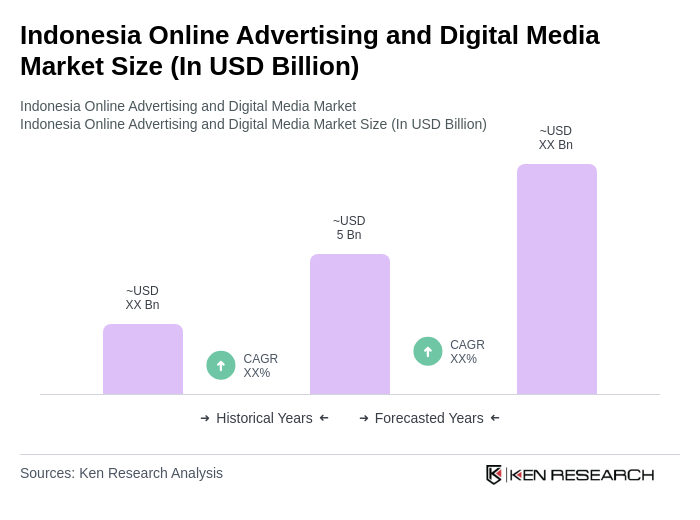
- The Indonesia Online Advertising and Digital Media Market is valued at USD 5 billion, based on a five-year historical analysis. This growth is primarily driven by the increasing internet penetration, mobile device usage, and the rising trend of e-commerce, which has led businesses to allocate more budgets towards digital marketing strategies to reach their target audiences effectively.
- Jakarta, Surabaya, and Bandung are the dominant cities in the Indonesian online advertising market. Jakarta, being the capital and the largest city, serves as a hub for businesses and advertising agencies, while Surabaya and Bandung have rapidly growing digital ecosystems, supported by a young, tech-savvy population that actively engages with online content.
- In 2023, the Indonesian government implemented a regulation requiring all digital advertising platforms to comply with data privacy laws, ensuring that user data is handled responsibly. This regulation aims to protect consumer rights and enhance trust in digital advertising, thereby fostering a more sustainable advertising environment.
Indonesia Online Advertising and Digital Media Market Segmentation
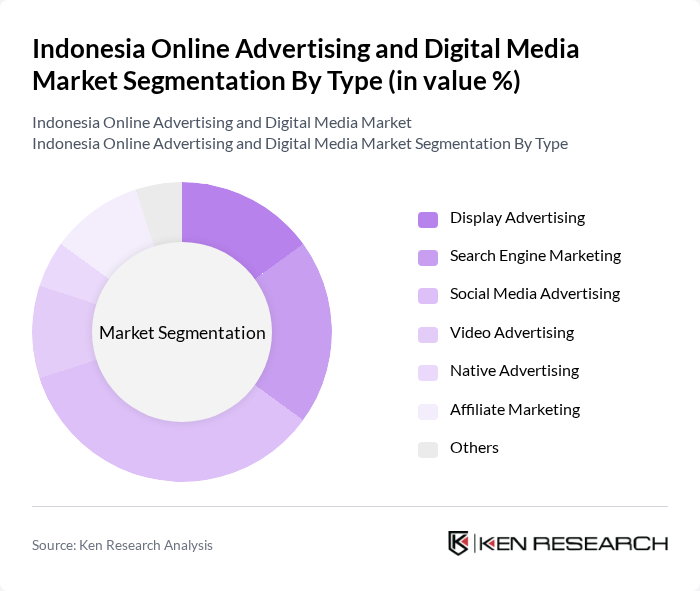
By Type:The online advertising market in Indonesia is segmented into various types, including Display Advertising, Search Engine Marketing, Social Media Advertising, Video Advertising, Native Advertising, Affiliate Marketing, and Others. Among these, Social Media Advertising has emerged as the leading sub-segment, driven by the widespread use of platforms like Facebook, Instagram, and TikTok. Brands are increasingly leveraging these platforms to engage with consumers through targeted ads, influencer partnerships, and interactive content, making it a preferred choice for marketers.
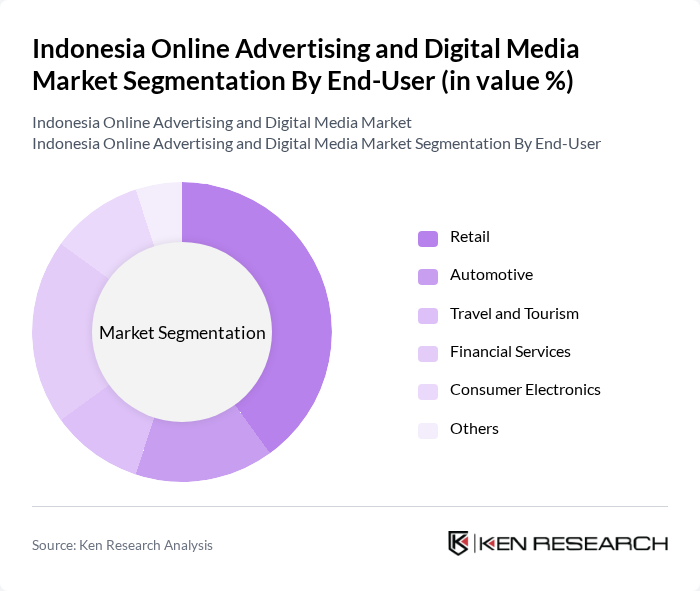
By End-User:The end-user segmentation of the online advertising market includes Retail, Automotive, Travel and Tourism, Financial Services, Consumer Electronics, and Others. The Retail sector is the most significant contributor, as e-commerce continues to thrive in Indonesia. Retailers are increasingly investing in online advertising to attract customers, promote sales, and enhance brand visibility, particularly during festive seasons and major shopping events.
Indonesia Online Advertising and Digital Media Market Competitive Landscape
The Indonesia Online Advertising and Digital Media Market is characterized by a dynamic mix of regional and international players. Leading participants such as Gojek, Tokopedia, Bukalapak, Traveloka, Grab, Katalis Digital, Adskom, Dentsu Indonesia, VGI Global Media, Kompas Gramedia, MNC Group, OVO, LinkAja, Shopee, Facebook Indonesia contribute to innovation, geographic expansion, and service delivery in this space.
Indonesia Online Advertising and Digital Media Market Industry Analysis
Growth Drivers
- Increasing Internet Penetration:Indonesia's internet penetration rate reached 77% in future, with approximately 210 million users accessing online content. This growth is driven by the expansion of affordable mobile data plans, which have decreased average costs to around IDR 30,000 per GB. As more users come online, businesses are increasingly investing in digital advertising to reach this expanding audience, leading to a significant increase in online ad spending, projected to exceed IDR 50 trillion.
- Rise of Mobile Advertising:Mobile advertising in Indonesia is projected to account for 70% of total digital ad spending in future, driven by the widespread use of smartphones, which reached 90% penetration among internet users. With over 150 million smartphone users, brands are shifting their focus to mobile platforms, resulting in a surge in mobile ad revenues, which are expected to surpass IDR 35 trillion. This trend reflects the growing preference for mobile content consumption among consumers.
- Growth of E-commerce:The e-commerce sector in Indonesia is anticipated to grow to IDR 500 trillion by future, fueled by increased consumer spending and a shift towards online shopping. This growth is supported by a 25% rise in online transactions, with over 70 million people engaging in e-commerce activities. As e-commerce platforms invest heavily in digital marketing strategies, online advertising is becoming a critical component of their customer acquisition efforts, driving further market expansion.
Market Challenges
- Regulatory Compliance Issues:The Indonesian online advertising market faces significant regulatory challenges, particularly concerning data protection and advertising standards. The implementation of the Personal Data Protection Law in future requires businesses to comply with stringent data handling practices, which can incur costs estimated at IDR 1 trillion for compliance measures. Non-compliance risks hefty fines and reputational damage, creating barriers for smaller companies entering the market.
- High Competition:The online advertising landscape in Indonesia is characterized by intense competition, with over 1,000 active digital marketing agencies vying for market share. This saturation leads to aggressive pricing strategies, with average costs per click dropping to IDR 1,500. As companies compete for limited advertising space, maintaining profitability becomes challenging, particularly for new entrants who may struggle to differentiate their services in a crowded marketplace.
Indonesia Online Advertising and Digital Media Market Future Outlook
The future of Indonesia's online advertising and digital media market appears promising, driven by technological advancements and evolving consumer behaviors. As digital literacy improves, more businesses are expected to adopt innovative advertising strategies, including programmatic and influencer marketing. Additionally, the integration of AI and machine learning will enhance targeting capabilities, allowing for more personalized advertising experiences. This evolution will likely lead to increased ad spending, fostering a dynamic and competitive market landscape.
Market Opportunities
- Expansion of Social Media Platforms:With over 170 million active social media users in Indonesia, platforms like TikTok and Instagram present significant advertising opportunities. Brands can leverage these platforms to engage younger demographics, driving ad revenues that could exceed IDR 20 trillion by future, as businesses increasingly allocate budgets to social media marketing.
- Growth in Video Advertising:Video advertising is projected to grow rapidly, with an expected increase in spending to IDR 15 trillion by future. The popularity of video content on platforms such as YouTube and social media is driving this trend, as brands recognize the effectiveness of video in capturing consumer attention and enhancing engagement, making it a key area for investment.
Scope of the Report
| Segment | Sub-Segments |
|---|---|
| By Type | Display Advertising Search Engine Marketing Social Media Advertising Video Advertising Native Advertising Affiliate Marketing Others |
| By End-User | Retail Automotive Travel and Tourism Financial Services Consumer Electronics Others |
| By Platform | Mobile Platforms Desktop Platforms Social Media Platforms Video Streaming Platforms Others |
| By Advertising Format | Text Ads Image Ads Video Ads Interactive Ads Others |
| By Campaign Type | Brand Awareness Campaigns Lead Generation Campaigns Conversion Campaigns Retargeting Campaigns Others |
| By Budget Size | Small Budget Campaigns Medium Budget Campaigns Large Budget Campaigns Others |
| By Geographic Focus | Urban Areas Rural Areas National Campaigns Regional Campaigns Others |
Key Target Audience
Investors and Venture Capitalist Firms
Government and Regulatory Bodies (e.g., Kementerian Komunikasi dan Informatika, Badan Regulasi Telekomunikasi Indonesia)
Advertising Agencies
Media Buying Agencies
Digital Marketing Firms
Telecommunications Companies
Content Creators and Influencers
Brand Managers and Marketing Executives
Players Mentioned in the Report:
Gojek
Tokopedia
Bukalapak
Traveloka
Grab
Katalis Digital
Adskom
Dentsu Indonesia
VGI Global Media
Kompas Gramedia
MNC Group
OVO
LinkAja
Shopee
Facebook Indonesia
Table of Contents
Market Assessment Phase
1. Executive Summary and Approach
2. Indonesia Online Advertising and Digital Media Market Overview
2.1 Key Insights and Strategic Recommendations
2.2 Indonesia Online Advertising and Digital Media Market Overview
2.3 Definition and Scope
2.4 Evolution of Market Ecosystem
2.5 Timeline of Key Regulatory Milestones
2.6 Value Chain & Stakeholder Mapping
2.7 Business Cycle Analysis
2.8 Policy & Incentive Landscape
3. Indonesia Online Advertising and Digital Media Market Analysis
3.1 Growth Drivers
3.1.1 Increasing Internet Penetration
3.1.2 Rise of Mobile Advertising
3.1.3 Growth of E-commerce
3.1.4 Enhanced Targeting Capabilities
3.2 Market Challenges
3.2.1 Regulatory Compliance Issues
3.2.2 High Competition
3.2.3 Data Privacy Concerns
3.2.4 Limited Digital Literacy
3.3 Market Opportunities
3.3.1 Expansion of Social Media Platforms
3.3.2 Growth in Video Advertising
3.3.3 Increasing Investment in Digital Infrastructure
3.3.4 Adoption of AI and Machine Learning
3.4 Market Trends
3.4.1 Shift Towards Programmatic Advertising
3.4.2 Rise of Influencer Marketing
3.4.3 Growth of Augmented Reality Ads
3.4.4 Increased Focus on Sustainability in Advertising
3.5 Government Regulation
3.5.1 Data Protection Regulations
3.5.2 Advertising Standards Authority Guidelines
3.5.3 E-commerce Regulations
3.5.4 Taxation Policies on Digital Services
4. SWOT Analysis
5. Stakeholder Analysis
6. Porter's Five Forces Analysis
7. Indonesia Online Advertising and Digital Media Market Market Size, 2019-2024
7.1 By Value
7.2 By Volume
7.3 By Average Selling Price
8. Indonesia Online Advertising and Digital Media Market Segmentation
8.1 By Type
8.1.1 Display Advertising
8.1.2 Search Engine Marketing
8.1.3 Social Media Advertising
8.1.4 Video Advertising
8.1.5 Native Advertising
8.1.6 Affiliate Marketing
8.1.7 Others
8.2 By End-User
8.2.1 Retail
8.2.2 Automotive
8.2.3 Travel and Tourism
8.2.4 Financial Services
8.2.5 Consumer Electronics
8.2.6 Others
8.3 By Platform
8.3.1 Mobile Platforms
8.3.2 Desktop Platforms
8.3.3 Social Media Platforms
8.3.4 Video Streaming Platforms
8.3.5 Others
8.4 By Advertising Format
8.4.1 Text Ads
8.4.2 Image Ads
8.4.3 Video Ads
8.4.4 Interactive Ads
8.4.5 Others
8.5 By Campaign Type
8.5.1 Brand Awareness Campaigns
8.5.2 Lead Generation Campaigns
8.5.3 Conversion Campaigns
8.5.4 Retargeting Campaigns
8.5.5 Others
8.6 By Budget Size
8.6.1 Small Budget Campaigns
8.6.2 Medium Budget Campaigns
8.6.3 Large Budget Campaigns
8.6.4 Others
8.7 By Geographic Focus
8.7.1 Urban Areas
8.7.2 Rural Areas
8.7.3 National Campaigns
8.7.4 Regional Campaigns
8.7.5 Others
9. Indonesia Online Advertising and Digital Media Market Competitive Analysis
9.1 Market Share of Key Players
9.2 Cross Comparison of Key Players
9.2.1 Company Name
9.2.2 Group Size (Large, Medium, or Small as per industry convention)
9.2.3 Customer Acquisition Cost
9.2.4 Customer Lifetime Value
9.2.5 Conversion Rate
9.2.6 Return on Advertising Spend (ROAS)
9.2.7 Pricing Strategy
9.2.8 Click-Through Rate (CTR)
9.2.9 Engagement Rate
9.2.10 Market Penetration Rate
9.3 SWOT Analysis of Top Players
9.4 Pricing Analysis
9.5 Detailed Profile of Major Companies
9.5.1 Gojek
9.5.2 Tokopedia
9.5.3 Bukalapak
9.5.4 Traveloka
9.5.5 Grab
9.5.6 Katalis Digital
9.5.7 Adskom
9.5.8 Dentsu Indonesia
9.5.9 VGI Global Media
9.5.10 Kompas Gramedia
9.5.11 MNC Group
9.5.12 OVO
9.5.13 LinkAja
9.5.14 Shopee
9.5.15 Facebook Indonesia
10. Indonesia Online Advertising and Digital Media Market End-User Analysis
10.1 Procurement Behavior of Key Ministries
10.1.1 Digital Marketing Strategies
10.1.2 Budget Allocation for Digital Media
10.1.3 Preferred Advertising Channels
10.1.4 Evaluation Criteria for Campaigns
10.2 Corporate Spend on Infrastructure & Energy
10.2.1 Investment in Digital Infrastructure
10.2.2 Spending on Advertising Technology
10.2.3 Budget for Digital Campaigns
10.3 Pain Point Analysis by End-User Category
10.3.1 Challenges in Digital Adoption
10.3.2 Issues with Data Privacy
10.3.3 Difficulty in Measuring ROI
10.4 User Readiness for Adoption
10.4.1 Awareness of Digital Advertising Benefits
10.4.2 Training and Support Needs
10.5 Post-Deployment ROI and Use Case Expansion
10.5.1 Metrics for Success Evaluation
10.5.2 Opportunities for Campaign Expansion
11. Indonesia Online Advertising and Digital Media Market Future Size, 2025-2030
11.1 By Value
11.2 By Volume
11.3 By Average Selling Price
Go-To-Market Strategy Phase
1. Whitespace Analysis + Business Model Canvas
1.1 Market Gaps Identification
1.2 Business Model Development
1.3 Value Proposition Analysis
1.4 Competitive Landscape Overview
2. Marketing and Positioning Recommendations
2.1 Branding Strategies
2.2 Product USPs
3. Distribution Plan
3.1 Urban Retail Strategies
3.2 Rural NGO Tie-ups
4. Channel & Pricing Gaps
4.1 Underserved Routes
4.2 Pricing Bands Analysis
5. Unmet Demand & Latent Needs
5.1 Category Gaps
5.2 Consumer Segments Analysis
6. Customer Relationship
6.1 Loyalty Programs
6.2 After-sales Service
7. Value Proposition
7.1 Sustainability Initiatives
7.2 Integrated Supply Chains
8. Key Activities
8.1 Regulatory Compliance
8.2 Branding Efforts
8.3 Distribution Setup
9. Entry Strategy Evaluation
9.1 Domestic Market Entry Strategy
9.1.1 Product Mix Considerations
9.1.2 Pricing Band Strategy
9.1.3 Packaging Options
9.2 Export Entry Strategy
9.2.1 Target Countries Identification
9.2.2 Compliance Roadmap Development
10. Entry Mode Assessment
10.1 Joint Ventures
10.2 Greenfield Investments
10.3 Mergers & Acquisitions
10.4 Distributor Model Evaluation
11. Capital and Timeline Estimation
11.1 Capital Requirements Analysis
11.2 Timelines for Implementation
12. Control vs Risk Trade-Off
12.1 Ownership Considerations
12.2 Partnerships Evaluation
13. Profitability Outlook
13.1 Breakeven Analysis
13.2 Long-term Sustainability Strategies
14. Potential Partner List
14.1 Distributors Identification
14.2 Joint Ventures Opportunities
14.3 Acquisition Targets
15. Execution Roadmap
15.1 Phased Plan for Market Entry
15.1.1 Market Setup Activities
15.1.2 Market Entry Steps
15.1.3 Growth Acceleration Strategies
15.1.4 Scale & Stabilize Actions
15.2 Key Activities and Milestones
15.2.1 Milestone Planning
15.2.2 Activity Tracking
Research Methodology
Phase 1: Approach1
Desk Research
- Analysis of industry reports from local digital marketing associations
- Review of government publications on digital advertising regulations and trends
- Examination of online consumer behavior studies and digital media consumption statistics
Primary Research
- Interviews with digital marketing agency executives to understand service offerings
- Surveys with brand managers to gauge advertising spend and strategy
- Focus groups with consumers to explore perceptions of online advertising effectiveness
Validation & Triangulation
- Cross-validation of findings with multiple industry reports and expert opinions
- Triangulation of data from consumer surveys, agency insights, and market trends
- Sanity checks through expert panel discussions and feedback sessions
Phase 2: Market Size Estimation1
Top-down Assessment
- Estimation of total digital advertising spend based on national advertising expenditure reports
- Segmentation of market size by advertising channels (social media, search, display, etc.)
- Incorporation of growth rates from digital media consumption trends
Bottom-up Modeling
- Collection of revenue data from leading digital advertising platforms operating in Indonesia
- Estimation of average spend per campaign across various industries
- Analysis of user engagement metrics to project future advertising effectiveness
Forecasting & Scenario Analysis
- Multi-variable forecasting based on economic indicators and digital adoption rates
- Scenario analysis considering regulatory changes and shifts in consumer behavior
- Development of baseline, optimistic, and pessimistic growth projections through 2030
Phase 3: CATI Sample Composition1
| Scope Item/Segment | Sample Size | Target Respondent Profiles |
|---|---|---|
| Social Media Advertising Insights | 150 | Social Media Managers, Digital Marketing Strategists |
| Search Engine Marketing Trends | 100 | SEO Specialists, PPC Campaign Managers |
| Display Advertising Effectiveness | 80 | Brand Managers, Advertising Analysts |
| Consumer Perception of Digital Ads | 120 | Marketing Researchers, Consumer Behavior Analysts |
| Emerging Digital Media Platforms | 90 | Content Creators, Influencer Marketing Coordinators |
Frequently Asked Questions
What is the current value of the Indonesia Online Advertising and Digital Media Market?
The Indonesia Online Advertising and Digital Media Market is valued at approximately USD 5 billion, driven by increased internet penetration, mobile device usage, and the growth of e-commerce, prompting businesses to invest more in digital marketing strategies.
Which cities dominate the online advertising market in Indonesia?
What recent regulations have impacted digital advertising in Indonesia?
What are the main types of online advertising in Indonesia?
Other Regional/Country Reports
Other Adjacent Reports
Oman Social Media Advertising Market
UAE Location Targeted Mobile Advertising MarketQatar Video Advertising Market
Indonesia Influencer Marketing Market Outlook to 2030 Saudi Arabia Programmatic Advertising MarketThailand Digital Payment Market
Saudi Arabia data analytics market report Size, Share, Growth Drivers, Trends, Opportunities & Forecast 2025–2030UAE Nordics Cybersecurity MarketBrazil Search Engine Marketing Market
Why Buy From Us?

What makes us stand out is that our consultants follow Robust, Refine and Result (RRR) methodology. Robust for clear definitions, approaches and sanity checking, Refine for differentiating respondents' facts and opinions, and Result for presenting data with story.

We have set a benchmark in the industry by offering our clients with syndicated and customized market research reports featuring coverage of entire market as well as meticulous research and analyst insights.

While we don't replace traditional research, we flip the method upside down. Our dual approach of Top Bottom & Bottom Top ensures quality deliverable by not just verifying company fundamentals but also looking at the sector and macroeconomic factors.

With one step in the future, our research team constantly tries to show you the bigger picture. We help with some of the tough questions you may encounter along the way: How is the industry positioned? Best marketing channel? KPI's of competitors? By aligning every element, we help maximize success.

Our report gives you instant access to the answers and sources that other companies might choose to hide. We elaborate each steps of research methodology we have used and showcase you the sample size to earn your trust.

If you need any support, we are here! We pride ourselves on universe strength, data quality, and quick, friendly, and professional service.