About the Report
Base Year 2024Indonesia Thermoformed Plastics Printing Market Overview
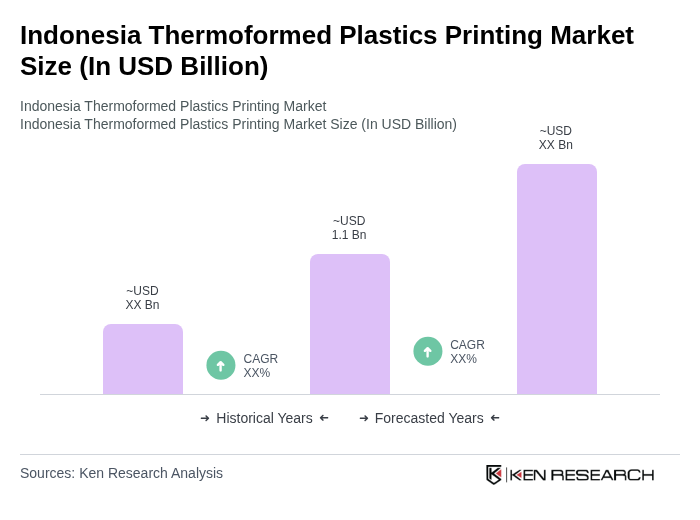
- The Indonesia Thermoformed Plastics Printing Market is valued at USD 1.1 billion, based on a five-year historical analysis, in line with the strong role of plastic packaging and thermoform-based formats within Indonesia’s broader plastics and packaging industry. This growth is primarily driven by the increasing demand for packaging solutions across sectors such as food and beverage, pharmaceuticals, and consumer goods, where plastics packaging accounts for a major share of total plastics consumption in Indonesia. The rise in e-commerce and modern retail, together with a shift toward lightweight, high-barrier, and brandable packaging, has further fueled the need for innovative and sustainable thermoformed plastic products that offer excellent printability and shelf appeal.
- Key regions dominating the market include Java and Sumatra, where industrial activities, population density, and urbanization are highest. Java, being the most populous island and the core manufacturing hub, hosts a significant number of plastics converters, packaging producers, and consumer markets, with plastic-related manufacturing in Java generating several billion United States dollars in annual sales. Sumatra benefits from its strong agricultural and food-processing base, which drives demand for thermoformed trays, containers, and other packaging solutions to support fresh produce, fisheries, and plantation-based exports. The concentration of economic and logistics activities in these islands, including ports and distribution centers supporting retail and e?commerce, underpins their dominance in the thermoformed plastics printing market.
- In 2023, the Indonesian government strengthened regulations aimed at reducing plastic waste and improving circularity in packaging, including mandatory waste reduction roadmaps for brand owners and retailers and the progressive integration of recyclable and recycled-content materials. A key binding framework is the Minister of Environment and Forestry Regulation No. P.75/MENLHK/SETJEN/KUM.1/10/2019 on Roadmap for Waste Reduction by Producers, issued by the Ministry of Environment and Forestry in 2019, which obliges packaging-intensive industries and retailers to design packaging that is reusable, recyclable, and supports recycled content targets over defined compliance phases. This regulatory push, combined with the National Plastic Action Plan and related extended producer responsibility initiatives, is encouraging thermoformed packaging manufacturers and printers to adopt eco?friendly materials, mono-material designs, and high-quality printing compatible with recycling systems.
Indonesia Thermoformed Plastics Printing Market Segmentation
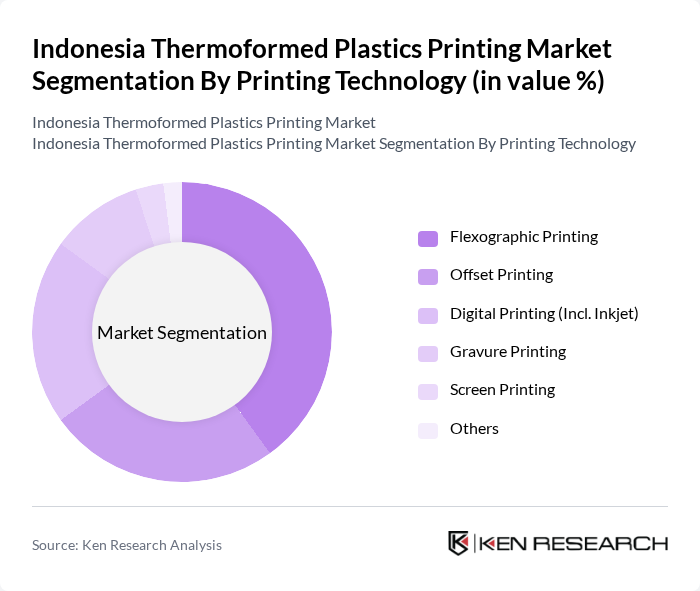
By Printing Technology:The printing technology segment includes various methods such as flexographic printing, offset printing, digital printing (including inkjet), gravure printing, screen printing, and others. Flexographic printing is widely used for high-volume packaging work, especially on flexible and semi?rigid plastic webs and thermoformed lids, thanks to its fast throughput, ability to handle a range of substrates, and compatibility with water-based and low?migration inks demanded by food and FMCG brands. Gravure and offset are applied mainly for long-run, high?quality graphics on rigid packaging and labels, while screen printing remains relevant for specialty and tactile effects on formed parts. Digital printing, including inkjet and electrophotographic systems, is gaining strong traction for short runs, versioning, and late?stage customization, aligning with brand needs for personalization, rapid design changes, and on-demand packaging for e?commerce and promotional campaigns.
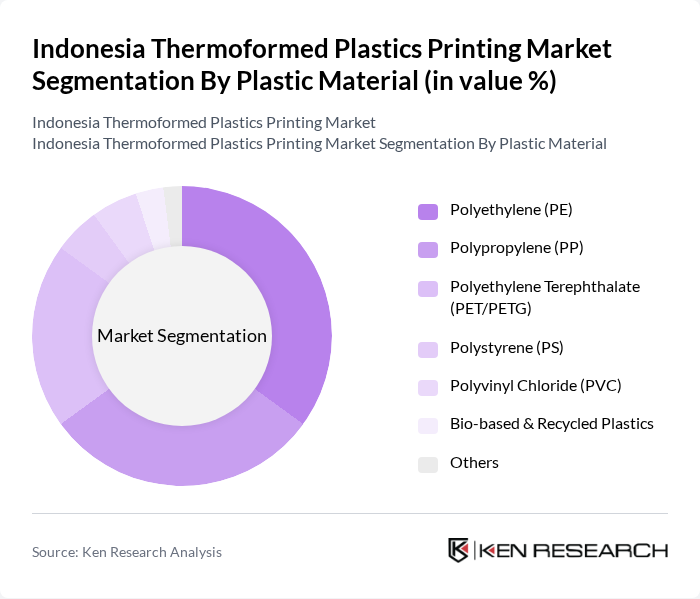
By Plastic Material:This segment encompasses various types of plastics used in thermoforming, including polyethylene (PE), polypropylene (PP), polyethylene terephthalate (PET/PETG), polystyrene (PS), polyvinyl chloride (PVC), bio-based & recycled plastics, and others. Polypropylene and polyethylene together account for a major share of Indonesia’s plastics and packaging resin demand, driven by their versatility, sealability, and cost-effectiveness in food, FMCG, and household packaging. PET and PETG are increasingly favored for thermoformed trays, clamshells, and containers where clarity, impact strength, and better recyclability are key, especially in beverages, ready meals, and fresh produce. Polystyrene and PVC retain niches in specific industrial and food-service applications, while the share of bio-based and recycled plastics is gradually increasing as converters respond to government roadmaps and brand-owner commitments to incorporate higher recycled content in thermoformed packaging.
Indonesia Thermoformed Plastics Printing Market Competitive Landscape
The Indonesia Thermoformed Plastics Printing Market is characterized by a dynamic mix of regional and international players. Leading participants such as PT. Indopoly Swakarsa Industry Tbk, PT. Sari Bumi Sukses, PT. Pura Barutama, PT. Kemas Indah Maju, PT. Multiplast Indah Abadi, PT. Dynaplast, PT. Tetra Pak Indonesia, PT. Duta Cipta Pakarperkasa, PT. Bumi Indah, PT. Cipta Kemas Abadi, PT. Sumber Indah Lestari, PT. Surya Multi Indopack, PT. Anugerah Kreasi Plastik, PT. Citra Tubindo Tbk, PT. Bintang Mas Triyasa contribute to innovation, geographic expansion, and service delivery in this space.
Indonesia Thermoformed Plastics Printing Market Industry Analysis
Growth Drivers
- Increasing Demand for Sustainable Packaging:The Indonesian packaging market is projected to reach IDR 200 trillion in future, driven by a growing consumer preference for eco-friendly products. With 75% of consumers willing to pay more for sustainable packaging, companies are increasingly adopting thermoformed plastics that are recyclable and biodegradable. This shift is supported by government initiatives promoting sustainable practices, which are expected to enhance the market's growth significantly.
- Technological Advancements in Printing Techniques:The introduction of advanced printing technologies, such as digital and 3D printing, is revolutionizing the thermoformed plastics sector in Indonesia. In future, the investment in these technologies is expected to exceed IDR 6 trillion, enabling manufacturers to produce high-quality, customized packaging solutions. This technological evolution not only improves efficiency but also reduces waste, aligning with the increasing demand for innovative packaging solutions.
- Expansion of E-commerce and Retail Sectors:Indonesia's e-commerce sector is projected to grow to IDR 700 trillion in future, significantly boosting the demand for packaging solutions. As online shopping becomes more prevalent, the need for durable and visually appealing thermoformed plastics is rising. This trend is further supported by the increasing number of retail outlets, which are expected to reach 1.2 million in future, creating a robust market for packaging solutions tailored to diverse consumer needs.
Market Challenges
- High Initial Investment Costs:The thermoformed plastics printing industry in Indonesia faces significant barriers due to high initial investment costs, estimated at around IDR 4 trillion for new machinery and technology. This financial burden can deter small and medium-sized enterprises from entering the market, limiting competition and innovation. As a result, many potential players may struggle to establish a foothold in this growing sector, impacting overall market dynamics.
- Regulatory Compliance and Environmental Concerns:Stringent regulations regarding plastic waste management and environmental sustainability pose challenges for the thermoformed plastics market. In future, compliance costs are expected to rise by 20%, impacting profit margins for manufacturers. Additionally, increasing public scrutiny over plastic usage is pushing companies to invest in sustainable practices, which can strain resources and complicate operational processes, hindering market growth.
Indonesia Thermoformed Plastics Printing Market Future Outlook
The future of the thermoformed plastics printing market in Indonesia appears promising, driven by a combination of technological advancements and shifting consumer preferences. As sustainability becomes a core focus, companies are likely to invest in innovative materials and processes that align with eco-friendly practices. Furthermore, the expansion of e-commerce will continue to create demand for customized packaging solutions, fostering growth opportunities for manufacturers willing to adapt to these evolving market dynamics.
Market Opportunities
- Growth in Food and Beverage Packaging:The food and beverage sector in Indonesia is expected to reach IDR 400 trillion in future, creating substantial opportunities for thermoformed plastics. As consumer demand for convenience and quality packaging rises, manufacturers can capitalize on this trend by offering tailored solutions that meet industry standards and consumer preferences, enhancing their market position.
- Development of Biodegradable Thermoformed Plastics:With increasing environmental awareness, the demand for biodegradable thermoformed plastics is set to rise. The market for biodegradable materials is projected to grow by IDR 2 trillion in future, providing manufacturers with an opportunity to innovate and differentiate their products. This shift not only meets regulatory requirements but also appeals to eco-conscious consumers, driving sales and market share.
Scope of the Report
| Segment | Sub-Segments |
|---|---|
| By Printing Technology | Flexographic Printing Offset Printing Digital Printing (Incl. Inkjet) Gravure Printing Screen Printing Others |
| By Plastic Material | Polyethylene (PE) Polypropylene (PP) Polyethylene Terephthalate (PET/PETG) Polystyrene (PS) Polyvinyl Chloride (PVC) Bio-based & Recycled Plastics Others |
| By Ink Type | Solvent-based Inks Water-based Inks UV-curable Inks LED-UV Inks Others |
| By Application | Food & Beverage Packaging Pharmaceutical & Medical Packaging Personal Care & Cosmetics Packaging Industrial & Electronics Trays Consumer Goods & Retail Packaging Others |
| By End-User Industry | FMCG Brand Owners Contract Packers / Converters Retailers & Private Labels Healthcare & Medical Device Manufacturers Others |
| By Region | Java Sumatra Kalimantan Sulawesi Bali & Nusa Tenggara Others |
| By Sustainability Profile | Recyclable Thermoformed Plastics Recycled-content Thermoformed Plastics Bio-based & Compostable Thermoformed Plastics Conventional Plastics |
Key Target Audience
Investors and Venture Capitalist Firms
Government and Regulatory Bodies (e.g., Ministry of Industry, Ministry of Environment and Forestry)
Manufacturers and Producers of Thermoformed Plastics
Packaging Companies
Distributors and Retailers of Plastic Products
Technology Providers for Printing Solutions
Industry Associations (e.g., Indonesian Plastics Industry Association)
Financial Institutions and Banks
Players Mentioned in the Report:
PT. Indopoly Swakarsa Industry Tbk
PT. Sari Bumi Sukses
PT. Pura Barutama
PT. Kemas Indah Maju
PT. Multiplast Indah Abadi
PT. Dynaplast
PT. Tetra Pak Indonesia
PT. Duta Cipta Pakarperkasa
PT. Bumi Indah
PT. Cipta Kemas Abadi
PT. Sumber Indah Lestari
PT. Surya Multi Indopack
PT. Anugerah Kreasi Plastik
PT. Citra Tubindo Tbk
PT. Bintang Mas Triyasa
Table of Contents
Market Assessment Phase
1. Executive Summary and Approach
2. Indonesia Thermoformed Plastics Printing Market Overview
2.1 Key Insights and Strategic Recommendations
2.2 Indonesia Thermoformed Plastics Printing Market Overview
2.3 Definition and Scope
2.4 Evolution of Market Ecosystem
2.5 Timeline of Key Regulatory Milestones
2.6 Value Chain & Stakeholder Mapping
2.7 Business Cycle Analysis
2.8 Policy & Incentive Landscape
3. Indonesia Thermoformed Plastics Printing Market Analysis
3.1 Growth Drivers
3.1.1 Increasing Demand for Sustainable Packaging
3.1.2 Technological Advancements in Printing Techniques
3.1.3 Rising Consumer Preference for Customization
3.1.4 Expansion of E-commerce and Retail Sectors
3.2 Market Challenges
3.2.1 High Initial Investment Costs
3.2.2 Regulatory Compliance and Environmental Concerns
3.2.3 Competition from Alternative Materials
3.2.4 Fluctuating Raw Material Prices
3.3 Market Opportunities
3.3.1 Growth in Food and Beverage Packaging
3.3.2 Development of Biodegradable Thermoformed Plastics
3.3.3 Expansion into Emerging Markets
3.3.4 Collaborations with E-commerce Platforms
3.4 Market Trends
3.4.1 Shift Towards Eco-friendly Materials
3.4.2 Integration of Smart Packaging Solutions
3.4.3 Customization and Personalization in Packaging
3.4.4 Adoption of Automation in Production Processes
3.5 Government Regulation
3.5.1 Implementation of Plastic Waste Management Policies
3.5.2 Standards for Food Safety in Packaging
3.5.3 Incentives for Sustainable Manufacturing Practices
3.5.4 Regulations on Import and Export of Plastics
4. SWOT Analysis
5. Stakeholder Analysis
6. Porter's Five Forces Analysis
7. Indonesia Thermoformed Plastics Printing Market Market Size, 2019-2024
7.1 By Value
7.2 By Volume
7.3 By Average Selling Price
8. Indonesia Thermoformed Plastics Printing Market Segmentation
8.1 By Printing Technology
8.1.1 Flexographic Printing
8.1.2 Offset Printing
8.1.3 Digital Printing (Incl. Inkjet)
8.1.4 Gravure Printing
8.1.5 Screen Printing
8.1.6 Others
8.2 By Plastic Material
8.2.1 Polyethylene (PE)
8.2.2 Polypropylene (PP)
8.2.3 Polyethylene Terephthalate (PET/PETG)
8.2.4 Polystyrene (PS)
8.2.5 Polyvinyl Chloride (PVC)
8.2.6 Bio-based & Recycled Plastics
8.2.7 Others
8.3 By Ink Type
8.3.1 Solvent-based Inks
8.3.2 Water-based Inks
8.3.3 UV-curable Inks
8.3.4 LED-UV Inks
8.3.5 Others
8.4 By Application
8.4.1 Food & Beverage Packaging
8.4.2 Pharmaceutical & Medical Packaging
8.4.3 Personal Care & Cosmetics Packaging
8.4.4 Industrial & Electronics Trays
8.4.5 Consumer Goods & Retail Packaging
8.4.6 Others
8.5 By End-User Industry
8.5.1 FMCG Brand Owners
8.5.2 Contract Packers / Converters
8.5.3 Retailers & Private Labels
8.5.4 Healthcare & Medical Device Manufacturers
8.5.5 Others
8.6 By Region
8.6.1 Java
8.6.2 Sumatra
8.6.3 Kalimantan
8.6.4 Sulawesi
8.6.5 Bali & Nusa Tenggara
8.6.6 Others
8.7 By Sustainability Profile
8.7.1 Recyclable Thermoformed Plastics
8.7.2 Recycled-content Thermoformed Plastics
8.7.3 Bio-based & Compostable Thermoformed Plastics
8.7.4 Conventional Plastics
9. Indonesia Thermoformed Plastics Printing Market Competitive Analysis
9.1 Market Share of Key Players
9.2 Cross Comparison of Key Players
9.2.1 Company Name
9.2.2 Revenue (Indonesia Thermoformed Plastics Printing, US$ Mn)
9.2.3 3-year Revenue CAGR (%)
9.2.4 EBITDA Margin (%)
9.2.5 Return on Capital Employed (ROCE, %)
9.2.6 Market Share (%)
9.2.7 Installed Thermoforming & Printing Capacity (Tons/Year)
9.2.8 Capacity Utilization Rate (%)
9.2.9 Average Realization / Price per Ton (US$/Ton)
9.2.10 Capex Intensity (Capex / Sales, %)
9.2.11 R&D / Innovation Spend (% of Sales)
9.2.12 Share of Sustainable / Recycled Products in Portfolio (%)
9.2.13 On-time Delivery Performance (%)
9.2.14 Key Export Dependence (% of Revenue from Exports)
9.3 SWOT Analysis of Top Players
9.4 Pricing Analysis
9.5 Detailed Profile of Major Companies
9.5.1 PT. Indopoly Swakarsa Industry Tbk
9.5.2 PT. Sari Bumi Sukses
9.5.3 PT. Pura Barutama
9.5.4 PT. Kemas Indah Maju
9.5.5 PT. Multiplast Indah Abadi
9.5.6 PT. Dynaplast
9.5.7 PT. Tetra Pak Indonesia
9.5.8 PT. Duta Cipta Pakarperkasa
9.5.9 PT. Bumi Indah
9.5.10 PT. Cipta Kemas Abadi
9.5.11 PT. Sumber Indah Lestari
9.5.12 PT. Surya Multi Indopack
9.5.13 PT. Anugerah Kreasi Plastik
9.5.14 PT. Citra Tubindo Tbk
9.5.15 PT. Bintang Mas Triyasa
10. Indonesia Thermoformed Plastics Printing Market End-User Analysis
10.1 Procurement Behavior of Key Ministries
10.1.1 Government Procurement Policies
10.1.2 Budget Allocation for Packaging Solutions
10.1.3 Evaluation Criteria for Suppliers
10.1.4 Others
10.2 Corporate Spend on Infrastructure & Energy
10.2.1 Investment Trends in Packaging Infrastructure
10.2.2 Corporate Sustainability Initiatives
10.2.3 Energy Efficiency Measures
10.2.4 Others
10.3 Pain Point Analysis by End-User Category
10.3.1 Quality Assurance Issues
10.3.2 Supply Chain Disruptions
10.3.3 Cost Management Challenges
10.3.4 Others
10.4 User Readiness for Adoption
10.4.1 Awareness of Thermoformed Plastics Benefits
10.4.2 Training and Skill Development Needs
10.4.3 Infrastructure Readiness
10.4.4 Others
10.5 Post-Deployment ROI and Use Case Expansion
10.5.1 Measurement of ROI Metrics
10.5.2 Case Studies of Successful Implementations
10.5.3 Opportunities for Scaling
10.5.4 Others
11. Indonesia Thermoformed Plastics Printing Market Future Size, 2025-2030
11.1 By Value
11.2 By Volume
11.3 By Average Selling Price
Go-To-Market Strategy Phase
1. Whitespace Analysis + Business Model Canvas
1.1 Market Gaps Identification
1.2 Business Model Framework
2. Marketing and Positioning Recommendations
2.1 Branding Strategies
2.2 Product USPs
3. Distribution Plan
3.1 Urban Retail Strategies
3.2 Rural NGO Tie-ups
4. Channel & Pricing Gaps
4.1 Underserved Routes
4.2 Pricing Bands
5. Unmet Demand & Latent Needs
5.1 Category Gaps
5.2 Consumer Segments
6. Customer Relationship
6.1 Loyalty Programs
6.2 After-sales Service
7. Value Proposition
7.1 Sustainability Initiatives
7.2 Integrated Supply Chains
8. Key Activities
8.1 Regulatory Compliance
8.2 Branding
8.3 Distribution Setup
9. Entry Strategy Evaluation
9.1 Domestic Market Entry Strategy
9.1.1 Product Mix
9.1.2 Pricing Band
9.1.3 Packaging
9.2 Export Entry Strategy
9.2.1 Target Countries
9.2.2 Compliance Roadmap
10. Entry Mode Assessment
10.1 JV
10.2 Greenfield
10.3 M&A
10.4 Distributor Model
11. Capital and Timeline Estimation
11.1 Capital Requirements
11.2 Timelines
12. Control vs Risk Trade-Off
12.1 Ownership vs Partnerships
13. Profitability Outlook
13.1 Breakeven Analysis
13.2 Long-term Sustainability
14. Potential Partner List
14.1 Distributors
14.2 JVs
14.3 Acquisition Targets
15. Execution Roadmap
15.1 Phased Plan for Market Entry
15.1.1 Market Setup
15.1.2 Market Entry
15.1.3 Growth Acceleration
15.1.4 Scale & Stabilize
15.2 Key Activities and Milestones
15.2.1 Milestone Planning
15.2.2 Activity Tracking
Research Methodology
Phase 1: Approach1
Desk Research
- Industry reports from Indonesian plastics associations and trade bodies
- Market analysis from government publications and economic surveys
- Academic journals and white papers on thermoforming technologies and applications
Primary Research
- Interviews with key stakeholders in the thermoformed plastics sector, including manufacturers and suppliers
- Surveys targeting end-users in industries such as food packaging, consumer goods, and automotive
- Field visits to production facilities to gather insights on operational practices and market needs
Validation & Triangulation
- Cross-validation of data through multiple sources, including trade publications and expert opinions
- Triangulation of findings from desk research and primary interviews to ensure consistency
- Sanity checks conducted through expert panel reviews to validate market assumptions
Phase 2: Market Size Estimation1
Top-down Assessment
- Analysis of national plastic consumption trends and their correlation with thermoformed products
- Segmentation of the market by application areas such as food service, medical, and industrial packaging
- Incorporation of government regulations impacting the use of plastics in various sectors
Bottom-up Modeling
- Volume estimates based on production capacities of leading thermoforming companies in Indonesia
- Cost analysis derived from material prices and manufacturing processes
- Estimation of market share based on sales data from key players in the industry
Forecasting & Scenario Analysis
- Multi-variable forecasting models considering economic growth, consumer behavior, and environmental regulations
- Scenario planning based on potential shifts in market dynamics due to technological advancements
- Development of baseline, optimistic, and pessimistic forecasts through 2030
Phase 3: CATI Sample Composition1
| Scope Item/Segment | Sample Size | Target Respondent Profiles |
|---|---|---|
| Food Packaging Sector | 120 | Packaging Managers, Product Development Leads |
| Consumer Goods Manufacturing | 90 | Supply Chain Managers, Operations Directors |
| Medical Device Packaging | 60 | Quality Assurance Managers, Regulatory Affairs Specialists |
| Automotive Parts Production | 70 | Procurement Managers, Engineering Leads |
| Retail and E-commerce Packaging | 80 | Logistics Coordinators, Marketing Managers |
Frequently Asked Questions
What is the current value of the Indonesia Thermoformed Plastics Printing Market?
The Indonesia Thermoformed Plastics Printing Market is valued at approximately USD 1.1 billion, reflecting the significant role of plastic packaging and thermoform-based formats within the country's broader plastics and packaging industry.
What are the main drivers of growth in the Indonesia Thermoformed Plastics Printing Market?
Which regions in Indonesia dominate the Thermoformed Plastics Printing Market?
How is the Indonesian government influencing the Thermoformed Plastics Printing Market?
Other Regional/Country Reports
Malaysia Thermoformed Plastics Printing Market
KSA Thermoformed Plastics Printing Market
APAC Thermoformed Plastics Printing Market
SEA Thermoformed Plastics Printing Market
Vietnam Thermoformed Plastics Printing Market
Thailand Thermoformed Plastics Printing Market
Other Adjacent Reports
Why Buy From Us?

What makes us stand out is that our consultants follow Robust, Refine and Result (RRR) methodology. Robust for clear definitions, approaches and sanity checking, Refine for differentiating respondents' facts and opinions, and Result for presenting data with story.

We have set a benchmark in the industry by offering our clients with syndicated and customized market research reports featuring coverage of entire market as well as meticulous research and analyst insights.

While we don't replace traditional research, we flip the method upside down. Our dual approach of Top Bottom & Bottom Top ensures quality deliverable by not just verifying company fundamentals but also looking at the sector and macroeconomic factors.

With one step in the future, our research team constantly tries to show you the bigger picture. We help with some of the tough questions you may encounter along the way: How is the industry positioned? Best marketing channel? KPI's of competitors? By aligning every element, we help maximize success.

Our report gives you instant access to the answers and sources that other companies might choose to hide. We elaborate each steps of research methodology we have used and showcase you the sample size to earn your trust.

If you need any support, we are here! We pride ourselves on universe strength, data quality, and quick, friendly, and professional service.