About the Report
Base Year 2024Nigeria Sports Equipment and Retail Market Overview
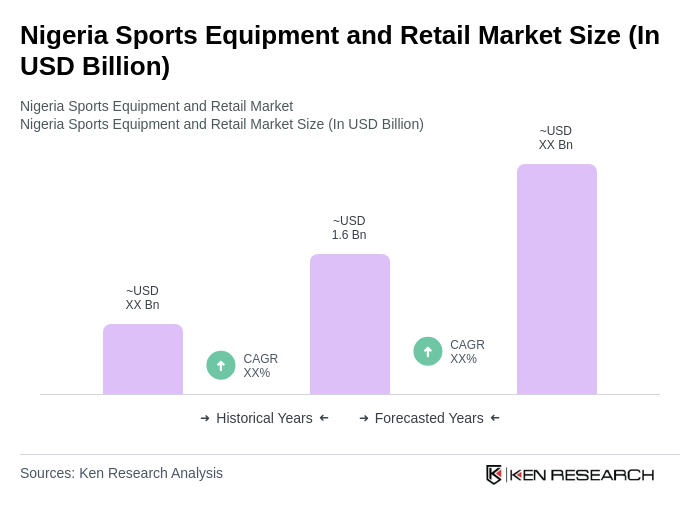
- The Nigeria Sports Equipment and Retail Market is valued at approximately USD 1.6 billion, based on a five-year historical analysis. This estimate is derived from the latest available market share data, with Nigeria accounting for over 40% of the Africa Sports Equipment and Accessories market, which is valued at USD 3.71 billion for the region . Growth is primarily driven by increasing participation in sports and fitness activities, a rising middle class that is more health-conscious, and greater willingness to invest in quality sports products. The market continues to see robust demand for both local and international brands, reflecting a consumer base that values quality, performance, and brand reputation .
- Lagos, Abuja, and Port Harcourt remain the dominant cities in the Nigeria Sports Equipment and Retail Market. Lagos, as the commercial hub, hosts a high concentration of retail outlets and sports facilities. Abuja, the political center, is experiencing increased investment in sports infrastructure, while Port Harcourt’s growing population and economic activity are driving higher sports participation, further contributing to market expansion .
- In 2023, the Nigerian government implemented the National Sports Industry Policy, issued by the Federal Ministry of Youth and Sports Development. This policy promotes sports development and strengthens the local sports equipment manufacturing sector. It encourages public-private partnerships, mandates standards for local manufacturing, and sets guidelines for investment in sports infrastructure, thereby boosting the domestic market for sports equipment and retail .
Nigeria Sports Equipment and Retail Market Segmentation
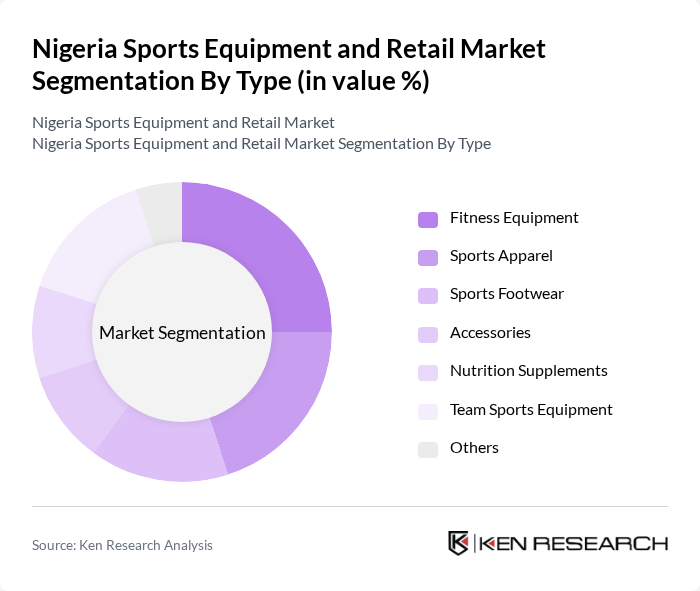
By Type:The market is segmented into fitness equipment, sports apparel, sports footwear, accessories, nutrition supplements, team sports equipment, and others. Fitness equipment includes treadmills, weights, and training machines. Sports apparel covers clothing designed for athletic activities, while sports footwear encompasses specialized shoes for various sports. Accessories include protective gear, bags, and wearable tech. Nutrition supplements consist of products supporting athletic performance and recovery. Team sports equipment covers items used in football, basketball, and other team sports. The "others" segment includes niche products and emerging categories.
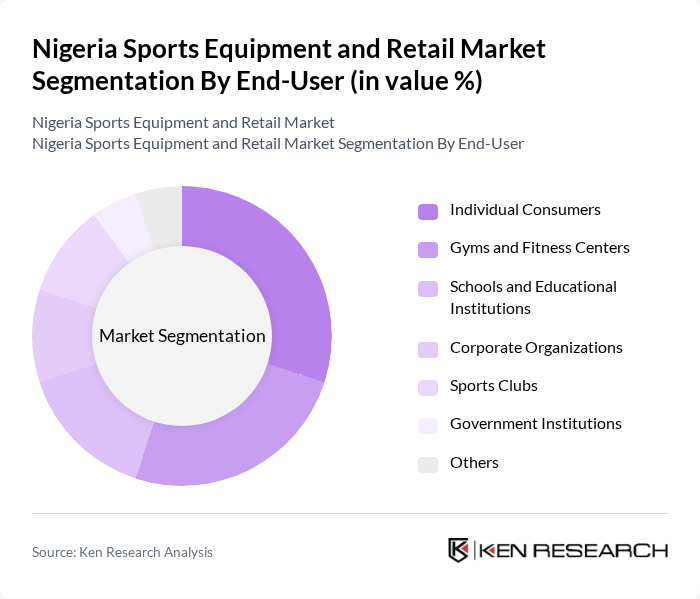
By End-User:The end-user segmentation includes individual consumers, gyms and fitness centers, schools and educational institutions, corporate organizations, sports clubs, government institutions, and others. Individual consumers drive demand for home fitness and personal sports gear. Gyms and fitness centers invest in commercial-grade equipment and accessories. Schools and educational institutions procure equipment for student sports programs. Corporate organizations increasingly support employee wellness initiatives. Sports clubs require specialized gear for training and competition. Government institutions focus on public sports infrastructure and community programs. The "others" segment includes non-profit organizations and informal groups.
Nigeria Sports Equipment and Retail Market Competitive Landscape
The Nigeria Sports Equipment and Retail Market is characterized by a dynamic mix of regional and international players. Leading participants such as Nike Inc., Adidas AG, Puma SE, Decathlon S.A., Under Armour Inc., Kappa S.p.A., Wilson Sporting Goods Co., Spalding, Mizuno Corporation, Asics Corporation, New Balance Athletics, Inc., Reebok International Ltd., Skechers USA, Inc., Li-Ning Company Limited, Yonex Co., Ltd., Sports World Nigeria Ltd., Jumia Nigeria (Sports & Fitness Category), SLOT Systems Limited (Sports Equipment Division), Game Stores Nigeria, Just Fitted Nigeria contribute to innovation, geographic expansion, and service delivery in this space.
Nigeria Sports Equipment and Retail Market Industry Analysis
Growth Drivers
- Increasing Youth Participation in Sports:Nigeria has a youth population of approximately70 million, with over30% actively participating in various sports. This surge in engagement is driven by school programs and community initiatives, leading to a higher demand for sports equipment. The Nigerian government has invested around?10 billion (approximately $24 million)in sports development programs, further encouraging youth involvement and boosting the sports equipment market significantly.
- Rise in Health Consciousness:With Nigeria's obesity rate rising to8%–10%among adults, there is a growing awareness of the importance of physical fitness. This trend has led to an increase in gym memberships, which reachedover 500,000, driving demand for fitness-related equipment. The health and wellness market is projected to grow by?200 billion (about $480 million), indicating a robust market for sports equipment catering to health-conscious consumers.
- Government Initiatives to Promote Sports:The Nigerian government has launched several initiatives, including the National Sports Policy, which allocates?5 billion (around $12 million) annuallyto enhance sports infrastructure. These initiatives aim to improve facilities and promote local talent, resulting in increased participation and demand for sports equipment. The government's commitment to sports development is expected to create a favorable environment for market growth in future.
Market Challenges
- Inadequate Infrastructure:Nigeria's sports infrastructure remains underdeveloped, with only20% of sports facilities meeting international standards. This lack of quality venues limits access to sports and discourages participation. The government has recognized this issue, but with only?3 billion (approximately $7.2 million)allocated for infrastructure improvements, the challenge persists, hindering the growth of the sports equipment market.
- High Import Tariffs on Equipment:Import tariffs on sports equipment in Nigeria can reach up to35%, significantly increasing costs for retailers and consumers. This high tariff structure discourages local retailers from stocking a diverse range of products, limiting consumer choice. As a result, the market struggles to compete with cheaper alternatives from neighboring countries, stifling growth and innovation in the sports equipment sector.
Nigeria Sports Equipment and Retail Market Future Outlook
The future of the Nigeria sports equipment market appears promising, driven by increasing youth engagement and a growing health consciousness among the population. As the government continues to invest in sports infrastructure and initiatives, the market is likely to see enhanced participation rates. Additionally, the rise of e-commerce platforms will facilitate easier access to sports equipment, further stimulating growth. The combination of these factors suggests a dynamic and evolving market landscape in future.
Market Opportunities
- Growth of Women's Sports:The increasing focus on women's sports in Nigeria presents a significant opportunity for the sports equipment market. With female participation in sports rising by25%in recent years, brands can capitalize on this trend by offering tailored products. This shift is supported by government initiatives promoting gender equality in sports, potentially increasing market share for companies targeting female athletes.
- Development of Sports Academies:The establishment of sports academies across Nigeria is creating a demand for specialized sports equipment. Withover 100 academies projected to open in future, this growth will drive the need for quality gear and training equipment. Partnerships with local manufacturers can enhance supply chains, providing a lucrative opportunity for businesses to meet the needs of these emerging institutions.
Scope of the Report
| Segment | Sub-Segments |
|---|---|
| By Type | Fitness Equipment Sports Apparel Sports Footwear Accessories Nutrition Supplements Team Sports Equipment (e.g., balls, protective gear, court equipment) Others |
| By End-User | Individual Consumers Gyms and Fitness Centers Schools and Educational Institutions Corporate Organizations Sports Clubs Government Institutions Others |
| By Sales Channel | Online Retail Brick-and-Mortar Stores Wholesale Distributors Direct Sales Sports Events and Expos Others |
| By Price Range | Budget Mid-Range Premium Luxury Others |
| By Brand Type | International Brands Local Brands Private Labels Others |
| By Distribution Mode | Direct Distribution Indirect Distribution Franchise Models Others |
| By Application | Recreational Use Professional Sports Fitness Training Rehabilitation Others |
Key Target Audience
Investors and Venture Capitalist Firms
Government and Regulatory Bodies (e.g., National Sports Commission, Federal Ministry of Youth and Sports Development)
Manufacturers and Producers
Distributors and Retailers
Sports Federations and Associations
Event Organizers and Promoters
Fitness Centers and Gyms
Sports Marketing Agencies
Players Mentioned in the Report:
Nike Inc.
Adidas AG
Puma SE
Decathlon S.A.
Under Armour Inc.
Kappa S.p.A.
Wilson Sporting Goods Co.
Spalding
Mizuno Corporation
Asics Corporation
New Balance Athletics, Inc.
Reebok International Ltd.
Skechers USA, Inc.
Li-Ning Company Limited
Yonex Co., Ltd.
Sports World Nigeria Ltd.
Jumia Nigeria (Sports & Fitness Category)
SLOT Systems Limited (Sports Equipment Division)
Game Stores Nigeria
Just Fitted Nigeria
Table of Contents
Market Assessment Phase
1. Executive Summary and Approach
2. Nigeria Sports Equipment and Retail Market Overview
2.1 Key Insights and Strategic Recommendations
2.2 Nigeria Sports Equipment and Retail Market Overview
2.3 Definition and Scope
2.4 Evolution of Market Ecosystem
2.5 Timeline of Key Regulatory Milestones
2.6 Value Chain & Stakeholder Mapping
2.7 Business Cycle Analysis
2.8 Policy & Incentive Landscape
3. Nigeria Sports Equipment and Retail Market Analysis
3.1 Growth Drivers
3.1.1 Increasing Youth Participation in Sports
3.1.2 Rise in Health Consciousness
3.1.3 Government Initiatives to Promote Sports
3.1.4 Expansion of E-commerce Platforms
3.2 Market Challenges
3.2.1 Inadequate Infrastructure
3.2.2 High Import Tariffs on Equipment
3.2.3 Limited Local Manufacturing
3.2.4 Economic Instability
3.3 Market Opportunities
3.3.1 Growth of Women's Sports
3.3.2 Development of Sports Academies
3.3.3 Sponsorship and Partnership Opportunities
3.3.4 Technological Advancements in Equipment
3.4 Market Trends
3.4.1 Increasing Popularity of E-sports
3.4.2 Shift Towards Sustainable Equipment
3.4.3 Customization of Sports Gear
3.4.4 Growth of Fitness Apps and Wearables
3.5 Government Regulation
3.5.1 Sports Development Bill
3.5.2 Import Regulations on Sports Equipment
3.5.3 Tax Incentives for Local Manufacturers
3.5.4 Standards for Sports Equipment Safety
4. SWOT Analysis
5. Stakeholder Analysis
6. Porter's Five Forces Analysis
7. Nigeria Sports Equipment and Retail Market Market Size, 2019-2024
7.1 By Value
7.2 By Volume
7.3 By Average Selling Price
8. Nigeria Sports Equipment and Retail Market Segmentation
8.1 By Type
8.1.1 Fitness Equipment
8.1.2 Sports Apparel
8.1.3 Sports Footwear
8.1.4 Accessories
8.1.5 Nutrition Supplements
8.1.6 Team Sports Equipment (e.g., balls, protective gear, court equipment)
8.1.7 Others
8.2 By End-User
8.2.1 Individual Consumers
8.2.2 Gyms and Fitness Centers
8.2.3 Schools and Educational Institutions
8.2.4 Corporate Organizations
8.2.5 Sports Clubs
8.2.6 Government Institutions
8.2.7 Others
8.3 By Sales Channel
8.3.1 Online Retail
8.3.2 Brick-and-Mortar Stores
8.3.3 Wholesale Distributors
8.3.4 Direct Sales
8.3.5 Sports Events and Expos
8.3.6 Others
8.4 By Price Range
8.4.1 Budget
8.4.2 Mid-Range
8.4.3 Premium
8.4.4 Luxury
8.4.5 Others
8.5 By Brand Type
8.5.1 International Brands
8.5.2 Local Brands
8.5.3 Private Labels
8.5.4 Others
8.6 By Distribution Mode
8.6.1 Direct Distribution
8.6.2 Indirect Distribution
8.6.3 Franchise Models
8.6.4 Others
8.7 By Application
8.7.1 Recreational Use
8.7.2 Professional Sports
8.7.3 Fitness Training
8.7.4 Rehabilitation
8.7.5 Others
9. Nigeria Sports Equipment and Retail Market Competitive Analysis
9.1 Market Share of Key Players
9.2 Cross Comparison of Key Players
9.2.1 Company Name
9.2.2 Group Size (Large, Medium, or Small as per industry convention)
9.2.3 Revenue (USD, NGN)
9.2.4 Revenue Growth Rate (%)
9.2.5 Market Share (%)
9.2.6 Market Penetration Rate (%)
9.2.7 Number of Retail Outlets/Touchpoints
9.2.8 Distribution Network Coverage (Regions/Cities)
9.2.9 Product Portfolio Breadth (Number of SKUs/Categories)
9.2.10 Customer Retention Rate (%)
9.2.11 Pricing Strategy (Mass, Mid, Premium)
9.2.12 Brand Equity Score
9.2.13 Digital Presence (E-commerce, Social Media Followers)
9.2.14 Customer Satisfaction Index
9.2.15 Local Sourcing Ratio (%)
9.3 SWOT Analysis of Top Players
9.4 Pricing Analysis
9.5 Detailed Profile of Major Companies
9.5.1 Nike Inc.
9.5.2 Adidas AG
9.5.3 Puma SE
9.5.4 Decathlon S.A.
9.5.5 Under Armour Inc.
9.5.6 Kappa S.p.A.
9.5.7 Wilson Sporting Goods Co.
9.5.8 Spalding
9.5.9 Mizuno Corporation
9.5.10 Asics Corporation
9.5.11 New Balance Athletics, Inc.
9.5.12 Reebok International Ltd.
9.5.13 Skechers USA, Inc.
9.5.14 Li-Ning Company Limited
9.5.15 Yonex Co., Ltd.
9.5.16 Sports World Nigeria Ltd.
9.5.17 Jumia Nigeria (Sports & Fitness Category)
9.5.18 SLOT Systems Limited (Sports Equipment Division)
9.5.19 Game Stores Nigeria
9.5.20 Just Fitted Nigeria
10. Nigeria Sports Equipment and Retail Market End-User Analysis
10.1 Procurement Behavior of Key Ministries
10.1.1 Ministry of Youth and Sports Development
10.1.2 Ministry of Education
10.1.3 Ministry of Health
10.2 Corporate Spend on Infrastructure & Energy
10.2.1 Investment in Sports Facilities
10.2.2 Sponsorship Deals
10.2.3 Equipment Upgrades
10.3 Pain Point Analysis by End-User Category
10.3.1 Accessibility to Quality Equipment
10.3.2 Affordability Issues
10.3.3 Maintenance and Support Services
10.4 User Readiness for Adoption
10.4.1 Awareness of New Products
10.4.2 Training and Support Needs
10.4.3 Financial Readiness
10.5 Post-Deployment ROI and Use Case Expansion
10.5.1 Performance Metrics Tracking
10.5.2 User Feedback Mechanisms
10.5.3 Expansion into New Sports
11. Nigeria Sports Equipment and Retail Market Future Size, 2025-2030
11.1 By Value
11.2 By Volume
11.3 By Average Selling Price
Go-To-Market Strategy Phase
1. Whitespace Analysis + Business Model Canvas
1.1 Market Gaps Identification
1.2 Business Model Framework
1.3 Value Proposition Development
1.4 Revenue Streams Analysis
1.5 Cost Structure Evaluation
1.6 Key Partnerships
1.7 Customer Segments
2. Marketing and Positioning Recommendations
2.1 Branding Strategies
2.2 Product USPs
2.3 Target Audience Identification
2.4 Marketing Channels
2.5 Promotional Strategies
2.6 Customer Engagement Tactics
3. Distribution Plan
3.1 Urban Retail Strategies
3.2 Rural NGO Tie-ups
3.3 E-commerce Integration
3.4 Logistics and Supply Chain Management
3.5 Retail Partnerships
4. Channel & Pricing Gaps
4.1 Underserved Routes
4.2 Pricing Bands Analysis
4.3 Competitor Pricing Strategies
4.4 Consumer Price Sensitivity
4.5 Discounting Strategies
5. Unmet Demand & Latent Needs
5.1 Category Gaps
5.2 Consumer Segments
5.3 Emerging Trends
5.4 Product Development Opportunities
5.5 Market Entry Barriers
6. Customer Relationship
6.1 Loyalty Programs
6.2 After-sales Service
6.3 Customer Feedback Mechanisms
6.4 Community Engagement
6.5 Customer Education Initiatives
7. Value Proposition
7.1 Sustainability Initiatives
7.2 Integrated Supply Chains
7.3 Unique Selling Points
7.4 Customer-Centric Innovations
7.5 Competitive Advantages
8. Key Activities
8.1 Regulatory Compliance
8.2 Branding Initiatives
8.3 Distribution Setup
8.4 Training and Development
8.5 Market Research Activities
9. Entry Strategy Evaluation
9.1 Domestic Market Entry Strategy
9.1.1 Product Mix
9.1.2 Pricing Band
9.1.3 Packaging Strategies
9.2 Export Entry Strategy
9.2.1 Target Countries
9.2.2 Compliance Roadmap
10. Entry Mode Assessment
10.1 Joint Ventures
10.2 Greenfield Investments
10.3 Mergers & Acquisitions
10.4 Distributor Model
11. Capital and Timeline Estimation
11.1 Capital Requirements
11.2 Timelines for Implementation
12. Control vs Risk Trade-Off
12.1 Ownership vs Partnerships
13. Profitability Outlook
13.1 Breakeven Analysis
13.2 Long-term Sustainability
14. Potential Partner List
14.1 Distributors
14.2 Joint Ventures
14.3 Acquisition Targets
15. Execution Roadmap
15.1 Phased Plan for Market Entry
15.1.1 Market Setup
15.1.2 Market Entry
15.1.3 Growth Acceleration
15.1.4 Scale & Stabilize
15.2 Key Activities and Milestones
15.2.1 Milestone Planning
15.2.2 Activity Tracking
Research Methodology
Phase 1: Approach1
Desk Research
- Analysis of industry reports from sports equipment associations and market research firms
- Review of government publications on sports development and retail regulations in Nigeria
- Examination of trade statistics and import/export data related to sports equipment
Primary Research
- Interviews with key stakeholders in the sports retail sector, including store owners and managers
- Surveys conducted with consumers to understand purchasing behavior and preferences
- Focus group discussions with athletes and sports enthusiasts to gather insights on equipment usage
Validation & Triangulation
- Cross-validation of findings through comparison with existing market studies and reports
- Triangulation of data from consumer surveys, expert interviews, and industry reports
- Sanity checks through feedback from industry experts and academic professionals in sports management
Phase 2: Market Size Estimation1
Top-down Assessment
- Estimation of total market size based on national sports participation rates and demographics
- Segmentation of the market by product categories such as footwear, apparel, and equipment
- Incorporation of growth trends in sports participation and fitness awareness among Nigerians
Bottom-up Modeling
- Collection of sales data from leading sports retailers and e-commerce platforms
- Estimation of average selling prices for various categories of sports equipment
- Volume estimates based on consumer purchasing patterns and seasonal trends
Forecasting & Scenario Analysis
- Multi-factor analysis considering economic indicators, population growth, and urbanization rates
- Scenario modeling based on potential impacts of government policies on sports development
- Baseline, optimistic, and pessimistic forecasts for market growth through 2030
Phase 3: CATI Sample Composition1
| Scope Item/Segment | Sample Size | Target Respondent Profiles |
|---|---|---|
| Retail Sports Equipment Sales | 120 | Store Owners, Retail Managers |
| Consumer Purchasing Behavior | 140 | Sports Enthusiasts, General Consumers |
| Market Trends in Sports Apparel | 100 | Fashion Retailers, Brand Managers |
| Fitness Equipment Usage | 80 | Gym Owners, Personal Trainers |
| Impact of E-commerce on Sports Retail | 110 | E-commerce Managers, Digital Marketing Specialists |
Frequently Asked Questions
What is the current value of the Nigeria Sports Equipment and Retail Market?
The Nigeria Sports Equipment and Retail Market is valued at approximately USD 1.6 billion, representing over 40% of the Africa Sports Equipment and Accessories market, which is valued at USD 3.71 billion.
What factors are driving growth in the Nigeria Sports Equipment Market?
Which cities are the main hubs for sports equipment retail in Nigeria?
What is the impact of the National Sports Industry Policy in Nigeria?
Other Regional/Country Reports
Other Adjacent Reports
Philippines Sports Infrastructure Market
Why Buy From Us?

What makes us stand out is that our consultants follow Robust, Refine and Result (RRR) methodology. Robust for clear definitions, approaches and sanity checking, Refine for differentiating respondents' facts and opinions, and Result for presenting data with story.

We have set a benchmark in the industry by offering our clients with syndicated and customized market research reports featuring coverage of entire market as well as meticulous research and analyst insights.

While we don't replace traditional research, we flip the method upside down. Our dual approach of Top Bottom & Bottom Top ensures quality deliverable by not just verifying company fundamentals but also looking at the sector and macroeconomic factors.

With one step in the future, our research team constantly tries to show you the bigger picture. We help with some of the tough questions you may encounter along the way: How is the industry positioned? Best marketing channel? KPI's of competitors? By aligning every element, we help maximize success.

Our report gives you instant access to the answers and sources that other companies might choose to hide. We elaborate each steps of research methodology we have used and showcase you the sample size to earn your trust.

If you need any support, we are here! We pride ourselves on universe strength, data quality, and quick, friendly, and professional service.