Region:Middle East
Author(s):Dev
Product Code:KRAA8314
Pages:90
Published On:November 2025
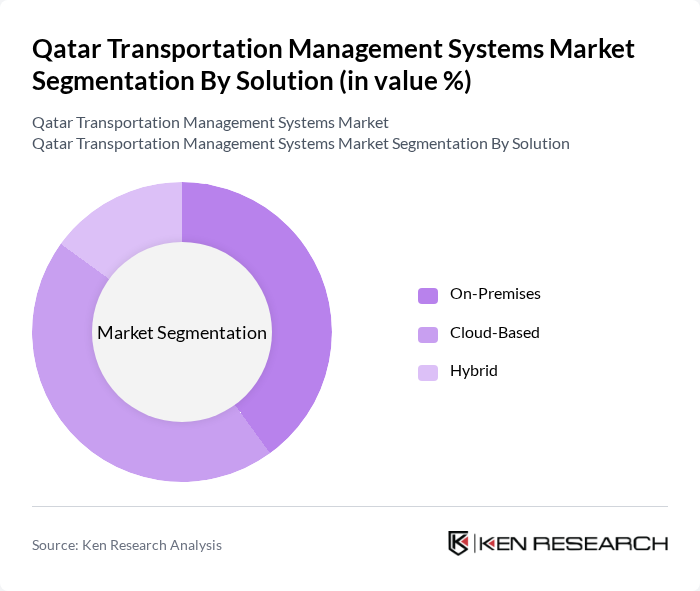
By Solution:The market is segmented into On-Premises, Cloud-Based, and Hybrid solutions. The On-Premises segment is favored by organizations seeking complete control over their systems and data security, particularly in government and critical infrastructure applications. Cloud-Based solutions are gaining traction due to their scalability, cost-effectiveness, and ease of integration with other digital platforms. Hybrid solutions offer a balanced approach, combining the benefits of both On-Premises and Cloud-Based systems, and are increasingly adopted by large enterprises and logistics providers seeking flexibility and resilience.
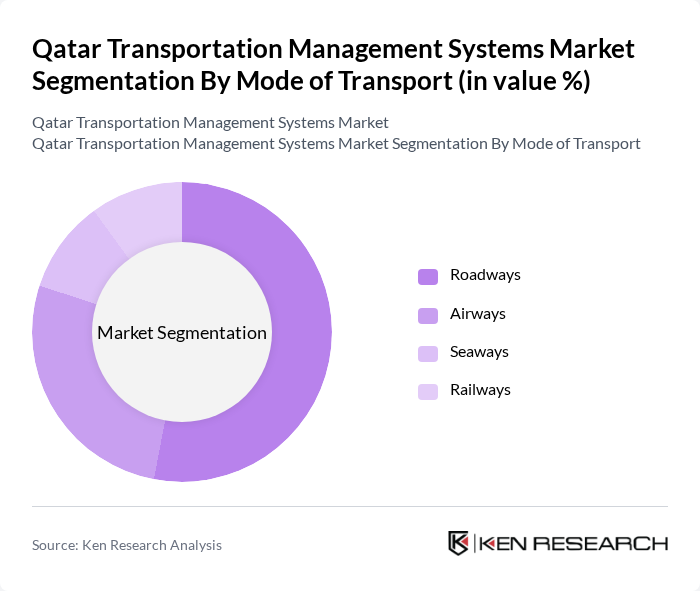
By Mode of Transport:This segmentation includes Roadways, Airways, Seaways, and Railways. Roadways dominate the market due to Qatar’s extensive road network and the increasing demand for efficient logistics and transportation solutions, especially for last-mile delivery and urban mobility. Airways are significant, given Qatar’s strategic position as a global aviation hub and the expansion of Hamad International Airport. Seaways and Railways are emerging segments, with growth potential driven by new port developments and the expansion of metro and tram systems in Doha and Lusail.
The Qatar Transportation Management Systems Market is characterized by a dynamic mix of regional and international players. Leading participants such as Siemens Mobility, IBM Corporation, Oracle Corporation, SAP SE, Cisco Systems, Inc., Trimble Inc., Alstom SA, Thales Group, Kapsch TrafficCom AG, Cubic Corporation, Conduent Incorporated, Hitachi, Ltd., Mitsubishi Electric Corporation, T-Systems International GmbH, Aimsun, Gulf Warehousing Company (GWC), QNB Group (QNB Logistics), Qatar Railways Company (Qatar Rail), Mowasalat (Karwa), SAPTCO (Saudi Public Transport Company) contribute to innovation, geographic expansion, and service delivery in this space.
The future of the Qatar Transportation Management Systems market appears promising, driven by ongoing urbanization and government initiatives aimed at enhancing infrastructure. As the country continues to invest in smart city projects, the integration of advanced technologies such as AI and IoT will become increasingly prevalent. This trend will facilitate improved traffic management and logistics efficiency, ultimately leading to a more sustainable transportation ecosystem. The focus on customer-centric services will also shape the market landscape, fostering innovation and competition.
| Segment | Sub-Segments |
|---|---|
| By Solution | On-Premises Cloud-Based Hybrid |
| By Mode of Transport | Roadways Airways Seaways Railways |
| By End-User | Government Agencies Private Transportation Companies Logistics Providers Public Transport Operators Manufacturing & Industrial Retail & E-commerce |
| By Application | Route Optimization Fleet Tracking & Telematics Traffic Monitoring & Control Freight & Order Management Incident & Risk Management |
| By Technology | GPS Tracking RFID Technology IoT & Connected Devices Data Analytics & AI Mobile Applications |
| By Deployment Mode | On-Premises Cloud-Based Hybrid |
| By Region | Doha Al Rayyan Umm Salal Al Wakrah Others |
| By Investment Source | Private Investments Government Funding Public-Private Partnerships (PPP) International Aid Others |
| Scope Item/Segment | Sample Size | Target Respondent Profiles |
|---|---|---|
| Public Transportation Management | 100 | City Planners, Transportation Authority Officials |
| Logistics and Freight Management | 60 | Logistics Managers, Supply Chain Analysts |
| Smart Traffic Management Systems | 50 | IT Managers, Urban Development Specialists |
| Fleet Management Solutions | 55 | Fleet Managers, Operations Directors |
| Last-Mile Delivery Systems | 45 | Delivery Managers, E-commerce Operations Heads |
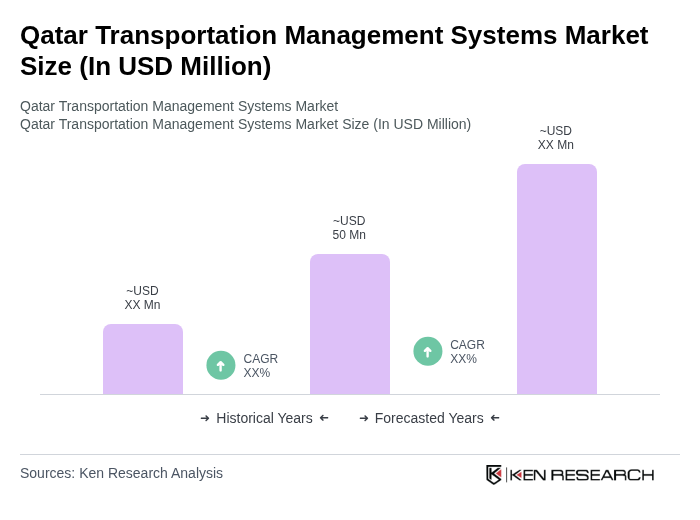
The Qatar Transportation Management Systems Market is valued at approximately USD 50 million, reflecting significant growth driven by urbanization, demand for efficient transportation solutions, and government investments in infrastructure development.

What makes us stand out is that our consultants follow Robust, Refine and Result (RRR) methodology. Robust for clear definitions, approaches and sanity checking, Refine for differentiating respondents' facts and opinions, and Result for presenting data with story.

We have set a benchmark in the industry by offering our clients with syndicated and customized market research reports featuring coverage of entire market as well as meticulous research and analyst insights.

While we don't replace traditional research, we flip the method upside down. Our dual approach of Top Bottom & Bottom Top ensures quality deliverable by not just verifying company fundamentals but also looking at the sector and macroeconomic factors.

With one step in the future, our research team constantly tries to show you the bigger picture. We help with some of the tough questions you may encounter along the way: How is the industry positioned? Best marketing channel? KPI's of competitors? By aligning every element, we help maximize success.

Our report gives you instant access to the answers and sources that other companies might choose to hide. We elaborate each steps of research methodology we have used and showcase you the sample size to earn your trust.

If you need any support, we are here! We pride ourselves on universe strength, data quality, and quick, friendly, and professional service.













