About the Report
Base Year 2024Scandinavian Commercial Real Estate Market Overview
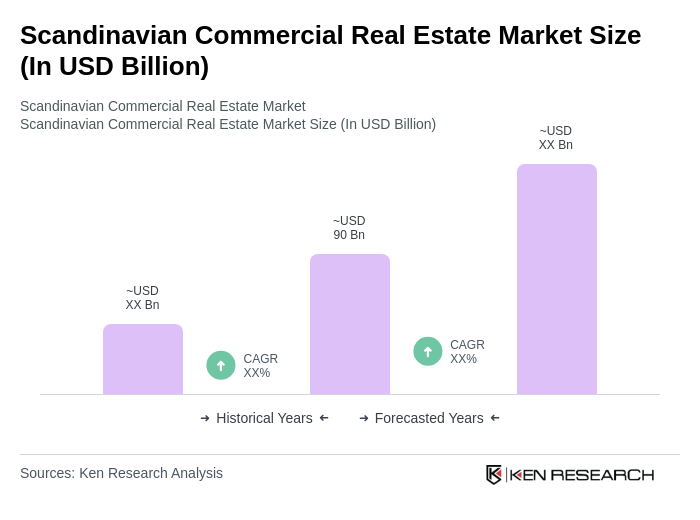
- The Scandinavian Commercial Real Estate Market is valued at USD 90 billion, based on a five-year historical analysis. This market is driven by urbanization, the refurbishment of ageing prime-office stock, sovereign-wealth-backed green-building mandates, and a robust retail sector. Recent trends include increased investments in energy retrofits, data-centre corridors, and last-mile logistics, which are enhancing the appeal of commercial properties across the region.
- Key players in this market include Sweden, Denmark, and Norway, which dominate due to their resilient economies, high standards of living, and progressive urban planning policies. These countries have established themselves as attractive destinations for both domestic and international investors, supported by pension-fund reallocations into Nordic multifamily and incentives for green-certified refurbishments.
- In 2023, the Swedish government enacted the Regulation on Climate Declaration for New Buildings (Klimatdeklaration för byggnader), issued by Boverket (the Swedish National Board of Housing, Building and Planning), requiring all new commercial buildings to meet specific energy efficiency and climate impact standards. This mandates developers to adopt green technologies and materials, thereby reducing the carbon footprint of the sector and aligning with national sustainability goals.
Scandinavian Commercial Real Estate Market Segmentation
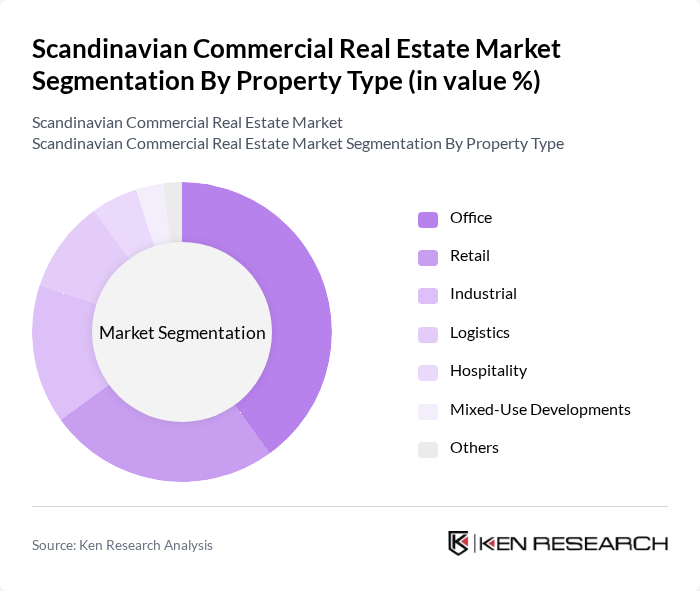
By Property Type:The property type segmentation includes Office, Retail, Industrial, Logistics, Hospitality, Mixed-Use Developments, and Others. The office segment remains the most dominant, driven by demand for high-quality, flexible workspaces and ongoing refurbishment of ageing stock to meet ESG standards. Retail properties are significant, especially in urban centers with strong consumer spending and last-mile logistics conversions. Industrial and logistics segments are expanding due to the rise of e-commerce, supply chain optimization, and record-low logistics vacancy rates in key corridors.
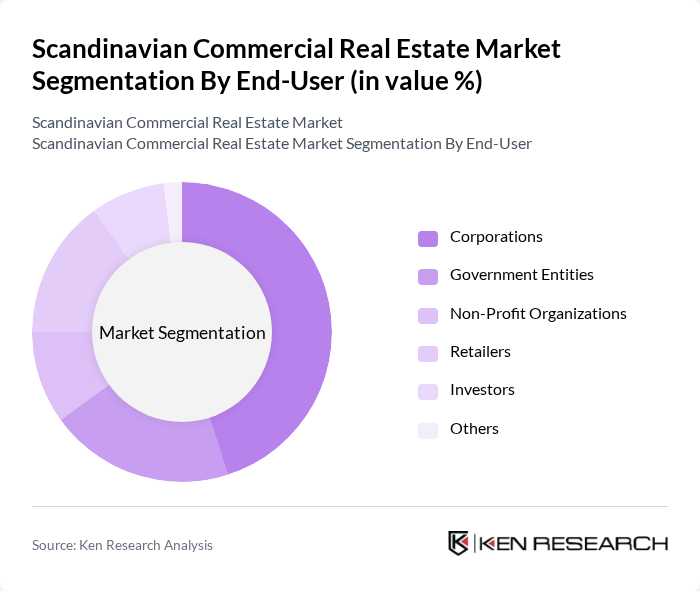
By End-User:The end-user segmentation includes Corporations, Government Entities, Non-Profit Organizations, Retailers, Investors, and Others. Corporations are the leading end-users, driven by the need for modern office spaces and flexible work environments. Government entities play a significant role, often leasing large spaces for administrative and public functions. Retailers are adapting to evolving consumer behaviors and omnichannel strategies, while investors are increasingly targeting mixed-use developments and logistics assets for portfolio diversification.
Scandinavian Commercial Real Estate Market Competitive Landscape
The Scandinavian Commercial Real Estate Market is characterized by a dynamic mix of regional and international players. Leading participants such as Skanska AB, Vasakronan AB, Castellum AB, Fabege AB, Hufvudstaden AB, Kungsleden AB, Atrium Ljungberg AB, Niam AB, Pandox AB, Fastighets AB Balder, Catena AB, Heimstaden AB, Samhällsbyggnadsbolaget i Norden AB (SBB), Nordic Real Estate Partners (NREP), DNB Eiendom AS contribute to innovation, geographic expansion, and service delivery in this space.
Scandinavian Commercial Real Estate Market Industry Analysis
Growth Drivers
- Urbanization and Population Growth:The Scandinavian region is experiencing significant urbanization, with urban populations projected to reach 85% by in future, up from 84% in 2020. This influx is driven by a growing population, which is expected to increase by approximately 1 million people by in future, leading to heightened demand for commercial real estate. Cities like Stockholm and Copenhagen are expanding, necessitating more office spaces, retail outlets, and residential developments to accommodate this growth.
- Increased Foreign Investment:Foreign direct investment (FDI) in Scandinavian commercial real estate reached €10 billion in 2023, reflecting a 20% increase from the previous year. This surge is attributed to the region's stable economic environment and attractive yields, with average returns on commercial properties around 4%. Countries like Sweden and Denmark are particularly appealing to international investors, bolstered by favorable regulatory frameworks and a robust legal system that protects property rights.
- Demand for Sustainable Buildings:The demand for sustainable buildings is on the rise, with over 50% of new commercial developments in Scandinavia expected to meet green building standards by in future. This trend is driven by increasing awareness of climate change and government initiatives promoting sustainability. The market for green buildings is projected to grow to €15 billion by in future, as businesses seek to reduce their carbon footprints and enhance their corporate social responsibility profiles.
Market Challenges
- Economic Uncertainty:Economic uncertainty poses a significant challenge to the Scandinavian commercial real estate market. The region's GDP growth is projected to slow to 1.5% in future, down from 2.5% in 2023, primarily due to global economic headwinds and inflationary pressures. This slowdown may lead to reduced investment activity and cautious spending by businesses, impacting demand for commercial properties and potentially leading to higher vacancy rates.
- Regulatory Compliance Costs:The increasing complexity of regulatory compliance is a notable challenge for developers and investors. In future, compliance costs are expected to rise by 10%, driven by stricter environmental regulations and building codes. These costs can significantly impact project feasibility and profitability, particularly for smaller developers who may lack the resources to navigate the regulatory landscape effectively, potentially stalling new developments.
Scandinavian Commercial Real Estate Market Future Outlook
The Scandinavian commercial real estate market is poised for transformation as it adapts to evolving trends such as remote work and sustainability. By in future, the integration of smart technologies in buildings is expected to enhance operational efficiency and tenant satisfaction. Additionally, urban living will continue to gain traction, with mixed-use developments becoming increasingly popular. These trends will shape investment strategies and development priorities, ensuring the market remains resilient and attractive to both local and foreign investors.
Market Opportunities
- Growth in E-commerce Logistics:The rise of e-commerce is creating substantial opportunities in logistics real estate. With online sales projected to reach €30 billion in future, demand for distribution centers and warehouses is surging. This trend is prompting developers to invest in logistics facilities, particularly in urban areas, to meet the needs of retailers and consumers seeking faster delivery times.
- Development of Mixed-Use Properties:The trend towards mixed-use properties is gaining momentum, driven by changing consumer preferences for convenience and community. By in future, the market for mixed-use developments is expected to grow to €5 billion, as developers capitalize on the demand for spaces that combine residential, commercial, and recreational facilities. This approach not only enhances urban living but also attracts diverse tenant profiles.
Scope of the Report
| Segment | Sub-Segments |
|---|---|
| By Property Type | Office Retail Industrial Logistics Hospitality Mixed-Use Developments Others |
| By End-User | Corporations Government Entities Non-Profit Organizations Retailers Investors Others |
| By Investment Type | Core Core-Plus Value-Add Opportunistic Others |
| By Geography | Sweden Denmark Norway Finland Others |
| By Property Class | Class A Class B Class C Others |
| By Lease Type | Full-Service Leases Gross Leases Net Leases Others |
| By Financing Type | Equity Financing Debt Financing Mezzanine Financing Others |
Key Target Audience
Investors and Venture Capitalist Firms
Government and Regulatory Bodies (e.g., Swedish Financial Supervisory Authority, Danish Financial Supervisory Authority, Norwegian Financial Supervisory Authority)
Real Estate Investment Trusts (REITs)
Property Management Companies
Commercial Real Estate Developers
Construction Firms
Insurance Companies
Pension Funds
Players Mentioned in the Report:
Skanska AB
Vasakronan AB
Castellum AB
Fabege AB
Hufvudstaden AB
Kungsleden AB
Atrium Ljungberg AB
Niam AB
Pandox AB
Fastighets AB Balder
Catena AB
Heimstaden AB
Samhallsbyggnadsbolaget i Norden AB (SBB)
Nordic Real Estate Partners (NREP)
DNB Eiendom AS
Table of Contents
Market Assessment Phase
1. Executive Summary and Approach
2. Scandinavian Commercial Real Estate Market Overview
2.1 Key Insights and Strategic Recommendations
2.2 Scandinavian Commercial Real Estate Market Overview
2.3 Definition and Scope
2.4 Evolution of Market Ecosystem
2.5 Timeline of Key Regulatory Milestones
2.6 Value Chain & Stakeholder Mapping
2.7 Business Cycle Analysis
2.8 Policy & Incentive Landscape
3. Scandinavian Commercial Real Estate Market Analysis
3.1 Growth Drivers
3.1.1 Urbanization and Population Growth
3.1.2 Increased Foreign Investment
3.1.3 Demand for Sustainable Buildings
3.1.4 Technological Advancements in Construction
3.2 Market Challenges
3.2.1 Economic Uncertainty
3.2.2 Regulatory Compliance Costs
3.2.3 Competition from Alternative Investments
3.2.4 Limited Availability of Prime Locations
3.3 Market Opportunities
3.3.1 Growth in E-commerce Logistics
3.3.2 Development of Mixed-Use Properties
3.3.3 Expansion of Green Building Initiatives
3.3.4 Increasing Demand for Flexible Workspaces
3.4 Market Trends
3.4.1 Rise of Remote Work and Its Impact
3.4.2 Integration of Smart Technologies
3.4.3 Focus on Sustainability and Energy Efficiency
3.4.4 Shift Towards Urban Living
3.5 Government Regulation
3.5.1 Zoning Laws and Land Use Regulations
3.5.2 Environmental Impact Assessments
3.5.3 Building Codes and Safety Standards
3.5.4 Tax Incentives for Green Developments
4. SWOT Analysis
5. Stakeholder Analysis
6. Porter's Five Forces Analysis
7. Scandinavian Commercial Real Estate Market Market Size, 2019-2024
7.1 By Value
7.2 By Volume
7.3 By Average Selling Price
8. Scandinavian Commercial Real Estate Market Segmentation
8.1 By Property Type
8.1.1 Office
8.1.2 Retail
8.1.3 Industrial
8.1.4 Logistics
8.1.5 Hospitality
8.1.6 Mixed-Use Developments
8.1.7 Others
8.2 By End-User
8.2.1 Corporations
8.2.2 Government Entities
8.2.3 Non-Profit Organizations
8.2.4 Retailers
8.2.5 Investors
8.2.6 Others
8.3 By Investment Type
8.3.1 Core
8.3.2 Core-Plus
8.3.3 Value-Add
8.3.4 Opportunistic
8.3.5 Others
8.4 By Geography
8.4.1 Sweden
8.4.2 Denmark
8.4.3 Norway
8.4.4 Finland
8.4.5 Others
8.5 By Property Class
8.5.1 Class A
8.5.2 Class B
8.5.3 Class C
8.5.4 Others
8.6 By Lease Type
8.6.1 Full-Service Leases
8.6.2 Gross Leases
8.6.3 Net Leases
8.6.4 Others
8.7 By Financing Type
8.7.1 Equity Financing
8.7.2 Debt Financing
8.7.3 Mezzanine Financing
8.7.4 Others
9. Scandinavian Commercial Real Estate Market Competitive Analysis
9.1 Market Share of Key Players
9.2 Cross Comparison of Key Players
9.2.1 Company Name
9.2.2 Portfolio Size (Gross Leasable Area, m²)
9.2.3 Geographic Diversification (Number of Countries/Regions)
9.2.4 Occupancy Rate (%)
9.2.5 Rental Yield (%)
9.2.6 Net Operating Income (NOI, € or SEK/NOK/DKK)
9.2.7 Return on Investment (ROI, %)
9.2.8 Tenant Retention Rate (%)
9.2.9 Capital Expenditure (CapEx, € or SEK/NOK/DKK)
9.2.10 Debt-to-Equity Ratio
9.2.11 ESG Certification Share (% of Portfolio)
9.2.12 Average Lease Term (Years)
9.2.13 Vacancy Rate (%)
9.2.14 Prime Yield (%)
9.2.15 Market Capitalization (€ or SEK/NOK/DKK)
9.3 SWOT Analysis of Top Players
9.4 Pricing Analysis
9.5 Detailed Profile of Major Companies
9.5.1 Skanska AB
9.5.2 Vasakronan AB
9.5.3 Castellum AB
9.5.4 Fabege AB
9.5.5 Hufvudstaden AB
9.5.6 Kungsleden AB
9.5.7 Atrium Ljungberg AB
9.5.8 Niam AB
9.5.9 Pandox AB
9.5.10 Fastighets AB Balder
9.5.11 Catena AB
9.5.12 Heimstaden AB
9.5.13 Samhällsbyggnadsbolaget i Norden AB (SBB)
9.5.14 Nordic Real Estate Partners (NREP)
9.5.15 DNB Eiendom AS
10. Scandinavian Commercial Real Estate Market End-User Analysis
10.1 Procurement Behavior of Key Ministries
10.1.1 Ministry of Finance
10.1.2 Ministry of Infrastructure
10.1.3 Ministry of Environment
10.2 Corporate Spend on Infrastructure & Energy
10.2.1 Corporate Investments in Real Estate
10.2.2 Budget Allocations for Infrastructure Projects
10.3 Pain Point Analysis by End-User Category
10.3.1 Cost Management
10.3.2 Regulatory Compliance
10.3.3 Sustainability Concerns
10.4 User Readiness for Adoption
10.4.1 Awareness of Sustainable Practices
10.4.2 Financial Readiness
10.5 Post-Deployment ROI and Use Case Expansion
10.5.1 Measurement of ROI
10.5.2 Opportunities for Expansion
11. Scandinavian Commercial Real Estate Market Future Size, 2025-2030
11.1 By Value
11.2 By Volume
11.3 By Average Selling Price
Go-To-Market Strategy Phase
1. Whitespace Analysis + Business Model Canvas
1.1 Market Gaps Identification
1.2 Business Model Framework
2. Marketing and Positioning Recommendations
2.1 Branding Strategies
2.2 Product USPs
3. Distribution Plan
3.1 Urban Retail vs Rural NGO Tie-ups
4. Channel & Pricing Gaps
4.1 Underserved Routes
4.2 Pricing Bands
5. Unmet Demand & Latent Needs
5.1 Category Gaps
5.2 Consumer Segments
6. Customer Relationship
6.1 Loyalty Programs
6.2 After-sales Service
7. Value Proposition
7.1 Sustainability
7.2 Integrated Supply Chains
8. Key Activities
8.1 Regulatory Compliance
8.2 Branding
8.3 Distribution Setup
9. Entry Strategy Evaluation
9.1 Domestic Market Entry Strategy
9.1.1 Product Mix
9.1.2 Pricing Band
9.1.3 Packaging
9.2 Export Entry Strategy
9.2.1 Target Countries
9.2.2 Compliance Roadmap
10. Entry Mode Assessment
10.1 Joint Ventures
10.2 Greenfield Investments
10.3 Mergers & Acquisitions
10.4 Distributor Model
11. Capital and Timeline Estimation
11.1 Capital Requirements
11.2 Timelines
12. Control vs Risk Trade-Off
12.1 Ownership vs Partnerships
13. Profitability Outlook
13.1 Breakeven Analysis
13.2 Long-term Sustainability
14. Potential Partner List
14.1 Distributors
14.2 Joint Ventures
14.3 Acquisition Targets
15. Execution Roadmap
15.1 Phased Plan for Market Entry
15.1.1 Market Setup
15.1.2 Market Entry
15.1.3 Growth Acceleration
15.1.4 Scale & Stabilize
15.2 Key Activities and Milestones
15.2.1 Activity Timeline
15.2.2 Milestone Tracking
Research Methodology
Phase 1: Approach1
Desk Research
- Analysis of commercial real estate market reports from Scandinavian financial institutions
- Review of government publications and economic forecasts related to real estate
- Examination of industry journals and articles focusing on trends in Scandinavian commercial real estate
Primary Research
- Interviews with real estate developers and property managers in major Scandinavian cities
- Surveys targeting institutional investors and real estate funds operating in the region
- Field interviews with local government officials involved in urban planning and zoning
Validation & Triangulation
- Cross-validation of findings through multiple data sources, including market reports and expert opinions
- Triangulation of qualitative insights from interviews with quantitative data from market analysis
- Sanity checks through expert panel reviews comprising industry veterans and academic professionals
Phase 2: Market Size Estimation1
Top-down Assessment
- Estimation of total market size based on GDP contribution from the real estate sector in Scandinavia
- Segmentation of the market by property type, including office, retail, and industrial spaces
- Incorporation of demographic trends and urbanization rates influencing demand for commercial properties
Bottom-up Modeling
- Collection of data on rental rates and occupancy levels from leading commercial properties
- Analysis of transaction volumes and values from recent real estate deals in the region
- Estimation of market size based on the aggregation of individual property performance metrics
Forecasting & Scenario Analysis
- Multi-factor regression analysis incorporating economic indicators, interest rates, and consumer confidence
- Scenario modeling based on potential regulatory changes and their impact on the real estate market
- Development of baseline, optimistic, and pessimistic forecasts through 2030
Phase 3: Expert Interview Sample Composition1
| Scope Item/Segment | Sample Size | Target Respondent Profiles |
|---|---|---|
| Office Space Demand Analysis | 60 | Real Estate Developers, Corporate Real Estate Managers |
| Retail Market Trends | 50 | Retail Property Managers, Market Analysts |
| Industrial Property Insights | 40 | Logistics Managers, Industrial Property Owners |
| Investment Strategies in Real Estate | 55 | Institutional Investors, Real Estate Fund Managers |
| Urban Development and Zoning Regulations | 45 | Urban Planners, Local Government Officials |
Frequently Asked Questions
What is the current value of the Scandinavian Commercial Real Estate Market?
The Scandinavian Commercial Real Estate Market is valued at approximately USD 90 billion, driven by urbanization, refurbishment of prime-office stock, and investments in sustainable properties, logistics, and data centers.
Which countries dominate the Scandinavian Commercial Real Estate Market?
What are the main drivers of growth in the Scandinavian Commercial Real Estate Market?
What challenges does the Scandinavian Commercial Real Estate Market face?
Other Adjacent Reports
KSA Construction Services Market
KSA Property Management Market Outlook to 2030Netherlands Green Building Materials Market Size, Share & Forecast, By Material Type, End User & Application, 2026-2031China Logistics Real Estate Market Size, Share & Forecast, By Asset Type, Property Type & Ownership Model, 2026–2032Qatar Data Center Infrastructure Market
UAE Hospitality Real Estate MarketGermany Retail Real Estate Market
UAE Office Real Estate Market Size, Share & Forecast, By Property Type, Transaction Type & Ownership Model, 2025–2032Japan Mixed-Use Development Market
Why Buy From Us?

What makes us stand out is that our consultants follow Robust, Refine and Result (RRR) methodology. Robust for clear definitions, approaches and sanity checking, Refine for differentiating respondents' facts and opinions, and Result for presenting data with story.

We have set a benchmark in the industry by offering our clients with syndicated and customized market research reports featuring coverage of entire market as well as meticulous research and analyst insights.

While we don't replace traditional research, we flip the method upside down. Our dual approach of Top Bottom & Bottom Top ensures quality deliverable by not just verifying company fundamentals but also looking at the sector and macroeconomic factors.

With one step in the future, our research team constantly tries to show you the bigger picture. We help with some of the tough questions you may encounter along the way: How is the industry positioned? Best marketing channel? KPI's of competitors? By aligning every element, we help maximize success.

Our report gives you instant access to the answers and sources that other companies might choose to hide. We elaborate each steps of research methodology we have used and showcase you the sample size to earn your trust.

If you need any support, we are here! We pride ourselves on universe strength, data quality, and quick, friendly, and professional service.