About the Report
Base Year 2024Listen to the audio summary
Indonesia Green Coffee Market Overview
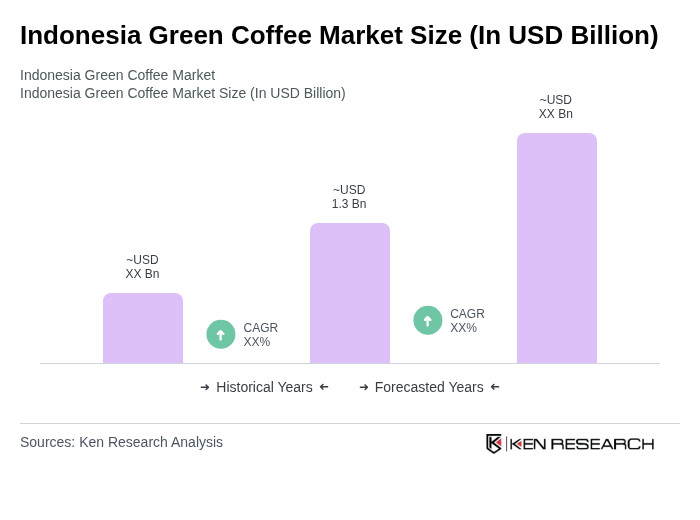
- The Indonesia Green Coffee Market is valued at USD 1.3 billion, based on a five-year historical analysis. This growth is primarily driven by the increasing global demand for specialty coffee, coupled with the country's rich biodiversity and favorable climate for coffee cultivation. The rise in consumer preference for organic and sustainably sourced coffee has also significantly contributed to the market's expansion.
- Key regions dominating the market include Java, Sumatra, and Sulawesi. Java is known for its high-quality Arabica coffee, while Sumatra is famous for its unique flavor profiles and robust production. Sulawesi, with its distinct coffee varieties, also plays a crucial role in the market. The combination of ideal growing conditions and established coffee culture in these regions supports their dominance.
- In recent years, the Indonesian government has implemented regulations to promote sustainable coffee farming practices. The Regulation of the Minister of Agriculture No. 18/Permentan/OT.140/5/2019 issued by the Ministry of Agriculture requires coffee producers to adopt sustainable farming standards, including traceability requirements for export shipments, certification for deforestation-free production, and compliance thresholds for smallholder farmers exceeding 1 hectare to register with local agricultural offices. This initiative is designed to enhance the quality of Indonesian coffee and boost its competitiveness in the global market.
Indonesia Green Coffee Market Segmentation
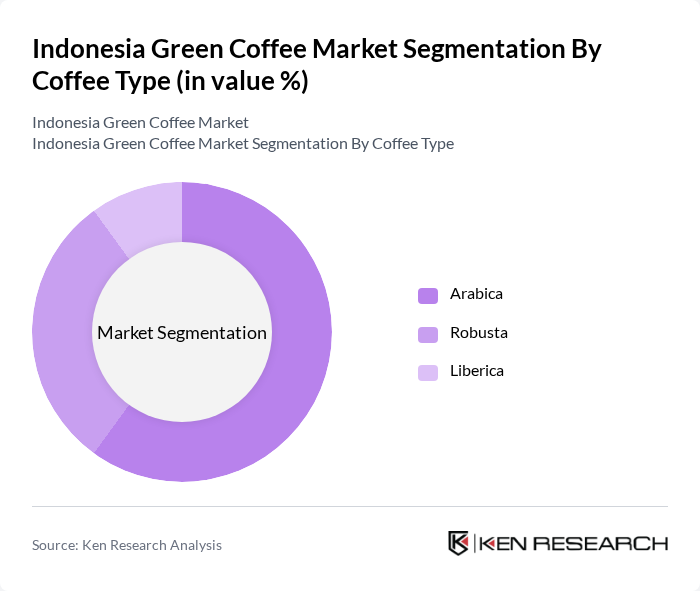
By Coffee Type:The coffee type segmentation includes Arabica, Robusta, and Liberica. Arabica coffee is the most sought-after due to its superior flavor and aroma, making it a favorite among consumers and coffee roasters. Robusta, known for its strong taste and higher caffeine content, is popular in the foodservice industry and dominates production output. Liberica, while less common, is gaining attention for its unique flavor profile. Arabica dominates the market due to its premium quality and higher price point, appealing to specialty coffee consumers.
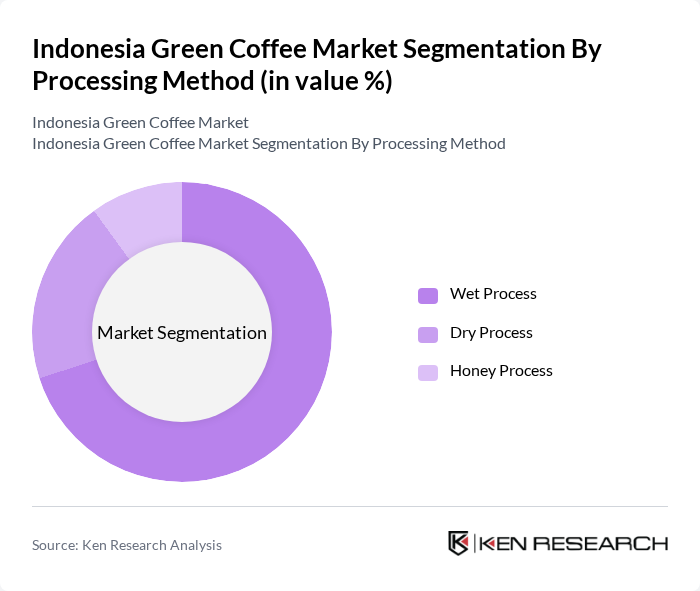
By Processing Method:The processing methods include Wet Process, Dry Process, and Honey Process. The Wet Process is the most widely used method in Indonesia, as it enhances the coffee's flavor and quality, making it preferred by specialty coffee producers, particularly for Arabica varieties. The Dry Process, while less common, is utilized for its cost-effectiveness and ability to produce unique flavor profiles, especially in Robusta production. The Honey Process is gaining traction for its ability to balance sweetness and acidity, appealing to niche markets. The Wet Process leads the market due to its quality-enhancing benefits.
Indonesia Green Coffee Market Competitive Landscape
The Indonesia Green Coffee Market is characterized by a dynamic mix of regional and international players. Leading participants such as PT. Indocafe, PT. Santos Jaya Abadi, PT. Taman Djamoe Indonesia, PT. Kopi Kenangan, PT. Java Coffee, PT. Anugerah Coffee, PT. Bina Coffee, PT. Sari Coffee, PT. Kopi Luwak, PT. Aroma Coffee, PT. Kopi Tuku, PT. Kopi Klasik, PT. Kopi Taman, PT. Kopi Nusantara, PT. Kopi Rakyat contribute to innovation, geographic expansion, and service delivery in this space.
Indonesia Green Coffee Market Industry Analysis
Growth Drivers
- Increasing Consumer Demand for Specialty Coffee:The Indonesian specialty coffee market has seen a significant rise, with sales reaching approximately IDR 12 trillion in future. This growth is driven by a shift in consumer preferences towards high-quality, unique coffee experiences. The number of specialty coffee shops in Indonesia has increased by 15% annually, reflecting a growing appreciation for artisanal coffee. This trend is supported by the increasing number of coffee enthusiasts, with over 35 million Indonesians identifying as coffee drinkers.
- Expansion of Coffee Export Markets:Indonesia's coffee exports reached 3.8 million bags in future, marking a 10% increase from the previous year. The country is now the fourth-largest coffee exporter globally, with key markets in the United States and Europe. This expansion is bolstered by trade agreements and a growing global demand for Indonesian coffee varieties, particularly Arabica. The government aims to increase export revenues to IDR 22 trillion in future, further enhancing market growth prospects.
- Rising Health Consciousness Among Consumers:Health trends are influencing coffee consumption patterns, with a notable increase in demand for organic and health-oriented coffee products. The organic coffee segment in Indonesia is projected to grow by 22% annually, driven by consumer awareness of health benefits associated with coffee. Additionally, the World Health Organization reports that coffee consumption can reduce the risk of certain diseases, further encouraging health-conscious consumers to choose premium coffee options.
Market Challenges
- Fluctuating Coffee Prices:The Indonesian coffee market faces significant challenges due to price volatility, with prices fluctuating between IDR 32,000 to IDR 52,000 per kilogram in future. This instability affects farmers' income and investment in production. The International Coffee Organization reported that global coffee prices dropped by 12% in future, impacting local producers who rely heavily on stable pricing for sustainability and growth.
- Climate Change Impact on Coffee Production:Climate change poses a severe threat to coffee production in Indonesia, with projections indicating a potential yield reduction of 28% by future. Increased temperatures and erratic rainfall patterns have already led to lower quality and quantity of coffee beans. The Indonesian Meteorology, Climatology, and Geophysics Agency reported that coffee-growing regions are experiencing a rise in pests and diseases, further complicating production efforts and threatening farmers' livelihoods.
Indonesia Green Coffee Market Future Outlook
The future of the Indonesian green coffee market appears promising, driven by increasing global demand for specialty and organic coffee. Innovations in sustainable farming practices and technology adoption are expected to enhance productivity and quality. Additionally, the rise of e-commerce platforms is likely to facilitate broader market access for local producers. As consumer preferences continue to evolve, the market is poised for growth, with opportunities for diversification and value-added products becoming increasingly relevant.
Market Opportunities
- Growth of E-commerce Platforms for Coffee Sales:The rise of e-commerce in Indonesia presents a significant opportunity for coffee producers. Online coffee sales have surged, with a 45% increase in future, driven by changing consumer shopping habits. This trend allows local farmers to reach a broader audience, enhancing their market presence and profitability while catering to the growing demand for convenience in purchasing coffee.
- Development of Sustainable Coffee Practices:There is a growing opportunity for the adoption of sustainable coffee farming practices, which can enhance product quality and marketability. The Indonesian government has initiated programs to support sustainable agriculture, with funding of IDR 600 billion allocated in future. This investment aims to promote environmentally friendly practices, which can attract eco-conscious consumers and improve the overall resilience of the coffee sector.
Scope of the Report
| Segment | Sub-Segments |
|---|---|
| By Coffee Type | Arabica Robusta Liberica |
| By Processing Method | Wet Process Dry Process Honey Process |
| By End-User | Retail Consumers Foodservice Industry Coffee Roasters Exporters |
| By Distribution Channel | Offline (Traditional Trade, Modern Trade) Online |
| By Region | Java Sumatra Sulawesi Papua |
Key Target Audience
Investors and Venture Capitalist Firms
Government and Regulatory Bodies (e.g., Ministry of Agriculture, Indonesian Coffee Exporters Association)
Manufacturers and Producers
Distributors and Retailers
Exporters and Importers
Industry Associations (e.g., Specialty Coffee Association of Indonesia)
Financial Institutions
Logistics and Supply Chain Companies
Players Mentioned in the Report:
PT. Indocafe
PT. Santos Jaya Abadi
PT. Taman Djamoe Indonesia
PT. Kopi Kenangan
PT. Java Coffee
PT. Anugerah Coffee
PT. Bina Coffee
PT. Sari Coffee
PT. Kopi Luwak
PT. Aroma Coffee
PT. Kopi Tuku
PT. Kopi Klasik
PT. Kopi Taman
PT. Kopi Nusantara
PT. Kopi Rakyat
Table of Contents
Market Assessment Phase
1. Executive Summary and Approach
2. Indonesia Green Coffee Market Overview
2.1 Key Insights and Strategic Recommendations
2.2 Indonesia Green Coffee Market Overview
2.3 Definition and Scope
2.4 Evolution of Market Ecosystem
2.5 Timeline of Key Regulatory Milestones
2.6 Value Chain & Stakeholder Mapping
2.7 Business Cycle Analysis
2.8 Policy & Incentive Landscape
3. Indonesia Green Coffee Market Analysis
3.1 Growth Drivers
3.1.1 Increasing Consumer Demand for Specialty Coffee
3.1.2 Expansion of Coffee Export Markets
3.1.3 Rising Health Consciousness Among Consumers
3.1.4 Government Support for Coffee Farmers
3.2 Market Challenges
3.2.1 Fluctuating Coffee Prices
3.2.2 Climate Change Impact on Coffee Production
3.2.3 Competition from Other Coffee-Producing Countries
3.2.4 Supply Chain Disruptions
3.3 Market Opportunities
3.3.1 Growth of E-commerce Platforms for Coffee Sales
3.3.2 Development of Sustainable Coffee Practices
3.3.3 Increasing Popularity of Coffee Tourism
3.3.4 Innovations in Coffee Processing Techniques
3.4 Market Trends
3.4.1 Rise of Organic and Fair Trade Coffee
3.4.2 Emergence of Coffee Subscription Services
3.4.3 Growth of Cold Brew and Ready-to-Drink Coffee Products
3.4.4 Increasing Use of Technology in Coffee Farming
3.5 Government Regulation
3.5.1 Import Tariffs on Coffee Products
3.5.2 Quality Standards for Coffee Exports
3.5.3 Environmental Regulations for Coffee Farming
3.5.4 Support Programs for Smallholder Farmers
4. SWOT Analysis
5. Stakeholder Analysis
6. Porter's Five Forces Analysis
7. Indonesia Green Coffee Market Market Size, 2019-2024
7.1 By Value
7.2 By Volume
7.3 By Average Selling Price
8. Indonesia Green Coffee Market Segmentation
8.1 By Coffee Type
8.1.1 Arabica
8.1.2 Robusta
8.1.3 Liberica
8.2 By Processing Method
8.2.1 Wet Process
8.2.2 Dry Process
8.2.3 Honey Process
8.3 By End-User
8.3.1 Retail Consumers
8.3.2 Foodservice Industry
8.3.3 Coffee Roasters
8.3.4 Exporters
8.4 By Distribution Channel
8.4.1 Offline (Traditional Trade, Modern Trade)
8.4.2 Online
8.5 By Region
8.5.1 Java
8.5.2 Sumatra
8.5.3 Sulawesi
8.5.4 Papua
9. Indonesia Green Coffee Market Competitive Analysis
9.1 Market Share of Key Players
9.2 Cross Comparison of Key Players
9.2.1 Company Name
9.2.2 Group Size (Large, Medium, or Small as per industry convention)
9.2.3 Year-over-Year Revenue Growth Rate (%)
9.2.4 Market Share (%)
9.2.5 Export Volume (Metric Tons)
9.2.6 Average Selling Price per Kilogram (USD)
9.2.7 Sustainability Certification Status
9.2.8 Geographic Presence (Number of Regions)
9.2.9 Production Capacity (Metric Tons/Year)
9.2.10 Organic Coffee Percentage of Portfolio (%)
9.3 SWOT Analysis of Top Players
9.4 Pricing Analysis
9.5 Detailed Profile of Major Companies
9.5.1 PT. Indocafe
9.5.2 PT. Santos Jaya Abadi
9.5.3 PT. Taman Djamoe Indonesia
9.5.4 PT. Kopi Kenangan
9.5.5 PT. Java Coffee
9.5.6 PT. Anugerah Coffee
9.5.7 PT. Bina Coffee
9.5.8 PT. Sari Coffee
9.5.9 PT. Kopi Luwak
9.5.10 PT. Aroma Coffee
9.5.11 PT. Kopi Tuku
9.5.12 PT. Kopi Klasik
9.5.13 PT. Kopi Taman
9.5.14 PT. Kopi Nusantara
9.5.15 PT. Kopi Rakyat
10. Indonesia Green Coffee Market End-User Analysis
10.1 Procurement Behavior of Key Ministries
10.1.1 Ministry of Agriculture
10.1.2 Ministry of Trade
10.1.3 Ministry of Industry
10.1.4 Others
10.2 Corporate Spend on Infrastructure & Energy
10.2.1 Investment in Coffee Processing Facilities
10.2.2 Funding for Sustainable Practices
10.2.3 Expenditure on Marketing and Branding
10.2.4 Others
10.3 Pain Point Analysis by End-User Category
10.3.1 Quality Consistency
10.3.2 Supply Chain Reliability
10.3.3 Pricing Volatility
10.3.4 Others
10.4 User Readiness for Adoption
10.4.1 Awareness of Coffee Varieties
10.4.2 Willingness to Pay for Quality
10.4.3 Adoption of Sustainable Practices
10.4.4 Others
10.5 Post-Deployment ROI and Use Case Expansion
10.5.1 Increased Sales from Quality Products
10.5.2 Expansion into New Markets
10.5.3 Enhanced Brand Loyalty
10.5.4 Others
11. Indonesia Green Coffee Market Future Size, 2025-2030
11.1 By Value
11.2 By Volume
11.3 By Average Selling Price
Go-To-Market Strategy Phase
1. Whitespace Analysis + Business Model Canvas
1.1 Market Gaps Identification
1.2 Business Model Development
2. Marketing and Positioning Recommendations
2.1 Branding Strategies
2.2 Product USPs
3. Distribution Plan
3.1 Urban Retail vs Rural NGO Tie-ups
4. Channel & Pricing Gaps
4.1 Underserved Routes
4.2 Pricing Bands
5. Unmet Demand & Latent Needs
5.1 Category Gaps
5.2 Consumer Segments
6. Customer Relationship
6.1 Loyalty Programs
6.2 After-sales Service
7. Value Proposition
7.1 Sustainability
7.2 Integrated Supply Chains
8. Key Activities
8.1 Regulatory Compliance
8.2 Branding
8.3 Distribution Setup
9. Entry Strategy Evaluation
9.1 Domestic Market Entry Strategy
9.1.1 Product Mix
9.1.2 Pricing Band
9.1.3 Packaging
9.2 Export Entry Strategy
9.2.1 Target Countries
9.2.2 Compliance Roadmap
10. Entry Mode Assessment
10.1 JV
10.2 Greenfield
10.3 M&A
10.4 Distributor Model
11. Capital and Timeline Estimation
11.1 Capital Requirements
11.2 Timelines
12. Control vs Risk Trade-Off
12.1 Ownership vs Partnerships
13. Profitability Outlook
13.1 Breakeven Analysis
13.2 Long-term Sustainability
14. Potential Partner List
14.1 Distributors
14.2 JVs
14.3 Acquisition Targets
15. Execution Roadmap
15.1 Phased Plan for Market Entry
15.1.1 Market Setup
15.1.2 Market Entry
15.1.3 Growth Acceleration
15.1.4 Scale & Stabilize
15.2 Key Activities and Milestones
15.2.1 Milestone Planning
Research Methodology
Phase 1: Approach1
Desk Research
- Analysis of industry reports from the Indonesian Coffee Association and local agricultural departments
- Review of market trends and consumer behavior studies published by research institutions
- Examination of trade statistics and export-import data from government databases
Primary Research
- Interviews with coffee farmers and cooperatives to understand cultivation practices and challenges
- Surveys with coffee roasters and distributors to gauge market demand and pricing strategies
- Field visits to coffee processing facilities to observe production methods and quality control
Validation & Triangulation
- Cross-validation of findings through multiple data sources, including trade publications and expert opinions
- Triangulation of market data with insights from industry stakeholders and government reports
- Sanity checks conducted through expert panel discussions to ensure data reliability
Phase 2: Market Size Estimation1
Top-down Assessment
- Estimation of total coffee consumption in Indonesia based on national consumption statistics
- Segmentation of the market by coffee type (e.g., Arabica, Robusta) and distribution channels
- Incorporation of growth rates from historical data and projected trends in coffee consumption
Bottom-up Modeling
- Collection of production volume data from major coffee-producing regions in Indonesia
- Analysis of pricing trends based on local market conditions and international coffee prices
- Calculation of market size using volume x price methodology for different coffee segments
Forecasting & Scenario Analysis
- Multi-variable forecasting model incorporating factors such as climate change impacts and consumer preferences
- Scenario analysis based on potential regulatory changes affecting coffee production and trade
- Development of baseline, optimistic, and pessimistic market projections through 2030
Phase 3: CATI Sample Composition1
| Scope Item/Segment | Sample Size | Target Respondent Profiles |
|---|---|---|
| Smallholder Coffee Farmers | 150 | Farm Owners, Agricultural Extension Workers |
| Coffee Exporters | 100 | Export Managers, Trade Compliance Officers |
| Coffee Roasters | 80 | Production Managers, Quality Control Specialists |
| Retail Coffee Outlets | 70 | Store Managers, Marketing Executives |
| Industry Experts and Analysts | 50 | Market Analysts, Coffee Industry Consultants |
Frequently Asked Questions
What is the current value of the Indonesia Green Coffee Market?
The Indonesia Green Coffee Market is valued at approximately USD 1.3 billion, reflecting significant growth driven by increasing global demand for specialty coffee and a preference for organic and sustainably sourced products.
Which regions in Indonesia are known for coffee production?
What types of coffee are produced in Indonesia?
What processing methods are used for Indonesian coffee?
Other Regional/Country Reports
Other Adjacent Reports
Kuwait Coffee Roasting Market
Middle East Specialty Coffee Market Report Size Share Growth Drivers Trends Opportunities & Forecast 2025–2030Vietnam organic coffee market report size, share, growth drivers, trends, opportunities & forecast 2025–2030South Africa Coffee Processing Equipment Market
Qatar Sustainable Agriculture Market
Egypt Agricultural Export Market
Indonesia Beverage Packaging Market Size, Share, Growth Drivers, Trends, Opportunities & Forecast 2025–2030UAE Food E-commerce Market
Kuwait Health Beverages Market
Kuwait Agricultural Inputs Market
Why Buy From Us?

What makes us stand out is that our consultants follow Robust, Refine and Result (RRR) methodology. Robust for clear definitions, approaches and sanity checking, Refine for differentiating respondents' facts and opinions, and Result for presenting data with story.

We have set a benchmark in the industry by offering our clients with syndicated and customized market research reports featuring coverage of entire market as well as meticulous research and analyst insights.

While we don't replace traditional research, we flip the method upside down. Our dual approach of Top Bottom & Bottom Top ensures quality deliverable by not just verifying company fundamentals but also looking at the sector and macroeconomic factors.

With one step in the future, our research team constantly tries to show you the bigger picture. We help with some of the tough questions you may encounter along the way: How is the industry positioned? Best marketing channel? KPI's of competitors? By aligning every element, we help maximize success.

Our report gives you instant access to the answers and sources that other companies might choose to hide. We elaborate each steps of research methodology we have used and showcase you the sample size to earn your trust.

If you need any support, we are here! We pride ourselves on universe strength, data quality, and quick, friendly, and professional service.