About the Report
Base Year 2024Japan Critical Illness Insurance Market Overview
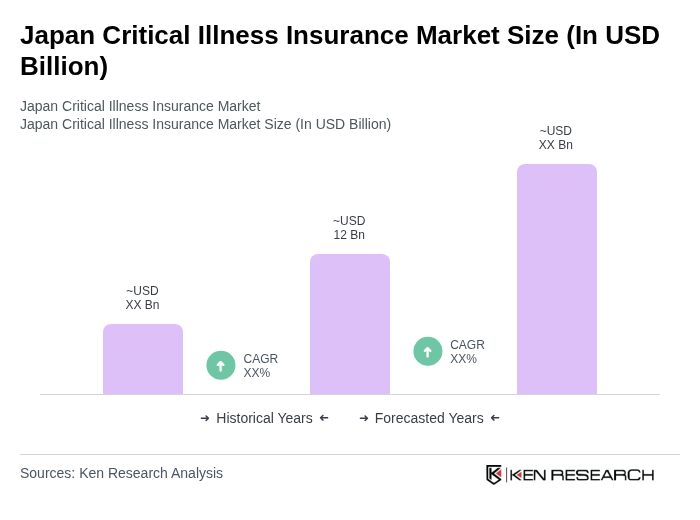
- The Japan Critical Illness Insurance Market is valued at USD 12 billion, based on a five-year historical analysis. This growth is primarily driven by an aging population, increasing healthcare costs, rising awareness of critical illness coverage among consumers, and technological integration in policy management and claims processing. The market has seen a significant uptick in demand as individuals seek financial protection against life-threatening health conditions.
- Key cities such as Tokyo, Osaka, and Yokohama dominate the market due to their high population density and economic activity. These urban centers have a greater concentration of insurance providers and a more informed consumer base, which contributes to the overall growth of the critical illness insurance sector in Japan.
- The Insurance Business Act, 2007 issued by the Financial Services Agency (FSA) governs insurance providers in Japan, requiring licensing for life insurance operations including critical illness coverage, with compliance mandates for solvency margins, product disclosure, and fair claims handling practices applicable to all licensed insurers offering health-related policies.
Japan Critical Illness Insurance Market Segmentation
By Type:This segmentation includes various plans tailored to meet the needs of different consumer groups. The subsegments are Individual Plans, Family Plans, Group Plans, and Others. Each of these plans caters to specific demographics and preferences, influencing consumer choices and market dynamics.
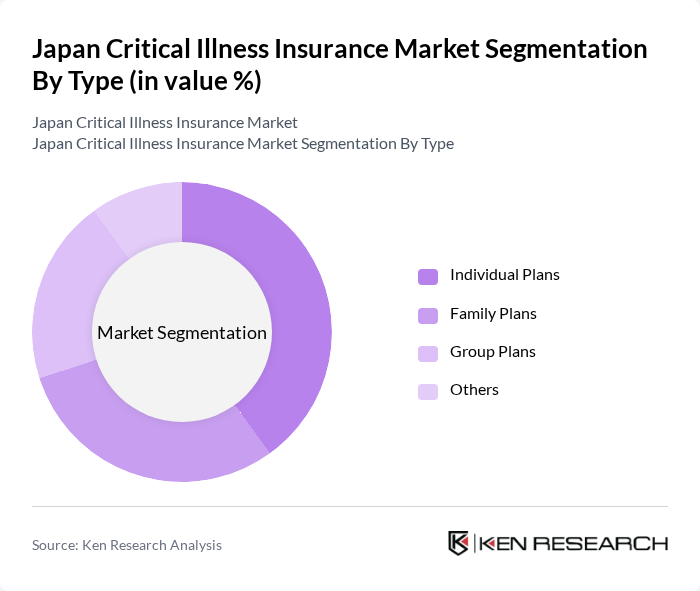
The Individual Plans segment is currently leading the market, driven by the increasing number of individuals seeking personalized insurance solutions. Consumers are increasingly aware of the importance of having coverage tailored to their specific health risks and financial situations. Family Plans are also gaining traction as families look to secure comprehensive coverage for all members, while Group Plans are popular among employers offering benefits to employees. The trend towards individualization in insurance products is a significant factor in the growth of Individual Plans.
By Policy Term:This segmentation categorizes policies based on their duration, including Short-term Policies, Long-term Policies, Renewable Policies, and Others. Each policy term offers different benefits and caters to varying consumer needs and preferences.
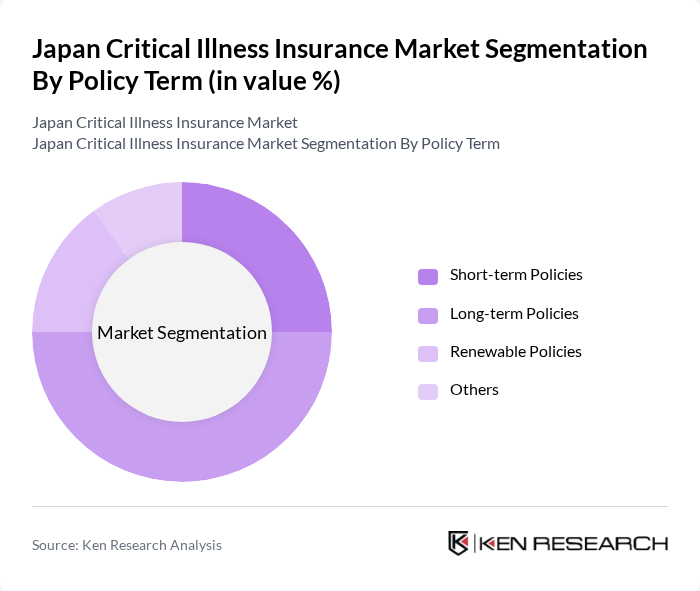
Long-term Policies dominate this segment, as consumers prefer the security of extended coverage against critical illnesses. The stability and peace of mind offered by long-term plans are appealing, especially for those with a family history of health issues. Short-term Policies are often chosen by younger individuals or those seeking temporary coverage, while Renewable Policies provide flexibility for consumers who may want to reassess their coverage needs periodically. The trend towards long-term financial planning is a key driver for the popularity of Long-term Policies.
Japan Critical Illness Insurance Market Competitive Landscape
The Japan Critical Illness Insurance Market is characterized by a dynamic mix of regional and international players. Leading participants such as Nippon Life Insurance Company, Dai-ichi Life Insurance Company, Sumitomo Life Insurance Company, Meiji Yasuda Life Insurance Company, Tokio Marine & Nichido Fire Insurance Co., Ltd., Mitsui Sumitomo Insurance Company, Aflac Japan, Sony Life Insurance Co., Ltd., Asahi Mutual Life Insurance Company, Japan Post Insurance Co., Ltd., ORIX Life Insurance Corporation, FWD Life Insurance Company, Rakuten Life Insurance Co., Ltd., Aioi Nissay Dowa Insurance Co., Ltd., Chubb Life Insurance Company of Japan contribute to innovation, geographic expansion, and service delivery in this space.
Japan Critical Illness Insurance Market Industry Analysis
Growth Drivers
- Increasing Prevalence of Chronic Diseases:The rise in chronic diseases such as diabetes and cardiovascular conditions is a significant growth driver for critical illness insurance in Japan. According to the Ministry of Health, Labour and Welfare, approximately 30% of the Japanese population suffers from chronic diseases, leading to increased healthcare demands. This trend necessitates financial protection against high medical costs, driving consumers towards critical illness insurance products, which are designed to alleviate the financial burden associated with severe health issues.
- Rising Healthcare Costs:Japan's healthcare expenditure is projected to reach ¥50 trillion (approximately $460 billion) in future, reflecting a 5% increase from the previous year. This surge in costs is primarily due to advanced medical technologies and an aging population. As healthcare expenses rise, individuals are increasingly seeking critical illness insurance to mitigate potential financial risks associated with serious health conditions, thereby boosting market demand for these insurance products.
- Growing Awareness of Critical Illness Insurance:Awareness campaigns and educational initiatives have significantly increased consumer knowledge about critical illness insurance in Japan. In future, surveys indicated that 65% of adults were aware of critical illness insurance, up from 45% in 2020. This growing awareness is crucial as it encourages more individuals to consider purchasing policies, thus expanding the market and enhancing the overall penetration of critical illness insurance in the country.
Market Challenges
- High Competition Among Insurers:The Japanese critical illness insurance market is characterized by intense competition, with over 55 insurers vying for market share. This saturation leads to aggressive pricing strategies, which can erode profit margins. In future, the average premium for critical illness insurance dropped by 10%, making it challenging for insurers to maintain profitability while still offering comprehensive coverage options to consumers.
- Regulatory Compliance Complexities:Insurers in Japan face stringent regulatory requirements that complicate product offerings and operational processes. The Financial Services Agency (FSA) has implemented new compliance measures that require insurers to enhance transparency and consumer protection. In future, compliance costs are expected to rise by 15%, placing additional financial strain on insurers and potentially limiting their ability to innovate and respond to market demands effectively.
Japan Critical Illness Insurance Market Future Outlook
The future of the critical illness insurance market in Japan appears promising, driven by technological advancements and evolving consumer preferences. Insurers are increasingly adopting digital platforms to streamline processes and enhance customer engagement. Additionally, the focus on preventive healthcare is expected to shape product offerings, encouraging insurers to develop policies that integrate wellness initiatives. As the market adapts to these trends, it is likely to witness a shift towards more personalized and accessible insurance solutions, catering to the diverse needs of the aging population.
Market Opportunities
- Expansion of Digital Insurance Platforms:The rise of digital insurance platforms presents a significant opportunity for growth. In future, it is estimated that 45% of insurance transactions will occur online, allowing insurers to reach a broader audience and reduce operational costs. This shift towards digitalization can enhance customer experience and streamline policy management, making critical illness insurance more accessible to consumers.
- Customization of Insurance Products:There is a growing demand for customized insurance products tailored to individual health needs. In future, approximately 30% of consumers are expected to prefer personalized insurance solutions. Insurers that offer flexible policies, allowing for adjustments based on lifestyle and health status, can capture this market segment, enhancing customer satisfaction and loyalty while driving sales growth.
Scope of the Report
| Segment | Sub-Segments |
|---|---|
| By Type | Individual Plans Family Plans Group Plans Others |
| By Policy Term | Short-term Policies Long-term Policies Renewable Policies Others |
| By Coverage Amount | Low Coverage Medium Coverage High Coverage Others |
| By Distribution Channel | Direct Sales Brokers Online Platforms Others |
| By Demographics | Age Group (18-30, 31-45, 46-60, 60+) Gender Income Level Others |
| By Health Status | Pre-existing Conditions Healthy Individuals Chronic Illness Patients Others |
| By Region | Hokkaido Tohoku Kanto Kansai Chubu Shikoku Kyushu Others |
Key Target Audience
Investors and Venture Capitalist Firms
Government and Regulatory Bodies (e.g., Financial Services Agency, Ministry of Health, Labour and Welfare)
Insurance Providers
Healthcare Providers
Technology Providers
Industry Associations (e.g., Japan Insurance Association)
Financial Institutions
Reinsurers
Players Mentioned in the Report:
Nippon Life Insurance Company
Dai-ichi Life Insurance Company
Sumitomo Life Insurance Company
Meiji Yasuda Life Insurance Company
Tokio Marine & Nichido Fire Insurance Co., Ltd.
Mitsui Sumitomo Insurance Company
Aflac Japan
Sony Life Insurance Co., Ltd.
Asahi Mutual Life Insurance Company
Japan Post Insurance Co., Ltd.
ORIX Life Insurance Corporation
FWD Life Insurance Company
Rakuten Life Insurance Co., Ltd.
Aioi Nissay Dowa Insurance Co., Ltd.
Chubb Life Insurance Company of Japan
Table of Contents
Market Assessment Phase
1. Executive Summary and Approach
2. Japan Critical Illness Insurance Market Overview
2.1 Key Insights and Strategic Recommendations
2.2 Japan Critical Illness Insurance Market Overview
2.3 Definition and Scope
2.4 Evolution of Market Ecosystem
2.5 Timeline of Key Regulatory Milestones
2.6 Value Chain & Stakeholder Mapping
2.7 Business Cycle Analysis
2.8 Policy & Incentive Landscape
3. Japan Critical Illness Insurance Market Analysis
3.1 Growth Drivers
3.1.1 Increasing prevalence of chronic diseases
3.1.2 Rising healthcare costs
3.1.3 Growing awareness of critical illness insurance
3.1.4 Aging population in Japan
3.2 Market Challenges
3.2.1 High competition among insurers
3.2.2 Regulatory compliance complexities
3.2.3 Limited consumer understanding of products
3.2.4 Economic fluctuations affecting disposable income
3.3 Market Opportunities
3.3.1 Expansion of digital insurance platforms
3.3.2 Customization of insurance products
3.3.3 Partnerships with healthcare providers
3.3.4 Increasing demand for wellness programs
3.4 Market Trends
3.4.1 Shift towards preventive healthcare
3.4.2 Integration of technology in insurance processes
3.4.3 Rise of telemedicine and virtual consultations
3.4.4 Focus on customer-centric insurance solutions
3.5 Government Regulation
3.5.1 Stricter underwriting guidelines
3.5.2 Enhanced consumer protection laws
3.5.3 Tax incentives for critical illness insurance
3.5.4 Regulations on advertising and marketing practices
4. SWOT Analysis
5. Stakeholder Analysis
6. Porter's Five Forces Analysis
7. Japan Critical Illness Insurance Market Market Size, 2019-2024
7.1 By Value
7.2 By Volume
7.3 By Average Selling Price
8. Japan Critical Illness Insurance Market Segmentation
8.1 By Type
8.1.1 Individual Plans
8.1.2 Family Plans
8.1.3 Group Plans
8.1.4 Others
8.2 By Policy Term
8.2.1 Short-term Policies
8.2.2 Long-term Policies
8.2.3 Renewable Policies
8.2.4 Others
8.3 By Coverage Amount
8.3.1 Low Coverage
8.3.2 Medium Coverage
8.3.3 High Coverage
8.3.4 Others
8.4 By Distribution Channel
8.4.1 Direct Sales
8.4.2 Brokers
8.4.3 Online Platforms
8.4.4 Others
8.5 By Demographics
8.5.1 Age Group (18-30, 31-45, 46-60, 60+)
8.5.2 Gender
8.5.3 Income Level
8.5.4 Others
8.6 By Health Status
8.6.1 Pre-existing Conditions
8.6.2 Healthy Individuals
8.6.3 Chronic Illness Patients
8.6.4 Others
8.7 By Region
8.7.1 Hokkaido
8.7.2 Tohoku
8.7.3 Kanto
8.7.4 Kansai
8.7.5 Chubu
8.7.6 Shikoku
8.7.7 Kyushu
8.7.8 Others
9. Japan Critical Illness Insurance Market Competitive Analysis
9.1 Market Share of Key Players
9.2 Cross Comparison of Key Players
9.2.1 Company Name
9.2.2 Group Size (Large, Medium, or Small as per industry convention)
9.2.3 Customer Acquisition Cost
9.2.4 Policy Retention Rate
9.2.5 Claims Settlement Ratio
9.2.6 Average Policy Size
9.2.7 Pricing Strategy
9.2.8 Customer Satisfaction Score
9.2.9 Market Penetration Rate
9.2.10 Revenue Growth Rate
9.3 SWOT Analysis of Top Players
9.4 Pricing Analysis
9.5 Detailed Profile of Major Companies
9.5.1 Nippon Life Insurance Company
9.5.2 Dai-ichi Life Insurance Company
9.5.3 Sumitomo Life Insurance Company
9.5.4 Meiji Yasuda Life Insurance Company
9.5.5 Tokio Marine & Nichido Fire Insurance Co., Ltd.
9.5.6 Mitsui Sumitomo Insurance Company
9.5.7 Aflac Japan
9.5.8 Sony Life Insurance Co., Ltd.
9.5.9 Asahi Mutual Life Insurance Company
9.5.10 Japan Post Insurance Co., Ltd.
9.5.11 ORIX Life Insurance Corporation
9.5.12 FWD Life Insurance Company
9.5.13 Rakuten Life Insurance Co., Ltd.
9.5.14 Aioi Nissay Dowa Insurance Co., Ltd.
9.5.15 Chubb Life Insurance Company of Japan
10. Japan Critical Illness Insurance Market End-User Analysis
10.1 Procurement Behavior of Key Ministries
10.1.1 Ministry of Health, Labour and Welfare
10.1.2 Ministry of Finance
10.1.3 Ministry of Education, Culture, Sports, Science and Technology
10.1.4 Others
10.2 Corporate Spend on Infrastructure & Energy
10.2.1 Corporate Health Initiatives
10.2.2 Employee Wellness Programs
10.2.3 Insurance Premium Allocations
10.2.4 Others
10.3 Pain Point Analysis by End-User Category
10.3.1 Individual Policyholders
10.3.2 Corporate Clients
10.3.3 Healthcare Providers
10.3.4 Others
10.4 User Readiness for Adoption
10.4.1 Awareness Levels
10.4.2 Financial Readiness
10.4.3 Technological Adoption
10.4.4 Others
10.5 Post-Deployment ROI and Use Case Expansion
10.5.1 Cost Savings Analysis
10.5.2 Health Outcomes Improvement
10.5.3 Customer Retention Rates
10.5.4 Others
11. Japan Critical Illness Insurance Market Future Size, 2025-2030
11.1 By Value
11.2 By Volume
11.3 By Average Selling Price
Go-To-Market Strategy Phase
1. Whitespace Analysis + Business Model Canvas
1.1 Market Gaps Identification
1.2 Business Model Development
2. Marketing and Positioning Recommendations
2.1 Branding Strategies
2.2 Product USPs
3. Distribution Plan
3.1 Urban Retail Strategies
3.2 Rural NGO Tie-ups
4. Channel & Pricing Gaps
4.1 Underserved Routes
4.2 Pricing Bands
5. Unmet Demand & Latent Needs
5.1 Category Gaps
5.2 Consumer Segments
6. Customer Relationship
6.1 Loyalty Programs
6.2 After-sales Service
7. Value Proposition
7.1 Sustainability Initiatives
7.2 Integrated Supply Chains
8. Key Activities
8.1 Regulatory Compliance
8.2 Branding Efforts
8.3 Distribution Setup
9. Entry Strategy Evaluation
9.1 Domestic Market Entry Strategy
9.1.1 Product Mix
9.1.2 Pricing Band
9.1.3 Packaging
9.2 Export Entry Strategy
9.2.1 Target Countries
9.2.2 Compliance Roadmap
10. Entry Mode Assessment
10.1 Joint Ventures
10.2 Greenfield Investments
10.3 Mergers & Acquisitions
10.4 Distributor Model
11. Capital and Timeline Estimation
11.1 Capital Requirements
11.2 Timelines
12. Control vs Risk Trade-Off
12.1 Ownership vs Partnerships
13. Profitability Outlook
13.1 Breakeven Analysis
13.2 Long-term Sustainability
14. Potential Partner List
14.1 Distributors
14.2 Joint Ventures
14.3 Acquisition Targets
15. Execution Roadmap
15.1 Phased Plan for Market Entry
15.1.1 Market Setup
15.1.2 Market Entry
15.1.3 Growth Acceleration
15.1.4 Scale & Stabilize
15.2 Key Activities and Milestones
15.2.1 Milestone Planning
15.2.2 Activity Tracking
Research Methodology
Phase 1: Approach1
Desk Research
- Analysis of industry reports from Japanese insurance regulatory bodies
- Review of market trends and forecasts from financial institutions and think tanks
- Examination of demographic data and health statistics from government health agencies
Primary Research
- Interviews with executives from leading critical illness insurance providers
- Surveys targeting healthcare professionals and insurance agents
- Focus groups with policyholders to understand consumer perceptions and needs
Validation & Triangulation
- Cross-validation of findings with multiple data sources, including market reports and expert opinions
- Triangulation of qualitative insights from interviews with quantitative data from surveys
- Sanity checks through expert panel discussions to ensure data reliability
Phase 2: Market Size Estimation1
Top-down Assessment
- Estimation of total market size based on national healthcare expenditure and insurance penetration rates
- Segmentation of the market by age groups, gender, and geographical regions
- Incorporation of trends in chronic illness prevalence and healthcare costs
Bottom-up Modeling
- Collection of premium data from major insurance companies to establish average policy values
- Analysis of claims data to determine payout ratios and loss ratios
- Estimation of new policy sales based on historical growth rates and market dynamics
Forecasting & Scenario Analysis
- Multi-variable forecasting using economic indicators, healthcare trends, and demographic shifts
- Scenario analysis based on potential regulatory changes and market entry of new players
- Development of baseline, optimistic, and pessimistic forecasts through 2030
Phase 3: CATI Sample Composition1
| Scope Item/Segment | Sample Size | Target Respondent Profiles |
|---|---|---|
| Individual Policyholders | 120 | Policyholders aged 30-60, diverse income levels |
| Insurance Agents | 85 | Agents with 5+ years of experience in critical illness insurance |
| Healthcare Professionals | 65 | Doctors and specialists in chronic illness management |
| Insurance Company Executives | 45 | Senior management from top insurance firms |
| Financial Advisors | 60 | Advisors specializing in health and life insurance products |
Frequently Asked Questions
What is the current value of the Japan Critical Illness Insurance Market?
The Japan Critical Illness Insurance Market is valued at approximately USD 12 billion, reflecting significant growth driven by factors such as an aging population, rising healthcare costs, and increased consumer awareness regarding critical illness coverage.
What are the main growth drivers for critical illness insurance in Japan?
Which cities are the primary markets for critical illness insurance in Japan?
What types of plans are available in the Japan Critical Illness Insurance Market?
Other Regional/Country Reports
Other Adjacent Reports
Egypt Long-Term Care Insurance Market
Japan Cancer Insurance Market
UAE insurtech market size, share, growth drivers, trends, opportunities & forecast 2025–2030Qatar Digital Health Market Size, Share & Forecast, By Product Type, Care Setting & Technology, 2026-2032Middle East Chronic Disease Management Market Size, Share, Growth Drivers, Trends, Opportunities & Forecast 2025–2030KSA Preventive Healthcare Market
Oman Healthcare Technology Market
Why Buy From Us?

What makes us stand out is that our consultants follow Robust, Refine and Result (RRR) methodology. Robust for clear definitions, approaches and sanity checking, Refine for differentiating respondents' facts and opinions, and Result for presenting data with story.

We have set a benchmark in the industry by offering our clients with syndicated and customized market research reports featuring coverage of entire market as well as meticulous research and analyst insights.

While we don't replace traditional research, we flip the method upside down. Our dual approach of Top Bottom & Bottom Top ensures quality deliverable by not just verifying company fundamentals but also looking at the sector and macroeconomic factors.

With one step in the future, our research team constantly tries to show you the bigger picture. We help with some of the tough questions you may encounter along the way: How is the industry positioned? Best marketing channel? KPI's of competitors? By aligning every element, we help maximize success.

Our report gives you instant access to the answers and sources that other companies might choose to hide. We elaborate each steps of research methodology we have used and showcase you the sample size to earn your trust.

If you need any support, we are here! We pride ourselves on universe strength, data quality, and quick, friendly, and professional service.