Region:Asia
Author(s):Dev
Product Code:KRAA6772
Pages:99
Published On:January 2026
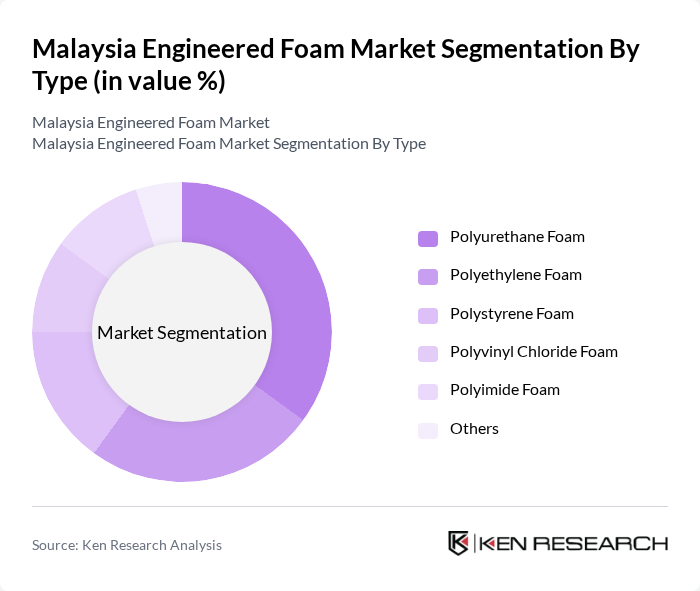
By Type:The engineered foam market can be segmented into various types, including Polyurethane Foam, Polyethylene Foam, Polystyrene Foam, Polyvinyl Chloride Foam, Polyimide Foam, and Others. Each type serves distinct applications across industries, with varying properties that cater to specific needs. Polyurethane foams dominate the market due to their superior performance in automotive seating and vibration damping applications, while polyethylene and polystyrene grades find favor in packaging and protective cushioning.
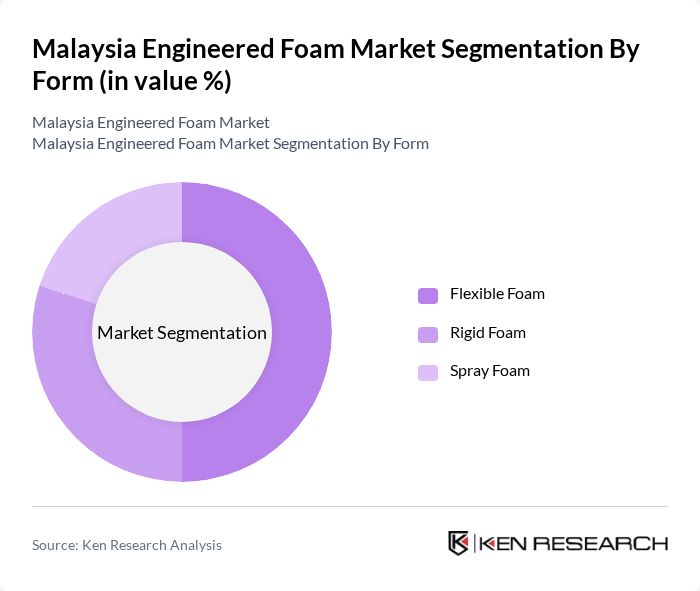
By Form:The market can also be segmented by form, which includes Flexible Foam, Rigid Foam, and Spray Foam. Each form has unique characteristics that make it suitable for different applications, from cushioning and insulation to structural support. Flexible foam continues to lead the market, driven by demand from furniture, bedding, and automotive seating applications, while rigid foam and spray foam segments are experiencing growth due to increased adoption in construction and thermal insulation applications.
The Malaysia Engineered Foam Market is characterized by a dynamic mix of regional and international players. Leading participants such as BASF Malaysia, Dow Chemical Company, Huntsman Corporation, Recticel Group, Armacell International, Sealed Air Corporation, Rogers Corporation, UFP Technologies, Zotefoams plc, FoamPartner, Vita Group, Carpenter Co., Future Foam, Sika AG, Kingspan Group contribute to innovation, geographic expansion, and service delivery in this space.
The future of the engineered foam market in Malaysia appears promising, driven by increasing demand for lightweight and sustainable materials across various industries. As the automotive and furniture sectors continue to expand, the need for innovative foam solutions will grow. Additionally, the focus on circular economy practices and the development of bio-based foams will likely shape market dynamics, encouraging manufacturers to invest in research and development to meet evolving consumer preferences and regulatory requirements.
| Segment | Sub-Segments |
|---|---|
| By Type | Polyurethane Foam Polyethylene Foam Polystyrene Foam Polyvinyl Chloride Foam Polyimide Foam Others |
| By Form | Flexible Foam Rigid Foam Spray Foam |
| By End-User | Building & Construction Automotive & Transportation Aerospace & Defence Medical & Healthcare Bedding & Furniture Packaging Others |
| By Density | Low Density Medium Density High Density |
| By Region | Central Region Northern Region Southern Region Eastern Region |
| By Manufacturing Process | Chemical Blowing Agent Physical Blowing Agent Others |
| By Product Form | Sheets Rolls Blocks Others |
| Scope Item/Segment | Sample Size | Target Respondent Profiles |
|---|---|---|
| Automotive Foam Applications | 100 | Product Engineers, Procurement Managers |
| Construction Insulation Materials | 80 | Architects, Project Managers |
| Consumer Goods Packaging | 75 | Marketing Managers, Supply Chain Coordinators |
| Medical Foam Products | 60 | Quality Assurance Managers, R&D Specialists |
| Industrial Foam Solutions | 90 | Operations Managers, Safety Officers |
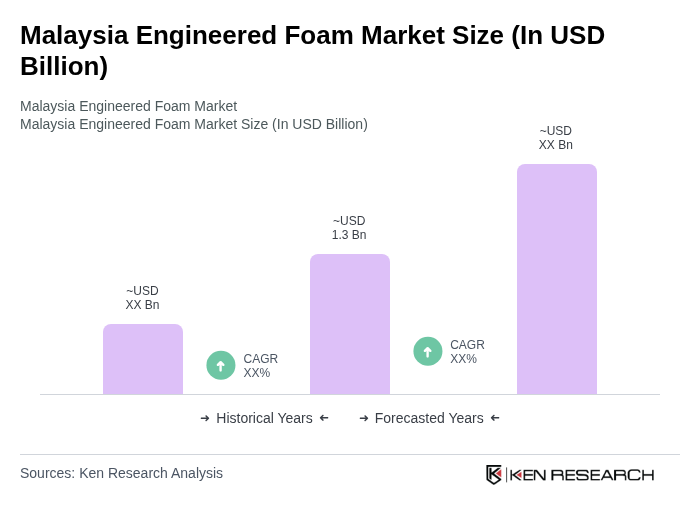
The Malaysia Engineered Foam Market is valued at approximately USD 1.3 billion, reflecting significant growth driven by demand from sectors such as automotive, construction, and healthcare, as well as the increasing awareness of energy-efficient materials.

What makes us stand out is that our consultants follow Robust, Refine and Result (RRR) methodology. Robust for clear definitions, approaches and sanity checking, Refine for differentiating respondents' facts and opinions, and Result for presenting data with story.

We have set a benchmark in the industry by offering our clients with syndicated and customized market research reports featuring coverage of entire market as well as meticulous research and analyst insights.

While we don't replace traditional research, we flip the method upside down. Our dual approach of Top Bottom & Bottom Top ensures quality deliverable by not just verifying company fundamentals but also looking at the sector and macroeconomic factors.

With one step in the future, our research team constantly tries to show you the bigger picture. We help with some of the tough questions you may encounter along the way: How is the industry positioned? Best marketing channel? KPI's of competitors? By aligning every element, we help maximize success.

Our report gives you instant access to the answers and sources that other companies might choose to hide. We elaborate each steps of research methodology we have used and showcase you the sample size to earn your trust.

If you need any support, we are here! We pride ourselves on universe strength, data quality, and quick, friendly, and professional service.













