Region:Middle East
Author(s):Geetanshi
Product Code:KRAA4253
Pages:88
Published On:January 2026
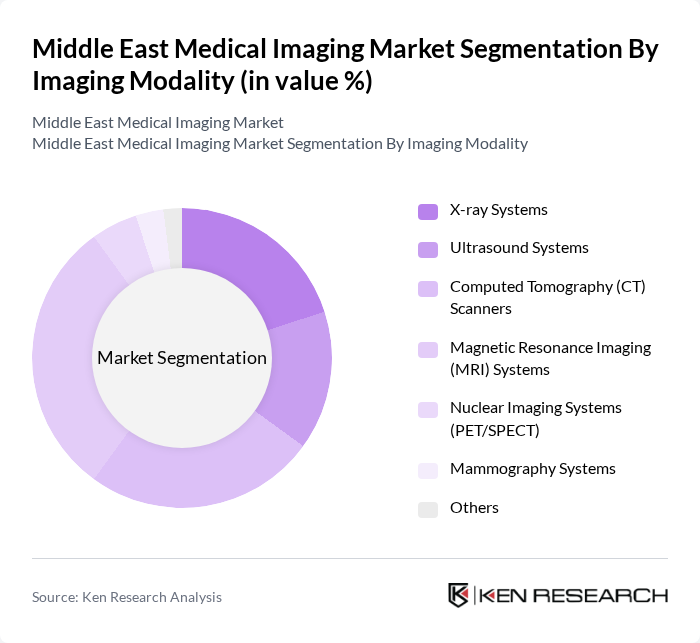
By Imaging Modality:The imaging modality segment includes various technologies used for medical imaging, each serving distinct diagnostic purposes. While high-value cross?sectional modalities such as Computed Tomography (CT) and Magnetic Resonance Imaging (MRI) drive a large share of equipment revenue, in terms of procedure volume and installed base, X?ray and Ultrasound Systems generally account for the largest share of examinations in Middle East and Africa settings, particularly in emergency, primary care, and obstetric applications. MRI Systems are increasingly important for their ability to provide detailed images of soft tissues, making them essential in oncology, neurology, and musculoskeletal imaging. The increasing demand for non-invasive diagnostic procedures and advancements in MRI technology, such as higher-field scanners and functional MRI, are supporting faster adoption in tertiary hospitals and specialized centers. Other modalities like X-ray Systems and Computed Tomography (CT) Scanners also play significant roles, with CT widely used in trauma, cardiovascular, and oncology pathways, while Ultrasound remains a mainstay in obstetrics, abdominal and vascular imaging; together these modalities shape procurement decisions as healthcare providers balance versatility, throughput, and cost-effectiveness.
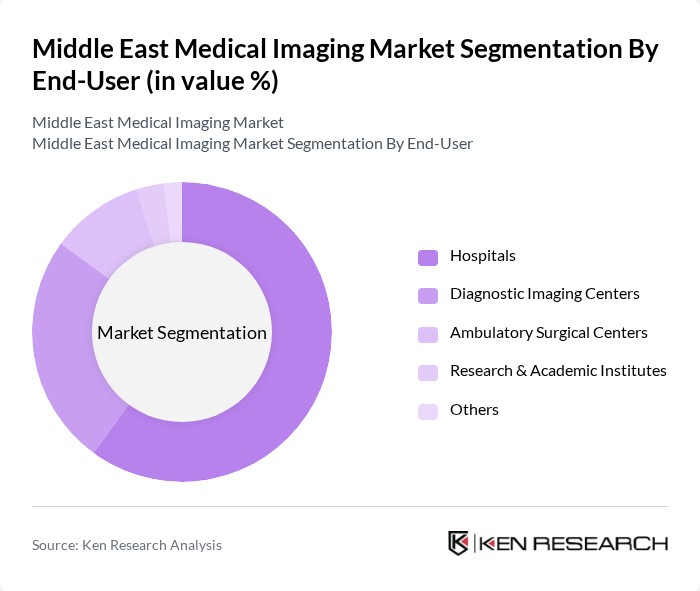
By End-User:The end-user segment encompasses various healthcare settings where medical imaging is utilized. Hospitals are the dominant sub-segment, accounting for a significant portion of the market due to their comprehensive diagnostic services, multidisciplinary care pathways, and ability to invest in advanced imaging facilities, including CT, MRI, and interventional suites. The increasing number of public and private hospitals in Gulf countries and Israel, coupled with modernization of existing facilities, has solidified their leading position. Diagnostic Imaging Centers also contribute notably, driven by the rising demand for specialized imaging services, shorter waiting times, and outpatient care models, especially in urban areas. Ambulatory Surgical Centers and Research & Academic Institutes are growing end users as day-surgery, oncology, and research programs expand their in-house imaging capabilities, but they remain secondary to hospitals in terms of installed base and market share.
The Middle East Medical Imaging Market is characterized by a dynamic mix of regional and international players. Leading participants such as Siemens Healthineers AG, GE HealthCare Technologies Inc., Philips Healthcare (Koninklijke Philips N.V.), Canon Medical Systems Corporation, Fujifilm Healthcare Corporation, Hitachi Ltd. (Fujifilm Healthcare – legacy Hitachi Medical), Agfa HealthCare NV, Carestream Health, Inc., Hologic, Inc., Mindray Medical International Limited, Varian Medical Systems, Inc. (a Siemens Healthineers company), Samsung Medison Co., Ltd., Neusoft Medical Systems Co., Ltd., Bracco Imaging S.p.A., and other emerging regional players contribute to innovation, geographic expansion, and service delivery in this space.
The future of the Middle East medical imaging market appears promising, driven by technological advancements and increasing healthcare investments. The integration of AI and machine learning into imaging processes is expected to enhance diagnostic accuracy and efficiency. Additionally, the expansion of telemedicine will facilitate remote consultations, further increasing the demand for imaging services. As healthcare systems evolve, the focus on patient-centered care will likely shape the market landscape, promoting innovative imaging solutions.
| Segment | Sub-Segments |
|---|---|
| By Imaging Modality | X-ray Systems Ultrasound Systems Computed Tomography (CT) Scanners Magnetic Resonance Imaging (MRI) Systems Nuclear Imaging Systems (PET/SPECT) Mammography Systems Others |
| By End-User | Hospitals Diagnostic Imaging Centers Ambulatory Surgical Centers Research & Academic Institutes Others |
| By Clinical Application | Cardiology Oncology Neurology Orthopedics & Musculoskeletal Obstetrics & Gynecology Gastroenterology Others |
| By Technology | D Imaging D/4D Imaging Fusion / Hybrid Imaging Portable / Handheld Imaging Systems Others |
| By Region | GCC Countries Levant Region North Africa Rest of Middle East |
| By Distribution Channel | Direct Sales Distributors Online / E-commerce Others |
| By Business / Revenue Model | Capital Equipment Sales Leasing & Pay?per?use Models Managed Imaging Services Others |
| Scope Item/Segment | Sample Size | Target Respondent Profiles |
|---|---|---|
| Hospital Imaging Departments | 120 | Radiologists, Imaging Directors |
| Diagnostic Imaging Centers | 90 | Center Managers, Technologists |
| Medical Device Distributors | 60 | Sales Managers, Product Specialists |
| Healthcare Policy Makers | 50 | Health Economists, Government Officials |
| Research Institutions | 55 | Medical Researchers, Academic Professors |
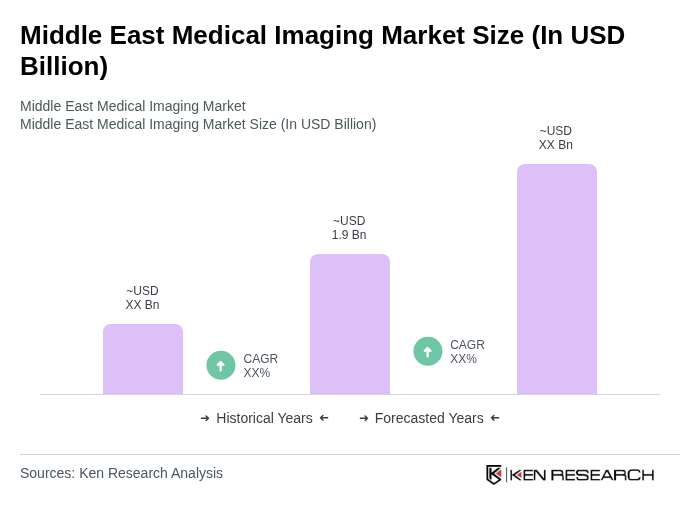
The Middle East Medical Imaging Market is valued at approximately USD 1.9 billion, driven by advancements in imaging technologies, increasing chronic disease prevalence, and rising healthcare expenditures across the region.

What makes us stand out is that our consultants follow Robust, Refine and Result (RRR) methodology. Robust for clear definitions, approaches and sanity checking, Refine for differentiating respondents' facts and opinions, and Result for presenting data with story.

We have set a benchmark in the industry by offering our clients with syndicated and customized market research reports featuring coverage of entire market as well as meticulous research and analyst insights.

While we don't replace traditional research, we flip the method upside down. Our dual approach of Top Bottom & Bottom Top ensures quality deliverable by not just verifying company fundamentals but also looking at the sector and macroeconomic factors.

With one step in the future, our research team constantly tries to show you the bigger picture. We help with some of the tough questions you may encounter along the way: How is the industry positioned? Best marketing channel? KPI's of competitors? By aligning every element, we help maximize success.

Our report gives you instant access to the answers and sources that other companies might choose to hide. We elaborate each steps of research methodology we have used and showcase you the sample size to earn your trust.

If you need any support, we are here! We pride ourselves on universe strength, data quality, and quick, friendly, and professional service.













