Region:Middle East
Author(s):Rebecca
Product Code:KRAB2126
Pages:98
Published On:January 2026
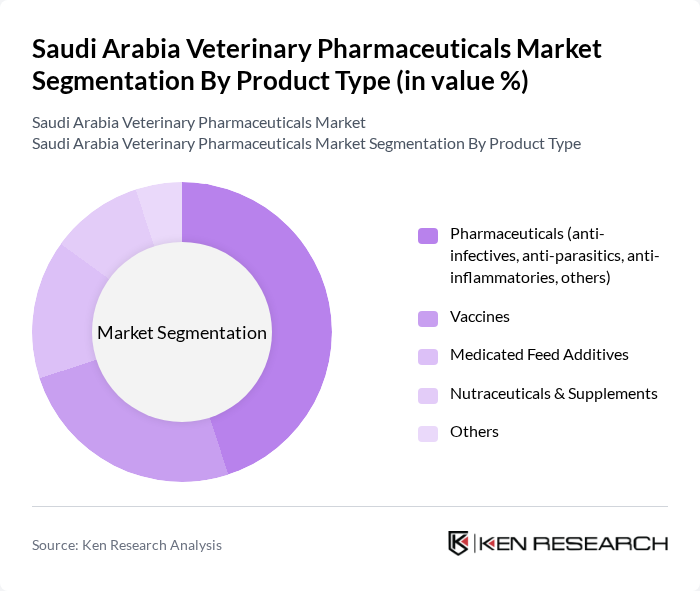
By Product Type:The market is segmented into various product types, including Pharmaceuticals, Vaccines, Medicated Feed Additives, Nutraceuticals & Supplements, and Others, consistent with the broader veterinary medication structure reported for Saudi Arabia. Pharmaceuticals, particularly anti-infectives and anti-parasitics, dominate the market due to their essential role in treating bacterial, parasitic, and inflammatory conditions in both companion and livestock animals. The increasing prevalence and awareness of zoonotic and production-limiting diseases, along with emphasis on food safety and productivity, are driving the demand for these products and supporting higher utilization of prescription veterinary drugs.
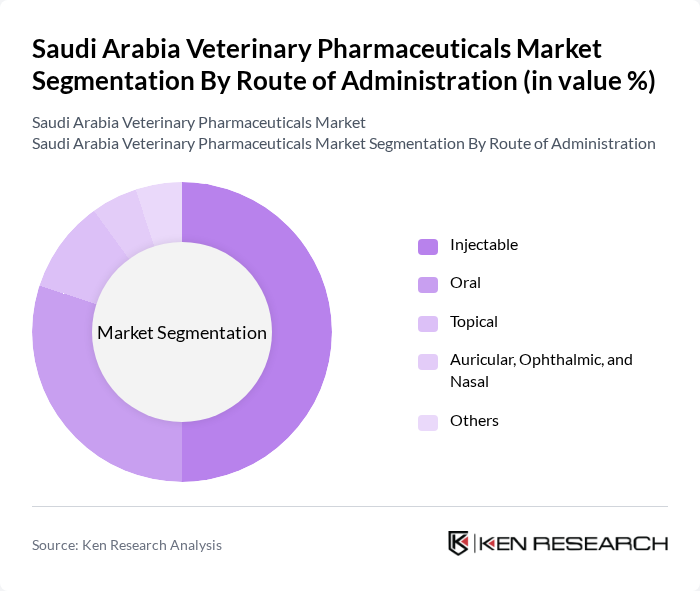
By Route of Administration:The market is further segmented by the route of administration, which includes Injectable, Oral, Topical, Auricular, Ophthalmic, and Nasal, and Others, in line with Saudi Arabia veterinary pharmaceuticals segmentation published by major industry studies. Injectable products are the most preferred route due to their rapid onset of action, higher bioavailability, and effectiveness in delivering medications for systemic infections, vaccines, and emergency treatments in both farm and companion animals. The convenience, dosing flexibility, and owner compliance associated with oral formulations also contribute to their substantial share, while topical and specialty routes (auricular, ophthalmic, nasal) are increasingly used for targeted therapies in small animals.
The Saudi Arabia Veterinary Pharmaceuticals Market is characterized by a dynamic mix of regional and international players. Leading participants such as Zoetis Inc., Merck Animal Health (Merck & Co., Inc.), Boehringer Ingelheim Animal Health, Elanco Animal Health Incorporated, Bayer AG (Animal Health legacy portfolio), Ceva Santé Animale, Virbac, Vetoquinol SA, Dechra Pharmaceuticals plc, Phibro Animal Health Corporation, Neogen Corporation, PetIQ, Inc., Montajat Veterinary Pharmaceuticals Co. Ltd., Saudi Pharmaceutical Industries & Medical Appliances Corporation (SPIMACO), Salehiya Healthcare contribute to innovation, geographic expansion, and service delivery in this space, supplying a range of vaccines, anti-infectives, parasiticides, and other therapeutics to both companion and production animal segments in Saudi Arabia.
The future of the veterinary pharmaceuticals market in Saudi Arabia appears promising, driven by increasing pet ownership and livestock production. The integration of technology in veterinary practices, such as telemedicine, is expected to enhance service delivery and accessibility. Additionally, the focus on preventive healthcare will likely lead to higher demand for veterinary products. As the market evolves, stakeholders must navigate regulatory challenges while capitalizing on emerging trends to ensure sustainable growth and improved animal health outcomes.
| Segment | Sub-Segments |
|---|---|
| By Product Type | Pharmaceuticals (anti-infectives, anti-parasitics, anti-inflammatories, others) Vaccines Medicated Feed Additives Nutraceuticals & Supplements Others |
| By Route of Administration | Injectable Oral Topical Auricular, Ophthalmic, and Nasal Others |
| By Animal Type | Companion Animals Production Animals (Livestock & Poultry) Others |
| By End User | Veterinary Hospitals Veterinary Clinics Animal Farms E-commerce / Online Platforms Others |
| By Region | Northern & Central Region Western Region Eastern Region Southern Region |
| By Therapeutic Area | Anti-infectives Parasiticides Anti-inflammatory & Analgesics Vaccines & Immunologicals Others |
| Scope Item/Segment | Sample Size | Target Respondent Profiles |
|---|---|---|
| Veterinary Clinics | 100 | Veterinarians, Clinic Managers |
| Pharmaceutical Distributors | 80 | Sales Managers, Distribution Heads |
| Animal Health Product Retailers | 70 | Store Owners, Product Managers |
| Livestock Farmers | 90 | Farm Owners, Animal Health Advisors |
| Pet Owners | 60 | Pet Owners, Veterinary Technicians |
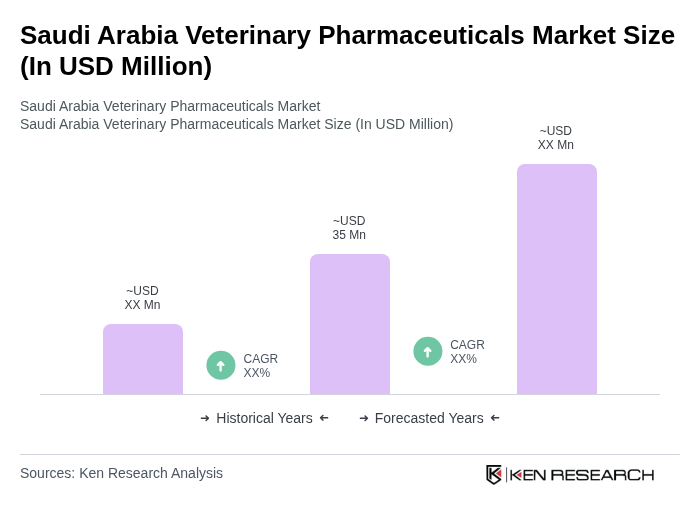
The Saudi Arabia Veterinary Pharmaceuticals Market is valued at approximately USD 35 million, reflecting a historical analysis of dedicated veterinary pharmaceuticals revenue within the broader animal health sector.

What makes us stand out is that our consultants follow Robust, Refine and Result (RRR) methodology. Robust for clear definitions, approaches and sanity checking, Refine for differentiating respondents' facts and opinions, and Result for presenting data with story.

We have set a benchmark in the industry by offering our clients with syndicated and customized market research reports featuring coverage of entire market as well as meticulous research and analyst insights.

While we don't replace traditional research, we flip the method upside down. Our dual approach of Top Bottom & Bottom Top ensures quality deliverable by not just verifying company fundamentals but also looking at the sector and macroeconomic factors.

With one step in the future, our research team constantly tries to show you the bigger picture. We help with some of the tough questions you may encounter along the way: How is the industry positioned? Best marketing channel? KPI's of competitors? By aligning every element, we help maximize success.

Our report gives you instant access to the answers and sources that other companies might choose to hide. We elaborate each steps of research methodology we have used and showcase you the sample size to earn your trust.

If you need any support, we are here! We pride ourselves on universe strength, data quality, and quick, friendly, and professional service.













