Region:Asia
Author(s):Rebecca
Product Code:KRAB4051
Pages:97
Published On:October 2025
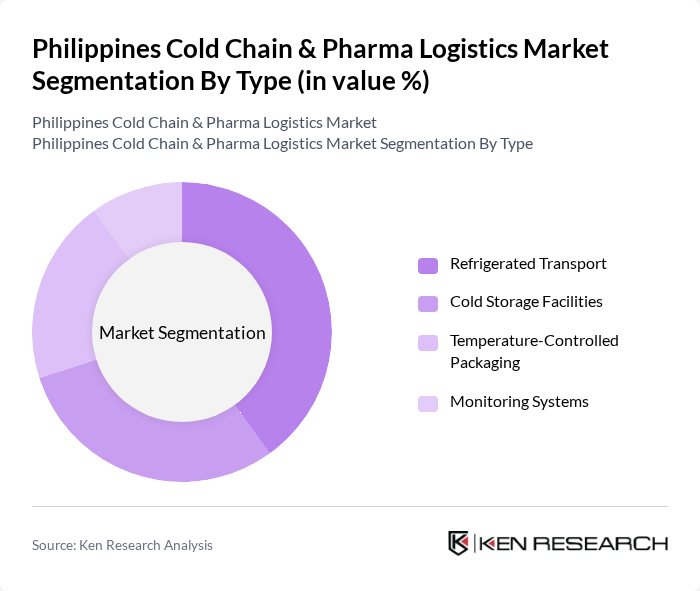
By Type:The market is segmented into Refrigerated Transport, Cold Storage Facilities, Temperature-Controlled Packaging, and Monitoring Systems. Refrigerated Transport is critical for moving pharmaceuticals and perishables across the archipelago, while Cold Storage Facilities are expanding rapidly, with capacity reaching nearly 600,000 metric tons in 2024. Temperature-Controlled Packaging is gaining importance, especially for high-value pharmaceuticals and biologics, with advanced solutions like polyurethane (PUR) containers being deployed for long-haul and last-mile delivery. Monitoring Systems are increasingly integrated for real-time tracking and energy efficiency, supporting compliance and reducing spoilage.
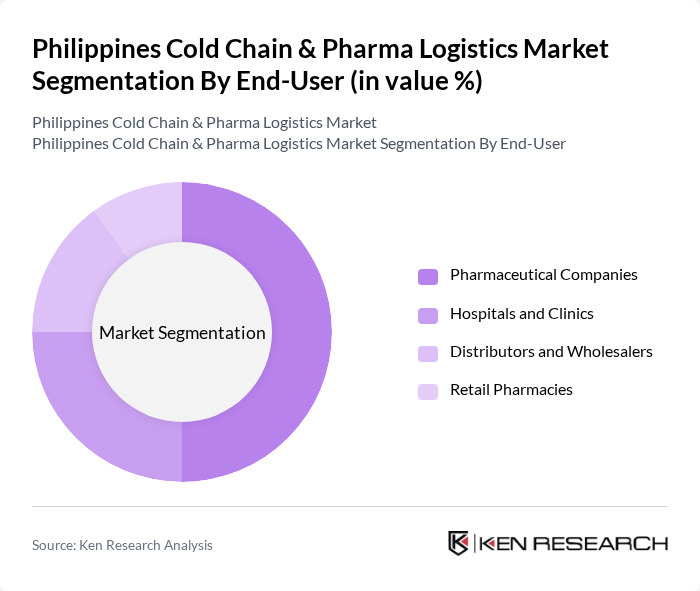
By End-User:The end-user segmentation includes Pharmaceutical Companies, Hospitals and Clinics, Distributors and Wholesalers, and Retail Pharmacies. Pharmaceutical Companies lead due to the stringent requirements for vaccine, biologic, and high-value medicine logistics, with the pharmaceutical cold chain segment growing by 35 percent in 2024. Hospitals and clinics are significant users, especially with ongoing immunization programs and pandemic response efforts. Distributors and wholesalers, as well as retail pharmacies, are expanding their cold chain capabilities to meet rising consumer and regulatory demands.
The Philippines Cold Chain & Pharma Logistics Market features a dynamic mix of regional and international players. Leading companies include DHL Supply Chain, FAST Logistics Group, United Parcel Service of America, Inc. (UPS), Cardinal Health, Cold Chain Technologies, Creopac, Cryopak (A TCP Company), Intelsius, Pelican Products, Inc., Softbox, Sofrigam, Sonoco ThermoSafe, Kuehne + Nagel, CEVA Logistics, and DB Schenker. These firms drive innovation, geographic expansion, and service quality in temperature-controlled logistics.
The future of the Philippines cold chain and pharma logistics market appears promising, driven by technological advancements and increasing investments in infrastructure. As the demand for biopharmaceuticals rises, logistics providers are expected to adopt innovative solutions such as IoT for real-time monitoring and automated warehousing. Additionally, the government's commitment to enhancing healthcare logistics will likely create a more efficient supply chain, ensuring that temperature-sensitive products reach consumers safely and effectively, thereby improving overall healthcare outcomes.
| Segment | Sub-Segments |
|---|---|
| By Type | Refrigerated Transport Cold Storage Facilities Temperature-Controlled Packaging Monitoring Systems |
| By End-User | Pharmaceutical Companies Hospitals and Clinics Distributors and Wholesalers Retail Pharmacies |
| By Application | Vaccines Biologics Blood Products Other Temperature-Sensitive Products |
| By Distribution Mode | Direct Distribution Third-Party Logistics (3PL) E-commerce Platforms Others |
| By Sales Channel | Online Sales Offline Sales B2B Sales Others |
| By Price Range | Budget Mid-Range Premium |
| By Policy Support | Government Subsidies Tax Incentives Regulatory Support Others |
| Scope Item/Segment | Sample Size | Target Respondent Profiles |
|---|---|---|
| Pharmaceutical Manufacturers | 75 | Production Managers, Supply Chain Executives |
| Cold Chain Logistics Providers | 65 | Operations Managers, Logistics Coordinators |
| Healthcare Institutions | 55 | Pharmacy Directors, Procurement Officers |
| Regulatory Bodies | 40 | Policy Makers, Compliance Officers |
| Technology Providers for Cold Chain | 50 | Product Managers, Business Development Leads |
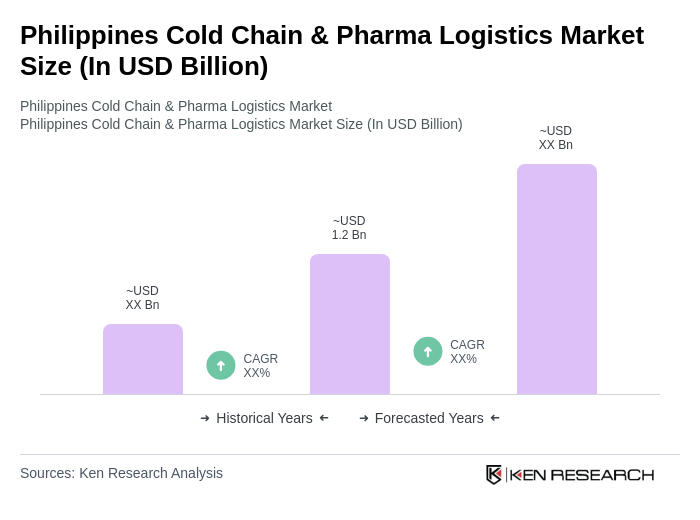
The Philippines Cold Chain & Pharma Logistics Market is valued at approximately USD 1.2 billion, reflecting the combined sectors of cold chain logistics and pharmaceutical logistics, driven by increasing demand for temperature-sensitive products and investments in infrastructure.

What makes us stand out is that our consultants follow Robust, Refine and Result (RRR) methodology. Robust for clear definitions, approaches and sanity checking, Refine for differentiating respondents' facts and opinions, and Result for presenting data with story.

We have set a benchmark in the industry by offering our clients with syndicated and customized market research reports featuring coverage of entire market as well as meticulous research and analyst insights.

While we don't replace traditional research, we flip the method upside down. Our dual approach of Top Bottom & Bottom Top ensures quality deliverable by not just verifying company fundamentals but also looking at the sector and macroeconomic factors.

With one step in the future, our research team constantly tries to show you the bigger picture. We help with some of the tough questions you may encounter along the way: How is the industry positioned? Best marketing channel? KPI's of competitors? By aligning every element, we help maximize success.

Our report gives you instant access to the answers and sources that other companies might choose to hide. We elaborate each steps of research methodology we have used and showcase you the sample size to earn your trust.

If you need any support, we are here! We pride ourselves on universe strength, data quality, and quick, friendly, and professional service.













