Region:Middle East
Author(s):Shubham
Product Code:KRAD2597
Pages:94
Published On:January 2026
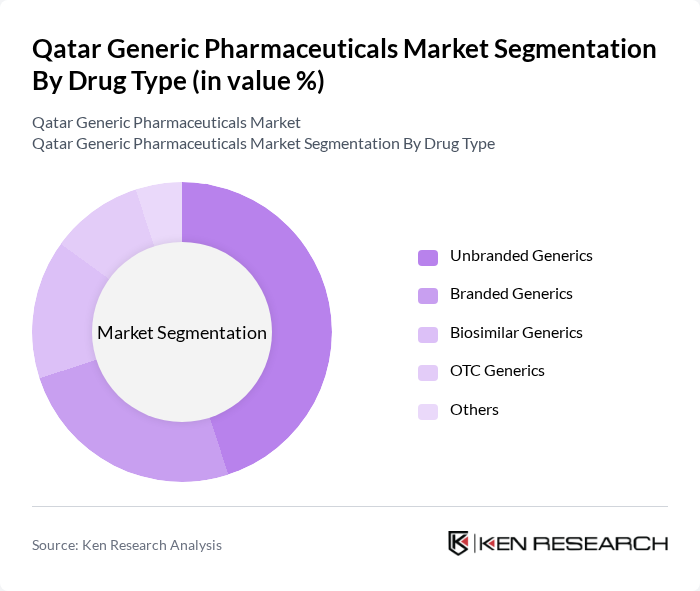
By Drug Type:The drug type segmentation includes various categories such as Unbranded Generics, Branded Generics, Biosimilar Generics, OTC Generics, and Others. Among these, Unbranded Generics account for a substantial share of the generic drugs dispensed through public sector facilities due to their affordability and formulary?driven use, while branded generics and originator brands remain important in private and retail channels. The increasing focus on cost-effective treatment options, pressure on payers to optimize pharmaceutical budgets, and the global expansion of generic drug portfolios have collectively supported the growing use of unbranded and branded generics in Qatar’s healthcare system.
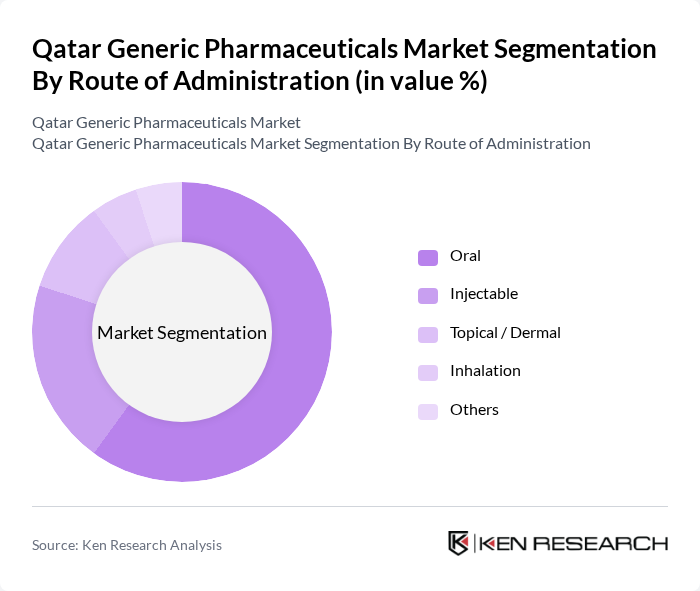
By Route of Administration:The route of administration includes Oral, Injectable, Topical / Dermal, Inhalation, and Others. The Oral route is the most prevalent for generic medicines, reflecting global utilization patterns in which oral solid dosage forms dominate prescription and OTC volumes because of ease of administration, lower manufacturing cost, and high patient adherence. Oral medications are preferred by both healthcare providers and patients, leading to a significant market share in this segment, while injectable and inhalation generics are increasingly used in chronic disease management, hospital care, and biologic/biosimilar therapies.
The Qatar Generic Pharmaceuticals Market is characterized by a dynamic mix of regional and international players. Leading participants such as Qatar Pharma, Doha Pharmaceutical Company, Gulf Pharmaceutical Industries (Julphar), Al Hayat Pharmaceutical Industries, United Pharmaceutical Manufacturing Company, Qatar Biotech, Aster DM Healthcare (Pharma Division), Hikma Pharmaceuticals, Novartis, Sanofi, Pfizer, Merck, GlaxoSmithKline (GSK), AstraZeneca, Teva Pharmaceuticals contribute to innovation, geographic expansion, and service delivery in this space.
The future of the Qatar generic pharmaceuticals market appears promising, driven by increasing healthcare investments and a supportive regulatory environment. As the government continues to promote generics through various initiatives, the market is expected to witness a gradual shift towards more affordable medication options. Additionally, the rise of digital health solutions and e-pharmacies is likely to enhance accessibility, further driving the adoption of generic drugs among consumers and healthcare providers alike.
| Segment | Sub-Segments |
|---|---|
| By Drug Type | Unbranded Generics Branded Generics Biosimilar Generics OTC Generics Others |
| By Route of Administration | Oral Injectable Topical / Dermal Inhalation Others |
| By Therapeutic Category | Cardiovascular System Diabetes and Metabolic Disorders Oncology Respiratory System Central Nervous System Anti-Infectives Others |
| By End-User | Public Hospitals Private Hospitals Retail Pharmacies Polyclinics & Specialized Clinics Others |
| By Distribution Channel | Hospital Pharmacies Community / Retail Pharmacies Online Pharmacies / E-Pharmacy Platforms Wholesalers & Distributors Others |
| By Region | Ad Dawhah (Doha) Al Rayyan Al Wakrah Others |
| By Procurement & Policy Framework | Government Tender-Based Procurement Private Sector Procurement Insurance-Driven Formularies Local Manufacturing Incentive Schemes Others |
| Scope Item/Segment | Sample Size | Target Respondent Profiles |
|---|---|---|
| Pharmacy Retail Sector | 120 | Pharmacy Owners, Pharmacists |
| Healthcare Providers | 100 | Doctors, Nurses, Healthcare Administrators |
| Generic Drug Manufacturers | 80 | Production Managers, Quality Control Officers |
| Regulatory Bodies | 60 | Regulatory Affairs Specialists, Compliance Officers |
| Patient Focus Groups | 40 | Chronic Disease Patients, General Consumers |
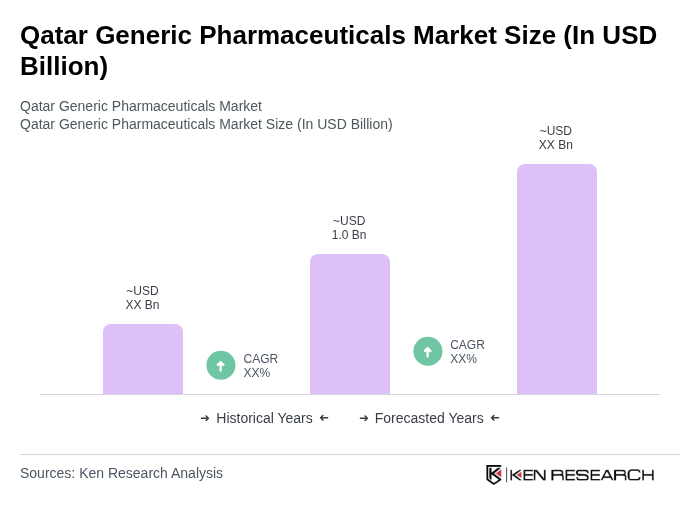
The Qatar Generic Pharmaceuticals Market is valued at approximately USD 1.0 billion, reflecting a significant share of the overall pharmaceutical spending in the region. This growth is driven by increasing demand for affordable medications and government initiatives to promote local manufacturing.

What makes us stand out is that our consultants follow Robust, Refine and Result (RRR) methodology. Robust for clear definitions, approaches and sanity checking, Refine for differentiating respondents' facts and opinions, and Result for presenting data with story.

We have set a benchmark in the industry by offering our clients with syndicated and customized market research reports featuring coverage of entire market as well as meticulous research and analyst insights.

While we don't replace traditional research, we flip the method upside down. Our dual approach of Top Bottom & Bottom Top ensures quality deliverable by not just verifying company fundamentals but also looking at the sector and macroeconomic factors.

With one step in the future, our research team constantly tries to show you the bigger picture. We help with some of the tough questions you may encounter along the way: How is the industry positioned? Best marketing channel? KPI's of competitors? By aligning every element, we help maximize success.

Our report gives you instant access to the answers and sources that other companies might choose to hide. We elaborate each steps of research methodology we have used and showcase you the sample size to earn your trust.

If you need any support, we are here! We pride ourselves on universe strength, data quality, and quick, friendly, and professional service.













