Region:Asia
Author(s):Rebecca
Product Code:KRAD3152
Pages:97
Published On:January 2026
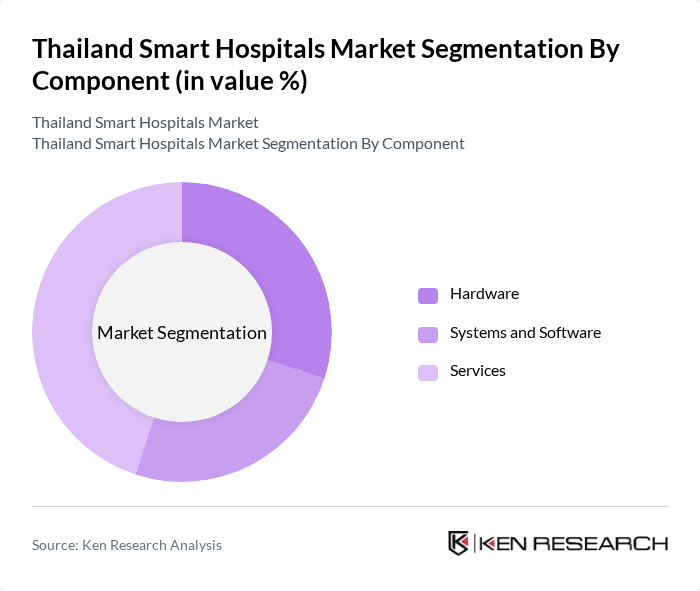
By Component:The components of the market include Hardware, Systems and Software, and Services. Among these, the Services segment is currently dominating the market due to the increasing demand for telemedicine and remote patient monitoring services. The growing trend of personalized healthcare and the need for efficient patient management systems are driving hospitals to invest more in service-oriented solutions. Hardware and Systems and Software are also essential, but they are more supportive of the overall service delivery.
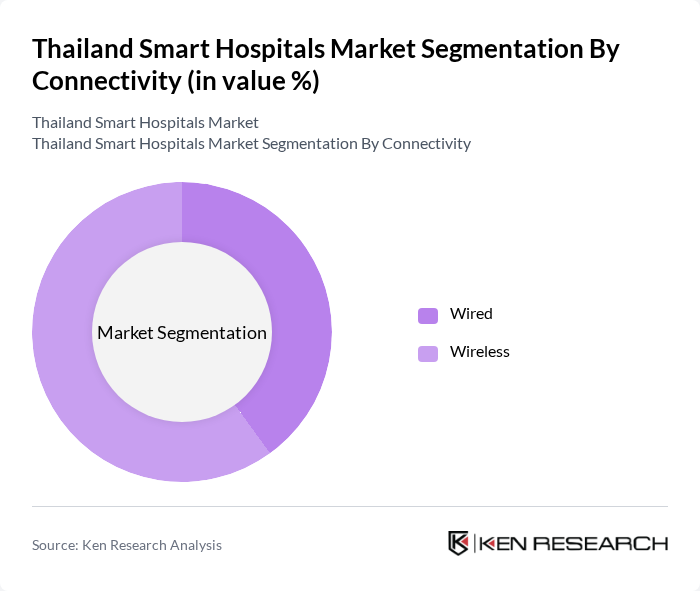
By Connectivity:The connectivity segment is divided into Wired and Wireless. The Wireless sub-segment is leading the market due to the increasing adoption of mobile health applications and wearable devices. The convenience and flexibility offered by wireless technologies are appealing to both healthcare providers and patients, facilitating real-time data sharing and remote monitoring. Wired connectivity remains important, particularly in hospital infrastructure, but the trend is shifting towards wireless solutions.
The Thailand Smart Hospitals Market is characterized by a dynamic mix of regional and international players. Leading participants such as Bangkok Dusit Medical Services, Bumrungrad International Hospital, Samitivej Hospital, Bangkok Hospital, Phyathai Hospital, Vejthani Hospital, Chulalongkorn Hospital, Siriraj Hospital, Ramkhamhaeng Hospital, Thonburi Hospital, Piyavate Hospital, BNH Hospital, MedPark Hospital, Theptarin Hospital, Bangkok Christian Hospital contribute to innovation, geographic expansion, and service delivery in this space.
The future of the Thailand smart hospitals market appears promising, driven by ongoing technological advancements and supportive government policies. In future, the integration of AI and IoT technologies is expected to revolutionize patient care, enhancing operational efficiency and data management. Additionally, the increasing focus on value-based care will likely encourage hospitals to adopt smart solutions that prioritize patient outcomes. As healthcare providers navigate challenges, collaboration with technology firms will be crucial for successful implementation and innovation in the sector.
| Segment | Sub-Segments |
|---|---|
| By Component | Hardware Systems and Software Services |
| By Connectivity | Wired Wireless |
| By Artificial Intelligence | Offering AI Solutions Non-AI Solutions |
| By End-User | Public Hospitals Private Hospitals Specialty Clinics Diagnostic Laboratories |
| By Service Type | Inpatient Services Outpatient Services Ancillary Services |
| By Geographic Location | Bangkok Metropolitan Area Eastern Economic Corridor Northern Thailand Southern Thailand Northeastern Region (Isan) |
| Scope Item/Segment | Sample Size | Target Respondent Profiles |
|---|---|---|
| Hospital Administrators | 120 | CEOs, CFOs, and IT Directors of hospitals |
| Healthcare Professionals | 150 | Doctors, Nurses, and Healthcare IT Specialists |
| Patients Using Smart Hospital Services | 80 | Patients who have utilized telemedicine or smart health services |
| Technology Vendors | 60 | Sales and Marketing Managers from healthcare technology firms |
| Regulatory Bodies | 40 | Officials from the Ministry of Public Health and related agencies |
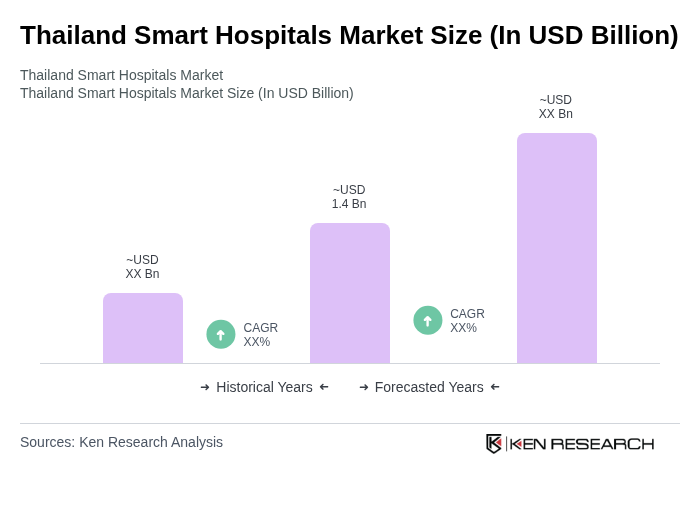
The Thailand Smart Hospitals Market is valued at approximately USD 1.4 billion, reflecting significant growth driven by the adoption of digital health technologies, government initiatives, and rising patient expectations for enhanced healthcare services.

What makes us stand out is that our consultants follow Robust, Refine and Result (RRR) methodology. Robust for clear definitions, approaches and sanity checking, Refine for differentiating respondents' facts and opinions, and Result for presenting data with story.

We have set a benchmark in the industry by offering our clients with syndicated and customized market research reports featuring coverage of entire market as well as meticulous research and analyst insights.

While we don't replace traditional research, we flip the method upside down. Our dual approach of Top Bottom & Bottom Top ensures quality deliverable by not just verifying company fundamentals but also looking at the sector and macroeconomic factors.

With one step in the future, our research team constantly tries to show you the bigger picture. We help with some of the tough questions you may encounter along the way: How is the industry positioned? Best marketing channel? KPI's of competitors? By aligning every element, we help maximize success.

Our report gives you instant access to the answers and sources that other companies might choose to hide. We elaborate each steps of research methodology we have used and showcase you the sample size to earn your trust.

If you need any support, we are here! We pride ourselves on universe strength, data quality, and quick, friendly, and professional service.













